
 Worksheets
riview science grade 4 even semester
Total questions: 42
Worksheet time: 42mins
A force is _____
a push
a pull
a push or a pull

What force is it?
Push
Pull
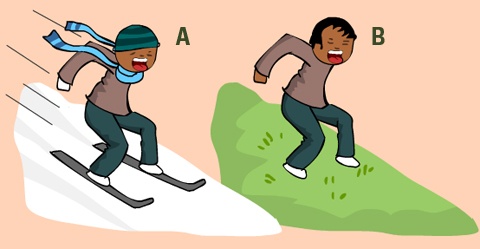
Which surface would have the least amount of friction?
A road
A carpet
An ice skating ring
Which surface would have the most amount of friction?
A road
Carpet
An ice skating ring
Friction does not produce heat.
True
False

The change in an objects position is________.
Force
Motion
Reaction
movement

What type of motion is this?
Rectilinear
Circulatory
Periodic
Curvilinear

What type of motion is this?
Linear
Circular
Oscillation
Reciprocal

What two forms of energy does a lamp produce
heat and sound
light and sound
light
light end electrical
Which of the following doesn't use electrical energy?
- Tv
- Laptop
- cat
- flash light
1
2
3
4
Which of these items uses electrical energy to make sound energy?
A lamp
A rubber band
A cat
A radio
Riding a bicycle is an example of what form of energy?
Bicycle energy
sound energy
light energy
mechanical energy

Batteries contain _______________________
potential energy
light energy
kinetic energy
chemical energy

What type of energy is used to cook food in an oven?
heat
solar
nuclear
mechanical
__________ is an energy resource that WILL NOT run out in the next several hundred years.
Renewable Energy Resource
Non-Renewable Energy Resource
__________ is an energy resource that WILL run out in the next several hundred years.
Renewable Energy Resource
Non-renewable Energy Resource
Which of the following is a renewable resource?
Oil
Solar
Coal
Natural Gas

Coal and oil are?
Non-Renewable energy resources
Renewable energy resources
None of the above
_______________ is made by vibrations
wave
sound
How high or low a sound is
pitch
sound
volume
acoustics
How loud or soft the sound is
Pitch
Wavelength
Acoustics
Volume
How can we protect our ears from hearing loss?
Wear ear plugs
Try not to listen to loud things
Put our fingers in our ears
All of the above

Which one has a higher pitch?
Cello
Violin
Which one has a lower pitch?
Cello
Violin
The frequency of ultrasonic sound is...
Above 20.000 Hz
Between 20 – 20.000 Hz
Below 20 Hz
Below 20.000 Hz
Read the sentences below.
1. Sound enter the ear from the air.
2. The auditory nerves transmit the sound to the brain so thatwe can perceive sound.
3. The sound vibrate the ear drum
4. The sound vibrations are transmitted to the earbones and cochlea, until they reach
auditory nerves.
The correct way of how our ear works is shown by ...
1-2-3 and 4
1-2-4 and 3
1-3-4 and 2
1-4-3 and 2
The outer part of the ear is ...
cochlea
Ear bones
Pinna
Auditory nerve
The part of ear that has the function to deliver the stimulus of sound to the brain is ....
Pinna
Auditory nerve
Ear drum
Ear bones
Which of the following is the unit for measuring loudness of sounds?
Decibel
Volt
Joule
Meter
What is the unit of frequency?
Decibel
Meter
Hertz
Second
Sound with frequencies less than 20 Hz is called _____
infrasound
ultrasound
super sound
soft sound
Which of the following objects allow light to pass through?
paper and cardboard
wood and steel
rubber ball and aluminum
glasses and lens
The transparent object is . . . .
glass
Wooden chair
Wall
One of the properties of light can be seen in the formation of rainbow in the sky after the rain that is . . . .
Light can be dispersed
Light can be refracted
Light can be reflected
Light can pass through transparent object
example of translucent object is...
book
tissue
wood
An example of an opaque object is ....
clear plastic
clear glass
clear water
white wall

2 – 3 – 1 – 4
1 – 2 – 3 – 4
2 – 1 – 4 – 3
4 – 3 – 2 – 1
we can see the object because the ...... enter our eyes
sound
light

