
 Worksheets
Management
Total questions: 47
Worksheet time: 43mins
Pick 2 advantages of a tall organisational structure
Motivating for workers (as there is a clear route for progression)
Workers are more specialised with specific job roles
Communication is likely to be poor
Lower management costs as not many managers

Show few or no levels of management between executives.
Functional Top-Down
Flat Organizational Chart
Divisional Structure
Matrix Org. Chart
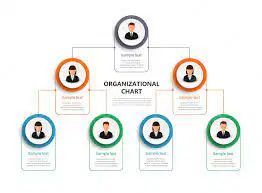
A diagram that displays a reporting or relationship __________.
with people
hierarchy
more
alone
What are the steps involved in creating an organizational chart?
Identify key positions, determine reporting relationships, create horizontal structure, add names/titles, review/revise
Determine key positions, create reporting relationships, add names/titles, review/revise
Identify key positions, determine reporting relationships, create vertical structure, add names/titles, review/revise
Identify key positions, determine reporting relationships, create hierarchical structure, add names/titles, review/revise
What are the benefits of visualizing the hierarchy in an organizational chart?
Visualizing the hierarchy in an organizational chart is a waste of time and resources.
Visualizing the hierarchy in an organizational chart leads to confusion and miscommunication.
Understanding the reporting structure, clarifying roles and responsibilities, improving communication and coordination, facilitating decision-making, and enhancing transparency and accountability.
Visualizing the hierarchy in an organizational chart has no benefits.
How can organizational charts help in clarifying roles and responsibilities?
Organizational charts only confuse employees about their roles and responsibilities.
Organizational charts visually represent the hierarchical structure of an organization and show the different departments, positions, and reporting relationships, clarifying roles and responsibilities.
Organizational charts are only used for decorative purposes and have no impact on roles and responsibilities.
Organizational charts are not useful in clarifying roles and responsibilities.
What are the advantages of using organizational charts?
Organizational charts are time-consuming and difficult to create.
Organizational charts provide a visual representation of the hierarchical structure of an organization, which helps in understanding the chain of command, reporting relationships, and division of responsibilities.
Organizational charts help in creating confusion and misunderstanding within the organization.
Organizational charts do not provide any useful information about the organization's structure.
What is a functional organizational chart?
A functional organizational chart is a document that outlines the roles and responsibilities of each employee within an organization.
A functional organizational chart is a tool used to track the progress of projects within an organization.
A functional organizational chart is a visual representation of the hierarchical structure of an organization.
A functional organizational chart is a diagram that shows the different functions or departments within an organization.
What is the role of a CEO in an organizational chart?
The role of a CEO is to oversee day-to-day operations and manage employees.
The role of a CEO is to handle administrative tasks and paperwork.
The role of a CEO is to focus on marketing and sales strategies.
The role of a CEO is to provide overall leadership and make strategic decisions.
What is hierarchy in an organizational chart?
Structure or arrangement of positions and roles within an organization
The physical location of employees within an organization
The process of assigning tasks and responsibilities to employees
The order in which employees are hired in an organization
What is the purpose of an organizational chart?
The purpose of an organizational chart is to track employee attendance.
The purpose of an organizational chart is to provide a clear and concise overview of the organization's structure, roles, and responsibilities.
The purpose of an organizational chart is to determine employee salaries.
The purpose of an organizational chart is to showcase the organization's achievements.
Hierarchy in the organization represents
what is for hier
rank or status
authority
who is the boss
Organizational chart is
a picture on the wall of the business
a diagrammatic representation of the structure and reporting relationships in the organization
a chain of command
determining which which employee will be promoted the next hierarchical position
Stakeholders who have a legal or contractual relationship with the company, providing goods or services, are known as:
Investors
Competitors
Suppliers
None of the above
What term is used to describe the clear and direct line of authority in a line organizational structure?
Hierarchy
Matrix
Collaboration
Decentralization
Which group of stakeholders is primarily concerned with the quality, price, and availability of a company’s products or services?
Employees
Customers
Investors
Suppliers
Who are stakeholders interested in the financial performance of the company and its ability to generate profits and dividends?
Customers
Investors
Employees
Suppliers
In a functional organizational structure, how are employees grouped based on their specialties?
Geographically
By products or services
By project
By customer segment
In which management function do managers motivate, direct, and influence employees to achieve organizational goals?
Planning
Controlling
Leading
Organizing
Which management function focuses on arranging tasks, people, and resources to achieve organizational goals?
Controlling
Leading
Organizing
Planning
What management function involves identifying and selecting appropriate goals and courses of action?
Organizing
Controlling
Planning
Leading
Explain the role of a line manager in an organizational chart.
The line manager is responsible for maintaining office supplies
The line manager is in charge of marketing and advertising
The line manager is responsible for managing a team of employees and directly overseeing their work.
The line manager is responsible for managing the company's finances
Who is a subordinate in an organizational chart?
A person who is equal in rank and position to others
A person who is not part of the organization
A person who is higher in rank or position than others
A person who is lower in rank or position and reports to a higher-ranking person
Describe the structure of a functional organizational chart.
A functional organizational chart depicts the company's marketing strategy
A functional organizational chart displays the company's product line
A functional organizational chart shows the hierarchy of positions and departments within an organization.
A functional organizational chart shows the company's financial performance
Differentiate between a line organizational chart and a line and staff organizational chart.
The line organizational chart shows the direct line of authority and responsibility, while the line and staff organizational chart includes staff positions that provide support and advice to the line positions.
The line organizational chart does not show the direct line of authority and responsibility
The line and staff organizational chart only shows the direct line of authority
The line organizational chart includes both line and staff positions
What is meant by span of control? Why is it important in organizational charts?
Number of office supplies a manager can order
Number of subordinates a manager can effectively supervise
Number of vacation days a manager can take
Number of meetings a manager can attend
Define chain of command in the context of organizational charts.
A type of jewelry worn by employees to show their rank
A series of interconnected metal rings used for security purposes
A method of organizing files and documents in a specific order
Hierarchy of authority and responsibility within an organization
Why is it important for an organization to have an organizational chart?
To define hierarchy, roles, and responsibilities within the organization.
To make it difficult to understand the structure and roles within the organization
To limit communication and collaboration among employees
To create confusion and chaos within the organization
What are the different types of organizational charts? Provide a brief description of each.
Team-based, Cross-functional, Divisional
Traditional, Modern, Hybrid
Circular, Network, Vertical
Hierarchical, Matrix, Flat
Explain the concept of hierarchy in organizational charts.
Arrangement of individuals and departments in a top-down structure based on levels of authority and responsibility
Arrangement of individuals and departments in a circular structure
Arrangement of individuals and departments in a bottom-up structure
Random placement of individuals and departments in the chart
What is the purpose of an organizational chart?
To visually represent the structure and hierarchy of an organization.
To organize company events
To track employee attendance
To design the company logo
Which of the following is NOT one of the functions of management
Planning
Implementing
Producing
Controlling
involves directing and coordinating employees, motivating employees, directing activities and communicating with employees
leading
controlling
planning
staffing
What is the primary work of all managers?
Have responsibility for the work of others.
Regularly complete work grouped into management functions.
Have authority over other people.
Have expert power
Management responsibility to customers entails
maximizing efficiency and creating surpluses
producing goods of a marketable quality at reasonable prices
providing adequate working conditions and maintaining human relations.
contributing towards the development of society.
Management responsibility to owners entails
maximizing efficiency and creating surpluses.
producing goods of a marketable quality at reasonable prices
providing adequate working conditions and maintaining good human relations
contributing towards the development of society
Management responsibility to employees entails
maximizing efficiency and creating enterprise.
producing goods of a marketable quality at reasoning prices.
providing adequate working conditions and maintaining good human relations.
contributing towards the development of society.

