
Font size
 Worksheets
Edexcel Civil Rights
Total questions: 73
Worksheet time: 53mins
What was the main goal of the Reconstruction Era?
Rebuilding the US after the Civil War
Rebuilding cities after an earthquake.
Hurting the feelings of people who disagreed
Constructing new ways of working
What was the purpose of the Black Codes after the Civil War?
To provide services for newly freed African Americans
To help African Americans exercise their rights
To limit the rights of African Americans
To help white farmers exercise their rights
What amendment abolished slavery in the United States?
The 15th Amendment
The 14th Amendment
The 13th Amendment
The 12th Amendment
Which of the following amendments recognized African Americans citizenship and offered equal protection under the law?
The 13th Amendment
The 14th Amendment
The 15th Amendment
The Bill of Rights
Which workers in the South rented farms and paid rent with cash or crops?
Tenant farmers
Plantation owners
Slaves
Sharecroppers
What laws replaced Black Codes and encouraged segregation in the South?
Marshall Laws
Reconstruction laws
"Jim Crow" laws
Segregation Laws
This amendment gave African American men the right to vote
13th Amendment
14th Amendment
15th Amendment
19th Amendment
This Freedmen's Bureau was created after the Civil War to...
establish churches to provide aid in the Southern states.
reunify the former Confederate States and to craft a plan to readmit them to the Union.
establish schools and provide job training to former slaves in the South.
abolish former Confederate governments and to punish former Confederate leaders.

The intent of the KKK was to
help former slaves vote in elections
prevent former slaves from voting in elections
help former soldiers adjust to life at home
prevent women from voting
What does impeachment mean?
removal from office
conviction of a crime
formal accusation of wrongdoing
After the passage of the 13th, 14th, and 15th amendments, African Americans continued to experience political and economic oppression mainly because
the amendments were not intended to solve their problems
many African Americans distrusted the Federal Government
Southern legislatures enacted Jim Crow laws
poor communications kept people from learning

“No state shall make or enforce any law which shall abridge the privileges . . . of citizens . . . nor shall any state deprive any person of life, liberty, or property, without due process of law. . . .” The major purpose of these provisions of the 14th Amendment was to
limit the power of the federal government
expand the civil rights of women
maintain competition in business
protect the rights of African Americans

The Jim Crow laws, upheld by the Supreme Court in Plessy v. Ferguson (1896), provided for
free land for former slaves
separate public facilities based on race
racial integration of public schools
voting rights for African-American males

During Reconstruction, the Black Codes passed by Southern states were attempts to...
provide land to former slaves
punish former Confederate leaders
repeal the Jim Crow laws
deny equal rights to African Americans
The Supreme Court decision in the case of Plessy v. Ferguson (1896) affected civil rights in the United States by:
ruling that segregated public schools
rejecting the legal basis of Jim Crow laws
approving racial segregation in public facilities
strengthening the protections of the 14th amendment

Frederick Douglass was
an abolitionist
a slave
a writer
all of the above

Harriet Tubman was
The slave mistress of Thomas Jefferson
The first African American woman to become a multimillionaire with a hair product business
A runaway slave who helped fight during the Civil War and fred many slaves
The inventor of the cooking fork

Which newspaper headline would have appeared during the Reconstruction Period after the Civil War?
“Jim Crow Laws End”
“Former Slaves Made Citizens”
“Supreme Court Issues Dred Scott Decision”
“Emancipation Proclamation Issued”
What did the 15th amendment accomplish?
Grants citizenship & equal protection
Right to bear arms
Bans slavery
Guarantees voting rights
He would have said, "It is more important to preserve the Union and reconcile rather than punish the South"
Frederick Douglass
Abraham Lincoln
Robert E. Lee
Agricultural & economic practice where a land owner allows a tenant farmer to work his land for a share of his crop
sustenance farming
sharecropping
carpetbagger
slavery
Why did reconstruction end in 1877?
The 14th amendment was ratified
A victorious KKK ended military rule
Reconstruction was declared unconstitutional by the Supreme Court
The Election of 1876 led to a Compromise ending Reconstruction
Black codes passed in the few years of Reconstruction looked to
force sharecroppers back to slavery
allow African Americans to write new state laws
deny basic rights and constutional rights to African Americans
abolish slavery in the Southern states
After the end of Reconstruction in 1877, Southerners did all of the following EXCEPT
Promote the use of literacy test to allow voting
Supported Jim Crow legislations
did not obey the 13th amendment
used deceptive methods to send African Americans to jail


What problem were both the Civilian Conservation Corps (CCC) and the Works Progress Administration (WPA) developed to address?
Excessive stock market speculation
High unemploment
Increased use of credit
Overproduction of goods

The Agricultural Adjustment Act tried to help farmers by
helping them become more efficient
paying them not to grow crops
buying up their surpluses
making land available for farming
The TVA provided ________ for rural citizens.
Electricity
new farm land
new homes
New Deal support
What is the NRA?
National Registration Administration
National Recovery Administration
National Reservation Act
National Redistribution Acts
A struggle for social justice during the 50s and 60s for African Americans to gain equal rights under the law was called?
Executive Order 9981
Montgomery Bus Boycott
Civil Rights Movement
March on Washington
The Court Case that overturned “Separate but Equal” ruling?
Plessy v Ferguson
Brown vs Board of Education
Regents of UC Davis v Bakke
Southern Pastor who founded the SCLC with Ralph Abernathy?
(a)
What event did Rosa Parks spark when she was arrested?
Montgomery Bus Boycott
Selma March
March on Washington
Brown v Board of Education
How long did the Montgomery bus boycott last?
1 year
2 year
6 months
9 months
What court case justified Separate but Equal segregation?
Brown v Board of Education
Plessy v Ferguson
Kennedy v Khrushchev
Castro v Kennedy
NAACP Lawyer who helped with the Brown v Board of Education Court Case?
Dr. Martin Luther King Jr.
Earl Warren
Thurgood Marshall
Chadwick Boseman
Laws that were in place in the South that led to the Civil Rights Movement?
Jim Crow
Jim Bird
Jon Snow
Dr. King
Which amendment did Plessy v Ferguson violate?
13
14
15
19
What methods of protest did Dr. King adopt from Gandhi?
Violent
Sit-Ins
Busing
Nonviolent
African Americans secured passage of civil rights legislation by -
electing African Americans to the United States Congress
working through the court system and mass protests
pushing for legislation through referendum
conducting work stoppages around the country
Which Supreme Court case originally allowed for separate but equal facilities for black and white Americans?
Gideon v. Wainwright
Brown v. Topeka Board of Education
Plessy v. Ferguson
Marbury v. Madison
Which person served on the defense team for the NAACP in a landmark court case and went on to become the first African American appointed to the United States Supreme Court?
Thurgood Marshall
Oliver Hill
William Randolph
Edgar Meavers
The Civil Rights Act of 1964 -
promoted the election of African Americans to public office
was signed into law by President John F. Kennedy
led to the appointment of the first African American to the president's Cabinet
prohibited discrimination based on race, religion, national origin, and gender
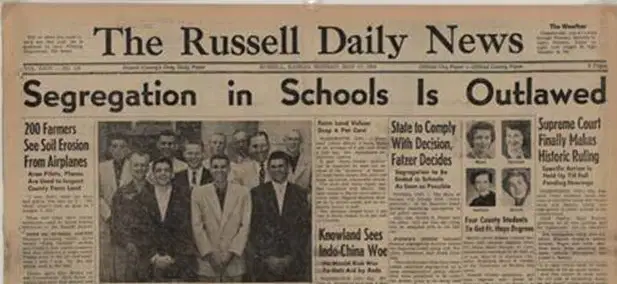
To which court case does this headline refer?
Brown v. Topeka Board of Education
Loving v. Virginia
Heart of Atlanta v. United States
Swann v. Charlotte Mecklenburg Board of Education
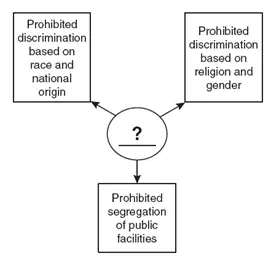
Which of these events best completes this diagram?
Passage of the Civil Rights Act of 1964
Brown v. Board of Education Decision
Passage of the Voting Rights Act of 1965
Bakke v. the California Board of Regents Decision
Which of the following represents a pair of correctly matched ideas and people in the 1960s Civil Rights Movement?
Julian Bond - Black Power
Malcolm X - Non-violent Protest
Martin Luther King, Jr. - Civil Disobedience
Rosa Parks - Conversion to the Nation of Islam
The Civil Rights Act of 1964 made segregation illegal in -
housing
churches
private universities
public accommodations
During the 1963 March on Washington, what speech did Dr. Martin Luther King, Jr. give that inspired participants?
"I've Been to the Mountaintop"
"Birmingham Jail"
"Black Power"
"I Have a Dream"
So the registrar [at the circuit clerk's office] gave me the sixteenth section of the Constitution of Mississippi. He pointed it out in the book and told me to look at it and...interpret what I had read. That was impossible. I had tried to give it, but I didn't even know what it meant, much less interpret it.
— Fannie Lou Hamer
This practice was outlawed with the passage of the —
19th Amendment
15th Amendment
Civil Rights Act of 1964
Voting Rights Act of 1965
The goal of the Montgomery Bus Boycott in 1955 was to protest segregation on city buses by -
advocating further mass protests that would disrupt the city
placing political pressure on the city leaders to outlaw segregation
putting economic pressure on the city bus company
threatening several class-action lawsuits against the city
Which doctrine was overturned by the Supreme Court decision in Brown v. Board of Education?
"Separate but equal"
Due process of law
"All deliberate speed"
Equal protection of the law

Barack Obama first ran for the presidency in 2008 against __________.
Donald Trump and Mike Pence
John McCain and Sarah Palin
Michael Warm and John Cold
Joe Biden and Kamala Harris
Which of the following was the name for President Obama's health program legislation?
Affordable Care Act
Obama's Care Act
Healthy Issuant Act
Progressive Inclusive Health Act
Which of the following was the Obama administration's response to the Great Recession of 2007-2009?
a large tax cut program that included an increase in the child tax credit
a $6 trillion national stimulus package
a $787 billion economic stimulus package that included spending increases and tax cuts
a message to potential homeowners to go ahead and purchase that new home
Where was Obama born?
Hawaii
Alaska
Puerto Rico
Guam

Which state was Barack a senator for?
Idaho
Iowa
Illinois
Indiana
Obama was a _______ BEFORE he was president.
senator
vice=president
judge


