
 Worksheets
Technology Test 4º Eval 2º ESO
Total questions: 40
Worksheet time: 23mins
The technical materials are divided into: woods, metals, plastics, (a) and construction materials. (OPTIONS: stones, textiles, clothes, ferrous, insulators)
What of the following could be consider as main functions of structures
Coat an object to
protect it from climate changes
Withstand forces by maintaining the shape
Save efforts supporting the weight of any object
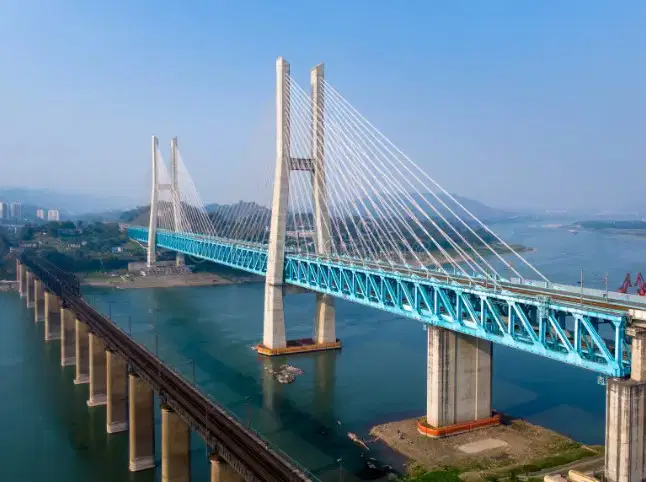
The bridge in the picture is shown:
A mixture of frame and suspension structure
A suspended structure only because blue elements are decoratives
A cable-stayed and suspension structure, at the same time
A good example of mixture of cable-stayed and trussed structure
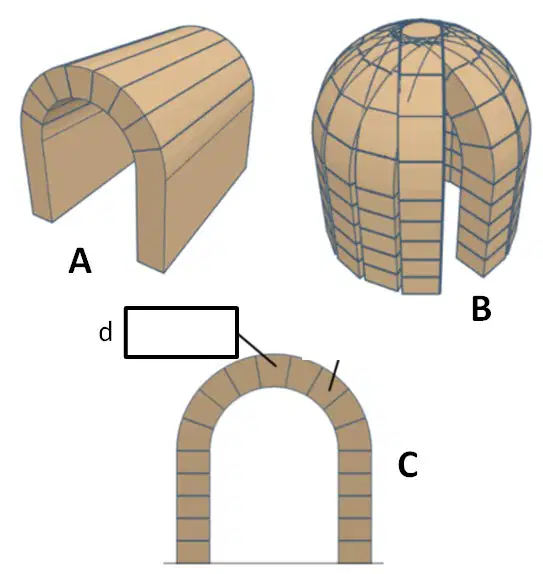
The elements in the picture are:
A) Vault
B) Dome
C) Arch
d) Keystone
A) Arch
B) Damm
C) Vault
d) Voluta
A) Dome
B) Damm
C) Keystone
d) Vault
A) Vault
B) Damm
C) Arch
d) Keystone
Which of the following sentences is not true?
Mass structures are solid but very light
Trabeated structures are constructed with lintels
Arch is a linear element but vault is a superficial one
Trussed structures are formed by triangles
Hardwoods come from deciduous trees, and are ...
very easy to work with, cheap and of uniform quality
more expensive, difficult to work with and better quality-finished
very easy to work with, more expensive and of uniform quality
difficult to work with, cheap and better quality-finished
Trussed structures are formed by bars arranged to form
Triangles
Pentagons
Hexagons
Squares
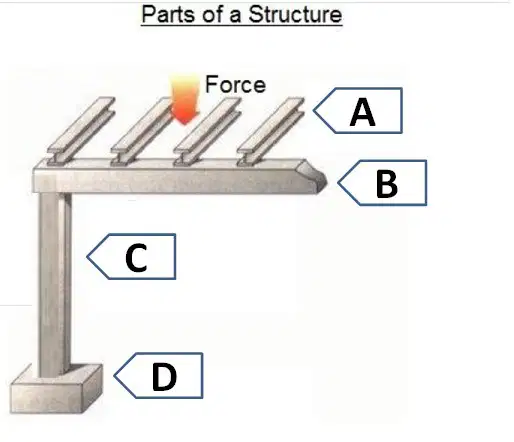
In the attached picture we can identify:
A) Pillar
B) Foundation
C)Joists
D) Beam
A) Foundation
B) Pillar
C) Foundation
D) Joists
A) Beam
B) Joists
C) Pillar
D) Foundation
A) Joists
B) Beam
C) Pillar
D) Foundation
The part of the mineral that we obtain metal from is called ________ and the rest of the mineral is called ______________ (select the correct names in the correct order).
Core
Gague
Care
Gangue
Aure
Gongue
Ore
Gangue
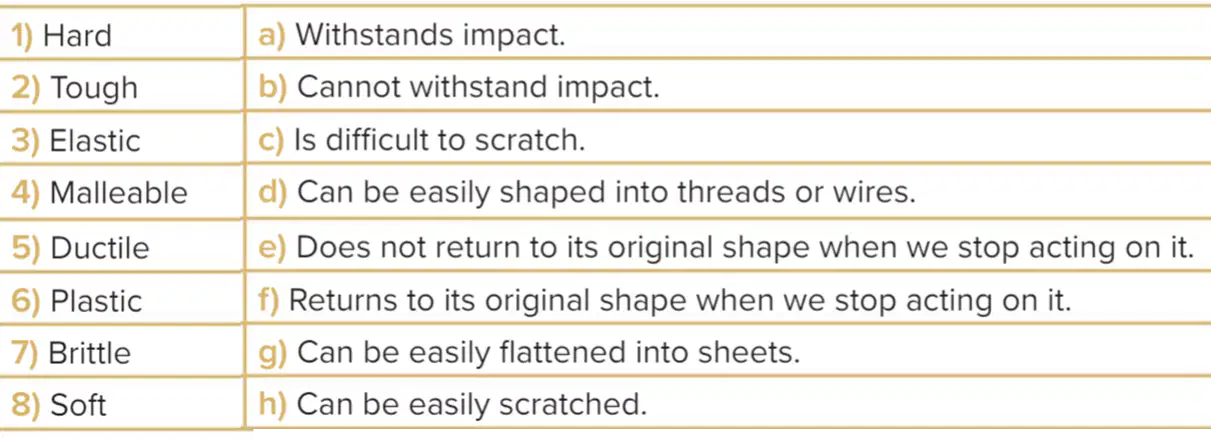
Analyzing the table of the picture (click on it to get a better sight), what couples of letters and numbers are correct?:
1-f, 2-a, 3-c, 4-d, 6-h
1-c, 7-b, 5-d, 4-g, 3-f
1-b, 3-g, 6-h, 5-f, 8-a
4-e, 5-g, 2-a, 7-b, 8-d
Thermal (a) doesn't conduct the heat. (OPTIONS: conductors, fabrics, metals, insulators, devices)
Ferrous metals are formed by iron and small concentration of ...
Copper
Sand
Carbon
Steel
Ductile materials ...
Can be touched easily
Stay in the shape that you put when you stretch them
Shape into threads and wires
Can break easily
Choose the real types of wood.
Plywood
Rankwood
Cidrus
Loftwood
A mixture of two or more metals is called ...
(a)
Select a ferrous metal.
Aluminium
Copper
Steel
Titanium
What is a property of metals?
Good conductors of electricity and heat
They are not malleable or ductile
They are liquid at room temperature
Poor conductors of electricity and heat
Why is it important to recycle materials?
It is important to recycle materials to reduce waste, conserve natural resources, and decrease pollution.
It is important to recycle materials to generate more waste and harm the environment.
It is important to recycle materials to reduce the production of the factories manufacturing new ones.
It is important to recycle materials to increase pollution and deplete natural resources.
What is a property of wood?
Is a radioactive material
Is a natural and renewable material
Is a metallic material
Is a synthetic material
What material is a good conductor?
Wood
Glass
Pottery
Metal
What material is the most flexible?
Glass
Pottery
Diamond
Textiles

Wood is a good conductor of heat and electricity.
true
false


Gears transfer _______________ from one place to another.
effort
electricity
movement
water
In a lever, the force that generates the movement is called the...
pulley
gear
effort
fulcrum
We can classify the lever in...
Group 1, 2 and 3
One, two and three bars
First, second and third class
Team 1, 2 and 3

What is the class of this lever?
First class
This is not a lever
Third class
Second class

Select the true options
Left pulley goes faster than right one
Its name is chain drive
the sense of rotation remains the same
All answers are true

The effort to apply to lift the 60kg load is:
120 kg
30 kg
60 kg
15 kg
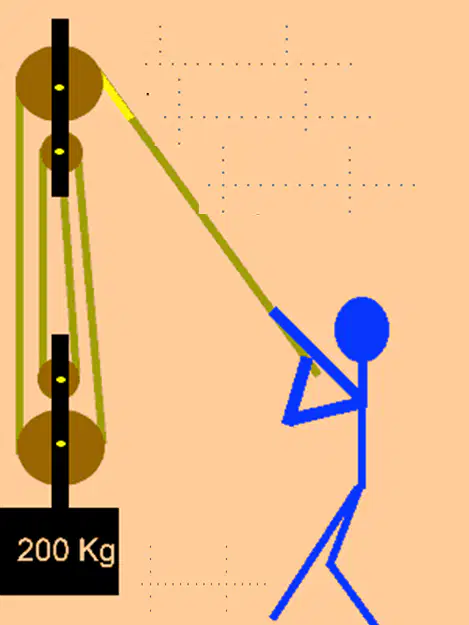
In the attached system, how many ropes must we pull to lift the weight one meter?
One meter
Two meters
Three meters
Four meters
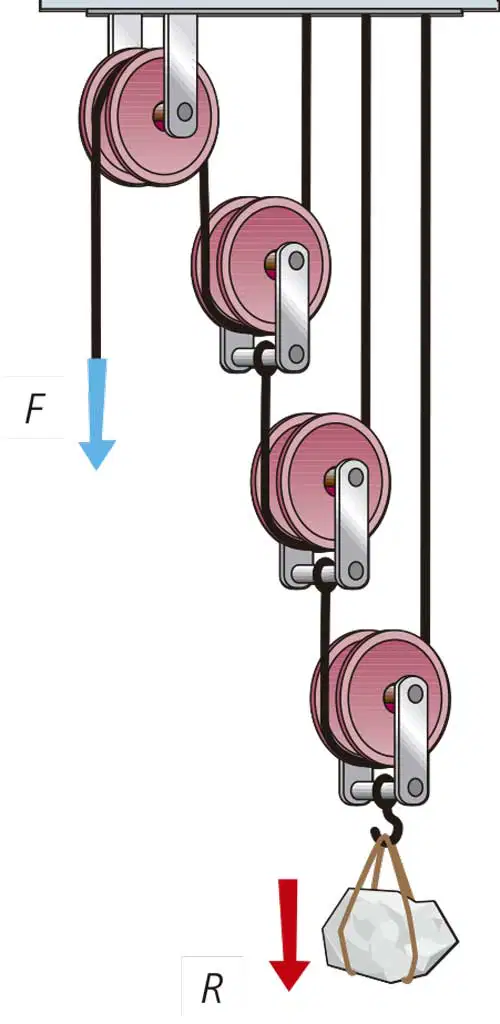
In the attached figure, If R = 200 kg, what must be F?
100 kg
50 kg
200 kg
25 kg
20 kg

Considering the rotation sense of the driver gear A,
The box cover will be opened
The box cover will be closed
There will not be any movement of the cover
Rotation sense must be changed to get any movement
Electric current is...
a) The flow of protons from one atom to another
b) The flow of electrons inside an insulating material
c) The flow of electrons inside a conductive material
d) The flow of protons from one atom to another inside a conductive material
Select the option that states Ohm’s law correctly:
a) V = I × R
b) V = I / R
c) I = V × R
d) R = V × I
There are four main components in a electric circuit:
cells, batteries, resistors and motors
power sources, load devices, conductors and control devices
lamps, switches, resistors and conductors
conductors, resistors, power sources and wires
Power sources:
supply the electrical energy in order to move the electrons
collect and keep the electrical energy from the circuit
change the flowing sense of the electric current
create a difference of voltage in the contro ldevices of a circuit

In the attached circuit, the equivalent resistance is:
4 ohms
3 ohms
2 ohms
6 ohms

In the attached circuit, the equivalent resistance is:
250 ohms
150 ohms
50 ohms
225 ohms

