
 Worksheets
2022 Copy of Copy of Chemistry Final Exam
Total questions: 67
Worksheet time: 34mins
Name
Class
Date
1.
when we graph data which variable goes on the x axis
a)
dependent
b)
independent
2.
Which describes the octet rule?
a)
atoms want 10 electrons total
b)
atoms want 8 valence electrons
c)
atoms want 8 inner electrons
d)
atoms want 0 valence electrons
3.
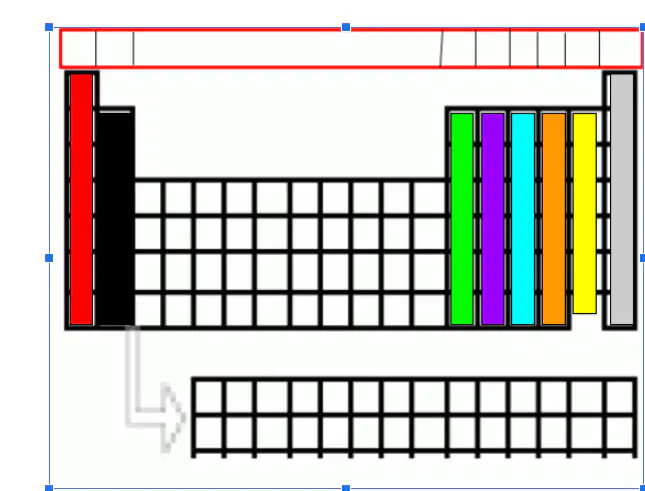
The element in the red column all have
a)
2 valence electrons and a +2 charge when loosing electrons
b)
1 valence electrons and a +1 charge when loosing electrons
c)
7 valence electrons and a -1 charge when gaining electrons
d)
8 valence electrons and 0 charge because they neither gain or loose electrons
4.
Because Calcium is in the same family as Magnesium they will behave similarly because they have the same
a)
# of protons
b)
# of valence electrons
c)
# of neutrons
d)
This is false they have nothing in common
5.
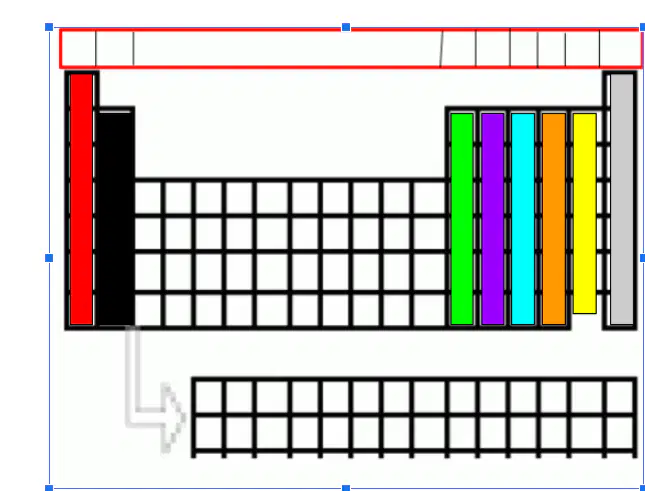
The element in the yellow column all have
a)
2 valence electrons and a +2 charge when loosing electrons
b)
1 valence electrons and a +1 charge when loosing electrons
c)
7 valence electrons and a -1 charge when gaining electrons
d)
8 valence electrons and 0 charge because they neither gain or loose electrons
6.
Which group has the independent variable in it that you are testing?
a)
Control group
b)
Experimental group
7.

What variables can affect how a gas behaves?
a)
Temperature
b)
Pressure
c)
Volume
d)
All 3 affect gases
8.
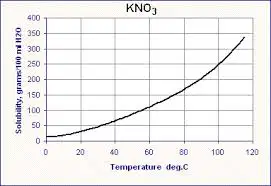
What is the relationship in this graph
a)
as the temperature increases the solubility also increases
b)
as the temperature increases the time also increases
c)
as time increases the solubility also increases
d)
as time decreases the solubility decreases
9.
How many moles are present in 5 grams of NaCl record your answer to 2 decimal places
(a)
10.
This is identified as the reactant that determines the maximum amount of product that can be formed
a)
Excess reactant
b)
limiting reactant
c)
percent composition
d)
empirical formula
11.
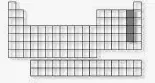
a)
noble gases
b)
halogens
c)
carbon family
d)
silicon family
12.
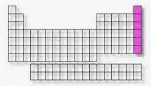
a)
noble gases
b)
halogens
c)
carbon family
d)
silicon family
13.
metals go
a)
on the right of the table
b)
on the left of the table
14.
Families go
a)
across the table
b)
up and down on the table
15.
Nonmetals are on the
a)
Left side
b)
right side
16.
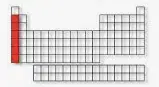
a)
alkali metals
b)
alkaline earth metals
c)
transition metals
d)
semiconductors
17.
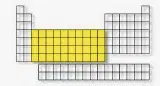
a)
alkali metals
b)
alkaline earth metals
c)
transition metals
d)
semiconductors
18.
A syringe containing 2.50 mL of gas at 2.00 atm would be the new volume at a pressure of 6.00 atm?
a)
0.833 mL
b)
1.20 mL
c)
5.50 mL
d)
7.50 L
19.
A gas at 403K occupies 8.44L. At constant pressure, what will the new temperature be if the second volume is 7.74L?
a)
436 K
b)
302 K
c)
245 K
d)
370 K
20.
Boyle's Law states
a)
if you increase pressure you increase volume
b)
if you increase pressure you decrease volume
c)
if you decrease pressure you decrease volume
d)
volume and pressure are directly proportional
21.
Charles Law states
a)
if we increase temperature we increase volume
b)
if we increase temperature we decrease volume
c)
if we increase volume we increase pressure
d)
temperature and volume are indirectly proportional
22.
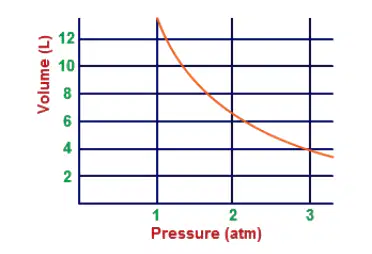
At a pressure of 3 atmospheres, what is it the volume of the gas?
a)
2 L
b)
4 L
c)
6 L
d)
8 L
23.
If electrons in an atom have the lowest possible energies, the atom is in the
a)
excited state
b)
ground state
24.
The part of the atom where the electrons CANNOT be found is the
a)
area surrounding the nucleus.
b)
electron cloud
c)
orbitals
d)
nucleus
25.
The p orbitals are shaped like
a)
dumb bells
b)
spheres
c)
circles
d)
ovals
26.
How many electrons can occupy the s orbitals at each energy level?
a)
two, if they have opposite spins
b)
two, if they have the same spins
c)
only 1
d)
more than 2
27.
Which of the following rules requires that each of the electrons in an orbital all must fill by facing upwards first before the second electron can fill facing downward spins?
a)
Aufbau
b)
Hund's Rule
c)
Pauli Exclusion Principle
28.
The electron configuration for aluminum (atomic number 13) is
a)
1s2 2s2 2p3 3s2 3p3 3d1
b)
1s2 2s2 2p6 3s2 2d1.
c)
1s2 2s2 2p6 3s2 3p1
d)
1s2 2s2 2p9
29.

The coefficients of the balanced chemical equation are:
a)
1,2,1,2
b)
2,1,2,1
c)
2,4,3,4
d)
1,2,3,4
30.

The coefficients of the balanced chemical equation are:
a)
1,2,1,2
b)
1,1,2,1
c)
balanced
d)
1,2,3,4
31.

What type of reaction is below
a)
Single Discplacement
b)
Double Discplacement
c)
Synthesis
d)
Decomposition
32.

What type of reaction is below
a)
Single Discplacement
b)
Double Discplacement
c)
Synthesis
d)
Decomposition
33.
What does a subscript tell us
a)
# of atoms
b)
# of moles or molecules
34.
What does a coefficient tell us
a)
# of atoms
b)
# of moles or molecules
35.
Which word means to build a compound from two elements
a)
Single Displacement
b)
Double Displacement
c)
Synthesis
d)
Decomposition
36.
Which word means to break a compound down into its elements
a)
Single Displacement
b)
Double Displacement
c)
Synthesis
d)
Decomposition
37.
When element reacts with a compound and takes the place of another element in that compound.
a)
Single Displacement
b)
Double Displacement
c)
Synthesis
d)
Decomposition
38.
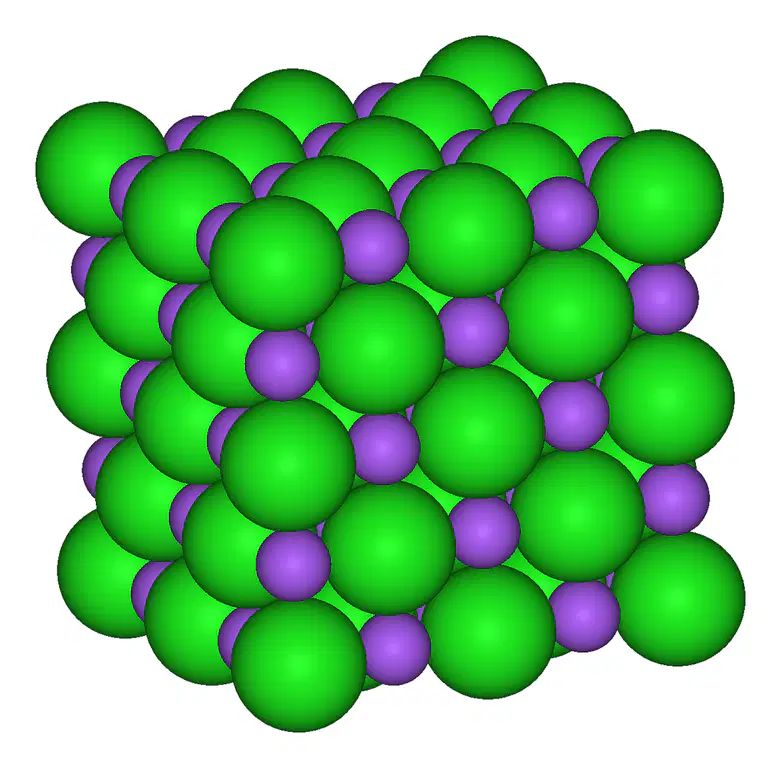
Firm and stable in shape, not liquid or fluid
a)
gas
b)
vapor
c)
solid
d)
plasma
39.
name
4 lines
40.
Who was responsible for the first idea that all matter is made up of tiny particles?
a)
Democritus and Dalton
b)
Niels Bohr
c)
JJ Thompson
d)
Ernest Rutherford
41.
Who was responsible for using a cathode ray to determine the presence of the electron and gave us the plum pudding theory?
a)
Democritus and Dalton
b)
Niels Bohr
c)
JJ Thompson
d)
Ernest Rutherford
42.
Who gave us the planetary model of the atom where electrons orbit the nucleus?
a)
Democritus and Dalton
b)
Niels Bohr
c)
JJ Thompson
d)
Ernest Rutherford
43.
The atomic nucleus is composed of
a)
protons
b)
electrons
c)
neutrons
d)
both protons and neutrons
44.
Order these elements from LEAST to GREATEST atomic mass.
a)
Li, He, N, S
b)
He, Li, N, S
c)
N, He, Li, S
d)
S, N, Li, He
45.
Which is a property of a proton?
a)
o charge
b)
+1 charge
c)
-1 Charge
46.
Which is a property of a neutron?
a)
o charge
b)
+1 charge
c)
-1 Charge
47.
Which is a property of a electron?
a)
o charge
b)
+1 charge
c)
-1 Charge
48.
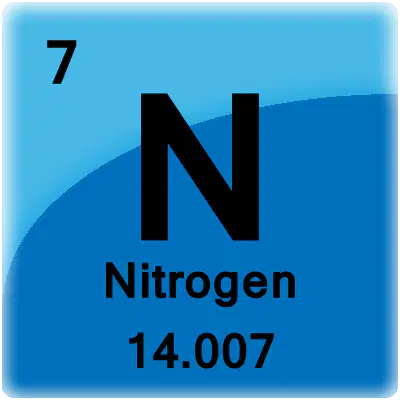
Examine the block from the periodic table for the element nitrogen, chemical symbol N. Using your knowledge of the periodic table, which of these statements is correct about nitrogen?
a)
All nitorgen atoms have 7 protons
b)
the mass number of nitrogen is 21
c)
all nitrogen atoms have 14 protons
d)
nitrogen atoms have more protons than fluorine atoms
49.
In an electrically stable atom of any element, there are equal numbers of
a)
protons and neutrons
b)
electrons and protons
c)
electrons and neutrons
d)
atomic number and mass number
50.
Identify the charge on an ion that has 6 protons, 5 neutrons, and 8 electrons.
a)
+1
b)
+2
c)
-1
d)
-2
51.
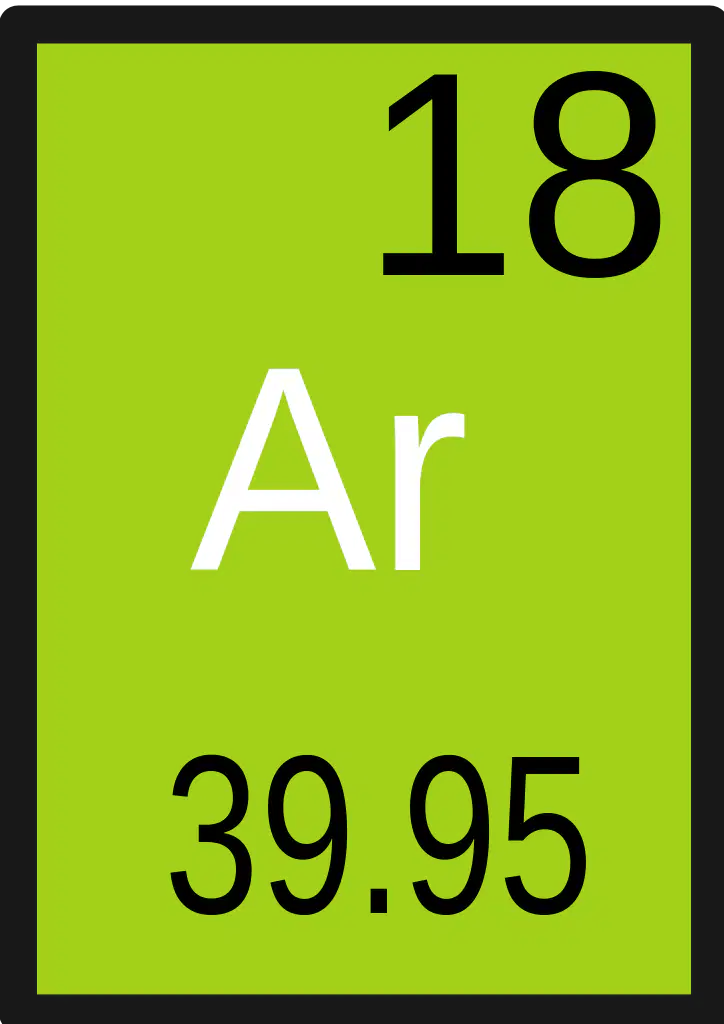
Determine the number of protons in Argon.
a)
40
b)
39
c)
18
d)
21
52.
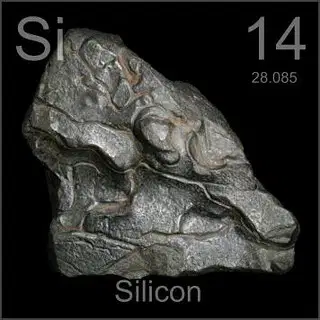
Determine the number of electrons in Silicon (Si)
a)
14
b)
28
c)
42
d)
28.086
53.
What is the one thing that makes one element different from another element?
a)
atomic mass
b)
# of neutrons
c)
# of electrons
d)
# of protons
54.
Is an ion that has a positive charge because it has lost its electrons.
a)
cation
b)
anion
c)
isotopes
d)
nonion
55.
Due to the law of conservation of mass how much product would be produced in the following reaction? C + O → CO If I have 10 Grams of Carbon and add them to 15 Grams of Oxygen how much CO would be produced?
a)
5 grams
b)
10 grams
c)
150 grams
d)
25 grams
56.
Matter is anything that
a)
has mass
b)
has volume
c)
has neither mass or volume
d)
has both mass and volume
57.
Properties that can be observed or measured without changing the samples composition.
a)
Chemical properties
b)
physical properties
58.
A block of aluminum occupies a volume of 15.0 mL and weighs 40.5 g.What is its density? Record answer to the nearest tenths
4 lines
59.
Which of these is a physical property
a)
reactivity
b)
neutralization
c)
density
d)
corrosion and rusting
60.
which of the following are chemical properties
a)
color
b)
odor
c)
hardness
d)
reactivity
61.
An example of a physical change
a)
sublimation
b)
burning
c)
corroding
d)
rusting
62.
Changing that takes one or more substance and turns it into a new substance with different properties.
a)
physical change
b)
chemical change
63.
Which of the following are chemical changes
a)
melting
b)
freezing
c)
burning
d)
boiling
64.

Does not decompose into simpler parts. Examples are Iron, Gold, Silver, Oxygen.
a)
element
b)
compound
c)
mixture
65.
Two or more substances chemically combined and can be broken down into the elements that make them up.
a)
element
b)
compound
c)
mixture
66.

Well mixed or the same throughout. Examples salt water and Kool-Aid
a)
Pure Substance
b)
Homogeneous Mixture
c)
Heterogeneous Mixture
67.

Not well mixed, so you can see the different parts that make it up.
a)
Pure Substance
b)
Homogeneous Mixture
c)
Heterogeneous Mixture
100 %

