
 Worksheets
Optical instruments
Total questions: 151
Worksheet time: 2hrs 47mins
To increase the angular magnification of a simple microscope, one should increase:
the focal length of the lens
the power of the lens
the aperture of the lens
the object size
An optical instrument used for magnification has power 25 D of objective and 20 D of eyepiece. Whether it is a microscope or a telescope?
Microscope
Telescope
The eyepiece of an astronomical telescope has a focal length of 10 cm. The telescope is focused for normal vision of distant objects when the tube length is 1 m. The focal length of the objective is:
20 cm
10 cm
90 cm
100 cm
If the focal length of the objective lens is increased then,
Magnifying power of microscope will increase but that of telescope will decrease
Magnifying power of microscope and telescope both will increase
Magnifying power of microscope and telescope both will decrease
Magnifying power of microscope will decrease but that of telescope will increase
The magnification produced by the objective lens and the eye lens of a compound microscope are 25 and 6 respectively. The magnifying power of this microscope is:
19
31
150
120
The objective of a compound microscope is essentially:
A concave lens of small focal length and small aperture
Convex lens of small focal length and large aperture
Convex lens of large focal length and large aperture
Convex lens of small focal length and small aperture
A compound microscope has two lenses. The magnifying power of one is 5 and the combined magnifying power is 100. The magnifying power of the other lens is:
10
20
50
25
We make the approximation that ...
Light rays from the object are parallel at the telescope
Light rays are coming from at least 1 parsec away
Light rays are not affected by Earth's atmosphere
Light rays will form a perfect image on our screen
For angular magnification we use the equation
=fofe
=fefo
=β2α
=α2β
A Cassegrain telescope uses how many mirrors and lenses
2 mirrors and 1 lens
3 mirrors and 1 lens
2 mirrors and 2 lenses
2 mirrors and no lenses
Some of discoveries made by my lenses were: irregularity of the Moon’s surface and the four largest Jupiter’s moons.
Who am I?
Telescope
Microscope
Binoculars
I am a simple manual optical instrument that students use in Science class to be able to observe small things they don't see well such as insects in the garden. Who am I?
Glasses
Camera
Magnifying glass
Without my lenses, scientists would never be able to find out about the Sun and the Solar system.
Who am I?
Camera
Magnifyng glass
Telescope
I have lenses that help children to see better. Who am I?
Camera
Magnifyng glass
Glasses
My lenses help to correct some vision problems like myopia, the astigmatism and hyperopia.
Who am I?
Binoculars
Glasses
Telescope
My lenses help to correct some vision problems that cause headaches, blurred vision and discomfort due to visual effort.
Who am I?
Glasses
Camera
Microscope
My lenses protect the eyes by reducing the range of artificial light that is harmful for vision.
Who am I?
Magnifyng glass
Glasses
Microscope
I have a set of lenses that allows scientists to study and observe the Universe and the Galaxy where we live.
Who am I?
Telescope
Binoculars
Microscope
My lenses allow us to know the world of microorganisms and many disease-causing agents.
Who am I?
Microscope
Camera
Telescope
I have lenses that help people to read newspapers, magazines and see well.
Who am I?
Telescope
Glasses
Camera
Through my lenses, it is possible to record important moments in people's lives.
Who am I?
Magniyng glass
Binoculars
Camera
I am the instrument used by detectives to see the clues better and to solve the mystery.
Who am I?
Telescope
Microscope
Magnifying glass
Through my lenses, people can register and record cultural events.
Who am I?
Binoculars
Telescope
Camera
Some people like using me to enjoy a Safari in Africa, because they can see details of the animals at long distances.
Who am I?
Camera
Binoculars
Glasses
Some people use my lenses to work recording other people, landscapes and objects.
Who am I?
Camera
Binoculars
Glasses
Through my lenses, scientists were able to observe microorganisms and could develop the antibiotics that fight many diseases. Who am I?
Binoculars
Microscope
Telescope
Through my lenses, it is possible to see the colors and the beak’s size of some birds in the forest.
Who am I?
Camera
Binoculars
Glasses
The angular magnification of a system is less than one. Does it mean that the image formed is inverted?
Yes
No
To increase the angular magnification of a simple microscope, one should increase:
the focal length of the lens
the power of the lens
the aperture of the lens
the object size
An optical instrument used for magnification has power 25 D of objective and 20 D of eyepiece. Whether it is a microscope or a telescope?
Microscope
Telescope
The eyepiece of an astronomical telescope has a focal length of 10 cm. The telescope is focused for normal vision of distant objects when the tube length is 1 m. The focal length of the objective is:
20 cm
10 cm
90 cm
100 cm
The magnifying power of an astronomical telescope is 8 and the distance between the two lenses is 54 cm. The focal length of eye lens and objective lens will be respectively:
6 cm and 48 cm
48 cm and 6 cm
8 cm and 64 cm
64 cm and 8 cm
Finger prints are observed by the use of :
Telescope
Microscope
Newtonian telescope
Concave lens
If the focal length of the objective lens is increased then,
Magnifying power of microscope will increase but that of telescope will decrease
Magnifying power of microscope and telescope both will increase
Magnifying power of microscope and telescope both will decrease
Magnifying power of microscope will decrease but that of telescope will increase
The magnification produced by the objective lens and the eye lens of a compound microscope are 25 and 6 respectively. The magnifying power of this microscope is:
19
31
150
120
The objective of a compound microscope is essentially:
A concave lens of small focal length and small aperture
Convex lens of small focal length and large aperture
Convex lens of large focal length and large aperture
Convex lens of small focal length and small aperture
A compound microscope has two lenses. The magnifying power of one is 5 and the combined magnifying power is 100. The magnifying power of the other lens is:
10
20
50
25
What type of mirror does a periscope use?
Plane mirror
Diverging mirror
Convex mirror
Concave mirror
What is the main purpose of a dental mirror?
To illuminate surfaces
To create patterns
To check for cavities
To reflect light
What type of mirror is used in headlights and flashlights?
Diverging mirror
Concave mirror
Convex mirror
Plane mirror
What do side mirrors in vehicles do?
Make objects appear smaller
Make objects appear farther
Make objects appear larger
Make objects appear closer
What is the main function of a microscope?
To illuminate surfaces
To capture images
To magnify small objects
To reflect light
What is the primary purpose of a camera?
To magnify objects
To capture and record images
To view distant objects
To reflect light
What is the main function of a telescope?
To illuminate surfaces
To capture images
To view distant objects
To magnify small objects
What is the purpose of binoculars?
To magnify small objects
To capture images
To illuminate surfaces
To view distant objects
What type of lens does a magnifying glass consist of?
Diverging lens
Plane lens
Convex lens
Concave lens
What do eyeglasses and contact lenses work to correct?
Peripheral vision
Problems with vision
Depth perception
Color vision
What is the main function of a kaleidoscope?
To capture images
To reflect light
To create patterns
To magnify small objects
What type of mirror does a dental mirror use?
Diverging mirror
Plane mirror
Convex mirror
Concave mirror
What is the main function of a periscope?
To capture images
To view distant objects
To magnify small objects
To reflect light
What is the main purpose of a solar cooker?
To capture images
To reflect light
To cook food
To magnify small objects
What type of lens is used in a microscope?
Concave lens
Convex lens
Plane lens
Diverging lens
The eyepiece of an astronomical telescope has a focal length of 10 cm. The telescope is focused for normal vision of distant objects when the tube length is 1 m. The focal length of the objective is:
20 cm
10 cm
90 cm
100 cm
Finger prints are observed by the use of :
Telescope
Microscope
Newtonian telescope
Concave lens
The magnification produced by the objective lens and the eye lens of a compound microscope are 25 and 6 respectively. The magnifying power of this microscope is:
19
31
150
120
A compound microscope has two lenses. The magnifying power of one is 5 and the combined magnifying power is 100. The magnifying power of the other lens is:
10
20
50
25
Some of discoveries made by my lenses were: irregularity of the Moon’s surface and the four largest Jupiter’s moons.
Who am I?
Telescope
Microscope
Binoculars
I am a simple manual optical instrument that students use in Science class to be able to observe small things they don't see well such as insects in the garden. Who am I?
Glasses
Camera
Magnifying glass
Without my lenses, scientists would never be able to find out about the Sun and the Solar system.
Who am I?
Camera
Magnifyng glass
Telescope
I have lenses that help children to see better. Who am I?
Camera
Magnifyng glass
Glasses
My lenses help to correct some vision problems like myopia, the astigmatism and hyperopia.
Who am I?
Binoculars
Glasses
Telescope
Some people like using me to enjoy a Safari in Africa, because they can see details of the animals at long distances.
Who am I?
Camera
Binoculars
Glasses
What type of lens is used to make a magnifying glass?
Convex
Concave
Mirror
Prism
What type of lens is used in a microscope and a telescope?
Concave
Convex
One concave and one convex
Two convex lenses
What is the main goal of an LCD projector?
display images onto screens or walls
control the way energized atoms release photons.
make very distant objects visible
make a chemical record of the pattern of light onto film.

The lens used in camera is _______ and the image formed is ________, _______ and smaller than the object
convex - real - inverted
convex - virtual - erect
concave - virtual - erect
concave - real - inverted
Which of the following can form an enlarged image?
Convex mirror
Plane mirror
Convex lens
Concave lens
An eye defect which can be corrected using a concave lens is the
Retina
Farsightedness
Optic nerve
Nearsightedness


What is a cataract?
Shortening of the eyeball
Cornea has too little curvature
Double vision
Clouding of the lens
Following controls and regulates the amount of light entering the eye
Iris
Pupil
Retina
Corena
What is the near point of a normal human eye?
25 cm
Infinity
-25 cm
How can hypermetropia be corrected?
By using concave lens
By using convex lens
By using bifocal lens
How can near sightedness be corrected?
Using concave lens
Using convex lens
Using bifocal lens
What is myopia?
Near Sightedness
Far sightedness

Q. This part of the eye carries the message from your eye to the part of your brain that controls vision.
Cornea
Optic Nerve
Retina
Pupil
Q. The vitreous humor is a liquid inside of your eye. When light passes from the lens into the vitreous, the light changes medium. What happens to light because of this medium change?
Light is transmitted.
Light is reflected.
Light is refracted.
Light is absorbed.
Q. Where is rods and cones are located in our eyes?
Retina
Nervous
Cornea
Optic nerve

What does a projector use to show the picture on the screen?
Light
Air
Power
What changes the small pictures into bigger pictures to shine on the screen?
A lens
A switch
A bulb
The light bulb in the projector gets very hot.
True
False
If we adjust the lens , what does it do to the picture on the screen?
It will focus the picture
It will make the picture bigger
It will make the picture move faster
What is a projector?
It changes small pictures into bigger pictures onto a screen
It changes big pictures into smaller pictures onto a screen
What is myopia?
Near Sightedness
Far sightedness
How can hypermetropia be corrected?
By using concave lens
By using convex lens
By using bifocal lens
The ability of our eyes to adjust its focal length is called
Aperture
Power of accomodation
Adjustment
Bifocal lens is used to correct this defect.
Myopia
Hypermetropia
Cataract
Presbyopia

What type of lens do you have in your eye?
Concave
Prismatic
Objective
Convex


Which kind of eye defect is this?
short sighted
long sighted
normal sighted
What is myopia?
Near Sightedness
Far sightedness
What is the near point of a normal human eye?
25 cm
Infinity
-25 cm
What is myopia?
Near Sightedness
Far sightedness
How can near sightedness be corrected?
Using concave lens
Using convex lens
Using bifocal lens
How can hypermetropia be corrected?
By using concave lens
By using convex lens
By using bifocal lens
Cause of myopia. (More than one answer)
Large focal length
Small focal length
Low power
High power
Cause of hypermetropia (More than one answer)
Large focal length
Small focal length
Low power
High power
The ability of our eyes to adjust its focal length is called
Aperture
Power of accomodation
Adjustment
The far point of human eye is
25 cm
Infinity
10,00,000 cm
A child is not able to read letters in the book clearly and has to keep the book far away to read it clearly. The child is suffering from
Myopia
Hypermetropia
Presbyopia
A child is not able to read letters in the book clearly and has to keep the book far away to read it clearly. In this defect, the image is formed
In front of retina
On the retina
Behind the retina
This defect is caused due to elongation of eye ball.
Myopia
Hypermetropia
Presbyopia
Bifocal lens is used to correct this defect.
Myopia
Hypermetropia
Cataract
Presbyopia
This problem arises due to foggy or cloudy lens .
presbyopia
myopia
cataract
hypermetropia
An image is formed on
Iris
Pupil
Retina
Cornea
To see an object comfortably and distinctly, we must hold it about _______ cm from our eyes.
10
25
15
infinity
Following is true for Hypermetropia
It can be corrected by using a convex lens
It may arise when focal length of eye lens is too long
it may arise when eyeball has become too small
all of above
Who is famous for inventing the telescope (even though he didn't really invent it)?
Galileo
James Webb
Newton
Hubble
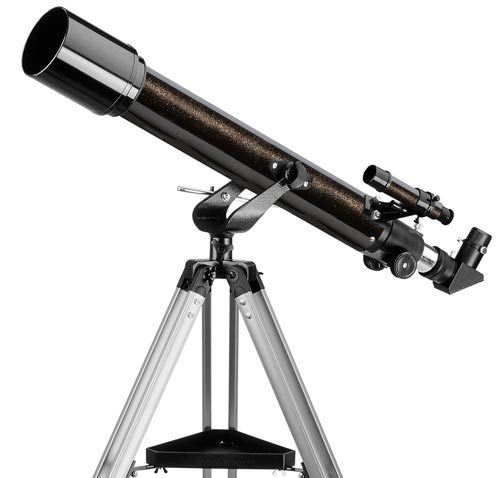
A refracting telescope uses _______ to focus light.
Lenses
Mirrors
Lasers
Water


The main advantage of using orbital observatories like the Hubble Space Telescope is that __________.
they are easier to use than land-based telescopes.
they are cheaper to build than land-based telescopes.
they can look anywhere in the universe at any time.
they avoid the distortion and absorption of electromagnetic waves by the atmosphere.
The angular magnification of a system is less than one. Does it mean that the image formed is inverted?
Yes
No
To increase the angular magnification of a simple microscope, one should increase:
the focal length of the lens
the power of the lens
the aperture of the lens
the object size
An optical instrument used for magnification has power 25 D of objective and 20 D of eyepiece. Whether it is a microscope or a telescope?
Microscope
Telescope
Finger prints are observed by the use of :
Telescope
Microscope
Newtonian telescope
Concave lens
The magnification produced by the objective lens and the eye lens of a compound microscope are 25 and 6 respectively. The magnifying power of this microscope is:
19
31
150
120
The objective of a compound microscope is essentially:
A concave lens of small focal length and small aperture
Convex lens of small focal length and large aperture
Convex lens of large focal length and large aperture
Convex lens of small focal length and small aperture
A compound microscope has two lenses. The magnifying power of one is 5 and the combined magnifying power is 100. The magnifying power of the other lens is:
10
20
50
25
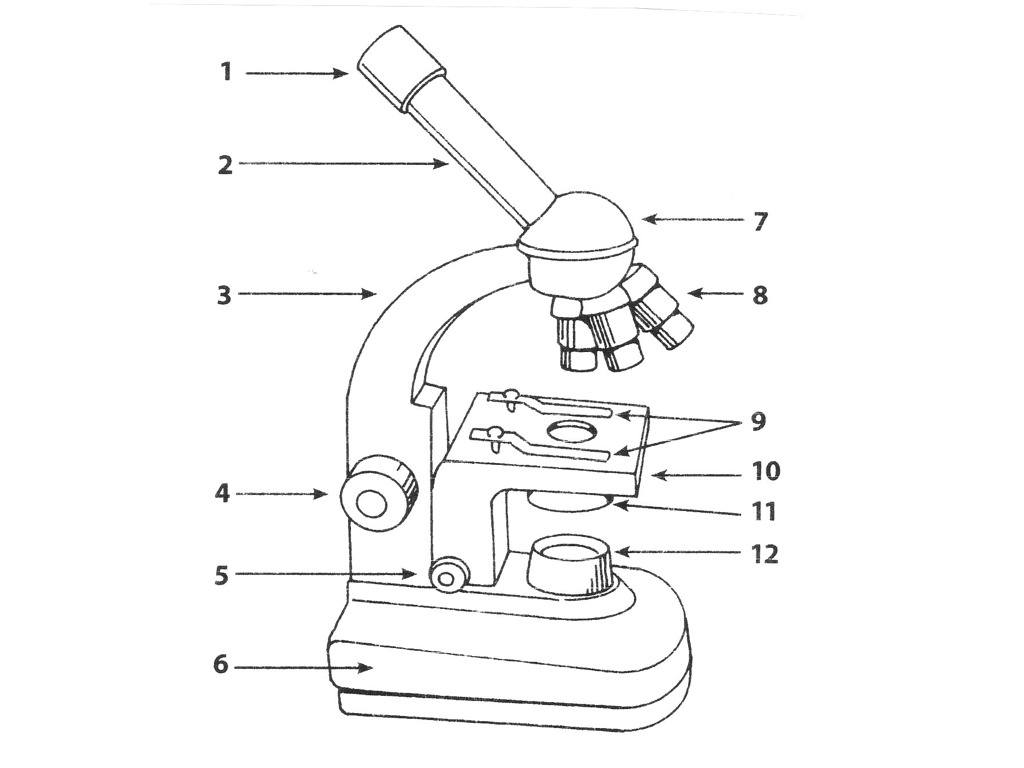
The formula of total magnification (MT) is the product of
magnification of the eyepiece (ME) and
magnification of the objective lenses (MO) like LPO, MPO, or HPO. Which equation represents the
statement?
MT = ME X MO
MT = ME + MO
MT = ME- MO
MT = ME/MO

What is the purpose of this button?
ON/OFF
YES/NO
OPEN/CLOSE
LIKE/UNLIKE

True/False: A remote control used to operate another device from a distance.
True
False

Which button was used to input the display cable each time the presentation started?
ENTER
SOURCE
LENS
MANU
Cables are used to connect PCs to projectors.
VGA
DVI
Display port cable
HDMI

_____ used to show on different screens at the same time.
PC screen only
Duplicate
Extend
Second screen only
Choose the correct of meaning about: Print preview
It is a function that lets users see the pages before to print,
It is a function that lets users to print the letter in both side.

What happens when you use this function?
Print double sided
Print preview
Printing Test Pages
Page Setup
Pick the 3 correct answers: What do you do before printing?
Print preview
Printing Test Pages
Page Setup
Print Only one side

True or false: Page Setup is used to set up the printer's tools.
True
False

