
 Worksheets
Chapter 10: Light Reflection and Refraction
Total questions: 150
Worksheet time: 2hrs 31mins
What letter is used to represent refractive index?
c
n
v
θ
What letter is used to represent the speed of light?
c
n
v
θ
What is a line drawn at 90° to a surface called?
incident ray
normal line
refracted ray
tangent
What causes refraction?
A change in frequency of a wave.
A change in amplitude of a wave
A change in speed of a wave.
A change in phase of a wave.
What direction does the ray bend when entering a more optically dense material, where the wave travels more slowly?
Towards the normal.
Away from the normal.
No change.
Answer is not listed above.
A beam of light strikes a glass block with refractive index of 1.52, at an angle of 5°, what is the angle of refraction?
7.51
0.087
0.13
3.29
What is the angle of incidence on a glass block with refractive index 1.52 if the angle of refraction is 32°?
52.6
20.7
32.0
74.3
What is the refractive index of air?
1.5
1.2
0.5
1.0
Which is the correct equation for refractive index?
n = v /c
n = v × c
n = c / v
n = c v
Which of the following is true about a wave that has been refracted?
The speed and frequency changes, but the wavelength stays the same.
The speed and wavelength changes, but the frequency stays the same.
The wavelength and frequency changes, but the speed stays the same.
The speed and frequency changes, but the amplitude stays the same.
What is the speed of light in water of refractive index 1.33?
3.0×10⁸m/s
2.0×10⁸m/s
2.3×10⁸m/s
3.9×10⁸m/s
Which of the following is true?
When light travels from a vacuum into glass it speeds up.
When light travels from a vacuum into glass it bends away from the normal.
When light travels from a vacuum into glass the frequency decreases.
When light travels from a vacuum into glass the wavelength decreases.
Which of the following is a correct representation of snell's law?
n1sinθ2=n2sinθ1
n1sinθ1=n2sinθ2
n2sinθ1=n1sinθ2
n1/sinθ1=n2/sinθ2
flint glass n=1.70
barium glass n=1.60
crown glass n=1.523
water n=1.33
diamond n=2.45

Based on the image, which medium has a larger index of refraction?
Medium 1 has a larger index of refraction.
Medium 2 has a larger index of refraction.
Both mediums have the same index of refraction.
Cannot be determined.

Based on the image, as light passes from medium 1 to medium 2
light speeds up and bends towards the normal
light speeds up and bends away from the normal
light slows down and bends towards the normal
light slows down and bends away from the normal
When light falls on a smooth polished surface, most of it
is reflected in the same direction
is reflected in different directions
is scattered
is refracted into the second medium

A student does the experiment on tracing the path of a ray of light passing through a rectangular glass slab for different angles of incidence. He can get a correct measure of the angle of incidence and the angle of emergence by following the labelling indicated in figure:
I
II
III
IV
If the image is formed in front of the mirror, then the image distance will be
positive or negative depending on the size of the object
positive
negative
neither positive nor negative
When the object is placed between f and 2f of a convex lens, the image formed is
at f
at 2f
beyond 2f
between O and f
A spherical mirror and a spherical lens each have a focal length of -10 cm. The mirror and the lens are likely to be
the mirror is convex and the lens is concave
the mirror is concave and the lens is convex
both convex
both concave
Focal length of a concave mirror is
negative
positive
depends on the position of object
depends on the position of image
The image formed by a convex lens can be
virtual image is not formed
virtual and of same size
virtual and diminished
virtual and magnified
If an incident ray passes through the focus, the reflected ray will
pass through the pole
be parallel to the principal axis
retrace its path
pass through the center of curvature
The speed of light in vacuum is
3×10⁸m/s
2.8×10⁸m/s
3×10⁷m/s
3×10⁹m/s
Power of a lens is the ………. of its focal length.
value
reciprocal
2 times
half
Image formed by reflection from a plane mirror is
real and inverted
virtual and erect
real and erect
virtual and inverted
Magnifying power of a concave lens is
can have any value
always = 1
always < 1
always > 1
A point object is placed at a distance of 20 cm from a convex mirror of focal length 20 cm. The image will form at:
at infinity
at focus
at the pole
behind the mirror
If the power of a lens is – 2 D, what is its focal length?
+50 cm
-50 cm
-100 cm
+100 cm
If the magnification produced by a lens has a negative value, the image will be
real and inverted
real and erect
virtual and erect
virtual and inverted
Which mirror can produce a virtual, erect and magnified image of an object?
Both concave and convex mirrors
Plane mirror
Convex mirror
Concave mirror
A ray of light is travelling from a rarer medium to a denser medium. While entering the denser medium at the point of incidence, it
does not enter at all
goes straight into the second medium
bends away from the normal
bends towards the normal
A ………. mirror is used as a head mirror by the doctors to concentrate light on the body parts to be examined.
concave
convex
No matter how far you stand from a spherical mirror, your image appears erect. The mirror may be plane or convex mirror.
True
False
The optical phenomena, twinkling of stars, is due to
Atmospheric reflection
Total reflection
Atmospheric refraction
Total refraction
When light hits an area and bounces back it is called:
echo
refraction
reflection
absorbing
When light goes from one material(medium) to another it becomes bent, what term means bent?
reflected
refracted
absorbed
turned
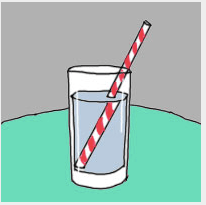
Why does the straw appear to be bent?
light is reflected
light is absorbed
light is turned
light is refracted
When light passes from air to water, what happens to the speed of the light?
speeds up
slows down
stays the same

What is the best explanation for Mickey seeing himself in the mirror?
refraction
absorbed
reflection
flipped

What is happening in this picture?
Reflection
Refraction

What is the angle of reflection (θr) in the image?
56o
90o
124o
34o

Which of the following characteristics are correct for the image formed in a plane mirror?
I. Upright
II. Inverted
III. Real
IV. Same size as the object
V. Virtual
I, II, III
I, III, IV
I, IV, V
III, IV, V
Which of the following factors contributes to the bending of light?
Change of speed of light
Change of density of light
Change of colour of light
Change of energy of light
flint glass n=1.70
barium glass n=1.60
crown glass n=1.523
water n=1.33
diamond n=2.45
When the light passes out of the glass, back into the air
It bends away from the normal
It does not bend
It bends towards the normal
It continues to be the normal
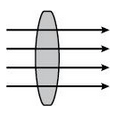
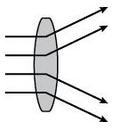
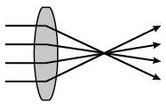
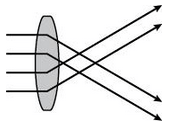
Which figure represents the path light takes through a converging lens?
The type of mirror used in reflector in automobile lights is
Plane mirror
Concave mirror
Convex mirror
None of the above
What do we call a material that light can travel through?
air
water
medium
pathway
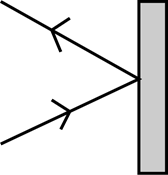
In the illustration, the light ray striking the object is-
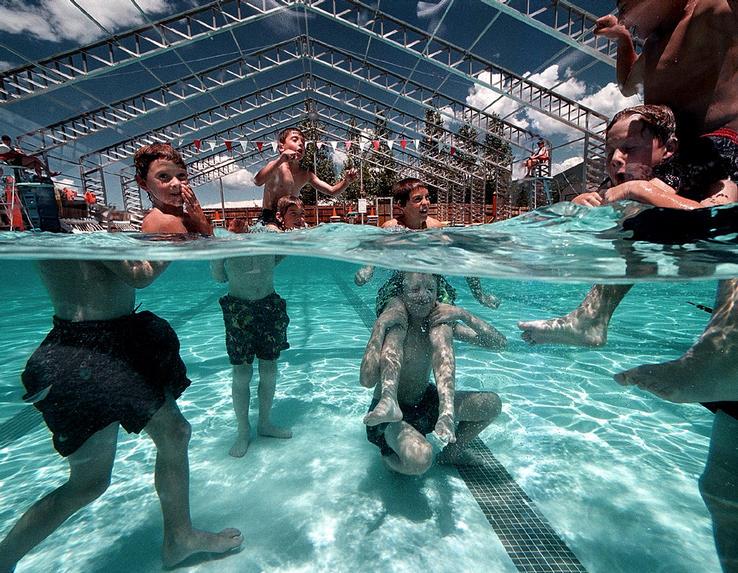
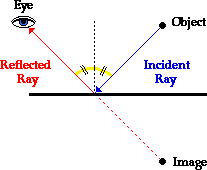
What is the angle of reflection equal to?
The angle of refraction
The angle of incidence
The angle of absorption
The angle of light
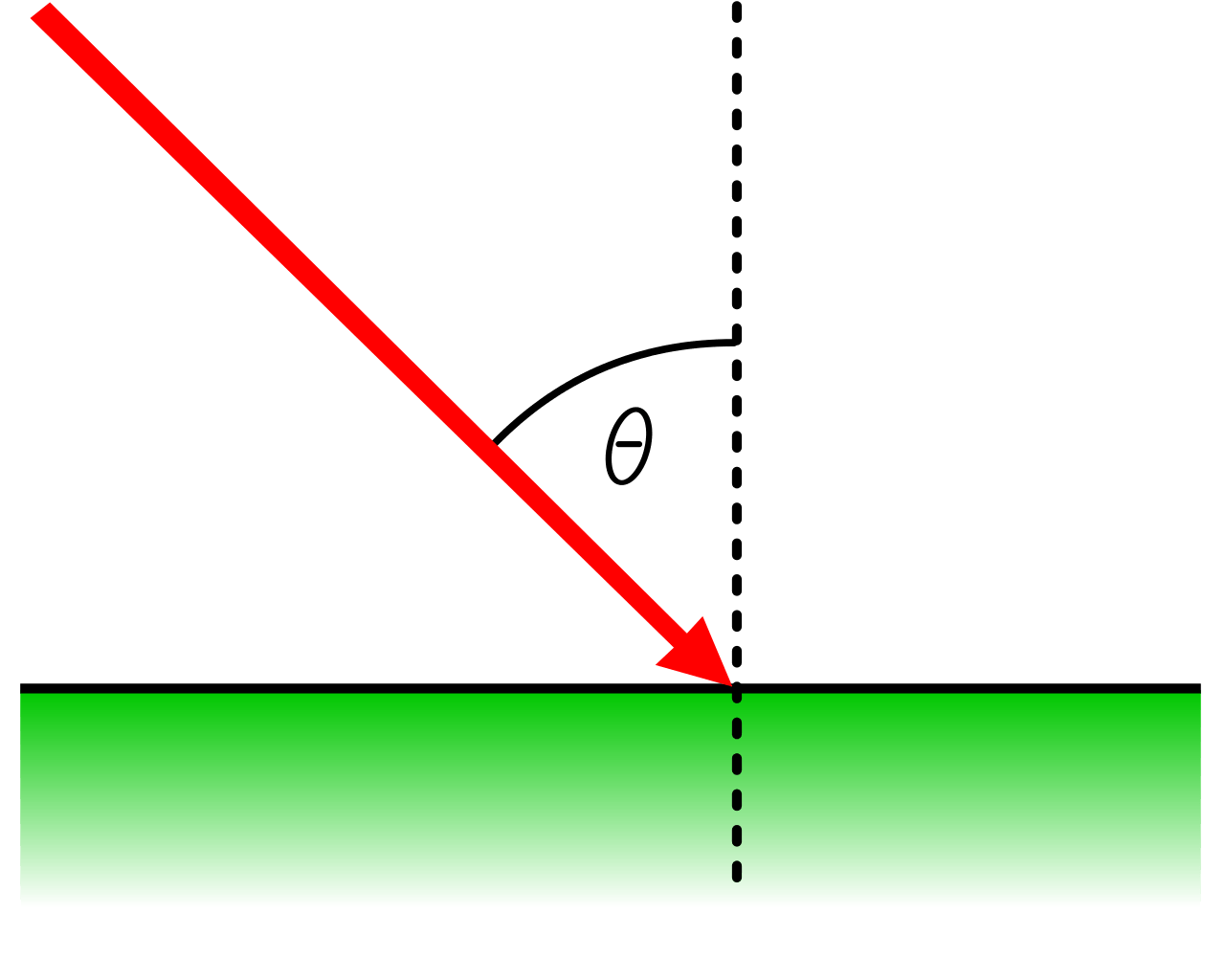

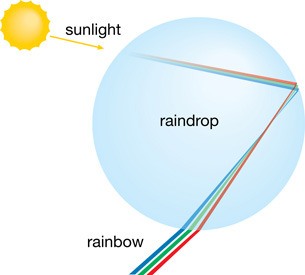
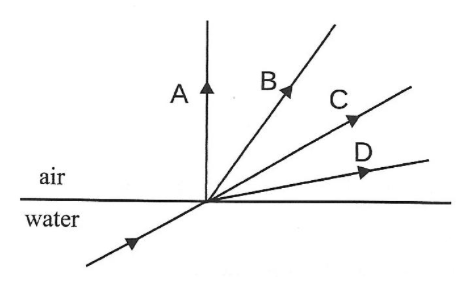
A light ray is incident from water to air. Which of the refracted rays is correct?
A
B
C
D
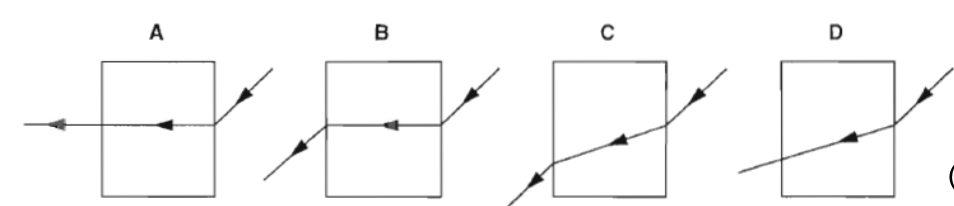
A ray of light travels from air into a glass block.
Which diagram correctly shows the path of the ray through the glass block?
A
B
C
D
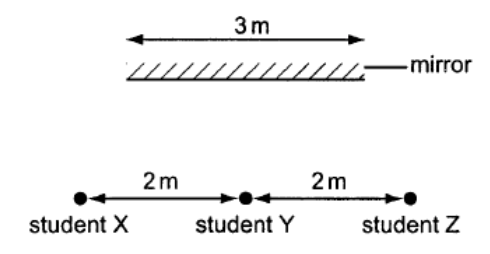
Three students stand 2 m apart in front of a plane mirror which is 3 m long.
Student Y is standing opposite the mid-point of the mirror.
How many students can see the images of the other two?
0
1
2
3
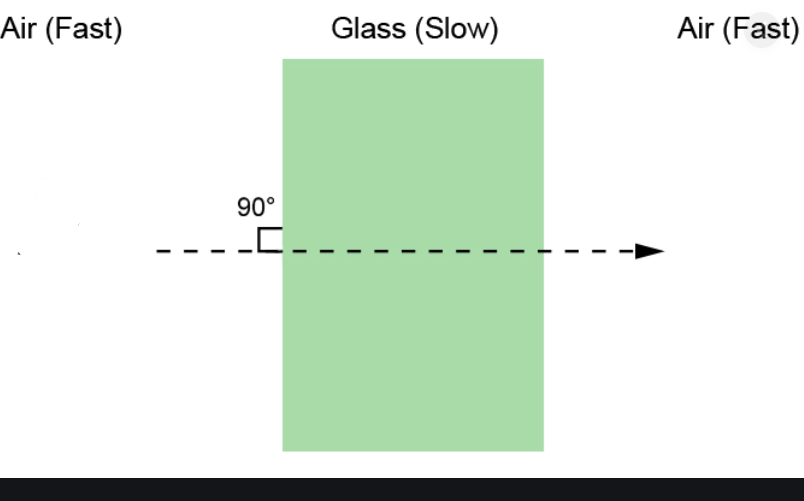
The line 90 degress through the refracting or reflecting surface is called?
Medium
Normal
Incidence
Reflection
Lateral inversion is
When a light ray hits an object as a curved wave
The term used to describe light rays reflecting off dark, matte surfaces
The same as 'angle of incidence'
When something is reflected in a plane mirror where left becomes right and right becomes left
Refraction is
The bending of light as it passes through the one substance at an angle
A light beam shone in one end of an optical fibre and totally internally reflected at the other end
The bending of light as it passes from one substance to another at an angle
A type of convex object used in everyday life

The above image is an example of a ____________. They happen because cool and hot air have a different ___________________________.
Mirage; angle of incidence
Optical fibre; refractive index
Lateral inversion; angle of reflection
Mirage; refractive index
Refraction happens because light travels _____________ in glass or water compared to air
Faster
The same
At the speed of sound
Slower
Total internal reflection is
When lateral inversion occurs
When the angle of reflection increases up to a critical point where all the light is reflected
When the angle of incidence increases up to a critical point where all the light is reflected
Used in surgery where a light is connected to an optical fibre
A convex lens produces a _______ image whereas a concave lens produces a _______ image
Virtual, real
Virtual; diffused
Real; refracted
Real; virtual
An example of total internal reflection is
Diamond
Looking down at someone in a swimming pool
A camera inserted in a person's body during surgery
The 'pool' of water seen when looking into the distance on a hot day
Which of the following can make a parallel beam of light when light from a point source is incident on it ?
Concave mirror as well as convex lens
Convex mirror as well as concave lens
Two plane mirrors placed at 90° to each other
Concave mirror as well as concave lens
A 10 mm long awl pin is placed vertically in front of a concave mirror. A 5 mm long image of the awl pin is formed at 30 cm in front of the mirror. The focal length of this mirror is
-30 cm
-20 cm
-40 cm
-60 cm
Under which of the following conditions a concave mirror can form an image larger than the actual object ?
When the object is kept at a distance equal to its radius of curvature
When object is kept at a distance less than its focal length
When object is placed between the focus and centre of curvature
When object is kept at a distance greater than its radius of curvature

The diagrams showing the correct path of the ray after passing through the
II and III only
I and II only
I, II and III
I, II and IV

A light ray enters from medium A to medium B as shown in figure. The refractive index of medium B relative to A will be
greater than unity
less than unity
equal to unity
zero

Beams of light are incident through the holes A and B and emerge out of box through the holes C and D respectively as shown in the figure. Which of the following could be inside the box ?
A rectangular glass slab
A convex lens
A concave lens
A prism

A beam of light is incident through the holes on side A and emerges out of the holes on the other face of the box as show in the figure. Which of the following could be inside the box ?
Concave lens
Rectangular glass slab
Prism
Convex lens
Which of the following statements is true ?
A convex lens has 4 dioptre power having a focal length 0.25 m
A convex lens has -4 dioptre power having a focal length 0.25 m
A concave lens has 4 dioptre power having a focal length 0.25 m
A concave lens has -4 dioptre power having a focal length 0.25 m.
Magnification produced by a rear view mirror fitted in vehicles
is less than one
is more than one
is equal to one
can be more than or less than one depending upon the position of the object in front of it.
Rays from Sun converge at a point 15 cm in front of a concave mirror. Where should an object be placed so that size of its image is equal to the size of the object ?
15 cm in front of the mirror
30 cm in front of the mirror
between 15 cm and and 30 cm in front of the mirror
more than 30 cm in front of the mirror

A student used a device (X) to obtain/focus the image of a well illuminated distant building on a screen (S) as shown alongside in the diagram. Select the correct statement about the device (X).
This device is a concave lens of focal length 8 cm.
This device is a convex mirror of focal length 8 cm.
This device is a convex lens of focal length 4 cm.
This device is a convex lens of focal length 8 cm.

A student obtains a sharp image of the distant window (W) of the school laboratory on the screen (S) using the given concave mirror (M) to determine its focal length. Which of the following distances should he measure to get the focal length of the mirror ?
MW
MS
SW
MW-WS
The deviation of light ray from its path when it travels from one transparent medium to another transparent medium is called
reflection
refraction
dispersion
scattering
When light falls on a surface and bounces back to the medium, the phenomena is called
(a)
When rays of light after reflection meet a point ………….. image is formed.
(a)
……………. is ratio of height of image to height of object.
(a)
Assertion: Incident light is reflected in only one direction from a smooth surface.
Reason: Since the angle of incidence and the angle of reflection are same, a beam of parallel rays of light falling on a smooth surface is reflected as a beam of parallel light rays in one direction only.
Both the Assertion and the Reason are correct and the Reason is the correct explanation of the Assertion.
The Assertion and the Reason are correct but the Reason is not the correct explanation of the Assertion.
Assertion is true but the Reason is false.
The statement of the Assertion is false but the Reason is true.
Assertion: Pupil is black in color.
Reason: Pupil is black in color as no light is reflected in it.
Both the Assertion and the Reason are correct and the Reason is the correct explanation of the Assertion.
The Assertion and the Reason are correct but the Reason is not the correct explanation of the Assertion.
Assertion is true but the Reason is false.
The statement of the Assertion is false but the Reason is true.
A person standing in front of a mirror finds his image larger than himself. This shows that mirror is convex in nature.
True
False
A convex and a concave lens of equal focal length behaves as a regular glass slab receiving light normally.
True
False
The bending of light at the interface of two different mediums is
Reflection
Magnification
Refraction
Polarization
A ray of light travelling from glass slab to Air, then the refracted ray bends
Towards normal
At normal
Away from the normal
Reflect back to the same medium
3. Refractive index of four medium A, B, C and D are 1.44, 1.50, 1.65 and 1.36 respectively. The velocity of light is minimum in
medium B
medium D
medium C
medium A.
A ray of light passes from a medium X to another medium Y. No refraction of light occurs if the ray of light hits the boundary of medium Y at an angle of:
120 degree
90 degree
45 degree
Zero degree
The refractive index of water is 1.33. The speed of light in water will be
1.33 × 10power of 8 m/s
3 × 10 power of 8 m/s
2.26 × 10 power of 8 m/s
2.66 × 10 power of 8 m/s

Observe the table
Water
Air
Rock salt
Diamond

Observe diagram, identify P, Q, R
P - angel of emergent, Q – angle of incident , R- angel of refraction
P - angel of refraction, Q – angle of incident , R- angel of emergent
P - angel of emergent, Q – angle of refraction , R- angel of incident
P - angel of incident, Q – angle of refraction , R- angel of emergent

Identify the incident ray and emergent ray from the given figure
Incident ray - OS , emergent ray – ST
Incident ray- AO , emergent ray - OS
Incident ray- AO , emergent ray - ST
Incident ray - ST , emergent ray - AO
A convex lens is
Thicker throughout
Thinner throughout
Thinner in middle, thicker at edges
Thicker in the middle, thinner at edges
If the image formed by lens is diminished in size and erect for all positions of the object what type of lens is this
Convex
Concave
Reflection lens
Plane mirror
The point on the lens through which ray of light passes on un deviated is
Optic centre
Principle focus
Focal length
Aperture
Focal length of convex lens is
Width of the lens
distance between optical centre and principal focus of the lens
the straight lines passing through centre of curvature.
the point where beam of light parallel to principal axis, either converges or diverges after refraction.
Focal length of convex lens is 15 cm, it’s radius of curvature Will be
40 cm
15 cm
30 cm
60 cm
If an incident ray passes through the focus, the reflected ray will
pass through the pole
retrace its path
be parallel to the principal axis
pass through the centre of curvature
In concave lens, the object is placed beyond 2f1, then the nature of size of the image formed is
Virtual, erect, magnified
Real, inverted, magnified
Virtual, erect, diminished
Real, inverted, diminished

The correct diagram to show formation of image of an object placed between F1 and 2f1 is
a
b
c
d
To obtained magnified, erect image on convex lens, object should be placed
Beyond 2F1
Between F1 and O
At 2F1
Between 2F1 and F1
The image formed by convex lens real, inverted same size as that of the object, the position of the object is
At F1
At 2F1
Beyond 2F1
Between F and 2F1
Reciprocal of focal length in meter and its SI unit are
Magnification of lens, metre
Power of lens, Dioptre
Principle focus , metre
Optic centre, dioptre
Nature, position of the image and type of lens used when the magnification is (-1).
Real, inverted and enlarged image beyond 2F2 obtained from concave lens.
Virtual , erect and diminished image at 2F1 obtained from concave lens.
Real , erect and enlarged image at 2F2 obtained from convex lens
Real, inverted and similar sized image at 2F2 obtained from convex lens.
The bending of light at the interface of two different mediums is
Reflection
Magnification
Refraction
Polarization
A ray of light travelling from glass slab to Air, then the refracted ray bends
Towards normal
At normal
Away from the normal
Reflect back to the same medium
3. Refractive index of four medium A, B, C and D are 1.44, 1.50, 1.65 and 1.36 respectively. The velocity of light is minimum in
medium B
medium D
medium C
medium A.
A ray of light passes from a medium X to another medium Y. No refraction of light occurs if the ray of light hits the boundary of medium Y at an angle of:
120 degree
90 degree
45 degree
Zero degree
The refractive index of water is 1.33. The speed of light in water will be
1.33 × 10power of 8 m/s
3 × 10 power of 8 m/s
2.26 × 10 power of 8 m/s
2.66 × 10 power of 8 m/s
Observe the table
Water
Air
Rock salt
Diamond
Observe diagram, identify P, Q, R
P - angel of emergent, Q – angle of incident , R- angel of refraction
P - angel of refraction, Q – angle of incident , R- angel of emergent
P - angel of emergent, Q – angle of refraction , R- angel of incident
P - angel of incident, Q – angle of refraction , R- angel of emergent
Identify the incident ray and emergent ray from the given figure
Incident ray - OS , emergent ray – ST
Incident ray- AO , emergent ray - OS
Incident ray- AO , emergent ray - ST
Incident ray - ST , emergent ray - AO
A convex lens is
Thicker throughout
Thinner throughout
Thinner in middle, thicker at edges
Thicker in the middle, thinner at edges
If the image formed by lens is diminished in size and erect for all positions of the object what type of lens is this
Convex
Concave
Reflection lens
Plane mirror
The point on the lens through which ray of light passes on un deviated is
Optic centre
Principle focus
Focal length
Aperture
Focal length of convex lens is
Width of the lens
distance between optical centre and principal focus of the lens
the straight lines passing through centre of curvature.
the point where beam of light parallel to principal axis, either converges or diverges after refraction.
Focal length of convex lens is 15 cm, it’s radius of curvature Will be
40 cm
15 cm
30 cm
60 cm
If an incident ray passes through the focus, the reflected ray will
pass through the pole
retrace its path
be parallel to the principal axis
pass through the centre of curvature
In concave lens, the object is placed beyond 2f1, then the nature of size of the image formed is
Virtual, erect, magnified
Real, inverted, magnified
Virtual, erect, diminished
Real, inverted, diminished
The correct diagram to show formation of image of an object placed between F1 and 2f1 is
a
b
c
d
To obtained magnified, erect image on convex lens, object should be placed
Beyond 2F1
Between F1 and O
At 2F1
Between 2F1 and F1
The image formed by convex lens real, inverted same size as that of the object, the position of the object is
At F1
At 2F1
Beyond 2F1
Between F and 2F1
Reciprocal of focal length in meter and its SI unit are
Magnification of lens, metre
Power of lens, Dioptre
Principle focus , metre
Optic centre, dioptre
Nature, position of the image and type of lens used when the magnification is (-1).
Real, inverted and enlarged image beyond 2F2 obtained from concave lens.
Virtual , erect and diminished image at 2F1 obtained from concave lens.
Real , erect and enlarged image at 2F2 obtained from convex lens
Real, inverted and similar sized image at 2F2 obtained from convex lens.
An object is placed at a distance of 0.25 min front of a plane mirror. The distance between the object and image will be
0.25 m0.25 m
1.0 m
0.5 m
0.125 m
The angle of incidence for a ray of light having zero reflection angle is
0
30°
45°
90°
For a real object, which of the following can produce a real image?
Plane mirror
Concave mirror
Concave lens
Convex mirror
Which of the following mirror is used by a dentist to examine a small cavity?
Convex mirror
Plane mirror
Concave mirror
Combination of convex and concave mirror
An object at a distance of 30 cm from aconcave mirror gets its image at the same point. The focal length of the mirror is
– 30 cm
30 cm
– 15 cm
+15 cm
An object at a distance of + 15 cm is slowly moved towards the pole of a convex mirror. The image will get
shortened and real
enlarged and real
enlarge and virtual
diminished and virtual
A concave mirror of radius 30 cm is placed in water. It’s focal length in air and water differ by
15
20
30
0
A concave mirror of focal length 20 cm forms an image having twice the size of object. For the virtual position of object, the position of object will be at
25 cm
40 cm
10 cm
At infinity
The image formed by concave mirror is real, inverted and of the same size as that of the object. The position of object should be
at the focus
at the centre of curvature
between focus and centre of curvature
beyond centre of curvature
The nature of the image formed by concave mirror when the object is placed between the focus (F) and centre of curvature (C) of the mirror observed by us is
real, inverted and diminished
virtual, erect and smaller in size
real, inverted and enlarged
virtual, upright and enlarged
The nature of image formed by a convex mirror when the object distance from the mirror is less than the distance between pole and focal point (F) of the mirror would be
real, inverted and diminished in size
real, inverted and enlarged in size
virtual, upright and diminished in size
virtual, upright and enlarged in size
If a man’s face is 25 cm in front of concave shaving mirror producing erect image 1.5 times the size of face, focal length of the mirror would be
75 cm
25 cm
15 cm
60 cm
As light travels from a rarer to a denser medium it will have
increased velocity
decreased velocity
decreased wavelength
both (b) and (c)
The angle of incidence i and refraction r are equal in a transparent slab when the value of i is
0°
45°
90°
depend on the material of the slab
The refractive index of transparent medium is greater than one because
Speed of light in vacuum < speed of light in tansparent medium
Speed of light in vacuum > speed of light in tansparent medium
Speed flight in vacuum = speed of light in tansparent medium
Frequency of light wave changes when it moves from rarer to denser medium
You are given three media A, B and C of refractive index 1.33, 1.65 and 1.46. The medium in which the light will travel fastest is
A
B
C
equal in all three media

