
 Worksheets
PHYSICS Final 1 Mark Revision
Total questions: 152
Worksheet time: 2hrs 44mins

Refer the diagram. A wire carries a current, creating a magnetic field around itself as shown. The current in the wire is:
Directed to the right
Directed to the left
Equal to the magnetic field
n the same direction as the magnetic field

Refer the diagram. The right face of the loop acts as North pole and left side of loop acts as south pole
False
True
The magnetic field lines are__________.
closed curves
open curves
semi circular
The relative strength of the magnetic field is shown by the degree of closeness of the field lines.
false
true
can't say
No two field-lines are found to cross each other.
true
false
Where is Earth's magnetic field the strongest?
poles
equator
mountain tops
ocean floor
Magnetic field inside a long solenoid carrying current is
same at all points (uniform)
different at poles and at the centre
zero
different at all points
A wire is parallel to the lines of the force of the magnetic field and the current flows in the wire. Then
The wire will experience a force along the direction of the magnetic field
The wire will not experience any force
The wire will experience the torque
The wire will experience a perpendicular force
An Electric charge in a uniform motion produces
An Electric Field only
An Magnetic field only
Both Electric Field & Magnetic field
Neither of them
In an electric motor, the direction of current in the coil changes once in each:
One-fourth rotation
Half rotation
One rotation
Doesn't change

Identify the poles of the magnet in the given figure.
NORTH
SOUTH
One is north and the other is south
Can't predict
A soft iron bar is inserted inside a current-carrying solenoid. The magnetic field inside the solenoid will
Increase
Decrease
Remains same
Becomes zero

Which of the following diagrams correctly shows the magnetic field produced by a current- carrying wire?
A
B
C
D
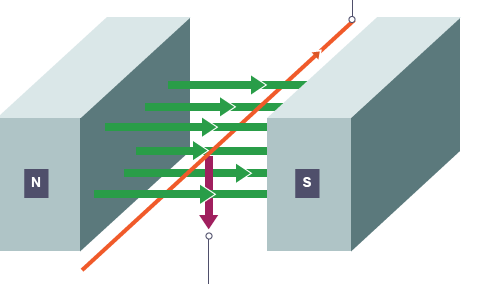
What direction is the force/motion in the following diagram?
Perpendicular to the magnets
Downwards
Parallel and through the magnets

What angle must there be between a magnetic field and a conductor in order for the maximum force to be exerted?
180
45
90
270
Give two ways you can reverse the direction of a basic dc motor?
Reverse the current
Keep the current the same
Reverse the magnetic field
Keep the magnetic field the same
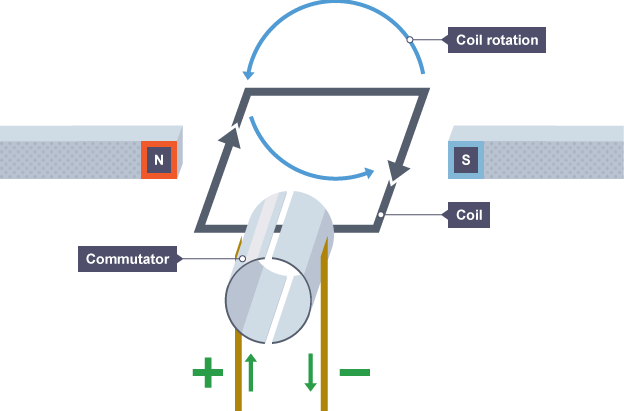
How does a split ring commutator work?
Swaps the contact evert full turn, so that the left-hand and right-hand arms of the coil always experience a force in the same direction.
Swaps the contact evert half turn, so that the left-hand and right-hand arms of the coil do not experience a force in the same direction.
Swaps the contact evert half turn, so that the left-hand and right-hand arms of the coil always experience a force in the same direction.

The given pictures is an example of _________ effect of electric current.
Heating effect
Magnetic effect
None of the above
Rajan made an electromagnet by winding 50 turns of the wire over an iron screw. Priya also made an electromagnet by winding 100 turns of the wire over an iron screw. which electromagnet will attract more pins?
Rajan's Electromagnet
Priya's Electromagnet
Both attract same number of pins
Two parallel wires carry current in the same direction attract each other because of
Potential difference between them
Mutual inductance between them
Electric forces between them
Magnetic forces between them
The strength of the magnetic field around a straight conductor carrying an electric current
is same every where around the conductor
obeys inverse square law
is directly proportional to the square root of the distance
None of the above
A wire is parallel to the lines of the force of the magnetic field and the current flows in the wire. Then
The wire will experience a force along the direction of the magnetic field
The wire will not experience any force
The wire will experience the torque
The wire will experience a perpendicular force

The resulting magnetic field at the point O due to the current carrying wire shown in the figure
Points vertically upwards
Points vertically downwards
is zero
Can not be determined

At the centre of which of the following four circular rings the magnetic field is the strongest for equal magnitude of current?
Loop 1
Loop 2
Loop 3
Loop 4
The magnetic field lines due to a straight wire carrying a current are
straight
circular
parabolic
elliptical

What is the law of reflection?
Angle of incidence = angle of reflection
Angle of incidence < angle of reflection
Angle of incidence > angle of reflection

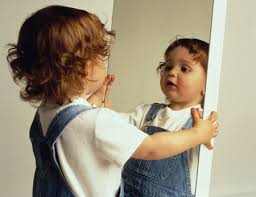
Images in a plane mirror are:
Smaller
Larger
Same size
Real

Geometric center of surface of mirror is called _________
center of curvature
principal focus
pole
aperture
Distance between center of curvature and pole is called____________
Radius of curvature
focal length
Aperture
magnification

Image formed by plane mirror is
virtual, erect(upright) & bigger in size
virtual, erect(upright) & same size as object
virtual, inverted & same size as object

Image formed by a convex mirror is
Virtual, erect, same size as the object
Virtual, erect, diminished in size
Virtual, erect, enlarged in size

Where will be the image be formed if the object is placed at infinity in a concave mirror?
At C
At F
At P

Where will be the image be formed if the object is placed at infinity in a convex mirror?
At C
At F
At P
Which is a spherical mirror?


what is the sign of the focal length of a convex mirror?
-
+
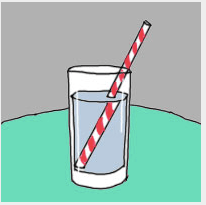
Why does the straw appear to be bent?
light is reflected
light is absorbed
light is turned
light is refracted
When light passes from air to water, what happens to the speed of the light?
speeds up
slows down
stays the same

What is happening in this picture?
Reflection
Refraction

What is the angle of reflection (θr) in the image?
56o
90o
124o
34o

Which of the following factors contributes to the bending of light?
Change of speed of light
Change of density of light
Change of colour of light
Change of energy of light
Which of the following characteristics are correct for the image formed in a plane mirror?
I. Upright
II. Inverted
III. Real
IV. Same size as the object
V. Virtual
I, II, III
I, III, IV
I, IV, V
III, IV, V
Which figure represents the path light takes through a converging lens?
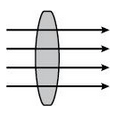
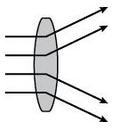
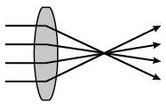
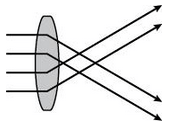

Which of the following shows that light travels in a straight line? Tick the correct answers.
A
B
C
D
E
Assertion: For observing the traffic at the hairpin bend in the mountains a plane mirror is preferred over convex or concave mirror.
Reason: A convex mirror has a much larger field view than a plane mirror or a concave mirror.
Both Assertion and Reason are true and Reason is the correct explanation of Assertion.
Both Assertion and Reason are true but Reason is not the correct explanation of Assertion.
Assertion is true but Reason is false.
Assertion is false but Reason is true.

A ………. lens will always give a virtual, erect and diminished image, irrespective of the position of the object.
(a)
Power of’ a lens is the (a) of its focal length
The SI unit of power is (a)

What happens to light passing through a hand lens that makes the image of the penny appear larger? The light is-
this problem arises due to foggy or cloudy lens .
presbyopia
myopia
cataract
hypermetropia
What is the near point of a normal human eye?
25 cm
Infinity
-25 cm
What is myopia?
Near Sightedness
Far sightedness
How can near sightedness be corrected?
Using concave lens
Using convex lens
Using bifocal lens
How can hypermetropia be corrected?
By using concave lens
By using convex lens
By using bifocal lens
The ability of our eyes to adjust its focal length is called
Aperture
Power of accomodation
Adjustment
The far point of human eye is
25 cm
Infinity
10,00,000 cm
A child is not able to read letters in the book clearly and has to keep the book far away to read it clearly. The child is suffering from
Myopia
Hypermetropia
Presbyopia
A child is not able to read letters in the book clearly and has to keep the book far away to read it clearly. In this defect, the image is formed
In front of retina
On the retina
Behind the retina
This defect is caused due to elongation of eye ball.
Myopia
Hypermetropia
Presbyopia
An image is formed on
Iris
Pupil
Retina
Cornea
Following is true for Hypermetropia
It can be corrected by using a convex lens
It may arise when focal length of eye lens is too long
it may arise when eyeball has become too small
all of above
Light enters the eye through a thin membrane called the
Iris
Pupil
Retina
Cornea
The shape of eye-ball is nearly _________________
Elliptical
Oval
Circular
Spherical
Following controls and regulates the amount of light entering the eye
Iris
Pupil
Retina
Corena
_________________ send signals to the brain
Optical nerve
Aqueous Humour
Viterous humour
Eye lens
When the light is very bright, the diameter of pupil
Expends
Contract
Remain same
All of these
Myopia and Hypermetropia can be corrected by
Concave and plano-convex lens
Concave and convex lens
Convex and concave lens
Plano-concave lens for both defects.
The image formed on the retina of the human eye is
virtual and inverted
real and inverted
virtual and erect
real and erect
When the light rays enters the eye, most of the refraction occurs at the
crystalline lens
outer surface of cornea
iris
pupil


A student placed a pencil in a cup of water. The pencil appears broken because light
always travels in a straight line.
bends when it passes through water.
makes the water in the glass evaporate.
reflects the pencil on the water's surface.
When light passes at an angle to the normal from one medium into another in which its speed is higher
it is bent toward the normal.
it always lies along the normal.
it is unaffected.
it is bent away from the normal.

Based on the image, which medium has a larger index of refraction?
Medium 1 has a larger index of refraction.
Medium 2 has a larger index of refraction.
Both mediums have the same index of refraction.
Cannot be determined.

Why is the spectrum of light separated into its components of color when white light is directed to a prism?
Because light reflects off the prism's surface
The incident white light refracts and separates into its constituent colors
The white light is absorbed by the prism, separating its colors
The light speeds up as it moves from air into the denser plastic material
This is the example of dispersion of light
sky looks bright orange in the evening
shadow
Pool seems shallower
rainbow



Why does the straw appear to be bent?
light is reflected
light is absorbed
light is turned
light is refracted
What do we call a material that light can travel through?
air
water
medium
pathway


The shape of eye-ball is nearly _________________
Elliptical
Oval
Circular
Spherical
Following is far-sightedness
Myopia
Hypermetropia
Presbyopia
All of the above
The person who is suffering from the following disease cannot donate eyes.
diabetes
asthma
hypertension
tetanus
The person who is suffering from _____________ requires bi-focal lens.
(a) Hypermetropia
(b) Myopia
both option(a) and (b)
none of these
The defect of vision in which the person is able to see distant object distinctly but cannot see nearby objects clearly is called
far-sightedness
near-sightedness
presbyopia
All of above
Myopia and Hypermetropia can be corrected by
Concave and plano-convex lens
Concave and convex lens
Convex and concave lens
Plano-concave lens for both defects.
The image formed on the retina of the human eye is
virtual and inverted
real and inverted
virtual and erect
real and erect

What is it called when light bends as it moves from one substance to another?
Absorption
Reflection
Refraction
Incidence

What do you feel when you see rainbow ?


what cause a rainbow?


When a rainbow is formed the sun is
behind you
in front of you
directly overhead
to the side of you
As you look at a rainbow, the colors go from top to bottom in what order?
ROYGBIV
VIBGYOR
GYORVIB
pretty to beautiful
Rainbows can be a complete circle:
True
False
I don't know
Wouldn't that be a raincircle?

What type of lens creates the image seen in the eyeglasses?
convex
concave
reflection
plane

What type of lens is used in the shown instrument?
concave lens
convex lens
reflection lens
reduction lens
minimum focal length of eye is.......................
2.25cm
2.27cm
2.25mm
2.27mm
phenomena observed in formation of rainbow is........................
dispersion,relection
dispersion,refraction,reflection
dispersion,refraction,internal reflection
dispersion,internal reflection
Electricity is a form of energy involving the flow of atoms.
True
False

In a circuit diagram, this symbol represents a
switch
multimeter
battery
globe
What is used to measure electric current?
Voltmeter
Ammeter
Wattmeter
pH meter

What type of circuit is this?
Series
Parallel
Simple
Why are Christmas lights wired in parallel?
It is cheaper to make
You can make longer strands
It uses less electricity
If a light breaks, the others keep working

If the current in an electrical circuit is constant, what will happen to the voltage if the resistance is increased?
Voltage will increase
Voltage will decrease
Voltage will stay the same

If you increase the voltage across a resistor, what will happen to the current?
Current will increase
Current will decrease
Current will stay the same

If you increase the size of the resistor and keep the voltage the same, what will happen to the current?
Current will increase
Current will decrease
Current will stay the same
Electric current is defined as
detect electric current
negative terminal to positive terminal
positive terminal to negative terminal
the flow rate of electric charges through a conductor
Electrons flows from
detect electric current
negative terminal to positive terminal
positive terminal to negative terminal
the flow rate of electric charges through a conductor
Galvanometer is used to
detect electric current
negative terminal to positive terminal
positive terminal to negative terminal
the flow rate of electric charges through a conductor
What voltage is needed to cause a 50A current flow through a 10Ω resistor?
15V
500V
500 kV
0.2V
Which of the following materials is used in a light bulb to produce heat and light?
Nichrome
Copper
Tungsten
Steel
A higher resistance in a circuit causes a _____________.
higher voltage
larger current
smaller current
lower voltage

