wayground logo

Free Printable Worksheets

Font size

S
M
L
XL
Worksheets

Science

Total questions: 130

Worksheet time: 2hrs 16mins

Name
Class
Date
1.

A wave is a disturbance that transfers __________from one place to another.

a)

water

b)

air

c)

matter

d)

energy

e)

electrons

2.

What kind of waves vibrate our eardrums so we can hear?

a)

microwaves

b)

water waves

c)

light waves

d)

sound waves

e)

radio waves

3.

What kind of waves require some sort if medium to travel through

a)

mechanical waves

b)

electromagnetic waves

c)

all of the above

d)

none of the above

4.

What kind of waves can travel through a vacuum?

a)

mechanical waves

b)

electromagnetic waves

c)

all of the above

d)

none of the above

5.

What kind of waves transfer energy?

a)

mechanical waves

b)

electromagnetic waves

c)

all of the above

d)

none of the above

6.

Which of the following waves is a mechanical wave?

a)

light

b)

microwaves

c)

radio waves

d)

x-rays

e)

sound

7.

Which of the following waves is an electromagnetic wave?

a)

seismic waves

b)

waves in a spring

c)

light

d)

sound

e)

water waves

8.

In which of the following waves does the disturbance move in the same direction as the wave?

a)

transverse waves

b)

longitudinal waves

c)

all of the above

d)

none of the above

9.

In which of the following waves does the disturbance move in a perpendicular direction to the wave?

a)

transverse waves

b)

longitudinal waves

c)

all of the above

d)

none of the above

10.

What type of wave is a sound wave?

a)

transverse and mechanical

b)

transverse and electromagnetic

c)

longitudinal and mechanical

d)

longitudinal and electromagnetic

11.

Mechanical waves (like sound) cannot travel through...

a)

metal

b)

a tree

c)

empty space (vacuum)

d)

a door

12.

Which wave has the lowest frequency?

a)

A

b)

B

c)

C

d)

D

13.

Which letter represents the crest?

a)

A

b)

B

c)

C

d)

D

14.

What travels through a wave?

a)

mass

b)

energy

c)

mass and energy

d)

neither mass nor energy

15.

Which electromagnetic radiation has the longest wavelength?

a)

infrared

b)

gamma

c)

radio

d)

ultraviolet

16.

Which is an example of a longitudinal wave?

a)

x ray

b)

microwave

c)

sound wave

d)

water wave

17.

Which electromagnetic radiation has the shortest wavelength?

a)

infrared

b)

gamma

c)

microwave

d)

ultraviolet

18.

The two waves have different...

a)

amplitudes

b)

speeds

c)

wavelengths

d)

frequencies

19.

Which letter represents the trough?

a)

A

b)

B

c)

C

d)

D

20.

Amplitude is the distance between

a)

the crest and the trough

b)

each wave

c)

the middle point of a wave and the clouds

d)

the crest or trough and the middle point of the wave

21.

The distance from one crest to the next crest in a wave is

a)

wavelength

b)

crest

c)

trough

d)

amplitude

22.
The frequency of a wave is measured in __________________. 
a)
inches
b)
hertz
c)
periods
d)
eras
23.
The three types of mechanical waves are transverse, surface, and _______________ waves
a)
medium
b)
water
c)
longitudinal
d)
crest
24.
In longitudinal waves, the parts where the coils are spread apart are called what?
a)
rarefactions
b)
compressions
c)
mechanicals
d)
longitudes
25.
What number represents the wavelength?
a)
1
b)
2
c)
3
d)
4
26.
In a longitudinal wave, the parts where the coils are close together are called what?
a)
longitudes
b)
rarefactions
c)
compressions
d)
contractions
27.
What kind of wave is pictured?
a)
Transverse
b)
Longitudinal
c)
surface
d)
none of the above
28.

What does a wave carry from place to place?

a)

energy

b)

matter

c)

people

29.

A wave that can travel through matter and empty space is a:

a)

electromagnetic wave

b)

longitudinal wavy

c)

transverse wave

30.

Which are properties of a mechanical wave?

a)

none of the answers

b)

can move through space

c)

must have matter to move

d)

carries energy

31.

When you throw a ball up into the air, what makes it fall toward the ground?

a)

its weight

b)

the temperature

c)

air movement

d)

gravity

32.

A pencil on Stacey’s desk rolls from one end to the other and falls. What is the effect of gravity on the falling pencil?

a)

it will pull the pencil back onto the desk

b)

it will cause the pencil to float

c)

it will have no effect

d)

it will cause the pencil to fall to the ground

33.

Why do your feet stay on the ground instead of floating?

a)

friction

b)

gravity

c)

inertia

d)

pushes and pulls

34.

David placed a car at the top of a ramp. Then he let go. Which picture most likely shows the final position of the car after it had stopped?

a)
b)
c)
d)
35.

When you throw a ball up into the air, what makes it fall toward the ground?

a)

its weight

b)

the temperature

c)

air movement

d)

gravity

36.

A pencil on Stacey’s desk rolls from one end to the other and falls. What is the effect of gravity on the falling pencil?

a)

it will pull the pencil back onto the desk

b)

it will cause the pencil to float

c)

it will have no effect

d)

it will cause the pencil to fall to the ground

37.

Why do your feet stay on the ground instead of floating?

a)

friction

b)

gravity

c)

inertia

d)

pushes and pulls

38.

David placed a car at the top of a ramp. Then he let go. Which picture most likely shows the final position of the car after it had stopped?

a)
b)
c)
d)
39.

When you throw a ball up into the air, what makes it fall toward the ground?

a)

its weight

b)

the temperature

c)

air movement

d)

gravity

40.

A pencil on Stacey’s desk rolls from one end to the other and falls. What is the effect of gravity on the falling pencil?

a)

it will pull the pencil back onto the desk

b)

it will cause the pencil to float

c)

it will have no effect

d)

it will cause the pencil to fall to the ground

41.

Why do your feet stay on the ground instead of floating?

a)

friction

b)

gravity

c)

inertia

d)

pushes and pulls

42.

David placed a car at the top of a ramp. Then he let go. Which picture most likely shows the final position of the car after it had stopped?

a)
b)
c)
d)
43.
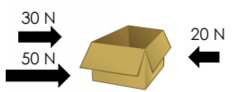
What is the net force?
a)
20 N 
b)
0 N 
c)
400 N 
d)
40 N 
44.

What is the unit to MEASURE force?

a)

Kilogram

b)

Meter

c)

Pounds

d)

Newton

45.

A ____________ is a push or a pull on an object.

a)

friction

b)

force

c)

magnet

d)

gravity

46.
What is the net force?
a)
10 N
b)
0 N
c)
25 N
d)
1 N
47.
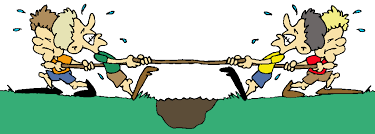
If these teams are pulling with the same amount of force what will happen?
a)
The boy in blue will win.
b)
They will not move at all.
c)
The boy in red will win.
d)
Both will fall down.
48.
Balanced or unbalanced?
a)
balanced
b)
unbalanced
49.

Forces that have a net force of zero Newtons

a)

Balanced force

b)

Unbalanced force

50.
The sum of all forces acting on an object.
a)
Contact Force
b)
Balanced Force
c)
Unbalanced Force
d)
Net Force
51.
What will cause an object to move?
a)
Applied forces
b)
Balanced forces
c)
Unbalanced forces
52.
Balanced or Unbalanced?
a)
Balanced 
b)
Unbalanced
53.
A push or pull that causes a change in motion
a)
Friction
b)
Gravity
c)
Force
d)
Mass
54.
When forces are _________ the object DOES NOT move.
a)
unbalanced
b)
balanced
c)
heavy
d)
light
55.
When forces are ___________ the object will move.
a)
unbalanced
b)
balanced
c)
light
d)
gravity
56.
What is the net force of an object that is not moving?
a)
0 N
b)
100 N
c)
Upward force
d)
10 N
57.
Calculate the Net Force. 
a)
60N, Left 
b)
40N, Right 
c)
0N
d)
60N, Right
58.
Calculate the Net Force. 
a)
40N, Left
b)
40N, Right
c)
0N, Balanced
d)
75N, Right
59.
You and your dad are moving the couch from one side to another. Your dad pushes with a force of 35 N to the right and you push with a force of 25 N right. What is the net force on the couch?
a)
60 N right
b)
10 N left
c)
60 n right
d)
50 N left
60.
Which could be an example of an unbalanced force?
a)
A plate sitting on a dining table
b)
A ball at the top of a hill that is not moving
c)
Earth orbiting the Sun 
d)
A baseball that has been thrown to home plate.
61.
What is the net force?
a)
400 N Up
b)
400 N Down
c)
- 400 N Down
d)
800 N Down
62.

Which example would be a balanced force?

a)

Train moving at a constant speed in the same direction.

b)

A skier going down a hill.

c)

A basketball being passed to a teammate.

d)

An apple falling to the floor.

63.
If a ball of cheese is fired into frictionless space, the amount of force needed to keep it going equals
a)
twice the force with which it was fired
b)
the same amount of force with which it was fired
c)
1/2 the force with which it was fired
d)
zero, since no force is requires to keep it moving. 
64.
Which one needs a greater net force to move, a kilogram of feathers or a kilogram of iron? 
a)
feathers 
b)
iron
c)
same
d)
depends on their friction
65.
One object has twice as much mass as another object. The first object also has also twice as much...
a)
velocity
b)
gravitational acceleration
c)
inertia
d)
all of these
66.
A(n) __________ is a push or pull.
a)
newton
b)
acceleration
c)
force
d)
momentum
67.
When a large truck pushes a small car with a given force, the small car is applying an equal and opposite force on the truck.
a)
True
b)
False
68.
What is Newton's First Law known as? The Law of
a)
Friction
b)
Mass
c)
Inertia
d)
Gravity
69.
Which has more Inertia? (so need more force to move) 
a)
Truck
b)
Ant
c)
A cat
d)
A skateboard
70.

What is required to lift a rocket off the ground?

a)

Upward forces that are balanced with gravity.

b)

Airplanes to lift up the rocket.

c)

This can't happen

d)

An upward force that is greater than Earth's gravity and air resistance.

71.
What is Newton's First Law
a)
F=ma
b)
Every action has an equal and opposite reaction
c)
An object at rest stays at rest, an object in motion stays in motion. 
d)
Friction 
72.
What is the unit of measurement for force?
a)
AMP
b)
Seconds
c)
Newtons
d)
Miles
73.
A force that slows or stops motion when objects rub together.
a)
Friction
b)
Push
c)
Pull
d)
Magnetism
74.
What is Newton's Third Law?
a)
Object in motion stays in motion and an object at rest stays at rest unless acted on by a outside force
b)
Force = mass x acceleration
c)
For every action there is an equal and opposite reaction
75.
According to Newton's second law, if you increase the force applied to an object :
a)
it accelerates more
b)
it doesn't move
c)
you get more inertia
d)
it decelerates
76.
Forces always act in equal and opposite pairs.
a)
Newton's 1st Law
b)
Newton's 2nd Law
c)
Newton's 3rd Law
d)
Newton's 4th Law
77.
An object at rest will _______ if no outside forces are applied.
a)
Stay at rest
b)
Increase Velocity
c)
Decrease Mass
78.
According to Newton’s first law of motion, a moving object that is not acted on by an unbalanced force will
a)
remain in motion.
b)
eventually come to a stop.
c)
change its momentum.
d)
accelerate.
79.
A person not wearing a seatbelt flies through a car window when someone slams on the breaks because the person’s body wants to remain in continuous motion even when the car stops.
a)
Newton's 1st Law
b)
Newton's 2nd Law
c)
Newton's 3rd Law
d)
None of them
80.
Who is the scientist who came up with the Laws of Motion?
a)
Sir Issac Newton
b)
The Greeks
c)
John Dalton
d)
Sir John Newt
81.
If you kicked a ball in space it would keep going because there is no gravity, friction, or air friction going against it. It will only stop moving in that direction if something comes into contact with it. This is an example of...
a)
Newton's First Law
b)
Newton's Second Law
c)
Newton's Third Law 
82.
If you slide a hockey puck on ice, eventually it will stop because of the friction of the ice. This is an example of which Law of Motion. 
a)
Newton's First Law 
b)
Newton's Second Law 
c)
Newton's Third Law 
83.
A rocket in outer space continues to move.
a)
Newton's
1st
Law of Motion
b)
Newton's
2nd
Law of Motion
c)
Newton's
3rd
Law of Motion
84.
A magician pulls a table cloth from under a table of dishes.
a)
Newton's
1st
Law of Motion
b)
Newton's
2nd
Law of Motion
c)
Newton's
3rd
Law of Motion
85.
A skater pushes another skater forward, but the one pushing moves backwards.
a)
Newton's
1st
Law of Motion
b)
Newton's
2nd
Law of Motion
c)
Newton's
3rd
Law of Motion
86.
The harder you hit a baseball, the faster it accelerates.
a)
Newton's
1st
Law of Motion
b)
Newton's
2nd
Law of Motion
c)
Newton's
3rd
Law of Motion
87.
You push against a wall and the wall is pushing back on you.
a)
Newton's
1st
Law of Motion
b)
Newton's
2nd
Law of Motion
c)
Newton's
3rd
Law of Motion
88.
As the fuel in a rocket ignites, the force of gas expansion and explosion pushes out the back of the rocket and pushes the rocket forward.
a)
Newton's
1st
Law of Motion
b)
Newton's
2nd
Law of Motion
c)
Newton's
3rd
Law of Motion
89.
You step from a boat to a dock.  The boat moves backwards as you move forwards and you fall in the water.
a)
Newton's
1st
Law of Motion
b)
Newton's
2nd
Law of Motion
c)
Newton's
3rd
Law of Motion
90.
You push against the floor when you walk and the floor pushes back on you.
a)
Newton's
1st
Law of Motion
b)
Newton's
2nd
Law of Motion
c)
Newton's
3rd
Law of Motion
91.
You slide towards the window when a car makes a sudden turn.
a)
Newton's
1st
Law of Motion
b)
Newton's
2nd
Law of Motion
c)
Newton's
3rd
Law of Motion
92.
A swimmer pushes water back with her arms but her body moves forward.
a)
Newton's
1st
Law of Motion
b)
Newton's
2nd
Law of Motion
c)
Newton's
3rd
Law of Motion
93.

The momentum of an object depends upon the object's ___________&_____________.

a)

size and shape

b)

mass and speed

c)

mass and veloctiy

d)

mass and energy

94.
When the speed of an object is doubled, its momentum
a)
remains unchanged in accord with the conservation of momentum.
b)
doubles
c)
quadruples
d)
decreases
95.
If two objects have the same mass, then the faster moving object has ____________ momentum.
a)
more 
b)
less
c)
the same
96.
If two objects have the same mass, then the faster moving object has ____________ momentum.
a)
more 
b)
less
c)
the same
97.
Which has more momentum: a car at a stop light or a bike moving at 15 mph?
a)
car
b)
bike
c)
they are equal
d)
cannot determine using the info provided
98.
Which of the following has the least amount of momentum?
a)
An ant walking along the ground
b)
An ant at rest
c)
An elephant walking
d)
An elephant running
99.

Which law of motion explains a rocket lifting off into space?

a)

1st Law

b)

2nd Law

c)

3rd Law

d)

none of the laws

100.
"For every action, there is an equal and opposite reaction."
a)
Newton's 1st Law
b)
Newton's 2nd Law
c)
Newton's 3rd Law
d)
Newton's 4th Law
101.
Force = Mass x Acceleration
a)
Newton's 1st Law
b)
Newton's 2nd Law
c)
Newton's 3rd Law
d)
Newton's 4th Law
102.
The tendency of an object to resist changes in its motion is...
a)
inertia
b)
force
c)
acceleration
d)
velocity
103.
Any push or pull on an object.
a)
force
b)
velocity 
c)
inertia
d)
momentum
104.
The force that opposes motion between two surfaces in contact with each other.
a)
inertia
b)
friction
c)
momentum
d)
gravity
105.
A force that opposes motion between a surface in contact with the atmosphere.
a)
air resistance
b)
gravity
c)
momentum
d)
terminal velocity
106.
The combination of all the forces acting on an object is the...
a)
net force
b)
action force
c)
reaction force
d)
balance force
107.

An archer pulls the bowstring back, then releases the string and the arrow flies forward. Pulling the string back is the...

a)

action force

b)

reaction force

c)

net force

d)

inertia

108.

When two equal forces act in opposite directions on an object, they are called ______________________.

a)

frictional force

b)

balanced force

c)

centripetal force

d)

gravitational force

109.

When an unbalanced force acts on an object, the force ______________________.

a)

changes the motion of the object

b)

is cancelled by another force

c)

does not change the motion of an object

d)

is equal to the weight of the object

110.
An automobile you are riding in suddenly stops, but you continue to go forward.
a)
Newton's
1st
Law of Motion
b)
Newton's
2nd
Law of Motion
c)
Newton's
3rd
Law of Motion
111.
You push against a wall and the wall is pushing back on you.
a)
Newton's
1st
Law of Motion
b)
Newton's
2nd
Law of Motion
c)
Newton's
3rd
Law of Motion
112.

What is the acceleration of a 50 kg object pushed with a force of 500 newtons?

a)

100 m/s2

b)

25,000 m/s2

c)

10 m/s2

d)

25 m/s2

113.

A cannonball with a mass of 0.5 kg is flying at an acceleration of 10 m/sec/sec. What is its force?

a)

50 Newtons

b)

5 Newtons

c)

20 Newtons

d)

9.5 Newtons

114.
Which force produces a change in motion?
a)
unbalanced force
b)
balanced force
c)
gravitational force
d)
frictional force
115.
A crumpled piece of paper hits the ground before a flat sheet of paper because
a)
the acceleration of gravity is greater on the  crumpled paper.
b)
there is more air resistance against the flat paper.
c)
the crumpled paper is more massive
d)
the crumpled paper is less massive.
116.
A sled sliding on a flat, icy surface with a constant velocity is best described by
a)
Newton’s first law of motion for objects at rest.
b)
Newton’s first law of motion for objects in motion.
c)
Newton’s second law of motion.
d)
Newton’s third law of motion.
117.
Which of the following explains the difference between speed and velocity?
a)
One has motion, and the other does not.
b)
One has direction, and the other does not.
c)
One involves time, and the other does not.
d)
One involves acceleration, and the other does not.
118.
The gravitational force of any object near Earth's surface is ____.
a)
unknown
b)
friction
c)
Newton's first law
d)
9.8 m/s2
119.
A magician pulls a tablecloth out from under dishes and glasses on a table without disturbing them.
a)
Newton's 1st Law
b)
Newton's 2nd Law
c)
Newton's 3rd Law
d)
None of them
120.
Rockets are launched into space using jet propulsion where exhaust accelerates out from the rocket and the rocket accelerates in an opposite direction.
a)
Newton's 1st Law
b)
Newton's 2nd Law
c)
Newton's 3rd Law
d)
None of them
121.
Pushing a child on a swing is easier than pushing an adult on the same swing, because the adult has more inertia.
a)
Newton's 1st Law
b)
Newton's 2nd Law
c)
Newton's 3rd Law
d)
None of them
122.
A soccer ball accelerates more than a bowling ball when thrown with the same force.
a)
Newton's 1st Law
b)
Newton's 2nd Law
c)
Newton's 3rd Law
d)
None of them
123.
A student leaves a pencil on a desk and the pencil stays in the same spot until another student picks it up.
a)
Newton's 1st Law
b)
Newton's 2nd Law
c)
Newton's 3rd Law
d)
None of them
124.
A rocket is sent into space.  When the power dies out, the rocket will just keep floating and moving in space forever (unless an unbalanced force, such as a meteor, runs into it).
a)
Newton's 1st Law
b)
Newton's 2nd Law
c)
Newton's 3rd Law
d)
None of them
125.

When there is an INCREASE in MASS of an object you will have a DECREASE in ______________.

a)

friction

b)

acceleration

c)

force

d)

gravity

126.

You are traveling in a car in a straight line. The driver puts on the brakes and you keep moving forward due to inertia. Which of Newton's Laws does this demonstrate?

a)

1st

b)

2nd

c)

3rd

127.

You kick a basketball and a tennis ball away from you with an equal amount of force. The tennis ball has less mass and therefore a greater acceleration. Which of Newton's Laws does this demonstrate?

a)

1st

b)

2nd

c)

3rd

128.

You push your feet against the pool wall and kick off. The backward push propels you forward through the water. Which of Newton's Laws does this demonstrate?

a)

1st

b)

2nd

c)

3rd

129.

Which of Newton's laws deals with force, mass, and acceleration?

a)

1st

b)

2nd

c)

3rd

130.

Which of Newton's laws states that for every action, there is an equal and opposite reaction?

a)

1st

b)

2nd

c)

3rd