
 Worksheets
Science Type Stuff
Total questions: 135
Worksheet time: 2hrs 12mins
Name
Class
Date
1.
The plant cell wall is made up of
a)
chitin
b)
peptidoglycan
c)
cellulose
d)
glycogen
2.
When using the microscope, you should always start with this objective lens
a)
low power
b)
high power
3.
When using the microscope, this adjustment knob should NEVER be used when viewing under high power
a)
fine
b)
coarse
4.
Additional layer around the outside of plant cells made from cellulose that protect and give shape
a)
Cell Wall
b)
Chloroplast
c)
Cell Membrane
d)
Golgi Complex
5.
Converts stored food into energy.
a)
Mitochondria
b)
Cell Wall
c)
Chloroplast
d)
Ribosome
6.
After lava flows from a volcano, the lava can become igneous rock due to which process?
a)
Erosion
b)
Cooling
c)
Pressure
d)
Cementation
7.
Which two organ systems work together to control the rate of a person’s breathing?
a)
Digestive & Respiratory
b)
Circulatory & Skeletal
c)
Nervous & Respiratory
8.
A student did 60 newton-meters of work by pulling a box 6 meters.
F = W / d
How much force did the student apply?
F = W / d
How much force did the student apply?
a)
5 N
b)
10 N
c)
20 N
d)
180 N
9.
A student rode a bicycle at an average speed of 12 miles per hour for 2 hours.
distance = speed x time
How far did they travel?
distance = speed x time
How far did they travel?
a)
6 mi
b)
18 mi
c)
24 mi
d)
42 mi
10.
An engineer builds a new machine that cuts glass. The machine holds a sharpened mineral that is used to cut the glass.
Which test will best determine if the new machine works?
Which test will best determine if the new machine works?
a)
test it at different speeds
b)
test it using different people
c)
test it at different times of the day
d)
test is using different thicknesses of glass
11.

Many birds migrate long distances when the seasons change. Which of the following is an environmental stimulus that would signal to the birds the changing seasons?
a)
changes in the length of daylight
b)
increase in population of edible plants
c)
decreased number of offspring per hatching event
d)
increase in annual precipitation levels
12.

Pain is a stimulus in animals that leads to responses which help the animal to -
a)
find food in the habitat
b)
recuperate after exercise
c)
avoid harmful situations
d)
fight serious infections
13.

When an animal is infected with a virus, the body responds by creating conditions that are not favorable for the virus. It does this by –
a)
creating a sensation of hunger
b)
raising the core body temperature
c)
inhibiting the sense of balance
14.

While sitting in a room, a person notices that the temperature has become uncomfortably warm. The body will respond by -
a)
sweating
b)
shivering
c)
twitching
d)
vomiting
15.

What is the formula to calculate speed?
a)
S = t/d
b)
S = d/t
c)
S = d x t
d)
S = t x d
16.

What is speed?
a)
how far you go
b)
how much distance is covered over a period of time
c)
how fast you accelerate
d)
the change in the location of a object
17.

A runner races in the 100 meter dash. It takes her 10 seconds to finish. What is her average speed?
a)
10 m/s
b)
1000 m/s
c)
100 seconds
d)
10 seconds
18.

Alan travels 100 km in 5hrs. Find his average speed in km/h
a)
5km/hr
b)
10km/hr
c)
50km/hr
d)
20km/hr
19.
When any rock type is _______ it will turn to magma.
a)
weathered
b)
compacted
c)
melted
d)
eroded
20.

This rock formed when bits of other rocks became pressed into a solid. What type of rock is it?
a)
Sedimentary Rock
b)
Metamorphic Rock
c)
Igneous Rock
21.

This rock was formed when magma cooled very slowly inside the Earth. What specific type of rock is it?
a)
Intrusive Igneous Rock
b)
Extrusive Igneous Rock
c)
Foliated Metamorphic Rock
d)
Clastic Sedimentary Rock
22.

This rock formed when lava cooled very quickly on Earth's surface. What specific type of rock is it?
a)
Extrusive Igneous Rock
b)
Intrusive Igneous Rock
c)
Non-Foliated Metamorphic Rock
d)
Biochemical Sedimentary Rock
23.
When you watch a volcano erupt molten rock, you are seeing _____
a)
Lava
b)
Magma
c)
Mineral Crystals
d)
Igneous Rocks
24.
What are the 3 major types of rocks?
a)
Igneous, Metamorphic, Sedimentary
b)
Metamorphic, Igneous, Cementation
c)
Brown, Red, Gray
d)
Streak, Hardness, Breakage
25.
Two ways to describe types of igneous rocks are _____
a)
Extrusive and Intrusive
b)
Foliated and Non-Foliated
c)
Clastic and Biochemical
d)
Black and Gray
26.
Which of the words below describe mud, sand, and tiny bits of rocks that cement together to form a type of rock?
a)
stalactites
b)
magmas
c)
metamorphs
d)
sediments
27.
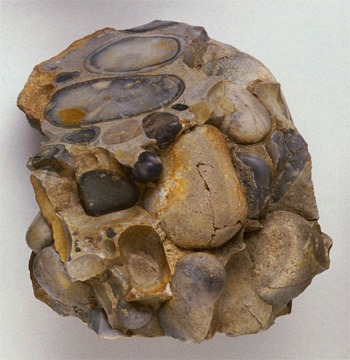
This rock was formed by smaller pieces of rock that settled at the bottom of a lake millions of years ago. What type of rock is this?
a)
Sedimentary
b)
Igneous
c)
Metamorphic
28.
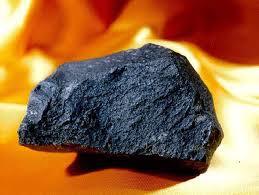
This rock was found near the mouth of a volcano. What type of rock is this?
a)
Sedimentary
b)
Igneous
c)
Metamorphic
29.
What is sedimentary?
a)
Formed by heat and pressure
b)
Formed by heat and cooling
c)
Layered rock formed by compaction
d)
All of the above
30.
The process in which dissolved minerals crystallize and glue sediment together.
a)
compaction
b)
deposition
c)
organic rock
d)
cementation
31.

The process when rocks break into smaller pieces due to exposure to natural elements is called
a)
erosion
b)
weathering
c)
sediments
32.
The movement of weathered material (sediment) is called?
a)
weathering
b)
erosion
c)
deposition
33.
This rock was formed when molten rock cooled into a solid. What type of rock is it?
a)
Igneous Rock
b)
Metamorphic Rock
c)
Sedimentary Rock
34.
What is deposition?
a)
Dropping off sediment
b)
Movement of sediment
c)
Breaking down of sediment
35.
Extreme Heat and Pressure creates a _________ rock.
a)
Igneous
b)
Metamorphic
c)
Sedimentary
d)
Mineral
36.

This rock started as lava that cooled and then was heated and put under pressure over time. What type of rock is this?
a)
Sedimentar
b)
Igneous
c)
Metamorphic
37.
What two processes make sediment?
a)
Weathering
b)
Erosion
c)
Weathering & Erosion
38.
Fossils are only found in
a)
Sedimentary rocks
b)
Foliated Metamorphic rocks
c)
Igneous Rocks
d)
Nonfoliated Metamorphic rocks
39.
What is process in which water, wind, and heat break down rock?
a)
weathering
b)
exfoliation
c)
cementation
d)
composition
40.

This rock was formed by lots of fossils that settled on top of each other over time. What type of rock is this?
a)
Sedimentary
b)
Igneous
c)
Metamorphic
41.
What is erosion?
a)
The breaking down of rocks
b)
The movement of broken down rocks
c)
Where water expands and contracts
42.

This is the symbol for a...
a)
Cold Front
b)
Warm Front
c)
Stationary Front
d)
Occluded Front
43.

This is the symbol for a...
a)
Occluded Front
b)
Stationary Front
c)
Warm Front
d)
Cold Front
44.

Identify the type of front that is shown in the image.
a)
Occluded Front
b)
Cold Front
c)
Stationary Front
d)
Warm Front
45.

This is the symbol for a...
a)
Stationary Front
b)
Occluded Front
c)
Cold Front
d)
Warm Front
46.

Identify the type of front that is shown in the image.
a)
Occluded Front
b)
Cold Front
c)
Stationary Front
d)
Warm Front
47.

Who created Spongebob?
a)
Walt Disney
b)
Stephen Hillenburg
c)
Samuel Higgins
d)
Edison Thomas
48.
Who is Spongebobs Best friend? (BEST friend)
a)
Pearl
b)
Patrick
c)
Squidward
d)
Sandy
49.

A magician pulls a tablecloth out from under dishes and glasses on a table without disturbing them.
a)
Newton's 1st Law
b)
Newton's 2nd Law
c)
Newton's 3rd Law
50.

A person not paying attention while skateboarding hits a rock. The skateboard stops...they don't.
a)
The Law of Inertia
b)
The Law of Acceleration
c)
The Law of Conservation of Momentum
51.
Particles in an atom's nucleus that are neutral and have no charge are
a)
megatrons.
b)
electrons.
c)
neutrons.
d)
protons.
52.
An atom with atomic number 6 would have how many protons?
a)
6
b)
12
c)
3
d)
cannot be determined
53.
What is the atomic number for an element with three protons?
a)
2
b)
1
c)
3
d)
6
54.
A negatively charged particle that moves around the nucleus is a(n)
a)
proton
b)
neutron
c)
electron
d)
quark
55.
Most of an atom's mass is found in the
a)
electrons.
b)
nucleus.
56.
A neutral atom of the element sodium has 11 protons and ____ electrons.
a)
22
b)
23
c)
8
d)
11
57.
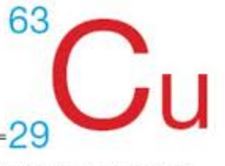
How many electrons does a Copper atom have?
a)
63
b)
29
c)
92
d)
34
58.

How many neutrons does a Hydrogen atom have?
a)
1
b)
2
c)
3
d)
0
59.

How many electrons does an atom of Krypton have?
a)
36
b)
83.80
c)
47.80
d)
119.80
60.
What is the atomic number for an element with 41 neutrons and a mass number of 80?
a)
39
b)
41
c)
80
d)
121
61.
Found in the nucleus of the atom
a)
electrons only
b)
protons only
c)
neutrons and protons
d)
neutrons and electrons
62.
Atomic mass - Atomic Number =
a)
protons
b)
neutrons
c)
electrons
d)
Average Mass
63.
Protons and neutrons are found in the....
a)
energy levels
b)
nucleus
c)
space
d)
Bohr Model
64.
An element is defined by its number of
a)
protons
b)
electrons
c)
neutrons
d)
protons + electrons
65.
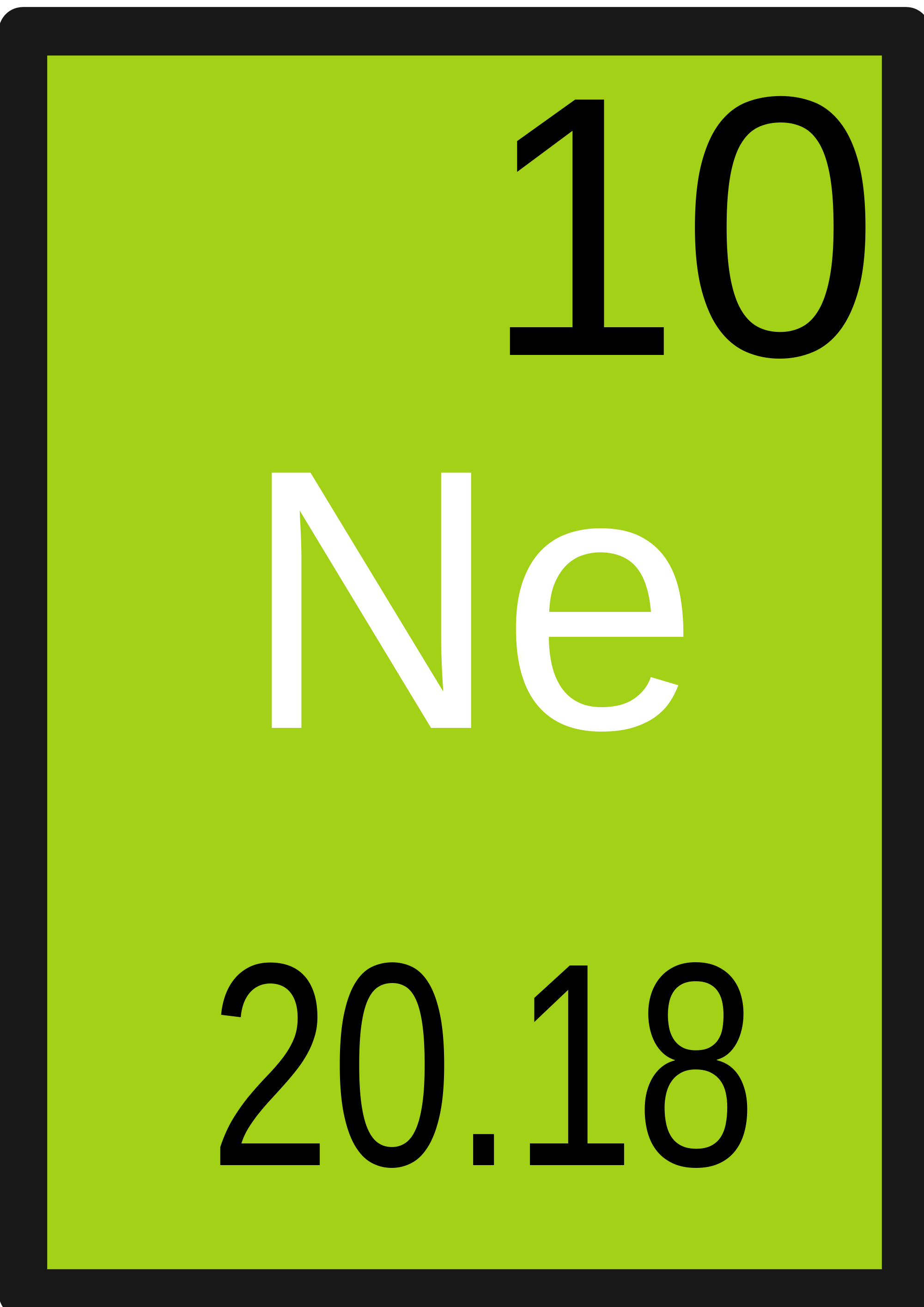
What is the atomic mass of Neon?
a)
10
b)
20.18
c)
10.18
d)
30.18
66.
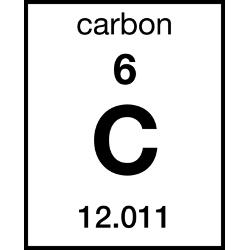
What does the 6 represent above the C
a)
Symbol
b)
Name
c)
Mass Number
d)
Atomic Number
67.
Which element has 56 electrons ?
a)
Barium
b)
Boron
c)
Beryllium
d)
Bromine
68.
Which element has 73 protons ?
a)
Titanium
b)
Tantulum
c)
Thallium
d)
Thorium
69.
Which element has 49 electrons ?
a)
Indium
b)
Iodine
c)
Iridium
d)
Lithium
70.
Which element has 5 more protons than Oxygen (O)?
a)
Aluminum
b)
Lithium
c)
Chlorine
d)
Silicon
71.
Which element has 30 neutrons and 26 electrons?
a)
Iron
b)
Nickel
c)
Zinc
d)
Silver
72.
This element has 42 neutrons and 33 electrons
a)
As
b)
Ar
c)
Al
d)
Au
73.

How many protons are in this element?
a)
79
b)
196
c)
117
d)
Cannot be determined
74.
If an atom has 3 electrons, how many protons does it have?
a)
1
b)
2
c)
4
d)
3
75.
If the number of protons equal the number of _____, the atom will have no charge
a)
protons
b)
neutrons
c)
electrons
d)
nucleus
76.
The subatomic particle with a negative charge is the
a)
electron
b)
proton
c)
neutron
d)
nucleus
77.
What is the atomic number?
a)
the number of protons
b)
the number of protons and neutrons
c)
the number of neutrons
d)
the number of protons and electrons
78.
What is the mass number?
a)
the number of protons
b)
the number of protons and neutrons
c)
the number of neutrons
d)
the number of protons and electrons
79.

Which is an electron?
a)
A
b)
B
c)
C
80.

What is found in the nucleus of atoms?
a)
Protons and electrons.
b)
Protons, neutrons, and electrons.
c)
Protons and neutrons.
d)
Neutrons and electrons.
81.
What is the mass of a neutron?
a)
1 amu
b)
0 amu
c)
same as electron
d)
doesn't have any mass
82.

How many neutrons does oxygen have?
a)
16
b)
15.99
c)
8
d)
Doesn't contain any neutrons
83.
How many protons are in Boron (B) ?
a)
3
b)
5
c)
10
d)
11
84.

How many neutrons are in Beryllium?
a)
4
b)
9
c)
5
d)
2
85.

How many neutrons are in a Gold atom?
a)
79
b)
196
c)
118
d)
275
86.
Is the following equation balanced or unbalanced?
Fe + S --> FeS
Fe + S --> FeS
a)
balanced
b)
unbalanced
87.

Is this equation balanced?
a)
yes
b)
no
c)
Not enough information
88.

Is this equation balanced?
a)
yes
b)
no
c)
Not enough information
89.
What is a PUSH or PULL of an object?
a)
Motion
b)
Force
c)
Friction
d)
Gravity
90.
What is MOVEMENT?
a)
Inertia
b)
Force
c)
Work
d)
Motion
91.
What is a force that works AGAINST MOTION?
a)
Force
b)
Motion
c)
Gravity
d)
Friction
92.
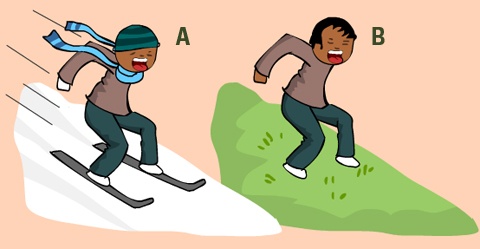
Why is it harder for the boy in Image B to get down the hill?
a)
Motion
b)
Friction
c)
Work
d)
Displacement
93.
Which force produces a change in motion?
a)
unbalanced force
b)
balanced force
c)
gravitational force
d)
frictional force
94.

Which season is shown in the northern hemisphere?
a)
winter
b)
spring
c)
summer
d)
fall
95.

Which season is shown in the southern hemisphere?
a)
winter
b)
spring
c)
summer
d)
fall
96.

Which organism do the owl and the weasel compete for in the food web?
a)
Hawk
b)
Spider
c)
Grasshopper
d)
Shrew
97.

Which of the following is a herbivore?
a)
cricket
b)
frog
c)
hawk
d)
shrew
98.

How many carnivores are shown in this food web?
a)
6
b)
4
c)
5
d)
3
99.
What might happen if you remove a primary consumer from the ecosystem?
a)
There would be more food for secondary consumers.
b)
The number of primary consumers would increase.
c)
The number of plants would increase.
d)
The number of secondary consumers would increase.
100.

Which of the following would be the most likely effect, if there were a sudden increase in the cricket population?
a)
There would be a decrease in the small bird population.
b)
There would be a decrease in the grass/flowers population.
c)
There would be a decrease in the mice population.
d)
There would be an increase in the grass/flowers population.
101.
A consumer that hunts is called:
a)
a producer.
b)
an omnivore.
c)
a predator.
d)
a herbivore.
102.

Which of the following best describes the small bird in the food web above?
a)
primary and secondary consumer
b)
secondary and tertiary consumer
c)
primary consumer only
d)
secondary consumer only
103.
A frog eats a fly. The frog and fly are demonstrating ________.
a)
mutualism
b)
competition
c)
predator/prey
d)
parasitism
104.
A tapeworm inside a dog is
a)
competition
b)
predation
c)
commensalism
d)
parasitism
105.
A tick and a dog have this type of relationship.
a)
mutualism
b)
commensalism
c)
neutralism
d)
parasitism
106.
A symbiotic relationship that involves species having to fight for something they both need or want
a)
competition
b)
predation
c)
commensalism
d)
parasitism
107.
Plants both trying to get sunlight are
a)
commensalism
b)
mutualism
c)
compeition
d)
parasitism
108.

How many herbivores are in this web?
a)
1
b)
2
c)
3
d)
4
109.

How many primary consumers are there in this food web?
a)
1
b)
2
c)
3
d)
4
110.

Who is this?
a)
Buzz
b)
Woody
c)
Lumber
d)
Slink
111.

Who is this?
a)
Lilo
b)
Lilian
c)
Lily
d)
Liro
112.

Who is this?
a)
Timon
b)
Simba
c)
Pumba
d)
Tusk
113.
Who is Cinderella's villain?
a)
Maleficent
b)
The Evil Queen
c)
Lady Tremaine
d)
Jafar
114.

Who is Sleeping Beauty's Villain?
a)
The Evil Queen
b)
Jafar
c)
Lady Tramaine
d)
Maleficent
115.
Who is the 101 Dalmatians villain?
a)
The Evil Queen
b)
Coruella de Vil
c)
Jafar
d)
Medusa
116.
Who is the villain in The Lion King?
a)
Mufasa
b)
Simba
c)
Scar
d)
Nala
117.
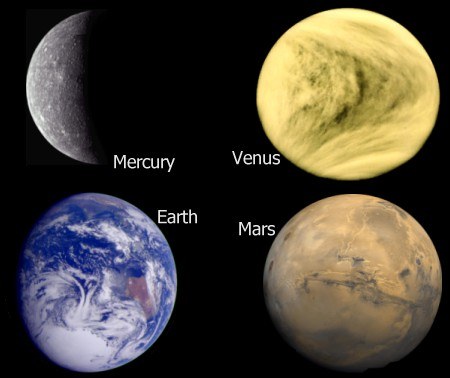
Earth and the other planets closest to the Sun are made mostly of _______
a)
gas
b)
metal
c)
water
d)
rock
118.

The moon is a natural ______ of Earth.
a)
comet
b)
axis
c)
satellite
d)
space probe
119.

Earth's ________ on its axis causes day and night.
a)
rotation
b)
revolution
c)
phase
d)
comet
120.

One kind of _______ is the crescent Moon.
a)
axis
b)
asteroid
c)
phase
d)
space probe
121.

One full orbit of an object around another object is called a ________.
a)
axis
b)
rotation
c)
revolution
d)
satellite
122.

The __________ has planets, moons, comets, and asteroids.
a)
solar system
b)
earth
c)
rotation
d)
United States
123.
One of the main differences between the outer and inner planets is __________.
a)
The inner planets all have water
b)
the inner planets are much bigger than the outer planets
c)
the outer planets are gas planets
d)
the outer planets have rings, and the inner planets don't
124.
Where is the asteroid belt found?
a)
between earth and mars
b)
Between Uranus and Neptune
c)
Between Mercury and Venus
d)
Between Mars and Jupiter
125.
Select the order from smallest to largest.
a)
Sun, Milky Way, solar system, universe
b)
Sun, Milky Way, universe, solar system
c)
Sun, solar system, Milky Way, universe
d)
Sun, solar system, universe, Milky Way
126.
Why does Earth have different seasons?
a)
because of the distance between Earth and the sun
b)
because of the speed of Earth as it rotates on its axis
c)
because of the amount of light blocked by the moon on its axis
d)
because of the tilt of Earth on its axis as it moves around the sun
127.
Which factor makes Earth different from all the other planets in the solar system in its ability to support life?
a)
The Earth is exposed to rays from the sun.
b)
The Earth has only one moon that orbits around it.
c)
The Earth rotates in an elliptical orbit around the sun.
d)
The Earth has a breathable atmosphere.
128.
Which best explains why the moon has phases?
a)
The moon’s position changes in relation to the sun and Earth.
b)
The sun’s position changes in relation to the moon and Earth.
c)
The Earth casts a shadow on the moon as it rotates.
d)
The moon rotates along its axis
129.
Day and night is caused by the _____________ of earth on its axis.
a)
revolution
b)
orbit
c)
rotation
130.
As the Earth travels around the sun, this tilt causes different areas of the Earth’s surface to get different amounts of daylight at different times of the year. The angle of the Sun’s rays to the surface also causes areas to have more or less of the Sun’s energy. This causes the ________.
a)
months
b)
day and night
c)
seasons
d)
years
131.
Which outer planets have rings?
a)
Just Saturn
b)
Saturn and Jupiter
c)
Jupiter, Neptune, and Saturn
d)
all 4 of them
132.

a pattern of stars that form an imaginary picture or design in the sky
a)
Orbit
b)
Rotate
c)
constellation
d)
Milky Way
133.
A spiral galaxy of stars that contains our Sun
a)
Planisphere
b)
Intensity
c)
Star
d)
Milky Way
134.
Which color star has medium temperature?
a)
Bluish-White
b)
Yellow
c)
Reddish-Orange
135.
Which of the following causes seasons?
a)
the earths tilt
b)
the earths rotation
c)
the earths revolution around the sun
d)
the earths size
100 %

