
Font size
 Worksheets
SHC Questions
Total questions: 167
Worksheet time: 3hrs 18mins
What is specific heat capacity?
The power needed to raise the temperature of 1 kg of a substance by 1oC.
The energy needed to raise the temperature of 1 kg of a substance by 1oC.
The temperature increase of 1 kg of a substance when it is heated for 1 minute.
The mass of a substance whose temperature will increase by 1oC when heated for 1 minute.
What are the units for energy?
Joules (J)
Watts (W)
Kilograms (kg)
Seconds (s)
What are the units for mass?
Joules (J)
Watts (W)
Kilograms (kg)
Seconds (s)
What are the units for temperature?
Joules (J)
Watts (W)
Kilograms (kg)
Degree Celsius (oC)
What are the units for specific heat capacity?
Joules per kilogram degree Celsius (J/kgoC)
Joules per kilogram degree Celsius (JkgoC)
Joules per kilogram (J/kg)
Joules per degree Celsius (J/oC)
How do we say Δ in science and maths?
Alpha
Beta
Gamma
Delta
What does Δ represent?
The increase in
The decrease in
The change in
All of the above
The specific heat capacity of a substance is 1000 J/kgoC. How much energy is required to raise 1 kg of it by 1oC?
10 J
100 J
1000 J
10,000 J
Water has specific heat capacity of 4180 J/kgoC and Lead has specific heat capacity 128 J/kgoC. Assume 1 kg of water and 1 kg of Lead are at 50oC. Which material would take longer to cool down to room temperature?
Water
Lead
Both would cool down at same rate
Impossible to tell
What is the name of the variable that tells you how much heat energy is required to change the temperature of 1kg
of substance by 1oC?
Specific Latent Heat Capacity
Specific Heat Capacity
Capacity of Material to withstand heat
Which of these is the correct equation for density?
Density = mass x volume
Density = mass /volume
Density = volume/mass
Density = mass/volume^3

Which state of matter does this particle diagram most closely represent?
Solid
Liquid
Gas
Plasma
Which state of matter is the most dense?
Solid
Liquid
Gas
Plasma
What state of matter does the following describe?
"a state of matter that has no fixed shape and no fixed volume"
(a)
What pieces of equipment would I use to find the volume of an irregularly shaped object?
Newton meter and volume meter
Balance, Ruler, then do length x mass x depth
Balance and eureka beaker
Eureka Beaker and measuring cylinder
A substance is changing state from a gas to a liquid. What do we call this?
(a)
When a substance changes state, there is a change in mass. True or false?
True
False
Internal energy is....(2 answers)
...stored in the atoms and molecules that make up the system
...the sum of the total kinetic energy and potential energy of particles
... the stored in gases when they are moved around
...increased by moving the substance from one place to another
Look at the following equation E = m c Δθ What does the c stand for?
Mass
change in temperature
Latent heat
specific heat capacity
Look at the equation: E=mcΔθ Calculate the energy needed to heat 10kg of water (with a SHC of 4200J/kg*C) from 20*C to 30*C
42,000J
42J
420,000J
1,260,000J

What is happening at D?
Liquid changing state into a gas - potential energy of particles is constant
Liquid being heated - kinetic energy of particles is increasing
Liquid being heated, temperature remains constant as there is no energy transfer
Liquid changing state into a gas - temperature of substance remains constant
What happens to the particles in a gas when it is heated?
Particles average kinetic energy increases
Particles move more randomly
They hit into each other less frequently
The pressure of the gas decreases
What is it called when a liquid changes state to a solid?
(a)
What is it called when a liquid changes state to a gas?
(a)
What does the Kinetic Theory of Matter suggest about particles?
Particles are only present in gases.
All particles are stationary.
Particles do not exist in solids.
Particles are always in motion.
According to the Kinetic Theory, how does temperature affect particle motion?
Temperature changes cause particles to disappear.
The lower the temperature, the faster the particles move.
Temperature has no effect on particle motion.
The higher the temperature, the faster the particles move.
What state of matter are particles packed tightly in a regular pattern?
Solid
Plasma
Liquid
Gas
What is the process called when a solid turns into a liquid?
Freezing
Melting
Sublimation
Condensation
What is density?
A measure of how much space an object occupies, volume per object
A measure of how much mass is packed into a given volume, mass per unit volue
A measure of how much air an object contains, mass of air per object
A measure of the weight of an object, in newtons
What does the Law of Conservation of Mass state?
Mass is only conserved in physical changes, not chemical reactions.
Mass can be created and destroyed easily.
Mass decreases over time in a closed system.
Mass cannot be created or destroyed in a closed system.
What happens to the particles of a substance during melting?
Particles gain kinetic energy and start to vibrate faster.
Particles lose all their energy.
Particles spread out into a loser structure.
Particles gain potential energy and bonds are broken.
What is specific heat capacity?
The amount of thermal energy needed to change the state of 1 kg of a substance.
The amount of thermal energy needed to raise the temperature of 1 kg of a substance by 1°C.
The amount of thermal energy a substance can hold at one time.
The temperature increase when thermal energy is applied to a substance.
What does absolute zero refer to?
The highest possible temperature measured in Kelvin.
The point at which a substance has maximum kinetic energy.
The average temperature of space.
The temperature at which all molecular motion stops.
What is the Ideal Gas Law represented by?
PV = nRT
F = ma
V = IR
E = mc^2
Increasing the temperature of a fixed volume of gas increases the pressure. Pick the 2 correct explanations for this.
The rate of collisions between particles increases
The force of the collisions between particles increases
The rate of particle collisions with the walls increases
The force of the collisions with the walls increases.
If a fixed mass of air is compressed at constant temperature, the pressure increases. Pick 2 correct statements which together explain this.
The mass of air is squashed more so exerts more pressure outwards
There are more collisions per unit area of the walls
The number of particles stays the same but the area of the walls decreases
The particles are travelling faster so there is a higher rate of collisions with the walls
Put these statements into a suitable order to explain evaporation
Evaporation can take place at temps below the boiling point
which is because the particles have a range of different Ek's
and those with the highest Ek have enough energy to escape the surface
which leaves the remaining particles with a lower average Ek
and hence a lower temperature
Particles with higher velocity have higher (a)
Comparing solids and liquids, which of the following are TRUE? (choose 2)
Their densities are very similar
Their arrangement is identical
Their internal energy is the same
Solids have a regular array whilst liquids have a random arrangment
When explaining pressure in terms of the particle model, we should always... (pick 3)
Discuss collisions between particles
Discuss collisions with the walls of the container
Use the formula P=F/A to help explain
Remember to consider both the force per collision, and the rate of collisions
Remember to consider both the force of the collisions and the number of collisions
What is the Equation for Kinetic Energy?
Kinetic Energy = 0.5 x Mass x Speed²
Kinetic Energy = 0.5 x Mass² x Speed
Kinetic Energy = 0.5 x Mass² / Speed
What are Equations for Gravitational Potential Energy?
Gravitational Potential Energy = Mass x Gravitational Field Strength x Height
Gravitational Potential Energy = Weight x Height
Gravitational Potential Energy = Mass x Gravitational Field Strength / Height
Gravitational Potential Energy = Weight / Height
The formula for calculating kinetic energy (Ek) is...
2 x speed x mass2
1/2 x speed x mass2
2 x mass x speed
1/2 x mass x velocity2
The units for kinetic energy are...
Joules, J
degrees celsius, oC
kilograms, kg
metres per second m/s
What is the formula for elastic potential energy?
Ee=1/2ke2
Ep=1/2ke2
Ee=2ke2
Ep=2ke2
Is Nuclear energy, as a source of electricity, renewable or non-renewable?
Non-renewable
Renewable
What is the specific heat capacity of a material?
The energy required to heat 1kg of an object by 1°C
The energy required to heat a set mass of the material by a set temperature
100
4200

Which material heats up quickest?
Aluminium
Concrete
Diamond
Glass
Water

Which material heats up slowest?
Aluminium
Concrete
Diamond
Glass
Water

Some 1kg of water and 1kg of diamond are heated to the same temperature. Which is true?
They both require the same amount of energy
The diamond needs around 8 times more energy
The water needs about 8 times more energy
The diamond heats up slower than the water
The water ends up colder

10 kg of aluminium is heated from 120C to 220C. How much energy is needed?
8 970 000 J
897 J
8970 J
89 700 J
897 000J

2kg of water and 4 kg of water are heated to the same temperature. Which is true
They both require the same amount of energy
2kg needs twice as much energy than the 4kg
4kg needs twice the energy the 2kg needs
4kg needs 4 times the energy the 2kg needs
The 2kg is hotter
What is the equation for specific heat capacity?
Q=mcΔT
Q=ΔTmc
Q=mcΔT
Q=mcΔT
Q=mΔcT
What are the units for specific heat capacity?
J kg / °C
J / kg / °C
J / °C
J / kg
kg °C / J

What is happening between D and E?
Melting
Boiling
Condensing
Freezing
Sublimation
What is happening between B and C?
Melting
Boiling
Condensing
Freezing
Sublimation
What is happening between A and B?
Melting
Boiling
Condensing
Freezing
None of these options

What does a steep line show?
High specific heat capacity
Low specific heat capacity
Nothing to do with specific heat capacity

What does section B show?
Melting
Boiling
Condensing
Freezing
None of these options
What does section D show?
Melting
Boiling
Condensing
Freezing
None of these options
What does section C show?
Melting
Boiling
Condensing
Freezing
None of these options

What state is the matter in at E?
Solid
Liquid
Gas
Plasma
Not enough information to say

What state is the matter between C and D
Solid
Liquid
Gas
Plasma
Not enough information to say
If Q=mcΔT , what is ΔT
ΔT=mcQ
ΔT=Qmc
ΔT=Qmc
ΔT=Qcm
c=mΔTQ

2 kg of glass is given 84 000 J. What is the change in temperature?
+50°C
-50°C
0°C
+100°C
-100°C
2 kg of glass at a temperature of 20°C is given 84 000 J. What is the final temperature?
+50°C
-50°C
-30°C
70°C
20°C

5 kg of water at a temperature of 60°C gives out 210 kJ of energy. What is the final temperature?
50°C
70 °C
60.01 °C
59.99 °C
60 °C
Which material heats up quickest?
Aluminium
Concrete
Diamond
Glass
Water
Which material heats up slowest?
Aluminium
Concrete
Diamond
Glass
Water
Some 1kg of water and 1kg of diamond are heated to the same temperature. Which is true?
They both require the same amount of energy
The diamond needs around 8 times more energy
The water needs about 8 times more energy
The diamond heats up slower than the water
The water ends up colder
10 kg of aluminium is heated from 120C to 220C. How much energy is needed?
8 970 000 J
897 J
8970 J
89 700 J
897 000J
2kg of water and 4 kg of water are heated to the same temperature. Which is true
They both require the same amount of energy
2kg needs twice as much energy than the 4kg
4kg needs twice the energy the 2kg needs
4kg needs 4 times the energy the 2kg needs
The 2kg is hotter
What is the equation for specific heat capacity?
Q=mcΔT
Q=ΔTmc
Q=mcΔT
Q=mcΔT
Q=mΔcT
What are the units for specific heat capacity?
J kg / °C
J / kg / °C
J / °C
J / kg
kg °C / J
What is happening between D and E?
Melting
Boiling
Condensing
Freezing
Sublimation
What is happening between B and C?
Melting
Boiling
Condensing
Freezing
Sublimation
What is happening between A and B?
Melting
Boiling
Condensing
Freezing
None of these options
What does a steep line show?
High specific heat capacity
Low specific heat capacity
Nothing to do with specific heat capacity
What does section B show?
Melting
Boiling
Condensing
Freezing
None of these options
What does section D show?
Melting
Boiling
Condensing
Freezing
None of these options
What does section C show?
Melting
Boiling
Condensing
Freezing
None of these options
What state is the matter in at E?
Solid
Liquid
Gas
Plasma
Not enough information to say
What state is the matter between C and D
Solid
Liquid
Gas
Plasma
Not enough information to say
If Q=mcΔT , what is ΔT
ΔT=mcQ
ΔT=Qmc
ΔT=Qmc
ΔT=Qcm
c=mΔTQ
2 kg of glass is given 84 000 J. What is the change in temperature?
+50°C
-50°C
0°C
+100°C
-100°C
2 kg of glass at a temperature of 20°C is given 84 000 J. What is the final temperature?
+50°C
-50°C
-30°C
70°C
20°C
5 kg of water at a temperature of 60°C gives out 210 kJ of energy. What is the final temperature?
50°C
70 °C
60.01 °C
59.99 °C
60 °C

Which will heat up faster?
copper
granite
iron
basalt

Which will heat up slower?
water
lead
granite
iron
Which of the following best explains why the sand at the beach is hotter than the water?
Sand has a higher specific heat than water.
Sand has a lower specific heat than water.
There is more water than sand at the beach.
There is more sand than water at the beach.
The amount of energy required to raise the temperature 1ºC for every gram is called____?
Thermal Energy
Specific Heat
Temperature
Kinetic Energy
The specific heat of platinum is 0.133 J/g°C. How much heat(Q) is released when a 10 g piece of platinum cools from 100°C to 50°C?
66.5 J
665 J
0.0266 J
0.665 J

What would be the effect on the particles if more heat is supplied to the system? (a)

Water has a specific heat of 4184 J/KgºC. Wood has a specific heat of 1760 J/KgºC. What material needs more energy to raise the temperature 1ºC (a)
it requires more energy to change temperature
it requires less energy to change temperature
You heat up 2 pans of water; one has 100 mL in it, and the other has 1000 mL. Which one heats up the fastest?
100 mL
1000 mL
They both heat up at the same speed
Which will heat up the fastest? (a)
Rank the materials in order of slowest to heat up to fastest to heat up.
water
1
lead
2
granite
3
iron
4
Which of the following best explains why the sand at the beach is hotter than the water?
Sand has a higher specific heat than water.
Sand has a lower specific heat than water.
Sand has a greater mass than water.
Water has a greater mass than sand.
(a) is the amount of energy required to raise the temperature of 1 kg of mass by 1 oC

Copper, Stainless Steel, Carbon Steel, and Zinc were all heated using the same amount of thermal energy. What material would be the coolest after being heated?
Copper
Carbon Steel
Zinc
Stainless Steel
Object A, it has a lower specific heat
Object B, it has a lower specific heat
Object A, it has a higher specific heat
Object B, it has a higher specific heat
Which one will have the SMALLEST change in temperature?
Heat will always transfer from the ___________ object to the ________ object.
The hottest object to the coolest object.
The coolest object to the hottest object.
The solid object to the liquid object.
The liquid object to the solid object.

Thermal energy
Temperature
Heat
Convection
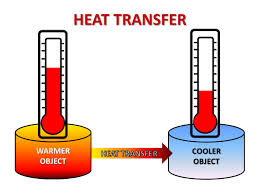
Heat flows from an area of (a) temperature to an area of (b) temperature.
Car A has their AC set to 72oF. Car B has their AC set to 67oF. If it is 98oF outside, which car will heat flow into faster?
Car A
Car B
Heat will flow into the cars at the same rate.
The sun heats up the sand and sea water at the same period of time. Which is the correct observation from the situation given?
sand gets hot slowly and sea water gets hot quickly
sand gets hot quickly and sea water gets hot slowly
both gets hot in a same time.
"When 100 J of heat is supplied to objects X and Y, object X experiences a rise in temperature of 1°C and object Y 2°C. "
Based on the statement above, which objects have higher heat capacity?
X
Y
When 100 J of heat is supplied to objects X and Y, object X experiences a rise in temperature of 1°C and object Y 2°C. This is due to object have different heat capacity. Based on below, which of the best assumptions on "object X have high heat capacity"
Rise of temperature in object X is bigger.
Rise of temperature in object X is smaller
When 100 J of heat is supplied to objects W, X , Y and Z, object W experiences a rise in temperature of 4°C , object X =1°C, object Y = 3 °C and Z = 2°C. Arrange the object in ascending order according to their heat capacity.
W, X, Y, Z
Z, W, Y, X
Y, X, W, Z
X, Z, Y, V
When 500 J of heat is supplied to objects M, N and O, object M experiences a rise in temperature of 5°C, object N= 3°C and object O = 7 °C. Which object has higher heat capacity?
M
N
O
When 500 J of heat is supplied to objects M, N and O, object M experiences a rise in temperature of 5°C, object N= 3°C and object O = 7 °C. Which object has smaller heat capacity?
M
N
O

If the water in beaker A and beaker B is heated for 5 minutes using the same Bunsen burner, which water in the beaker will show higher temperature?
A
B
What does the specific heat capacity of water mean?
=4200 J kg-1°C-1
4200 J heat required by 1 kg of water to raise the temperature by 2 ° C
4200 J heat required by 2 kg of water to raise the temperature by 1 ° C
4200 J heat required by 1 kg of water to raise the temperature by 1 ° C
What are the units for specific heat capacity?
Kg/JºC
J/KgºC
N/mºC
Watts
Determine the heat energy needed to heat the water in the pot to boiling.
Which material heats up slowest?
Aluminium
Concrete
Diamond
Glass
Water
10 kg of aluminium is heated from 120C to 220C. How much energy is needed?
8 970 000 J
897 J
8970 J
89 700 J
897 000J
20 g of water. specific heat of water is 4.18 J/g°C. temperature changes from 25° C to 20° C, how much heat energy (E) moves from the water to the surroundings?
418 J
209 J
83 J
4.18 J
E=mc∆t
E=mc
E= ½mv
m=EC
A 15.75-g piece of iron absorbs 1086.75 joules of heat energy, and its temperature changes from 25°C to 175°C. Calculate the specific heat capacity of iron.
0.46 J/goC
1.654 J/goC
2,567,446.875 J/goC
How many joules of heat are needed to raise the temperature of 10.0 g of aluminum from 22.0°C to 55.0°C, if the specific heat of aluminum is 0.903 J/g°C?
298 Joules
0.003 Joules
297 J/g°C
0.003 J/g°C
A 300.0 g piece of copper is heated and fashioned into a bracelet. The amount of energy transferred by heat to the copper is 66,300 J. If the specific heat of copper is 0.3845 J/g 0C, what is the change of the copper's temperature?
641 °C
7,650,000 Joules
The specific heat of aluminum is 0.9025 J/g°C. How much heat(Q) is released when a 10.0 g piece of aluminum foil is taken out of the oven and cools from 100.0° to 50.0°?
451 J
45.1 J
400 J
20.0 g of water. specific heat of water is 4.184 J/g°C. temperature changes from 25.0° C to 20.0° C, how much heat energy (Q) moves from the water to the surroundings?
418 Joules
209 J
83 J
4.18 J
∆t= 66
∆t=124
∆t=100
∆t=76
The specific heat(c) of copper is 0.38 J/g °C. What is the temperature change(∆t) when 100.0 Joules of heat(E) is added to 20.0 grams?
13 °C
13.2°C
13.16 °C


