
 Worksheets
Fluid mosaic model & transport
Total questions: 152
Worksheet time: 5hrs 10mins
Movement of substances from a region of higher concentration to a region of lower concentration is known as ________________________
Diffusion
Active transport
Phagocytosis

The sodium-potassium pump requires energy to move ions across the cell membrane against their concentration gradient so it is a type of.....
active transport
osmosis
diffusion
facilitated diffusion

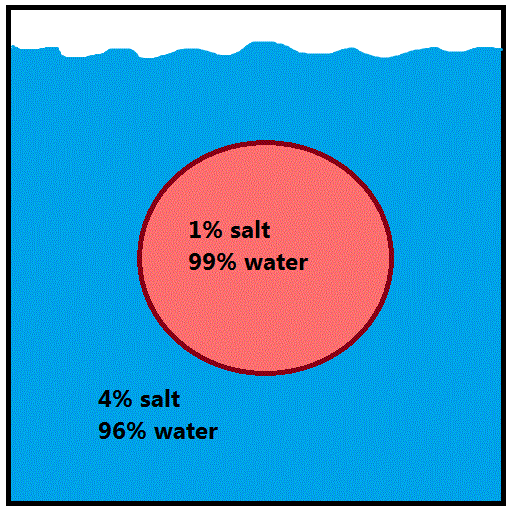
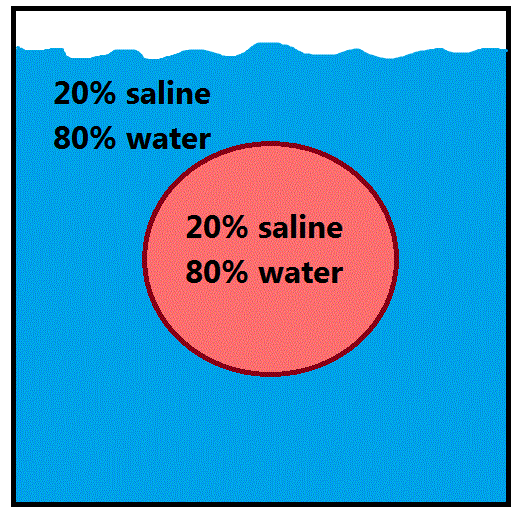
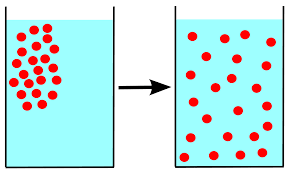
The picture is an example of _________________.
osmosis
facilitated diffusion
diffusion
active transport
Some molecules need the help of membrane proteins to move molecules from areas of high concentration to areas of low concentration.
active transport
facilitated diffusion
diffusion
osmosis
Energy for active transport comes from the cells
Golgi complex
mitochondria
nucleus
lysosome
All of the following are types of passive transport except
facilitated diffusion
simple diffusion
osmosis
endocytosis
The process that moves oxygen across the cell membrane into the cell is called.....
diffusion
osmosis
active transport
phagocytosis


Active Transport __________ require energy and uses the help of __________.
does, protein pumps
does, cytoplasm
does not, transport proteins
does not, sodium pumps


Diffusion & Facilitated Diffusion are both __________ transport.
Passive
Active
Easy
Free
Passive Transport uses ____ energy
no
a lot of
a little bit of
some
_____________ is the free movement of particles across the membrane with the concentration gradient
diffusion
facilitated diffusion
active transport
fusion
What is the movement of particles with the concentration gradient using protein "helpers"?
diffusion
facilitated diffusion
active transport
enzymatic reactions
This regulates the movement of molecules from one side of the membrane to the other.
cell membrane
equilibrium
passive transport
diffusion

Which way would the purple molecules move through the semi permeable membrane?
From the A side to the B side
From the B side to the A side
None of the purple molecules would move.
A process that does NOT use cellular energy is know as
active transport
passive transport
metabolic transport
living transport
Cellular transport is regulated by cell membranes. This happens because cell membranes are __________________________.
impermeable
fully permeable
rigid
selectively permeable
Movement of large and polar molecules down the concentration gradient until equilibrium is achieve
Movement of small, uncharged (non-polar) molecules down the concentration gradient until equilibrium is achieve
Movement of small, uncharged (non-polar) solute molecules against the concentration gradient until equilibrium is achieve
Movement of small, uncharged (non-polar) solute molecules against the concentration gradient using ATP
Osmosis is the movement of _____ from higher water potential region to lower water potential region through semi permeable membrane
food
energy
oxygen
water

Out of the cell, so the cell shrinks
Out of the cell, so the cell swells.
Into the cell, so the cell shrinks.
Into the cell, so the cell swells.

What happens to a plant cell when placed in a HYPOTONIC solution?
the cell lysis
the cell become turgid
the cell is plasmolysed
In diffusion, materials always move from areas of _____________ concentration, to areas of _____________ concentration.
low, high
high, low
low, low
high, high

What process is shown in the diagram below?
active transport
diffusion
osmosis
facilitated diffusion
When cells take in food molecules through active transport, what is it called?
diffusion
phagocytosis
exocytosis
osmosis


Energy from ATP changes the carrier protein's _______ to move molecules in and out of the cell.
charge
temperature
shape
position
Which is true of the sodium-potassium pump?
It moves potassium into the cell and sodium out of the cell.
It moves sodium into the cell and potassium out of the cell.
It moves both sodium and potassium into the cell.
It moves both sodium and potassium out of the cell.
How many sodium ions are moved by the sodium potassium pump?
How many potassium ions are moved by the sodium potassium pump?
four sodium ions,
two potassium ions
two sodium ions,
four potassium ions
three sodium ions,
two potassium ions
one sodium ion,
four potassium ions


The student sitting next to you just came from gym class and forgot to shower and you can tell. is this diffusion, osmosis or active transport?
diffusion
osmosis
active transport
The girl sitting two rows ahead of you put on too much perfume this morning. Is this diffusion, osmosis or active transport?
diffusion
osmosis
active transport
One way to get rid of slugs in your garden is to sprinkle salt on them, so they shrivel up. Is this diffusion, osmosis or active transport?
diffusion
osmosis
active transport
Yum! Something smells good. The neighbors are cooking on the grill! Is this diffusion, osmosis or active transport?
diffusion
osmosis
active transport
Gargling with salt water when you have a sore throat causes your swollen throat cells to shrink and feel better. Is this diffusion, osmosis or active transport?
diffusion
osmosis
active transport
Oxygen molecules move from the air sacs in the lungs across the cell membranes into the blood. Is this diffusion, osmosis or active transport?
diffusion
osmosis
active transport
Robert sprays water on the veggies in the produce section to “plump them up”. Is this diffusion, osmosis or active transport?
diffusion
osmosis
active transport

You put raisins in a glass of water and they plump up. Is this diffusion, osmosis or active transport?
diffusion
osmosis
active transport
Which of the following is a sample of active transport?
movement of oxygen from alveoli into red blood cell
movement of water across cell membrane
plant root absorbing mineral ions from the soil
uptake of water by the root hair of the plant
Which of the following is a sample of osmosis?
plant root absorbing mineral ions from the soil
the scent from a bunch of flowers spreads throughout a room
carbon dioxide move from air into leaves through stomata.
plant root absorbing water from the soil

The diagram shows an experiment using a potato. Which shows the result of the experiment after 24 hours?


Which one is the definition of Diffusion ?
movement of particles through the cell membrane from a region of lower concentration to a region of higher concentration using energy in the form of ATP.
passage of water molecules from a region of their higher concentration to a region of their lower concentration through a partially permeable membrane
net movement of molecule from a region of higher concentration to region of lower concentration. Molecule down a concentration gradient
net movement of molecule from a region of lower concentration to region of higher concentration. Molecule down a concentration gradient
Which one is the definition of Osmosis ?
movement of particles through the cell membrane from a region of lower concentration to a region of higher concentration using energy in the form of ATP.
passage of water molecules from a region of their higher concentration to a region of their lower concentration through a partially permeable membrane
net movement of molecule from a region of higher concentration to region of lower concentration. Molecule down a concentration gradient
net movement of molecule from a region of lower concentration to region of higher concentration. Molecule down a concentration gradient
Which one is the definition of active transport?
movement of particles through the cell membrane from a region of lower concentration to a region of higher concentration using energy in the form of ATP.
passage of water molecules from a region of their higher concentration to a region of their lower concentration through a partially permeable membrane
net movement of molecule from a region of higher concentration to region of lower concentration. Molecule down a concentration gradient
net movement of molecule from a region of lower concentration to region of higher concentration. Molecule down a concentration gradient


Identify cholesterol molecule
structure a
structure b
structure h
structure i

Identify a peripheral protein
structure a
strucure b
structure g
structure h
Plasma membranes are selectively permeable. This means
anything can pass in and out
the membrane regulates the passage of the material in and out of the cell
glucose cannot enter the cell
cholesterol cannot enter
Which is NOT a function of the membrane?
it forms a selective barrier
it has receptors for chemical messages
it is the control center of the cell
it is involved in self recognition
Small, nonpolar, hydrophobic molecules such as fatty acids
easily pass through the membrane's bilayer
very slowly diffuse through the bilayer
require transport proteins
enter through endocytosis
Membrane phospholipids
have hydrophobic heads that face the center of the membrane and are shielded from water
have hydrophilic tails that face outward
remain fluid because they are tightly packed
none of these
Which of the following substances would have the most trouble crossing the membrane by diffusing through the bilayer?
water
oxygen
carbon dioxide
a sodium ion
The cholesterol associated with membranes
is attached to proteins and extends into the environment surrounding the cell
helps stabilize the membrane at body temperature
is an abnormality resulting from a diet high in cholesterol
both a and c
When doctors perform organ transplants, they choose a donor tissue match. Which component is being matched?
membrane phospholipids
cytoskeleton
cell surface carbohydrates
cholesterol
What kinds of molecules pass through a cell membrane most easily?
ionic
small and hydrophobic
large polar
large and hydrophobic
Which of the following would likely move through the lipid bilayer most rapidly?
potassium
an amino acid
Carbon dioxide
glucose
Which of the following allows water to move faster across cell membranes?
aquaporins
ATP
peripheral proteins
the sodium-potassium pump
What is the "big idea" of the Fluid Mosaic Model of plasma membranes?
the plasma membrane creates a specialized FLUID that looks like a MOSAIC.
the plasma membrane is a MOSAIC.
the fluid mosaic model is NOT related to the plasma membrane.
a plasma membrane is a MOSAIC of components that move FREELY and FLUIDLY.
Describes the arrangement of the cell membrane as bendable and made of many parts.
the fluid mosaic model
the major mobility model
the crazy cell model
the cell theroy model

What is the "big idea" of the fluid mosaic model of plasma membranes?
the plasma membrane creates a specialized FLUID that looks like a MOSAIC.
the plasma membrane is a MOSAIC.
the fluid mosaic model is NOT related to the plasma membrane.
a plasma membrane is a MOSAIC of components that move FREELY and FLUIDLY.
What is the name of the macromolecule that makes up the majority of the cell membrane?
Lipid
Carbohydrate
Nucleic acid
Protein
Identify cholesterol molecule
structure a
structure b
structure h
structure i
Identify a peripheral protein
structure a
strucure b
structure g
structure h
Small, nonpolar, hydrophobic molecules such as fatty acids
easily pass through the membrane's bilayer
very slowly diffuse through the bilayer
require transport proteins
enter through endocytosis
Membrane phospholipids
have hydrophobic heads that face the center of the membrane and are shielded from water
have hydrophilic tails that face outward
remain fluid because they are tightly packed
none of these
Describes the arrangement of the cell membrane as bendable and made of many parts.
the fluid mosaic model
the major mobility model
the crazy cell model
the cell theroy model

Where can carbohydrates be found when part of a plasma membrane?
On the outside of the membrane
On the inside of the membrane
Embedded part of the way into the membrane
Embedded the whole way through the membrane
All of the above
Where can PROTEINS be found when part of a plasma membrane?
On the outside of the membrane
On the inside of the membrane
Embedded part of the way into the membrane
Embedded the whole way through the membrane
All of the above
Where can carbohydrates be found when part of a plasma membrane?
On the outside of the membrane
On the inside of the membrane
Embedded part of the way into the membrane
Embedded the whole way through the membrane
All of the above
Where can PROTEINS be found when part of a plasma membrane?
On the outside of the membrane
On the inside of the membrane
Embedded part of the way into the membrane
Embedded the whole way through the membrane
All of the above
What is the "big idea" of the fluid mosaic model of plasma membranes?
the plasma membrane creates a specialized FLUID that looks like a MOSAIC.
the plasma membrane is a MOSAIC.
the fluid mosaic model is NOT related to the plasma membrane.
a plasma membrane is a MOSAIC of components that move FREELY and FLUIDLY.

The purple regions of the image represent:
phospholipid
cholesterol
proteins
carbohydrates

Why do phospholipids tend to spontaneously orient themselves into something resembling a membrane such as the lipid-bilayer sphere, single-layer lipid sphere, and lipid-bilayer sheet?
Phospholipids are amphipathic molecules. The polar head faces towards water and the non polar fatty acid tails face towards other fatty acid tails.
Phospholipids are lipophilic molecules. The polar head faces towards water and the nonpolar fatty acid tails face towards other fatty acid tails
Phospholipids are amphipathic molecules. The nonpolar head faces towards other fatty acid tails and the polar fatty acid tails face towards water.
Phospholipids are hydrophilic molecules. The polar head faces towards water and the nonpolar fatty acid tails face towards other fatty acid tails.

The fluid mosaic model described the plasma membrane, seen here, as a mosaic of components. Why is it advantageous for the plasma membrane to be fluid in nature?
Fluidity allows greater flexibility to the cell and motion of membrane components required for transport.
Fluidity helps only in transport of some materials, and does not contribute to the flexibility.
Fluidity helps in maintaining the pH of intracellular fluid, and helps in maintaining the physiological pH of the cell.
Fluidity helps in providing mechanical strength to the plasma membrane.
List four components of a plasma membrane and explain their function.
Phospholipids: form the bilayer; Carbohydrates: help in adhesion; Cholesterol: form transporters; Integral proteins: provide flexibility; Peripheral proteins: part of the cell’s recognition sites.
Phospholipids: form the bilayer; Carbohydrates: part of the cell’s recognition sites; Cholesterol: provide flexibility to the membrane; Integral proteins: form transporters; peripheral proteins: part of the cell's recognition in communication
Phospholipids: form the bilayer; Carbohydrates: help in adhesion; Cholesterol: provide flexibility; Integral proteins: form transporters; Peripheral proteins: part of the cell’s recognition sites.
Phospholipids: form the bilayer; Carbohydrates: function as adhesion; Cholesterol: provide flexibility to the membrane, Integral proteins: form transporters; Intermediate filaments: part of the cell’s recognition sites.

