
 Worksheets
Motor Vehicle MV2 151 Mock- #4
Total questions: 22
Worksheet time: 11mins
Why do manufacturer's recommend specific service intervals?
It ensures a faster service.
It maximises their annual profits.
It prolongs the vehicle life expectancy.
It stops the need for intervention between services.
What is the legal minimum tyre tread depth for a light vehicle?
1.0mm
1.6mm
2.0mm
2.4mm
What activity should be carried out before a new oil filter is fitted?
Fit a new filter by-pass valve.
Clean the old filter and refit it.
Refit the old seal in the new filter.
Lubricate the seal before refitting.
If the ABS light turns on and then turns off, this indicates to the driver that the ABS system
is functioning correctly
has applied the brakes
is not functioning correctly
system has an intermittent fault.
The typical percentage of anti-freeze/water mix in a cooling system is?
25/75
50/50
60/40
70/30
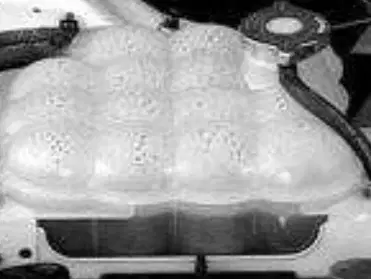
What is the purpose of the expansion tank cap shown in the image below?
It raises the temperature of the coolant.
It raises the pressure in the cooling system.
It allows a negative pressure to be produced.
It allows air movement in and out of the system.
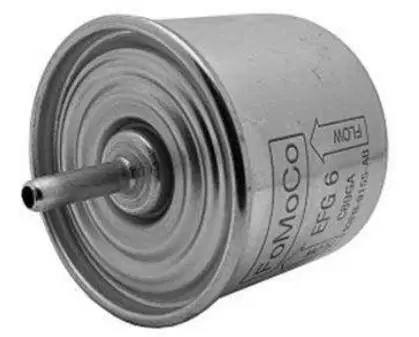
What is the component shown in the image below?
Fuel pump.
In-line fuel filter.
In-tank fuel filter.
Integrated fuel filter.
The front wheel alignment of a vehicle is found to be toeing out. How should the adjustment on a rack and pinion steering system be made?
By adjusting the torsion bar.
By adjusting the pinion diameter.
By adjusting the drop arm length.
By adjusting both of the track rods.
A spark plug gap can be checked by using
a micrometre
a depth gauge
a dial test indicator
What is the main purpose of a brake servo when fitted to a car's braking system?
To increase the pedal leverage.
To increase the brake pad wear.
To increase the stopping distance.
To increase the driver's pedal force.
Which of the following would require re-setting as part of a scheduled routine maintenance?
SRS warning light.
ABS warning light.
Brake pad warning light.
Service reminder warning light.
Brake pads and discs would be inspected on a routine service for which one of the following faults?
Brake fluid reservoir level.
Brake fluid age and condition.
Corrosion and excessive wear.
Excessive pad to disc clearance.
Which one of the following may need adjusting as part of a routine service?
Pad to disc free play.
Brake pedal free play.
Handbrake mechanism.
Load proportioning valve.
One method to check for leaks on a cooling system is by using
a hydrometer
a pressure tester
an emissions tester
an engine code reader
When referring to tyres, what does the abbreviation TWI stand for?
Tyre Wear Indicator.
Tyre Width Indicator.
Tread Wear Indicator.
Tread Width Indicator.
What would be a direct effect of extreme brake shoe to drum clearance?
Excessive brake fade.
The drums to overheat.
The rear brakes to lock up.
Excessive handbrake movement.
Which one of the following faults would be indicated by a low brake fluid reservoir level?
Defective ABS relay.
Over adjusted hand brake.
Excessively worn brake pads.
Excessively warped brake disc.
What is the purpose of a coolant expansion tank?
To check and drain a liquid cooling system.
To clean the coolant within a liquid cooling system.
To allow the coolant to solidify in freezing conditions.
To allow the coolant to expand and contract in the system.
Drive belts should be inspected on a routine service for which of the following?
Wear only.
Tension only.
Condition only.
Wear and condition.
When checking engine oil level using a dipstick, the vehicle should be
on level ground
on a trolley jack
tilted slightly forwards
tilted slightly backwards
Any vehicle damage identified prior to a service should be recorded on
a vehicle job card.
an MOT inspection sheet.
a customer service record book.
an invoice provided to the customer.
A vehicle’s specific engine oil type would be found in the
MOT manual
warranty sheet
workshop manual
vehicle’s inspection record.

