
NEW
Font size
 Worksheets
Earth 3
Total questions: 20
Worksheet time: 7mins
Rock that forms when pressure, temperature, or chemical processes change existing rock.
Igneous Rock
Sedimentary Rock
Metamorphic Rock
Glam Rock
The process by which water, wind, ice, and changes in temperature BREAK DOWN rock into fragments called sediments.
Deposition
Precipitation
Weathering
Eutrophication

This rock was formed by smaller pieces of rock that settled at the bottom of a lake millions of years ago. What type of rock is this?
Igneous Rock
Sedimentary Rock
Metamorphic Rock
Marine Rock

This rock was found near the mouth of a volcano. What type of rock is this?
Igneous Rock
Sedimentary Rock
Metamorphic Rock
Hephaestus Rock
You find a rock in which the grains are arranged in parallel bands of white and black crystals. The rock is probably a(n)
Igneous Rock
Sedimentary Rock
Metamorphic Rock
Post Rock
Small pieces of rock are also called
Coal
Compost
Sediment
Organic Matter
Rocks that have been changed from their
original form by immense heat or pressure
Igneous rocks
Sedimentary rocks
Metamorphic rocks
Slick rocks
Which rock type is typically formed under the surface of the Earth?
Sedimentary
Igneous
Metamorphic
Extrusive
Crystals forming from magma
Lithification
Crystallization
Sedimentation
Metamorphism
Moving wind, water, and glaciers carrying sediment from one place to another
Erosion
Weathering
Compaction
Cementation
The transformation of an existing rock to a rock with a different texture, structure, or mineral composition by extreme heat and pressure
Metamorphism
Lithification
Weathering
Compaction
Igneous rocks that cool underground
Intrusive igneous rocks
Extrusive igneous rocks
Uranic igneous rocks
Hephaestus igneous rocks
Igneous rocks that cool above the surface
Intrusive igneous rocks
Extrusive igneous rocks
Uranic igneous rocks
Hephaestus igneous rocks
The creation of rocks from sediments
Lithification
Vulcanization
Precipitation
Erosion
Sedimentary rocks that form from minerals that precipitate from salt water
Clastic sedimentary rocks
Chemical sedimentary rocks
Organic sedimentary rocks
Compost sedimentary rocks
Rich in magnesium and iron, tend to be dense and darker in color, generally associated with oceanic crust
Felsic
Mafic
Safic
Belsic
Rich in feldspar and quartz, tend to be less dense and lighter in color, generally associated with continental crust
Felsic
Mafic
Safic
Belsic
Occurs when magma touches a rock
Triggered Metamorphism
Contact Metamorphism
Regional Metamorphism
Kafkaesque Metamorphism
Occurs over a wide area when great masses of rock are exposed to pressure from sediment and rock layers on top of it
Triggered Metamorphism
Contact Metamorphism
Regional Metamorphism
Kafkaesque Metamorphism
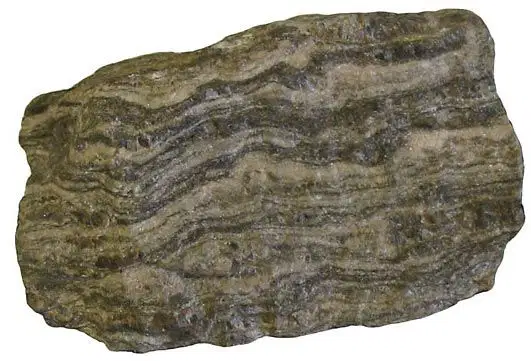
The layered or banded structure found in some rocks due to the alignment of minerals under pressure
Tigrification
Foliation
Lithification
Cementation
![[BGCS] The Fourth Quarter Test](https://cf.quizizz.com/image/image-loader.svg)
