
Font size
 Worksheets
BCA: 3rd Grade: Social Studies: Declaration of Independence&Rev
Total questions: 60
Worksheet time: 33mins


A form of government in which authority over the people is held by a ruling family (King or Queen)?
What are three reasons England wanted to claim land in the "New World"?
gold
natural resource
trade
wanted to take the Native Americans
Match the descriptions and images to the correct colony.
hills, rocky terrains not good for farming, and cold winters

rich farmland good for farming, and moderate climate

farms and plantations with good farming soil, hot summers and mild winters

This Act said the colonist had to pay taxes on sugar, molasses's, and several other goods.
This Act said the colonists had to buy a government stamp for almost every paper document.
Sugar Act of 1764
Stamp Act of 1765
Townshend Act
The colonist got so mad and angry that Great Britain repealed or did away with the Sugar Act and the Stamp Act. They replaced these two with a new Act call the _______?
This Act replaced the Sugar Act and Paper Act and taxed the colonist on many products like paint, paper and tea.
What did the Sugar, Stamp and Townshend Acts all have in common and how did the colonist react to these acts?
All three taxed benefits the colonist, and they were all very happy
All three taxed the colonist, and it made them very angry
What did the slogan, "no taxation without representation" mean to the colonists?
The colonist did not want to pay taxes unless they had a voice (saying) in the choices their government made.
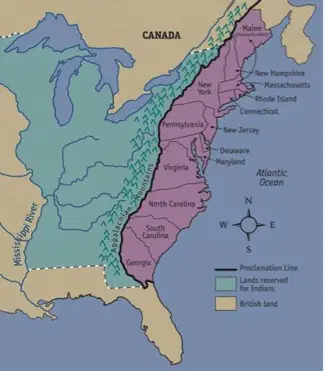
Why did France and Great Britain want the land west of the Appalachian Mountains? (select the correct answer, may be more than one)
good natural resources (forest for wood)
good farming to grow crops
expand their territories
How did France and Great Britain solve the conflict over the land west of the Appalachian mountains?
they went to war against each other and fought it out
their generals settle it by playing rock, paper, scissors
they had a horse race and who ever won got the land west of the Appalachian Mountains
Who won the war and gained the land between the Mississippi River and Appalachian mountains?
Great Britain (British)
When Great Britain's new King, George III passed a new law call the Proclamation of 1763, what did this new law tell the colonist they could not do?
Why was the Proclamation of 1763 passed?
To prevent conflicts(war) with Native American tribes and establish a boundary line for colonial settlement
How did the Sons of Liberty protest the Tea Party?
They dressed up as Native Americans, boarded the ships, and dumped more than 300 chest tea into the Boston Harbor
What did Thomas Paine promote in Common Sense?
Independence from Great Britain
What is the main difference between a representative democracy and a monarch?
In a representative democracy the people have the power and elect a smaller group of citizens to make laws for everyone, while a monarchy is ruled by the royal family.
Why was the Declaration of Independence created?
Who wrote the Declaration of Independence?
What are three "unalienable" or natural rights listed in the Declaration of Independence?
Right to Life, liberty, and the pursuit of happiness
What is the significance of Independence Day?
Americans celebrate their Declaration of Independence from British rule on July 4th, 1776
Americans celebrate soldiers and veterans who fought for our country
Americans celebrate with fireworks and hot dogs
Americans celebrate all citizens who work
Who wrote Common Sense?
The New England colonies had ____ soil?
good for farming
rich
rocky, not good for farming
Why was George Washington a significant person in the American Revolutionary War?
He was the commander in Chief of the Continental Army
He helped the army get the supplies and training they needed
He won many battles
all the above
How did the colonist react to the sugar, stamp and townshed Acts?
they did not want to pay taxes unless they had a voice in the choices their government made
none of the above
they were very happy about the Acts
they wanted to pay taxes even if they did not have a voice in the choices their government made
Why do people establish governments according to the Declaration of Independence?
to protect their land
to protect their rights
to protect their freedom
to protect their families
Why were the colonists upset about the Tea Act of 1773?
all the above
the colonist were angry that the tax was too low
the colonists were angry that the tax was not on tea and not coffee
the colonists were angry that another tax was given to them and that they had no representatives in Parliament
How did the French and Indian War lead to problems between Great Britain and its colonies?
The French started taxing the colonies to pay for the war. French said colonists could not settle west of the Appalachian mountains. Colonists were mad.
Great Britain started taxing the colonies to pay for the war. Great Britain said colonists could not settles west of the Appalachian mountains. They were mad
The Middle colonies had _____.
mild climate
hot summers and mild winters
hot all year round
cold winter
Why did people want to leave their homes in Great Britain to become colonists in American?
they wanted land, adventure and jobs
they wanted freedom of religion, land and more tea
they wanted gold, natural resources and iron
they wanted religious freedom, adventure and the chance to own land
What did the Sugar, Stamp and Townshend Acts have in common?
all three taxed the colonists
all three took away the colonists freedom
all three gave colonists their freedom
all three taxed tea
money that the government collects from people and businesses
tax
How did the Sons of Liberty protest the Tea Act?
none of the above
they held signs outside of businesses and protested
they stopped buying tea
they opened more than 300 chests of British tea and dumped them into the Boston Harbor
How was the soil in the Southern colonies?
not good for farming
hills, rocks, not good for farming
good for farming
a settlement controlled by a separate country
to be free
liberty
independence
slogan
parliament
The New England colonies had ______
hot climate all year round
mild climate
hot summers and mild winters
cold winters
Why was the Declaration of Independence created?
the colonies met to debate whether they should be apart of Great Britain. They decided to declare their Independence and wrote the Declaration of Independent
None of the Above
The colonists wanted to go to war. They decided to draft the Declaration of Independence
the colonists wanted to join forces with Great Britain. They wrote the Declaration of Independence as an agreement
ideas or actions that bring about a great change
slogan
proclamation
congress
revolutionary
Which is not an achievement of George Washington?
wrote to congress for supplies
he accomplished all of these things
commander in chief of the American Continental Army
moved soldiers to Valley Forge
How did the American Revolution end?
the two sided decided to split the land 50/50
the two side fought in a war that was never resolved
none of the above
Great Britain surrendered at Yorktown, and they signed the Treaty of Paris
Name an example of the American Revolution still used today.
city and town streets names after revolutionary heros
George Washington and Thomas Jefferson's face on money
none of the above
a picture of them was put on the moon
a government where the people have the power
monarchy
representative
representative democracy
revolutionary
How was the climate in the Southern colonies
cold winter
hot summers and mild winters
mild climate
hot all year
Why is the American Revolution significant in our lives today?
The war was the reason Great Britain still rules America today
The war is the reason we cannot travel to Great Britain
all the above
The war is the reason we are out own country today
What did Common Sense promote?
independence from Great Britain
independence from America
independence from Spain
independence from France
Why did the American colonies want to be independent from Great Britain?
the colonist wanted to make their laws and felt that the French government was violating their rights
the colonists wanted to make their laws and felt that the British government was violating their rights
the colonist wanted to make their laws and felt that the American government was violating their rights
the colonist wanted to make their laws and felt that the Native Americans were violating their rights
Big Question:
How did significant events, people and ideas of the Revolutionary era shape the formation of the United States?
It secured American Independent from Great Britain and established a republic for citizen rather than a monarchy.
all the above
It is not significant in the history of the U.S.A
It established a monarchy rather than a republic
a person chosen by a group to represent them at a meeting
patriot
loyalist
delegate
ally
a colonists who supported American Independence
Patriot
Parliament
Loyalist
Militia
freedom to make decision for oneself
patriot
tyrant
to withdraw from enemy forces because of their superior power or after a defeat
revolution
repeal
tyrant
retreat
Which of the following is not an unalienable or natural right listed in the Declaration of Independence?
liberty
pursuit of freedom
life
pursuit of happiness
a country that supports and helps another country in a war
How was the soil in the Middle colonies
rich
rocky, not good for farming
good for farming
a cruel and unreasonable ruler
patriot
tyrant
monach
loyalist
a group of ordinary citizens who organize themselves for a military service

