
 Worksheets
Unit 1 Review
Total questions: 44
Worksheet time: 44mins
What is the part of an experiment that serves as a standard for comparison?
Control Group
Constant
Hypothesis
Variable
The air that you breathe is an example of a(n) __________ solution.
solid
liquid
gaseous
plasma
The most common state of matter in the universe is __________.
solid
liquid
gas
plasma
The color of ink is a __________.
physical change
physical property
chemical change
chemical property
All of the following are steps in the scientific method EXCEPT __________.
observing and recording data
forming a hypothesis
developing a model
discarding data that doesn’t match the hypothesis
Three examples of physical changes are __________.
A factor that does NOT change in an experiment is the
constant
control group
dependent variable
independent variable
The “cause” of the experiment, what we are purposefully manipulating or changing is the
constant
control group
dependent variable
independent variable
Which of the following is not a physical property?
Color
Odor
State
Reactivity with oxygen
_____ is another name for a homogeneous mixture.
Liquid
Substance
Suspension
Solution
In which phase of matter are the molecules of the substance farthest apart from each other?
solid
liquid
gas
crystal
A type of matter formed by chemically joining two or more elements is known as a
compound
solution
colloid
suspension
Which of the following liquids would be the most viscous?
syrup
water
lemonade
soda
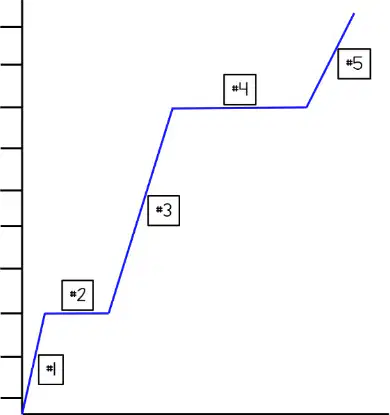
Use the word bank to label the five parts of the heating curve below. Remember, there may be more than one label on each segment. You should use every word in the word bank. (7 pts)
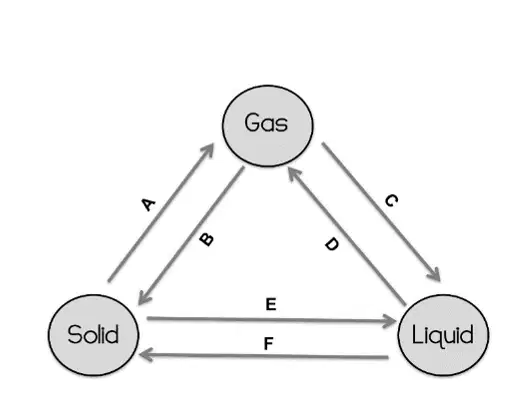
Use the word bank below to label the states of matter picture to the right. Each word will only be used once. (6 pts)
element
compound
mixture
Which is the BEST example of a pure substance
peanuts
milk
gold
air
Explain the difference between physical and chemical exfoliants.
Physical exfoliants involve scrubbing the skin's surface, while chemical exfoliants work by dissolving dead skin cells.
Physical exfoliants work by dissolving dead skin cells
Chemical exfoliants involve scrubbing the skin's surface
Physical exfoliants involve spraying the skin's surface
Which is a Chemical property?
Dissolving
Density
Color
Flammability
Odor (smell)

What is the density?
2
800
60
20
What is the normal boiling point of water
0oC
100oF
50oC
100oC
Soda water is formed by mixing carbon dioxide (CO2) with distilled water (H2O). Classify the two substances based on the information provided.
Soda water and distilled water are both heterogeneous mixtures.
Soda water is a homogeneous mixture and distilled water is a pure substance.
Soda water is a pure substance while distilled water is a homogeneous mixture.
Soda water and distilled water contain hydrogen and oxygen, therefore they are both pure substances.
While studying, you learn that the sugar that you eat has a chemical symbol of C11H22O11. Based on that info, how can you classify sugar?
Element
Compound
Mixture
True or false:
Dissolved particles will pass through a piece of filter paper.
True
False
A pure substance is
A substance made of only one type of element
A substance made of multiple atoms
A substance made of only one type of molecule
A substance that is made of pure things found in nature
Which of the following are both solutions?
Water and chicken noodle soup
Baking powder and cornstarch
milk and household bleach
lemonade and soda pop
What is the Tyndall effect?
The technique used to separate solid particles in a liquid using a filter paper
The process of separating a sublimable volatile component from a non-sublimable impurity by sublimation
The separation of immiscible liquids into layers depending on their densities
The scattering of a beam of light by the particles of a colloid, making the path of light visible
Choose the following heterogeneous and homogeneous mixtures.
Paint
Salt
Kool-Aid
Chocolate Chip Cookies

Why does oil and water not mix with each other?
It is an acid and water is neutral
The hydrogen bonds in water are stronger than oil
Water decomposes oil
Oil does mix with water if you stir it long enough
Label whether the mixture is homogenous or heterogenous.
TRAIL MIX
HOMOGENOUS
HETEROGENOUS

Flammability is a(n)....
Chemical Property
Physical Property
Not a property

These properties require special testing to determine
chemical properties
physical properties
extensive properties
intensive properties
What is the diffference between chemical and physical properties.
A characteristic that does not involve a change in the identity of a substance,
A characteristic that determines how a substance will change into another substance
A physical property the identity does not change when in a chemical property it turns into a new substance.
A chemical property the identity does not change when in a physical property it turns into a new substance.
Which state of matter has particles that are close together but can move past one another?
Solid
Liquid
Gas
Plasma

This state of matter does not have a definite size or shape.
gas
toys
solid
milk

Which state of matter has particles arranged like this?
solid
liquid
gas
Match the following:

solid

liquid

gas
The particles of a substance are arranged in a definite geometric pattern and are constantly vibrating. This substance can be in
the solid phase, only
the liquid phase, only
either the liquid or the solid phase
neither the liquid nor the solid phase
The physical state of a matter depends upon
temperature and pressure
temperature only
pressure only
nature of substance
Label the 3 states of matter shown here
Solid
Liquid
Gas

The particle diagrams represent a substance at different states of matter. Select the response that correctly identifies each arrangement in order.
Liquid, Solid, Gas
Gas, Liquid, Solid
Solid, Gas, Liquid
Solid, Liquid, Gas
List the steps of the scientific method
Conduct experiment
Form a hypothesis
Draw conclusions
Communicate results
Ask a question
Analyze results

