
NEW
Font size
 Worksheets
KIN 4315 Advanced AT Pre-Assessment
Total questions: 40
Worksheet time: 1hrs 2mins
When determining a treatment and rehabilitation program, which evaluation should be used as a baseline?
Initial evaluation
Reevaluation
Discharge evaluation
Final evaluation
Which of the following components of the clinical evaluation is the most informative?
history
inspection/
observation
palpation
special tests
What type of consent is needed before evaluating an injury?
implied consent
informed consent
non consent
assumed consent
A complete history should be taken in which of the following injury situations?
sideline evaluation of sprained ankle
on-field evaluation of an injured knee
clinical evaluation of an injured shoulder
follow up orthopedic exam
Before beginning the physical inspection portion of the exam, the clinician should be most concerned about their safety. Which of the following is the greatest threat to the clinician if an injured knee is about to be evaluated?
bruising of the knee
bleeding from an abrasion on the knee
swelling on the lateral portion of the knee
swelling on the lateral portion of the knee
What is the best method for palpating an injury?
immediately palpate the most painful site
if there is a bilateral structure, palpate it first
palpate away from the injury working toward the injury
Palpation does not offer any information and should not be performed
Active range of motion (AROM) should not be completed unless which of the following is present?
fracture
contusion
sprain
strain
Which of the following represents the heart rate range in beats/minute (bpm) of the general population?
60 to 100 bpm
80 to 120 bpm
70 to 110 bpm
90 to 120 bpm
When performing an immediate on-field examination, which of the following injuries should be ruled out first?
inhibition of the cardiovascular and respiratory systems
life-threatening trauma to the head or spinal column
fractures
profuse bleeding
How many metatarsals bones are located in the foot?
7
5
14
28
When performing chest compressions on a adult, how far should you push down on the chest?
0 - 0.5 inches
0.5 - 1 inch
1.5 - 2 inches
4 - 6 inches
During prolonged, intense training and conditioning of an athlete, what cardiac change may occur over a period of time?
development of heart murmur
development of premature ventricular contractions
increased heart size
decrease heart size
When working on a bleeding athlete, what should the athletic trainer always do?
refer to the nearest emergency department
avoid touching any bloody areas
wash hands before treatment
wear gloves
The condition where the circulatory system cannot circulate blood to all parts of the body is called:
shock
sepsis
defibrillation
seizure
A strain is an injury that occurs to a ligament
True
False
Which of the following is not a sign or symptom of a fracture?
swelling
deformity
loss of use
crepitus
all of the above are S&S of a fracture
Which of the following should NOT be done for a person experiencing non-life threatening heat related illness?
sit the victim down in the sun
apply cool, wet cloths and give them ample fluids to drink
call 9ll immediately
place the victim in warm water
Which of the following descriptions is correct regarding a chronic injury?
develops over a long period of time
no clear causative mechanism
vague or absent signs and symptoms
characterized by rapid onset resulting from traumatic event
Which of the following descriptions is correct regarding a chronic injury?
characterized by rapid onset resulting from traumatic event
obvious, clearly identifiable causative mechanism
usually associated with a significant traumatic event
Characterized by a slow, insidious onset
all of these describe a chronic injury
Which of the following muscles is not included in the rotator cuff muscle group?
teres major
teres minor
supraspinatus
infraspinatus
subscapularis
What type of bone is the patella?
sesamoid
irregular
long
short
Which three bones make up the shoulder girdle?
ulna, radius, and humerus
humerus, scapula, and sternum
sternum, clavicle, and humerus
humerus, scapula, and clavicle
What is the common name ofr medial tibial stress syndrome?
shin splints
runner's knee
hallux valgus deformity
IT band syndrome
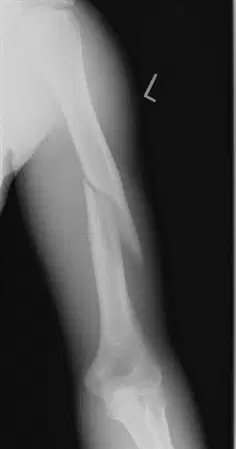
What injury is suspected based on the x-ray image?
fractured clavicle
fractured humerus
AC sprain
none of the above
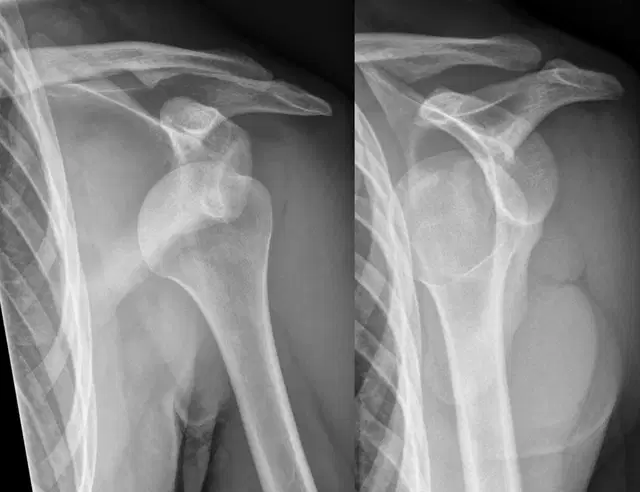
Which injury is being depicted in the x-ray image?
shoulder impingement
dislocation of the shoulder
biceps tendinitis
clavicle fracture
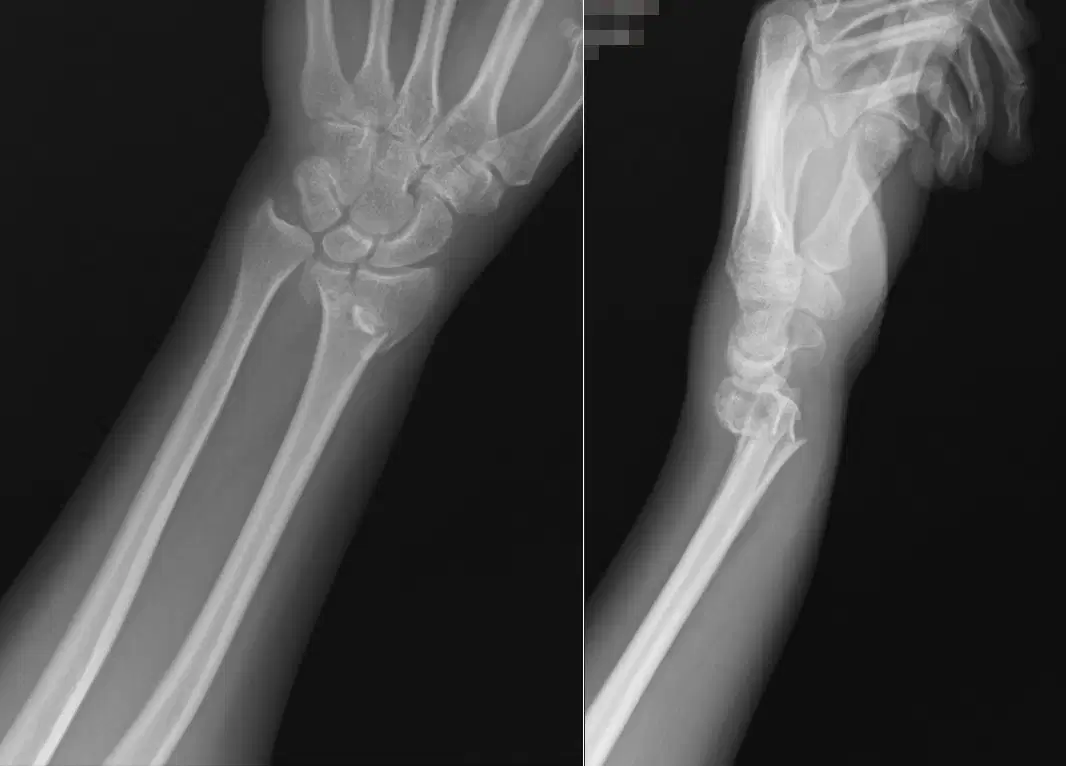
What type of fracture is being depicted in the x-ray image?
Colles' fracture
Scaphoid fracture
Wrist fracture
ulnar fracture
Which of the following can cause an indirect sports fatality?
contact sports
a blow to the head
blunt force trauma to the chest
rodeo riding
heat stroke
An athlete with a suspected concussion is allowed to return to participation the same day as the injury.
True
False
What does the acronym SOAP stand for?
subjective, objective, assessment, palpation
subjective, objective, assessment, plan
subjective, objective, assessment, pronation
subjective, observation, assessment, plan
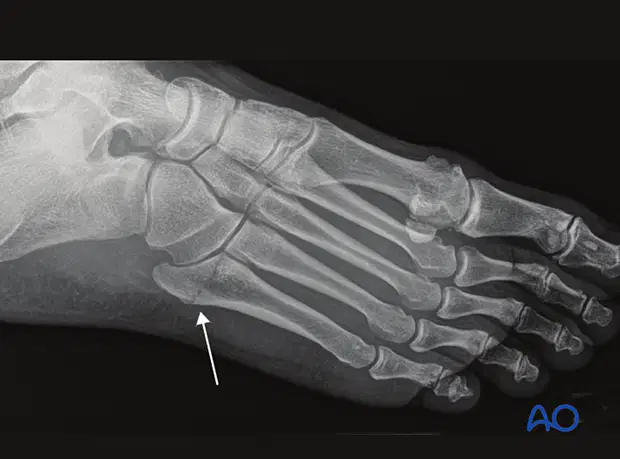
Which injury is depicted in the x-ray?
jones' fracture
fracture talus
march fracture
holly fracture
What condition is at its worst with the first few steps out of bed in the morning, pain on the medial aspect of the heel, and intensifies when the patient tries to push off on their toes?
march fracture
plantar fasciitis
toe fracture
bunion
The eversion ankle sprain is the most common injury to the ankle
True
False
An athlete may participate with a grade 3 ankle sprain, because it is the least severe form of the sprain.
true
false
Compartment Syndrome is considered a MEDICAL EMERGENCY
true
false
Which of the following is NOT a soft tissue injury?
Tears
Sprains
Contusions
Fracture
Which of the following is not a common site to ascertain a pulse?
Radial artery
Brachial Artery
Tibialis Posterior
artery
All of the above are common sites
What does hypertrophic cardiomyopathy mean?
enlarged heart
ruptured spleen
labrum tear
biceps brachii tendon rupture
What is the first step in CPR?
Make sure the scene is safe
Start Compressions
Clear the airway
Check responsiveness
What is the compression to breath ratio in CPR?
20:3
10:10
30:2
2:30
Which grade of injury represents a PARTIAL tear or rupture?
Grade 1
Grade 2
Grade 3
Grade 4

