wayground logo

Free Printable Worksheets

NEW

Font size

S
M
L
XL
Worksheets

92 Biochemistry & ED Review

Total questions: 50

Worksheet time: 50mins

Name
Class
Date
1.
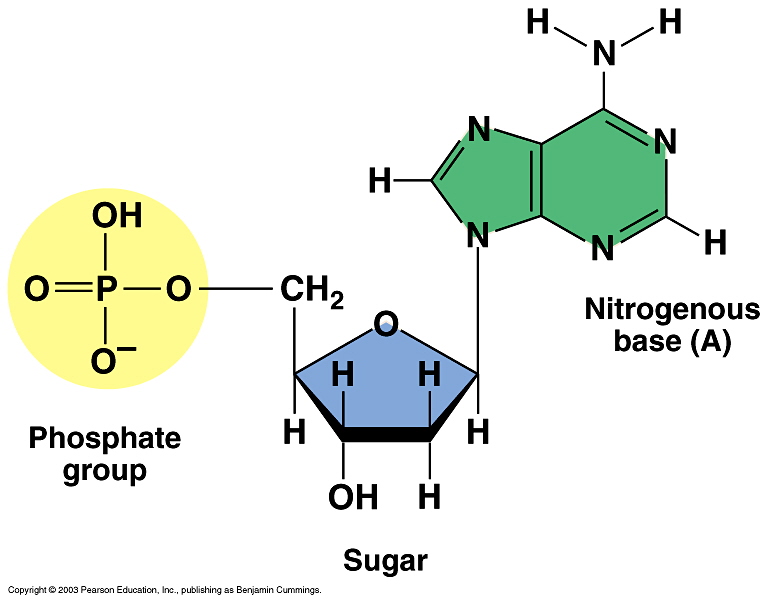
Which major macromolecule is being represented in this image? 
a)
carbohydrate
b)
lipid
c)
protein
d)
nucleic acid
2.
Which of the following contains the genetic code for protein synthesis?
a)
carbohydrate
b)
lipid
c)
protein
d)
nucleic acid
3.

Which macromolecules has a nitrogen base and phosphate found in its structure?

a)

carbohydrate

b)

lipid

c)

protein

d)

nucleic acid

4.
What is being represented by letter C? 
a)
Enzyme
b)
Active site
c)
Substrate
d)
Lipid
5.
Proteins are made of monomers called ___________
a)
Nucleotides
b)
Monosaccharides
c)
Amino Acids
d)
Glycerol and fatty acids
6.
Monosaccharides are monomers of
a)
Carbohydrates
b)
Lipids
c)
Proteins
d)
Nucleic Acids
7.
Waxes, oils and fats are examples of
a)
Carbohydrates
b)
Lipids
c)
Proteins
d)
Nucleic Acids
8.
Which macromolecule is shown?
 View Figure 4 (if not visible)
a)
lipid
b)
protein
c)
nucleic acid
d)
carbohydrate
9.
Which macromolecule is shown?
 View Figure 3 (if not visible)
a)
lipid
b)
protein
c)
nucleic acid
d)
carbohydrate
10.
Which macromolecule is shown?
 View Figure 2 (if not visible)
a)
lipid
b)
protein
c)
nucleic acid
d)
carbohydrate
11.
What type of macromolecule are enzymes?
a)
Protein
b)
Carbohydrate
c)
Lipid
d)
Nucleic Acid
12.
Carbohydrates are made of... 
a)
C H O
b)
C H O N
c)
C H O N P
d)
C H O N S
13.
Lipids are made of... 
a)
C H O
b)
C H O N
c)
C H O N P
d)
C H O N S
14.
Proteins are made of... 
a)
C H O
b)
C H O N
c)
C H O N P
d)
C H O N S
15.
Which macromolecule stores energy, insulates us, and makes up the cell membrane?
a)
lipids
b)
proteins
c)
carbohydrates
d)
nucleic acids
16.
Which macromolecule is made of simple and complex sugars?
a)
lipids
b)
proteins
c)
carbohydrates
d)
nucleic acids
17.
Glucose is a _____.
a)
carbohydrate
b)
lipid
c)
protein 
d)
nucleic acid
18.
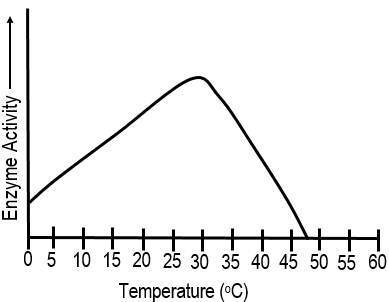
Based on the graph, what temperature does this enzyme work best? 
a)
15 C
b)
40 C
c)
30 C
19.
Letter D...
a)
active site
b)
enzyme
c)
substrate
d)
products
20.
Letter C...
a)
active site
b)
enzymes
c)
substrate
d)
products
21.
Identify the biomolecule
a)
Lipid
b)
Protein
c)
Carbohydrate
d)
Nucleic Acid
22.
Enzymes are _________ that __________ chemical reactions.
a)
proteins, slow down
b)
proteins, speed up
c)
lipids, slow down
d)
lipids, speed up
23.
What is the DEPENDENT variable (effect) in this experiment?
"Do tall people jump further than short people?"
a)
height of the person
b)
weight of the person
c)
how fast the person runs
d)
how far the person jumps
24.
What is the INDEPENDENT variable (cause)in this experiment?
"Which type of metal, copper or aluminum, conducts heat faster?" 
a)
size of metal
b)
types of metal
c)
time it takes to heat up
d)
shape of the metal
25.

A cow is given a growth hormone and then compared to another cow that was not given a growth hormone. Both cows were weighed at 2 years. What is the independent variable in this scenario?

a)

growth hormone

b)

weight of cow

c)

cows

26.

A cow is given a growth hormone and then compared to another cow that was not given a growth hormone. Both cows were weighed at 2 years. What is the dependent variable in this scenario?

a)

growth hormone

b)

weight of cow

c)

cows

27.

Which pair of answers correctly matches the monomer and the polymer?

a)

Glucose- Protein

b)

Amino Acid- Nucleic Acid

c)

Nucleotide - Nucleic Acid

d)

Fatty Acid- DNA

28.
The process that builds molecules (by removing water) to bind them together is
a)
Hydrolysis
b)
Protein Synthesis
c)
Dehydration Synthesis
d)
Lysis
29.
The chemical reaction that breaks down a molecule (by adding water) is
a)
Dehydration Synthesis
b)
Hydrophobia
c)
Hydrolysis
d)
Dehydration
30.
Enzymes are proteins that help increase the rate of chemical reactions inside cells. These proteins are composed of many simpler molecules called amino acids. Which of the following suggests that the shape of an enzyme determines the enzyme’s function?
 
a)
Enzymes are specific to a substrate.
b)
Enzymes can operate in a wide range of conditions.
c)
Enzymes are activated by neighboring molecules.
d)
 Enzymes can be found in all life-forms. 
31.
Why is the “lock and key” analogy often used to describe enzyme
function?
a)
Each enzyme is the same as its substrate.
b)
Each enzyme will fit with only one specific kind of substrate.
c)
Each enzyme can only be used once in a reaction and cannot be used
again.
d)
Each enzyme has its own active site that will not fit with other active
sites.
32.
Which best explains the purpose of the active site of an enzyme?
a)
The active site is for the attachment of the substrate.
b)
The active site changes to fit any available substrate.
c)
The active site determines how many reactions will be catalyzed.
d)
The active site determines how fast the reaction is allowed to occur.
33.

Which of the following biomolecules is correctly paired with its function?

a)

Carbohydrates - long-term energy storage

b)

Cell membrane - build muscle

c)

Nucleic acids - growth maintenance

d)

Lipids - long-term energy storage

34.

Which of the following macromolecules is correctly paired with its function?

a)

Protein - short-term energy storage

b)

Nucleic acids - genetic information (DNA/RNA)

c)

Lipids - speed up chemical reactions

d)

Lipids - short-term energy storage

35.

The optimal pH for Trypsin is:

a)

1.5

b)

5

c)

7.3

d)

8.2

36.

The optimal pH for Pepsin is:

a)

1.5

b)

5

c)

7.3

d)

8.2

37.

When an enzyme binds to its substrate, it forms:

a)

Enzymes

b)

Enzyme-Substrate Complex

c)

Mitochondria

d)

Activation energy

38.

An enzyme works optimally at a pH between 1 and 3.

Which best explains what will happen to this enzyme at a pH of 10?

a)

It will work on the same substrate as it did at a pH range of 2–4, but it will not work as well.

b)

It will work on a different substrate than at a pH range of 1–3.

c)

It will lose its original shape and work on new substrates.

d)

It will lose its original shape and not work on any substrate at all.

39.

_________ is the minimum amount of energy required to start a chemical reaction

a)

Substrate

b)

Products

c)

Activation energy

d)

Enzyme

40.
What 3 letters do enzymes typically end in?
a)
-ose
b)
-ase
c)
-ese
d)
-tic
41.
What affects Enzyme activity?
a)
cold temperature & pH levels
b)
hot or cold temperature & environment
c)
high temperature &  pH levels
d)
pH levels & environment
42.
What happens when enzymes are heated to a high temperature?
a)
The enzymes die.
b)
The shapes of the enzyme are altered or denatured
c)
The enzymes' amino acid sequence changes.
d)
The enzymes remain the same
43.
What substrate is metabolized by catalase? 
a)
hydrogen peroxide
b)
dihydrogen monoxide
c)
carbon dioxide
d)
sodium bicarbonate
44.

What are the constant variables?

a)

what we are changing or testing

b)

what we are observing or measuring

c)

what we keep the same to make the experiment fair

45.
The Independent/Manipulated Variable goes on the ___ axis
a)
x
b)
y
46.
The Dependent/Responding Variable goes on the ___ axis
a)
x
b)
y
47.

How how carbohydrates and lipids similar?

a)

both contain C, H, O, N, P and store energy

b)

both contain C, H, O, N and give energy

c)

both contain C, H, O, N, S and store energy

d)

both contain C, H, O and give energy

48.
How many sugar units make up polysaccharides?
a)
one
b)
two
c)
more than two
d)
zero
49.
What are the monomers of DNA?
a)
glycerols
b)
amino acids
c)
fatty acids
d)
nucleotides
50.
What are the functions of proteins?
a)
build structures and provide quick energy
b)
repair tissue and store long-term energy
c)

build structures/
hormones/enzymes

d)
provide energy/ transport