
 Worksheets
MTT 4303 - Discussion
Total questions: 44
Worksheet time: 40mins
What is the primary purpose of aging raw materials like clay before processing?
a) To increase moisture content
b) To improve plasticity and workability
c) To reduce particle size
d) To enhance color intensity
Feldspar is used in ceramics primarily as a:
a) Coloring agent
b) Binder
c) Fluxing agent
d) Drying agent
What role does feldspar play in the ceramic body?
a) Acts as a plasticizer
b) Provides color
c) Lowers the melting temperature
d) Acts as a binder
Which crusher is most suitable for large hard materials?
a) Jaw crusher
b) Ball mill
c) Edge-runner
d) Impact hammer
What is the primary function of a ball mill in ceramic processing?
a) Size reduction of large particles
b) Mixing of raw materials
c) Drying of materials
d) Separation of materials
Why is an accurate weighing of raw materials critical in ceramic production?
a) To save costs
b) To ensure consistency in the product
c) To reduce production time
d) To enhance color uniformity
The traditional tool used for shaping pottery on a rotating platform is called a:
a) Jigger
b) Jolley
c) Potter’s wheel
d) Stamping press
Which plastic forming method involves pressing a rotating mold into a sheet of clay?
a) Jolleying
b) Jiggering
c) Stamping
d) Throwing
What is the main difference between jiggering and jolleying?
a) Jiggering uses a fixed mold, jolleying uses a rotating mold
b) Jiggering applies pressure from the outside, jollying applies pressure from the inside
c) Jiggering applies pressure from the inside, jollying applies pressure from the outside
d) Jiggering is manual, jolleying is automatic
What is Drain Casting?
What is Solid Casting ?
Write ONE (01) advantage and ONE (01) disadvantage of slip casting process ?
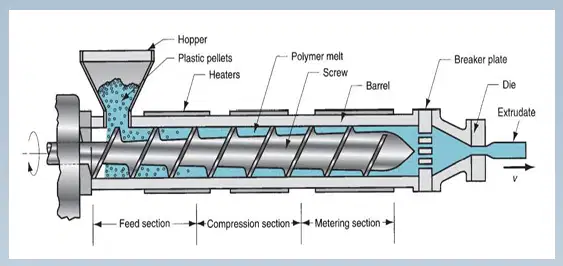
Using the image find the term described as "The component feeds the raw material into the extrusion machine"
(a)
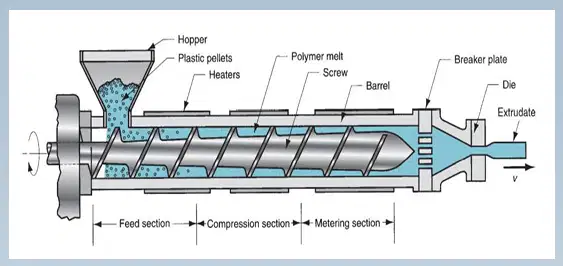
Using the image find the term described as "The part of the extrusion machine helps push the material through the die"
(a)
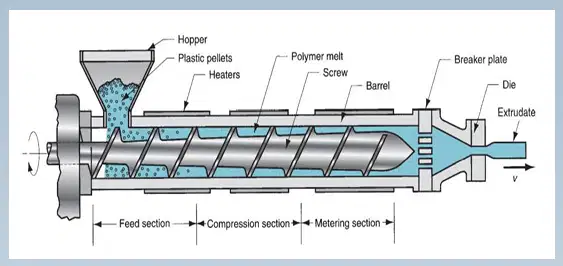
Using the image find the term described as "The equipment is used to maintain the temperature of the material during the extrusion process"
(a)
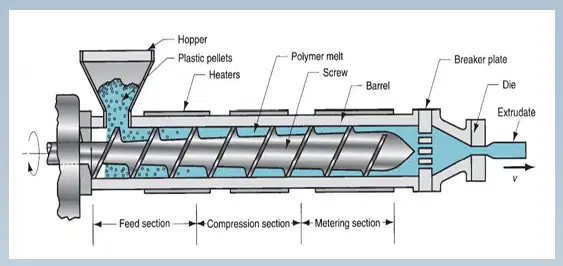
The component that shapes the extruded material into the desired form?
(a)
Which of the following is NOT an advantage of injection molding in advanced ceramics?
a) Cost-effective technique for complex designs
b) Ability to produce near-net-shape parts
c) Very low tolerance control
d) Complex ceramic parts can be manufactured easily and reliably
Powder pressing is commonly used to produce which type of ceramic products?
a) Hollow items
b) Flat tiles and components
c) Round pottery
d) Large sculptures
Explain the Uniaxial (Die) Pressing?
Explain the Isostatic Pressing?
Explain the "Cold Isostatic Pressing (CIP)" ?
What is the main purpose of air drying in ceramic processing?
a) To reduce moisture content before firing
b) To improve the surface finish
c) To prevent color changes
d) To increase the strength of the product
Which type of dryer is commonly used in the ceramic industry?
a) Rotary dryer
b) Tunnel dryer
c) Freeze dryer
d) Drum dryer
The main factors affecting the drying rate of ceramic products is:
a) The type of clay used
b) The thickness of the product
c) The color of the product
d) The firing temperature
What is glost firing?
a) Initial firing of the ceramic body
b) Final firing after glazing
c) Firing for bisque ware
d) Low-temperature firing
What is the main purpose of using a gradient kiln?
a) To achieve uniform temperature
b) To test the maturing temperature of glazes and bodies
c) To reduce firing time
d) To save fuel
Which of the following is an advantage of the sintering process?
a) Increased porosity
b) Enhanced strength and density
c) Reduced mechanical properties
d) Decreased particle packing
What happens to the porosity of a ceramic material during sintering?
a) It increases
b) It remains the same
c) It decreases
d) It disappears completely
In which zone of the tunnel kiln are the sintered parts cooled down?
a) Preheat zone
b) Sintering zone
c) Cooling zone
d) Combustion zone
What is the main purpose of glazing in ceramics?
a) To add color
b) To create a non-porous surface
c) To increase weight
d) To improve thermal resistance
Fill the blank.
Underglaze is applied (a) a clear glaze.
What are the raw materials use in a ceramic glazes?
What is the primary reason for using frits in ceramic glazes?
A) To increase the hardness of the glaze
B) To prevent water-soluble ingredients from dissolving in water
C) To make the glaze more colorful
D) To improve the taste of ceramic products
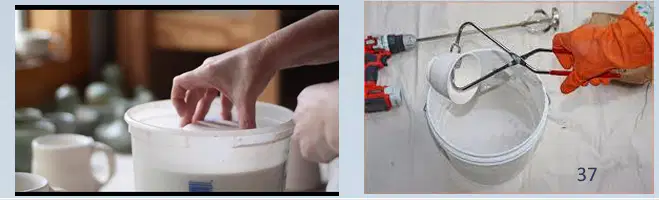
What is this glaze application technique?
(a)
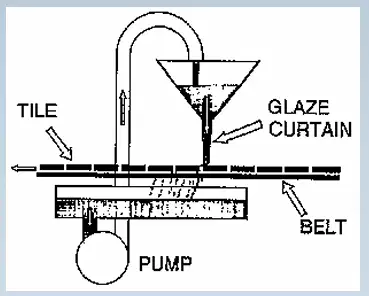
What is this glaze application technique?
(a)
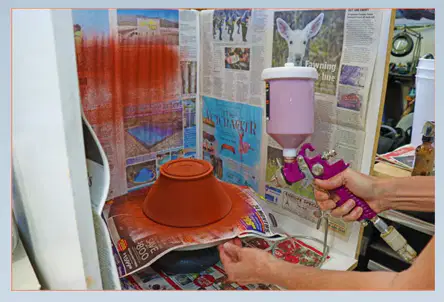
What is this glaze application technique?
(a)
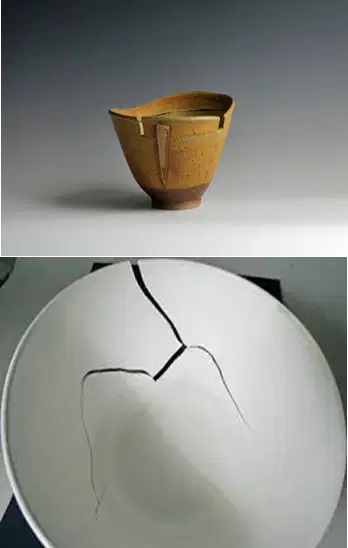
What is this defect?
(a)
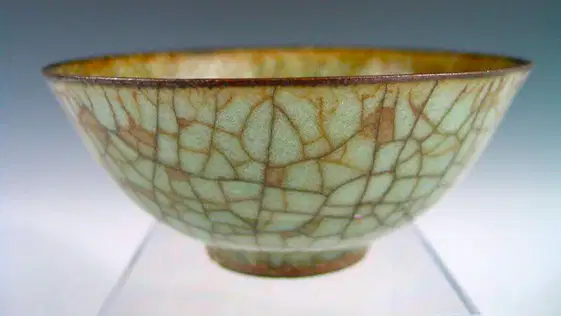
What is this defect called?
(a)
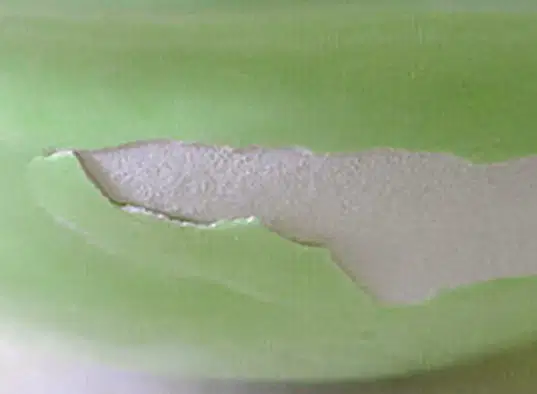
What is this defect called?
(a)

What is this defect called?
(a)
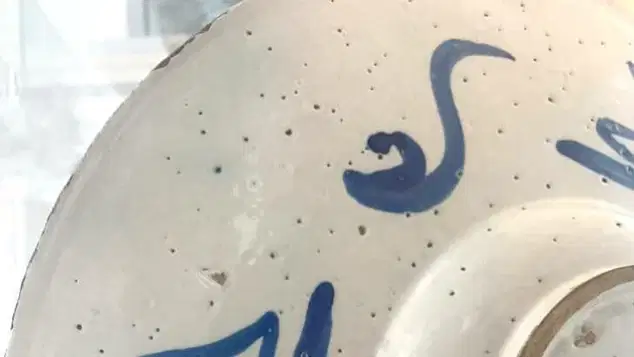
What is the defect called?
(a)

What is the defect called?
(a)
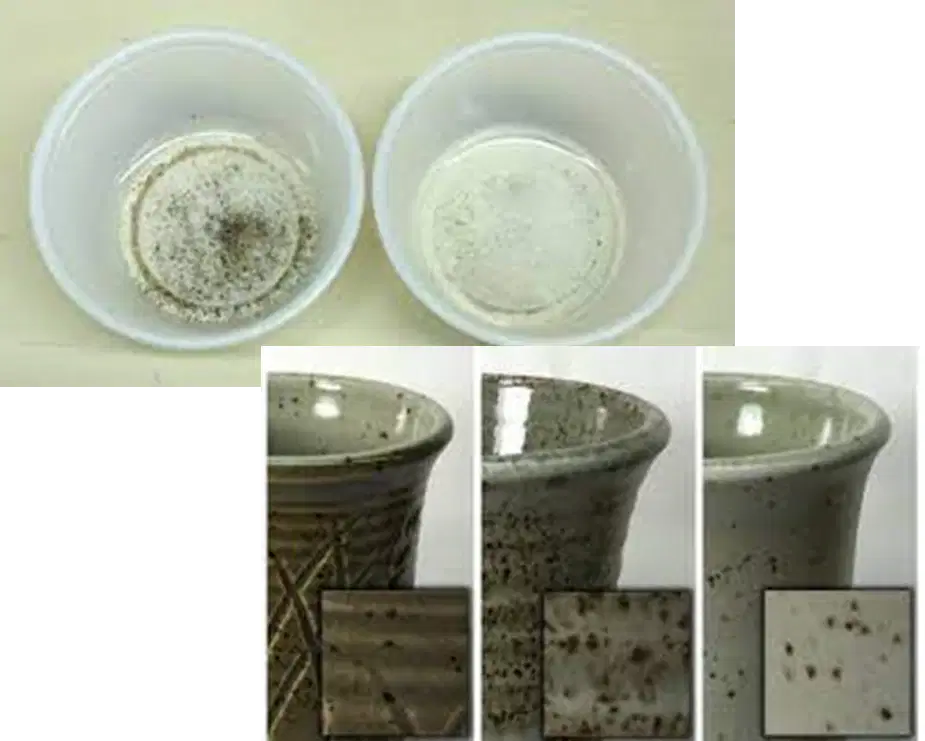
What is this defect called?
(a)
Why is quality control important in ceramic production?
a) To reduce costs
b) To ensure consistent product quality
c) To speed up production
d) To reduce energy consumption

