
 Worksheets
Matter and Mixtures
Total questions: 45
Worksheet time: 28mins
Type of matter //// Shape /// Movement /// Energy
Solid /// Uniform /// (a) /// (b)
Liquid /// (c) /// Partilces slide /// Some
Gas /// Indefinate /// (d) /// Lots
How can you determine the melting or freezing point of a substance when looking a phase change graph?
The graph flattens out at the melting/freezing point
The graph slants upwards at the melting/freezing point
The graph slants downwards at the melting/freezing point

What letter would the phase be ONLY gas?
B
D
E
F

Where is melting occuring?
A --> B
B--> C
C-->D
D--> E

What is occurring between B & C?
Temperature is rising & it is a solid
Temperature is rising and it is a liquid
Temperature is rising & it is a gas

What letter would match the melting point?
A
B
D
G

Which letter would match the boiling point?
A
B
C
D

What letters would be only a solid?
A-->B
C-->D
E-->F
None of these are correct.

What letters would be only a liquid?
A-->B
C-->D
E-->F
None of these are correct

What letters would be only a gas?
A-->B
C-->D
E-->F
none of these are correct
Transition from a liquid to a gas
Condensation
Freezing
Evaporation
Melting
Gas condenses to a liquid
Evaporation
Melting
Freezing
Condensation
What happens to molecules when their kinetic energy increases?
The molecules move slower
The molecules move faster
The molecules get heavier
It depends on the type of molecule

Three containers with the same amount of the same material are shown below. Which container has the substance with the highest amount of energy?
The container on the left
The middle container
The container on the right
All have an equal amount of energy
Three containers with the same amount of the same material are shown below. Which container has the substance with the lowest amount of energy?
The container on the left
The middle container
The container on the right
All have an equal amount of energy
Amy was sitting outside on a hot, summer day, enjoying a glass of sweet iced tea. She notices some water droplets on the outside of her glass. What is causing those water droplets?
The outside air is heating up the ice, causing it to melt into a liquid.
The cold liquid in the glass is cooling the air around it, making it condense into a liquid.
The outside air is heating up the liquid in the glass, causing it to evaporate.
The liquid in the glass is cooling the air around it, causing it to evaporate.
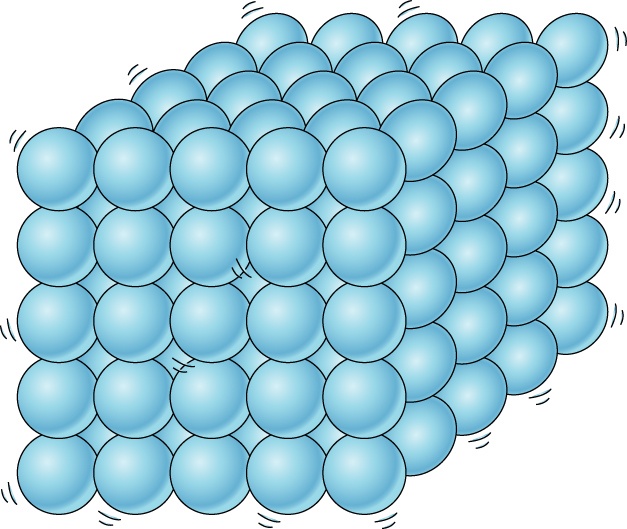
What state of matter?
Solid
Liquid
Gas
Plasma!!!
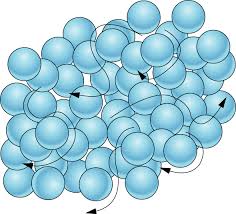
What state of matter?
Solid
Liquid
Gas
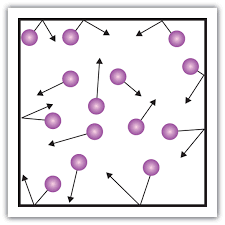
What state of matter?
Solid
Liquid
Gas
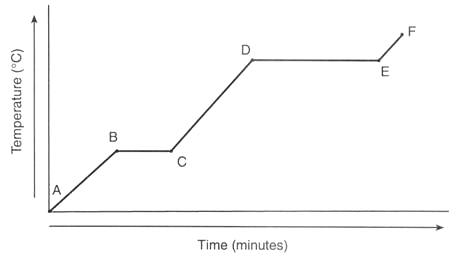
What is happening to the particles in the substance between points D and E?
Melting
Freezing
Vaporizing
Sublimating

What phase change occurs when you start at C and end at D?
Freezing
Melting
Condensing
Vaporization

Heterogeneous
Homogeneous

Heterogeneous
Homogeneous
The density of 2 candy hearts is ____ than the density of 5 candy hearts
more than
less than
the same as
unknown
A homogeneous mixture is the same thing as...
a solution
a heterogeneous mixture
a compound
an element
Which statement describes a mixture of sand and water at room temperature?
It is heterogeneous, and its components are in the same phase.
It is heterogeneous, and its components are in different phases.
It is homogeneous, and its components are in the same phase.
It is homogeneous, and its components are in different phases.
How can you separate a mixture of iron filings and sand?
By adding water and filtering the mixture.
By heating the mixture until the sand melts.
Using a magnet to attract the iron filings.
By adding acid to dissolve the sand.
Erin pours a mixture of sand and salt into a glass of warm water. She stirs the sand and salt with the water for one minute. She waits a few minutes and looks at the glass. She observes the following:
Which outcome will Erin observe and how could she classify the results of this experiment?
Salt dissolves in the water, while the sand sits at the bottom of the container making the salt and water a homogeneous mixture and the sand sitting at the bottom a heterogeneous mixture.
Salt is transparent in a liquid making it an element.
Salt evaporates from the water making it a heterogeneous mixture.
Salt chemically combines with sand making this a compound.


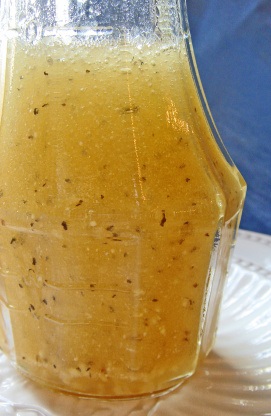
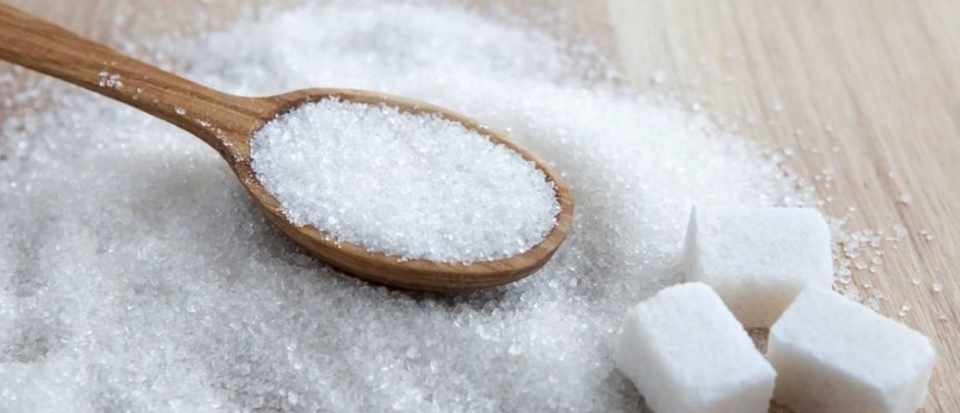
What happens when sugar dissolves in water?
Physical change because a new substance is formed
Chemical change because a new substance is formed
Physical change because the sugar is just getting smaller
Chemical change because the sugar is just getting smaller
Something that is made of two or more parts of matter
Mixture
Solution
Combination
Conjunction

