Wayground logo

Free Printable Worksheets

Font size

S
M
L
XL
Worksheets

Practice Test: Atomic review, Isotope vs Ion Review

Total questions: 51

Worksheet time: 57mins

Name
Class
Date
1.
An element has two naturally occurring isotopes. One is 10.013 amu and is 19.9% abundant. The other is 11.01 amu and is 80.1% abundant. What is the average atomic mass? What element is it?
a)
9.012, Beryllium
b)
12.011, Carbon
c)
6.941, Lithium
d)
10.812, Boron
2.

Chlorine has two naturally occurring isotopes, Cl-35 and Cl-37, The atomic mass of chlorine is 35.45. Which of these two isotopes of chlorine is more abundant?

a)

Cl-35

b)

Cl-37

c)

Cannot be determined from the information provided.

3.
Nitrogen has three occurring isotopes: Nitrogen-13, Nitrogen-14, Nitrogen-15. Which isotope is the most abundant?
a)
Nitrogen-13
b)
Nitrogen-14
c)
Nitrogen-15
d)
Based on the information given, it cannot be determined
4.
How many neutrons would Fe-56 have?
a)
56
b)
26
c)
30
d)
33
5.
If an atom of nickel has a charge of +3, how many electrons does the atom have?
a)
28
b)
25
c)
26
d)
31
6.
If an atom of oxygen has a charge of -2, how many electrons does the atom have?
a)
18
b)
6
c)
8
d)
10
7.
Which of the following could have 14 neutrons?
a)
Al-27
b)
Si-29
c)
Mg-25
d)
Na-22
8.
How many neutrons does the isotope of lithium have?
a)
8
b)
3
c)
4
d)
5
9.
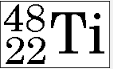
How many protons does this isotope of titanium have?
a)
48
b)
22
c)
26
d)
70
10.

If the number of electrons in an atom changes you make a(n) __________________.

a)

ion

b)

isotope

c)

new element

d)

isomer

11.
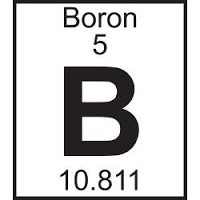
How many protons does this atom have?
a)
2.5
b)
6
c)
5
d)
10.811
12.

If the number of neutrons in an atom changes you make a(n) __________________.

a)

ion

b)

isotope

c)

new element

d)

isomer

13.

Which of the following is the correct isotope for the following ion: Protons = 20; Neutrons = 21; Electrons = 18

a)
b)
c)
d)
e)
14.

Which of the following is the correct isotope for the following ion: Protons = 8; Neutrons = 8; Electrons = 10

a)
b)
c)
d)
15.

Which of the following is the correct isotope for the following ion: Protons = 30; Neutrons = 36; Electrons = 28

a)
b)
c)
d)
e)
16.

What is a cation's charge?

a)

positive

b)

negative

c)

neutral

d)

depends on the element

17.

What is an anion's charge?

a)

positive

b)

negative

c)

neutral

d)

depends on the element's charge

18.
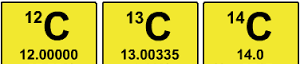
What do these isotopes of carbon all have in common?
a)
neutrons & mass number
b)
atomic number and neutrons
c)
atomic number and electrons
d)
protons, atomic number, and mass number
19.
In a correctly written symbol what would be located in the "A" position?
a)
number of neutrons
b)
atomic number
c)
number of electrons 
d)
mass number
20.

How many protons, electrons, and neutrons?

a)

16 protons

16 electrons

16 neutrons

b)

16 protons

18 electrons

16 neutrons

c)

16 protons

14 electrons

16 neutrons

d)

32 protons

32 electrons

16 neutrons

21.
24.1% of all the isotopes of a an element have a mass of 75.23 amu, 48.7% have a mass of 74.61 amu, and 27.2% have a mass of 75.20 amu.
What is the average mass of this element?
a)
74.92 amu
b)
24.97 amu
c)
75.01 amu
d)
74.51 amu
22.

Calculate the average atomic mass of the element iron (Fe) using the following data:

[Isotope / % abundance]

[Iron 54 / 6% ] [Iron 56 / 92% ] [ Iron 57 / 2% ]

a)

53.7 amu

b)

54.9 amu

c)

5592.0 amu

d)

55.9 amu

23.
How many neutrons in C-14?
a)
6
b)
7
c)
14
d)
8
24.
Nitrogen has three occurring isotopes: Nitrogen-13, Nitrogen-14, Nitrogen-15. Which isotope is the most abundant?
a)
Nitrogen-13
b)
Nitrogen-14
c)
Nitrogen-15
d)
Based on the information given, it cannot be determined
25.
Carbon has three known isotopes. Which is the most abundant?
a)
carbon-12.011
b)
carbon-12
c)
carbon-13
d)
carbon-14
26.
What is the shorthand electron configuration for Sulfur atom?
a)
[Ar] 3p4
b)
[He] 3s23p4
c)
[Ne] 3s23p4
d)
[Na] 3s23p3
27.
What is this element? 
1s22s22p63s23p6
4s23d104p6
a)
Argon
b)
Krypton
c)
Selenium
d)
Bromide
28.
What is the charge of an atom that has gained one electron?
a)
-1
b)
-2
c)
+1
d)
+2
29.
How many electron can be found in a p orbital?
a)
2
b)
3
c)
4
d)
6
30.
This orbital diagram represents:  
a)
C
b)
B
c)
N
d)
O
31.
Which of the following could have the electron configuration 1s22s22p63s23p6
1.Cl-
2. K+
3. Al3+
a)
1 only
b)
2 only
c)
1 and 2
d)
1, 2, and 3
32.

Who discovered that atoms are mostly empty space?

a)

Dalton

b)

Thomson

c)

Rutherford

d)

Bohr

33.

In the atomic model nicknamed the "plum pudding" model, what do the plums represent?

a)

the nucleus

b)

the atom

c)

the electrons

d)

the positive material

34.

Who proposed that electrons move around the nucleus in circular orbits?

a)

Dalton

b)

Thomson

c)

Rutherford

d)

Bohr

35.

In Rutherford's famous "Gold Foil" experiment, some particles passed through the foil, some were deflected, and some were bounced straight back. This observation made Rutherford conclude

a)

gold atoms have a solid nucleus

b)

gold atoms can conduct electricity

c)

gold atoms are denser than other metals

d)

gold's elections orbit the nucleus at definite distances from the center

36.
Value representing the number of protons in an element
a)
Atomic Mass
b)
Mass Number
c)
Valence Electrons
d)
Atomic Number
37.
Calculation used to find the number of neutrons in an atom
a)
Atomic Mass - Atomic Number
b)
Atomic Number - Atomic Mass
c)
Atomic Mass - Electrons
d)
none of these
38.
The nucleus of an atom is made of
a)
electrons and protons
b)
electrons and neutrons
c)
protons and neutrons
d)
empty space
39.

How do electrons become excited?

a)

Emitting light/energy

b)

Absorbing light/energy

c)

Going down an orbital/energy level

d)

Going up an orbital/energy level

40.

When an atom _______________ _____________, its electrons can use this energy to move to a higher energy level.

a)

releases energy

b)

absorbs energy

c)

emits radiation

d)

gets rid

41.

Explain what was occuring during the flame test that caused the flame change colors.

a)

The electrons gained energy and moved to an excited state.

b)

The electrons gained energy and moved to an ground state.

c)

The electrons released energy and moved to a ground state.

d)

The electrons released energy and moved to an excited state.

42.

When the element is heated, the electrons jump to higher energy level and this is called the ___ state.

a)

ground

b)

excited

43.

An element has the following configuration: 1s22s22p5


What is this element?

a)

Boron

b)

Nitrogen

c)

Fluorine

d)

Chlorine

44.
Where are the metals on the Periodic Table?
a)
To the left
b)
In the upper right hand corner
c)
On the zigzag line
d)
At the bottom
45.
In what state of matter are most of the nonmetals?
a)
Solid
b)
Liquid
c)
Gas
d)
Plasma
46.

How many NEUTRONS does an atom of Chlorine have?

a)

17

b)

18

c)

19

d)

35

47.
Electronegativity is...
a)
how good an atom is at attracting electrons
b)
the ability of an atom to lose electrons
c)
the energy required to remove an electron from a specific atom
d)
how easy it is to make friends. 
48.
Which elements have the same number of valence electrons?
a)
A & C
b)
E & C
c)
F & A
d)
F & B
49.

Which of the following elements is most likely to have similar properties to those of sodium (Na)?

a)

Magnesium (Mg)

b)

Sulfur (S)

c)

Francium (Fr)

d)

Titanium (Ti)

50.

Which element is most likely to have six valence electrons?

a)

Barium (Ba)

b)

Carbon (C)

c)

Oxygen (O)

d)

Americium (Am)

51.

Select the element with the largest atomic radius

a)

Potassium

b)

Scandium

c)

Gallium

d)

Arsenic