

wayground logo

Free Printable Worksheets

Font size

S
M
L
XL
Worksheets

Lesson 3 Quiz - BSHM 2B (part 2) 2)

Total questions: 8

Worksheet time: 20mins

Name
Class
Date
1.

What is the importance of Data-driven decision making in business?

a)
Data-driven decision making eliminates the need for human intuition.
b)
Data-driven decision making is only useful for large corporations.
c)
It is primarily about increasing the number of employees in a business.
d)
It focuses solely on reducing costs without considering customer needs.
e)
Data-driven decision making is crucial for enhancing accuracy, efficiency, and customer understanding in business.
2.

Which is the correct sequence in making data?

a)
Data Collection, Data Processing, Data Analysis, Data Interpretation, Data Presentation
b)
Data Analysis, Data Collection, Data Processing, Data Presentation, Data Interpretation
c)
Data Processing, Data Interpretation, Data Analysis, Data Collection, Data Presentation
d)
Data Interpretation, Data Presentation, Data Collection, Data Analysis, Data Processing
e)
Data Presentation, Data Analysis, Data Interpretation, Data Processing, Data Collection
3.

Which of the following BEST describes Database Management System?

a)
A system for managing hardware resources.
b)
A tool for designing user interfaces.
c)
A software for creating multimedia content.
d)
A software system that enables the creation, management, and manipulation of databases.
e)
A programming language for web development.
4.

How does Relational Databases differ from NO SQL database?

a)
NoSQL databases are only used for small datasets.
b)
Relational databases do not support transactions.
c)
Relational databases use structured schemas and enforce ACID properties, while NoSQL databases are schema-less and prioritize scalability.
d)
NoSQL databases require a fixed schema for data storage.
e)
Relational databases are always faster than NoSQL databases.
5.

The following are the applications of Big Data in Business EXCEPT

a)
Financial forecasting techniques
b)
Data analytics for marketing strategies
c)
Customer relationship management
d)
Supply chain optimization
e)
Personal hobbies or activities unrelated to data-driven decision making
6.

Identify the steps in making data. Explain each.
4 lines
7.

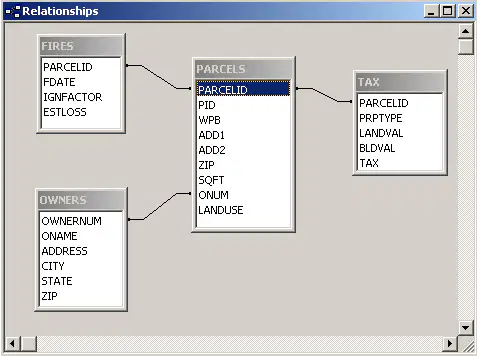
Refer to the figure at the left. What type of database is it, relational database or NOSQL database? Why?

4 lines
8.

You have a milk tea business and have received compliments about how great your milk tea tastes. To check if this is true, you recorded your sales over six months. However, the data reveals that your expenses are higher than your monthly sales. Should you rely on the positive customer feedback or the financial data you’ve collected? Why? (Answer this question in 3 to 5 sentences)

4 lines