
NEW
Font size
 Worksheets
8.6 Matter and Energy Review
Total questions: 75
Worksheet time: 38mins
Which of the following statements about elements and compounds is accurate?
Elements are many different types of atoms together but compounds are just one type of atom.
Elements are pure substances that cannot be broken down physically but compounds are pure substances that can be broken down physically.
Elements are not found on the Periodic Table but compounds are found on the Periodic Table.
Elements are pure substances that cannot be broken down chemically but compounds are pure substances that can be broken down chemically.
Which element is found in all organic compounds?
Carbon (C)
Nitrogen (N)
Hydrogen (H)
Oxygen (O)
The air that surrounds us is categorized as which of the following?
Element
Compound
Mixture
Organic compound
Which of the following could be the chemical formula for a compound?
Na
CO₂
H₂ + O₂
Au
Which of the following could be the chemical formula for an element?
Si₂
H₂O
C + O₂
C₆H₁₂O₆
Which of the following could be the chemical formula for a mixture?
CO2
H2
NACl + H2O
How could you separate a mixture of sand and water?
Pick out each sand grain
Allow the water to evaporate
Drink the water
This mixture cannot be separated
Which of the following is not an example of an element?
Platinum
Zinc
Glucose
Helium
Which of the following provides the number of atoms of an element?
Coefficient
Chemical symbol
Subscript
Capitals
Which of the following provides the number of molecules of an element or compound?
Coefficient
Chemical symbol
Subscript
Capitals
How many atoms of hydrogen does this formula indicate you have: 5H₂O?
1
2
7
10
How many atoms of sodium does this formula indicate you have: NaCl?
0
1
2
3
Which of the answers below would not be a chemical symbol of an element?
Mg
Zn
fe
Co
Which of the following chemical formulas contains the most total atoms?
CO
NaCl
NaHCO₃
H₂O
Which of the following chemical formulas contains the least total atoms?
CO
H₂O
Fe₂O₃
C₃H₈
Which of the following chemical formulas contains the most molecules?
5CO
3H₂O
2Fe₂O₃
4C3H8
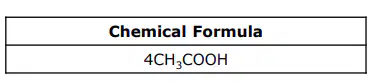
Which of the following correctly lists the elements in the chemical formula above?
Carbon, hydrogen, cobalt, oxygen
Carbon, hydrogen, oxygen
Carbon, helium, oxygen
Carbon, cobalt, oxygen

How many different elements are present in the chemical formula above?
1
2
3
4

How many total atoms are represented in the chemical formula above?
8
12
16
32

How many total atoms of Oxygen (O) are present in the chemical formula?
2
6
8
10

How many total atoms of Hydrogen (H) are present in the chemical formula?
4
8
16
24

How many molecules of acetic acid (CH₃COOH) are present?
0
1
4
12

Which of the following is a true statement about the chemical formula above?
There are twice as many oxygen atoms as hydrogen atoms.
There are twice as many hydrogen atoms as oxygen atoms.
There are the same number of oxygen atoms and hydrogen atoms.
There are carbon atoms than any other atoms.
How many molecules of water does this formula indicate you have: 5H₂O?
1
5
7
10
If the number of atoms of each element in a chemical equation are equal on both sides of a chemical equation, then the equation is -
Balanced
Unbalanced
Equal
Unequal
Which of the answers below would be a correct chemical symbol of an element?
MG
mg
mG
Mg
Which of the following chemical formulas contains the most atoms?
CO
NaCl
NaHCO₃
H₂O
Which of the following chemical formulas contains the least total atoms?
CO
H₂O
Fe₂O₃
C₃H₈
Which of the following chemical formulas contains the most molecules?
5CO
3H₂O
2Fe₂O₃
4C₃H₈
Which of the following best describes cohesion?
The attraction of molecules of different substances
The attraction of molecules of the same substance
A measure of how difficult it is to break the surface of a liquid
Which of the following is responsible for water forming a "dome" shape when it is poured onto a surface?
Cohesion
Adhesion
Surface Tension
Friction
Water soaking into a paper towel is an example of which of the following?
Cohesion
Adhesion
Surface Tension
Gravity
Which of the following allows water striders to walk on water?
Cohesion
Adhesion
Surface Tension
Weight
Which of the following substances is not hydrophilic?
Sponge
Wax paper
Paper towel
Cotton ball
Which of the following occurs when a water droplet is placed on a hydrophobic surface?
It absorbs into the surface
It spreads out into a thin layer
It forms a meniscus on the surface
It beads up on the surface
Which of the following does not play a role in capillary action?
Cohesion
Adhesion
Surface Tension
Density
Which of the following is not an example of surface tension?
Water soaking into a sponge
Water forming droplets on a waxed car
A water strider walking on the surface of water
A paperclip floating on the surface of water
What role does adhesion play in wetting a surface?
It causes water to bead up on a surface
It does not allow water to touch a surface
It causes water to evaporate off of the surface
It causes water to spread out on a surface
Certain insects are able to walk on the surface of water without sinking. How is this possible?
Due to the surface tension of water and being able to distribute their weight over a large area
Due to the low density of water
Due to the high viscosity of water
Due to the adhesion properties of water
Which of the following is responsible for a droplet of water sticking to the roots of plants?
Cohesion
Adhesion
Surface Tension
Erosion
How does cohesion play a role in the high surface tension of water?
It causes water molecules to stick together
It causes water molecules to stick to other substances
It causes water to flow easily
It causes water to evaporate
Water is able to move upward in a plant’s stem, against the force of gravity, due to which of the following?
Cohesion
Adhesion
Surface Tension
Inertia
Which of the following causes water droplets to join together to form larger droplets?
Cohesion
Adhesion
Surface Tension
Gravity
A mystery solution has a pH of 6.5. Which of the following best describes the solution?
The solution is a weak base.
The solution is a weak acid.
The solution is a strong base.
The solution is a strong acid.
Which of the following could be the possible pH of a solution that results from combining an acid and a base?
pH = 1.5
pH = 12.5
pH = 3.5
pH = 7.5
Which of the following is a similarity between acids and bases?
Both have a pH less than 7.
Both have a pH greater than 7.
Both can be corrosive to skin.
Both taste bitter.
Which of the following is a difference between acids and bases?
Acids are corrosive and bases are not.
Acids have a pH less than 7 and bases have a pH greater than 7.
Acids are able to conduct electricity and bases are not.
Acids have a bitter taste and bases have a sour taste.
Which of the following is a characteristic of an acid?
Turns blue litmus paper red.
Turns red litmus paper blue.
Has a bitter taste.
Has a pH greater than 7.
Which of the following would represent a very strong base?
A solution with a pH of 13.
A solution with a pH of 9.
A solution with a pH of 5.
A solution with a pH of 1.
Which of the following correctly identifies the reason for taking an indigestion tablet for an upset stomach?
The tablet helps to increase the acidity in the stomach.
The tablet helps to reduce the basicity in the stomach.
The tablet helps to speed up the digestive process.
The tablet helps to neutralize acid in the stomach.
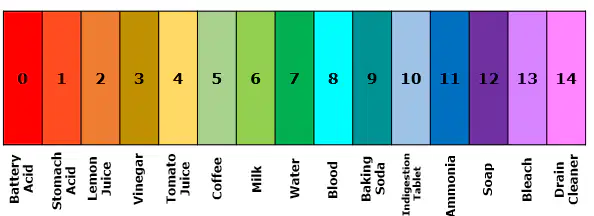
Which of the following lists only bases?
Lemon juice, coffee, vinegar
Baking soda, ammonia, milk
Bleach, soap, drain cleaner
Indigestion tablet, battery acid, water
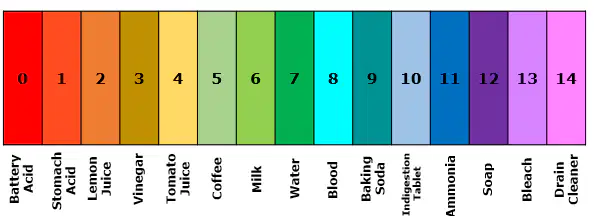
Which of the following would be more acidic than hydrogen peroxide (pH = 3)?
Tomato juice
Vinegar
Soap
Battery acid
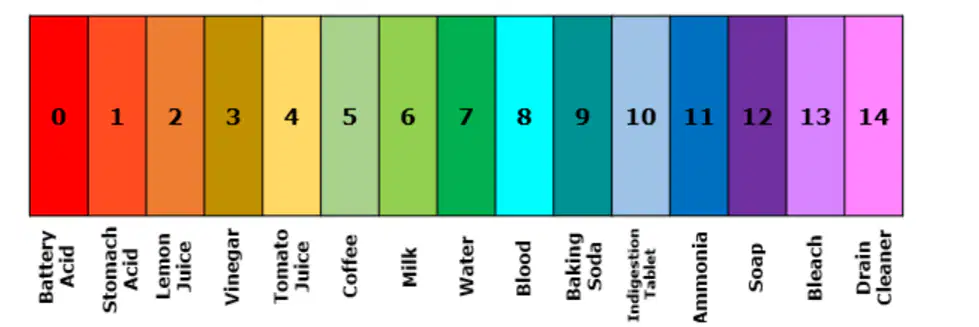
Which of the following would be more basic than a solution of ammonia?
Bleach
Water
Stomach acid
Baking soda
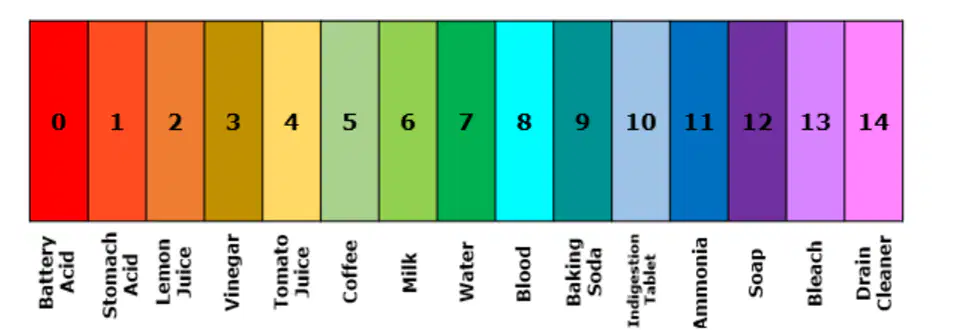
A mystery solution is more acidic than an indigestion tablet, but more basic than milk. Which of the following could possibly be the mystery solution?
Coffee
Water
Drain cleaner
Lemon juice
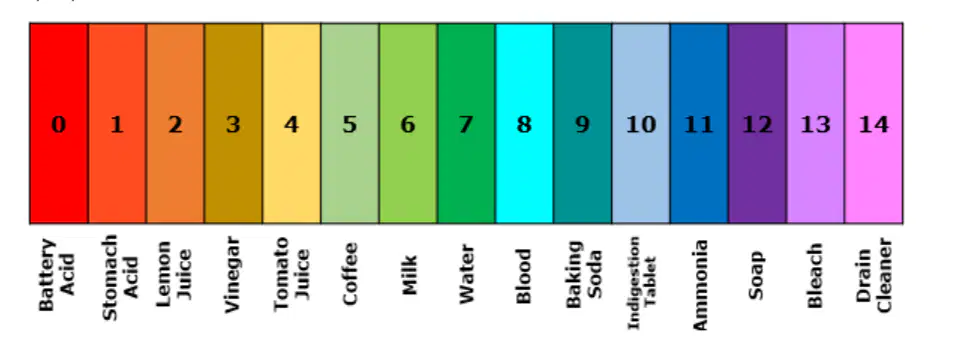
Which of the following is ten times more acidic than coffee?
Battery acid
Milk
Tomato juice
Vinegar

Which of the following correctly identifies the strongest acid and strongest base on the pH scale above?
Acid – milk; Base – blood
Acid – battery acid; Base – drain cleaner
Acid – drain cleaner; Base – battery acid
Acid – blood; Base – milk
Which of the following does not accurately describe the Law of Conservation of Mass?
Matter cannot be created or destroyed.
The mass of the reactants must equal the mass of the products.
The atoms of each element must be equal on both sides of a chemical equation.
The reactants always have more mass than the products.
A chemical equation contains 4 atoms of oxygen on the reactants side. How many atoms of oxygen must be present on the products side?
2 atoms
4 atoms
8 atoms
10 atoms
Students mix 25 grams of baking soda with 15 grams of vinegar to observe the chemical reaction that takes place. How many grams of products would be expected?
15 grams
25 grams
40 grams
50 grams
According to the Law of Conservation of Mass, during a chemical reaction atoms are -
created
destroyed
unchanged
rearranged into new substances

Which of the following correctly describes the chemical reaction?
There are 4 atoms of iron on both sides of the equation
There are 3 atoms of oxygen on both sides of the equation
There are 3 elements present on the reactants side
There are 4 total elements present in the equation

According to the Law of Conservation of Mass, if 225 grams of 2Fe2O3 are produced, which of the following would have been required?
100 grams of 4Fe and 25 grams of 3O2
125 grams of 4Fe and 125 grams of 3O2
195 grams of 4Fe and 30 grams of 3O2
225 grams of 4Fe and 225 grams of 3O2

Which of the following is not a true statement?
There are 4 molecules of Fe on the reactants side
There are 7 total atoms on the products side
Atoms of iron and oxygen are present
Atoms of iron and oxygen are rearranged into iron oxide

Which of the following correctly lists the reactants in the chemical equation above?
C₆H₁₂O₆ + 6O₂ + O2
6CO₂ + 6H₂O
6O2
6CO2

Which of the following correctly lists the products in the chemical equation above?
C6H12O6 + 6O2
6CO2 + 6H2O
6CO2
C6H12O6

How many different elements are present in the chemical equation above?
1
2
3
4

How many total atoms of Oxygen (O) are present on the reactants side of the chemical equation?
3
9
13
18

How many total atoms of Hydrogen (H) are present on the products side of the chemical equation?
1
12
18
24

How many molecules of glucose (C6H12O6) are present on the product side of the chemical equation?
0
1
6
24

Which of the following correctly describes the chemical equation above?
The atoms of all elements are equal on both sides.
The atoms of all elements are not equal on both sides.
There are more atoms of carbon than hydrogen involved in the reaction.
There are more less atoms of oxygen than hydrogen involved in the reaction.
Which of the following chemical reactions correctly represents the Law of Conservation of Mass?
2H₂ + 2O₂ → 2H₂O
4K + 2O₂ → 2K₂O
4Mg + 2O₂ → 4MgO
HCl + 2NaOH → 2NaCl + H₂O
Which of the following is an example of the Law of Conservation of Mass in action?
Mixing baking soda and vinegar to produce gas, water, and a salt
Spraying air freshener to make the room smell better
Taking a bite of a piece of pizza
Fertilizing a garden

Which of the following correctly describes the chemical reaction?
Atoms are rearranged into carbon dioxide and water
Atoms are rearranged into glucose and oxygen
Atoms are rearranged into the same exact substances
Atoms are not rearranged, but new substances are created

According to the Law of Conservation of Mass, if 30 grams of CO2 and 55 grams of H2O produce 70 grams of C6H12O6, how many grams of O2 would be produced?
15 grams
35 grams
70 grams
85 grams

Which of the following is not a true statement?
Carbon dioxide and water are the reactants
Glucose and oxygen are the products
There are the same number of atoms of each element present
There are different atoms of each element present

