
 Worksheets
Yr 8 Chemistry 2024
Total questions: 76
Worksheet time: 51mins
All matter is made up of tiny _______________
energy
particles (atoms and molecules)
bits
antimatter
The particles of ___________________ are tightly packed.
solids
liquids
gases
none
All matter is made up of tiny _______________
energy
particles (atoms and molecules)
bits
antimatter
The particles of ___________________ are tightly packed.
solids
liquids
gases
none
The particles of liquids can:
vibrate
move past each other
both
none
The particles of liquids can:
vibrate
move past each other
both
none
The forces of attraction between particles of _________ are weakest.
solids
liquids
gases
none


Which of the following sentences are true about solids?
Solids are rigid, have a fixed shape but not a fixed volume
Solids are not rigid, have a fixed shape and no fixed volume
Solids are rigid, have a fixed shape and a fixed volume
Particles are always moving.
True
False
Something that goes from liquid to gas is...
Evaporation
Melting
Freezing
Sublimation
Which image shows particles in a solid?


Which image shows particles in a liquid?
Which image shows particles in a gas?
In solids, molecules do not move.
True
False
The more energy particles have...
the faster they move.
the farther apart they tend to be.
the hotter they are.
All of the above
What do we call the phase change when a substance is changing from a solid to a liquid?
(a)
What do we call the phase change where we change from a liquid to a gas?
boiling
melting
freezing
evaporating
Which of these is not a phase change?
condensation
sublimation
deposition
imposition
The temperature of a substance does not change during a phase change.
True
False
The particles in a solid move _______ than do the particles in a gas.
more quickly
in the exact same way
more slowly
more quickly and farther

Which substance in the image is a most likely a liquid?
Substance A
Substance B
Substance C
Throwback! Which of the following is a chemical change?
a puddle of water evaporating
pounding and shaping gold into a coin
wood burning
ice melting
Which state of matter will hold its shape without a container?
solid
liquid
gas
Throwback! Which of these is a physical change?
a firework exploding
cooking an egg
dissolving salt in water
rusting iron
What type of change occurs when iron changes from a solid to a liquid?
a physical change
a phase change
a reversible change
all of the options given
What is the temperature at which a liquid changes to a solid known as?
Melting
Freezing
Sublimation Point
Freezing Point
A melting solid and a freezing liquid occur at the same temperature for a given substance.
True
False
Which of the following describes a solid?
No definite shape or definite volume, lowest intermolecular forces
Definite volume, takes the shape of its container, no definite shape
Definite shape and definite volume, vibrates in place and highest intermolecular forces
Highest Kinetic Energy

Which phase change is being represented in the particle diagram?
melting
evaporation
condensation
freezing

Letter "C" represents which state of matter on the phase change diagram shown.
Solid
Liquid
Gas

Using the following phase change diagram, determine how long was the gas condensing into a liquid for?
Hint: look at the phase change and determine how much time it took to complete the phase change.
2 minutes
5 minutes
7 minutes
8 minutes
What is the process called when a solid changes directly into a gas without becoming a liquid first?
Sublimation
Evaporation
Condensation
Melting
What is the order of phase changes (starting at low energy/heat)
Solid, Gas, Liquid
Gas, Liquid, Solid
Solid, Liquid, Gas
Gas, Solid, Liquid

TWISTING OF CLOTH
PHYSICAL CHANGE
CHEMICAL CHANGE

The change from gaseous state to liquid state is called evaporation that involves releasing of heat
TRUE
FALSE

The picture shows PHYSICAL CHANGE
TRUE
FALSE
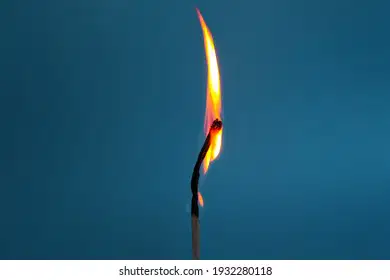
The picture shows CHEMICAL CHANGE.
TRUE
FALSE

Which answer defines a liquid?
A substance that has definite volume and definite shape.
A substance that does have definite volume, but not definite shape.
A substance that does not have definite shape, and does not have definite volume.

Which answer defines a gas?
A substance that has definite volume and definite shape.
A substance that does have definite volume, but not definite shape.
A substance that does not have definite shape, and does not have definite volume.
Evaporation occurs when
substances lose kinetic energy; gas to liquid
substances lose kinetic energy; liquid to solid
substances gain kinetic energy; solid to liquid
substances gain kinetic energy; liquid to gas
Condensation occurs when
substances lose kinetic energy; gas to liquid
substances lose kinetic energy; liquid to solid
substances gain kinetic energy; solid to liquid
substances gain kinetic energy; liquid to gas
Which processes are opposites?
[Select two correct answers.]
Condensation and evaporation
Condensation and freezing
Evaporation and melting
Melting and freezing

You have dropped your popsicle and are watching it become a liquid. Which answer explains the changes that are occurring?
The phase change that has occurred is condensation and the molecule movement has become faster.
The phase change that has occurred is evaporation and the molecule movement has become slower.
The phase change that has occurred is melting and the molecule movement has become faster.
The phase change that has occurred is freezing and the molecule movement has become slower.
Before: molecules move around each other
After: molecules move in place
Before: the substance was a solid
After: the substance was a liquid.
Before: the substance was a gas
After: the substance was a liquid.
Before: the substance was a liquid
After: the substance was a solid.
Before: the substance was a liquid
After: the substance was a gas.
The change of one state of matter to another is called
Osmosis
Phase Change
Matter
Energy
A phase change is a chemical or physical change?
Physical
Chemical

This is an example of
Freezing
Melting
Condensation
Sublimation

This is an example of
Condensation
Evaporation
Sublimation
Melting

This is an example of
(Hint: Dry Ice)
Deposition
Sublimation
Freezing
Melting

The temperature at which a liquid evaporates to a gas is called
freezing point
boiling point
melting point
condensation point
As a change of state, from solid to liquid, takes place heat _____ and temperature _______.
increases, stays the same
stays the same, stays the same
stays the same, changes
increases, increases
A change of state is a(n) ___________ process
reversible
irreversible
fun
chemical
Which of the below statements are true?
There can be a change in heat without the temperature changing
heat remains constant through a change of state
temperature changes through a change of state
heat and temperature are the same
What is different at the molecular level between a solid and a liquid? There can be more than one answer.
the type of molecule
the strength of the intermolecular forces
the speed of the particles
nothing
Rank the states of matter from slowest to fastest particle speed.
gas, solid, liquid
solid, liquid, gas
gas, liquid solid
solid, gas liquid
When heat is removed from a solid what happens?
The particles move faster
The solid becomes a liquid
The particles move slower
nothing
Describe the movement of solid particles.
no movement
vibrational
fast
flowing
As the speed of the particles decreases, _______
intermolecular forces become stronger
intermolecular forces become weaker
intermolecular forces do not change
energy increases

