
 Worksheets
Semester Test Fall 2023
Total questions: 77
Worksheet time: 39mins
Name
Class
Date
1.
Which of the following is NOT an important component of a graph?
a)
An appropriate title
b)
Labeled axes
c)
Evenly-spaced and marked numbers/values
d)
Bright colors
2.
When looking at a group of students that have been separated by age, the best type of graph to make would be a:
a)
circle graph
b)
line graph
c)
scatter plot
d)
bar graph
3.
When creating a line graph of data that is collected over time, time would be placed on
a)
the x-axis
b)
the y-axis
4.
Which type of graph is best suited for comparing information?
a)
Line graph
b)
Bar graph
c)
Circle graph
d)
Any of the above would work
5.
Which graph type shows parts of a whole and should always add up to 100%?
a)
line graph
b)
bar graph
c)
circle graph
d)
scatter plot
6.
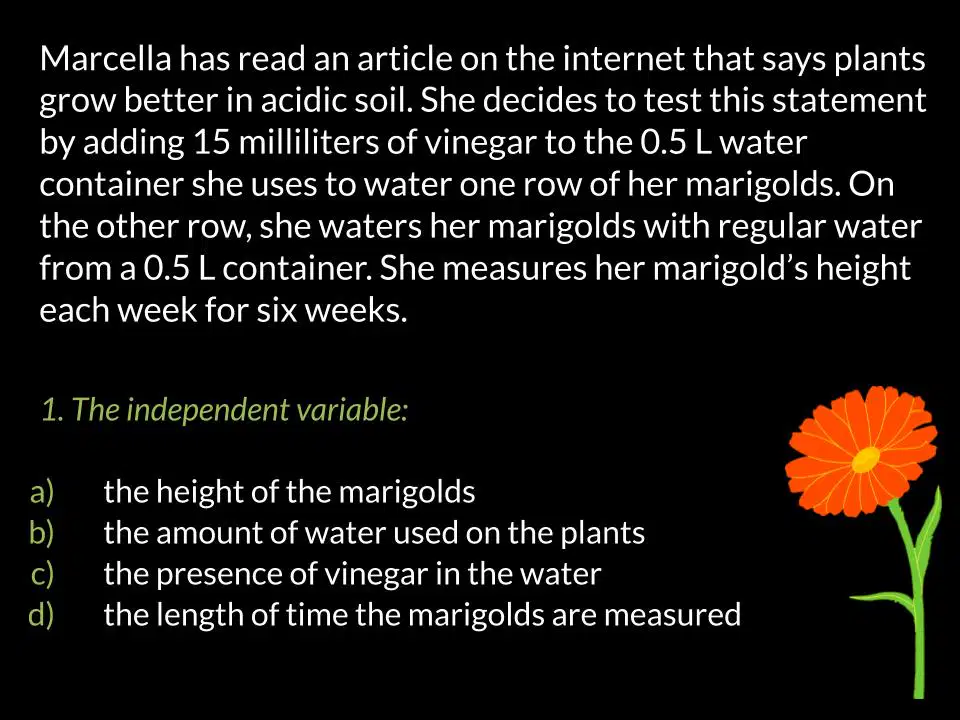
#1
a)
A
b)
B
c)
C
d)
D
7.
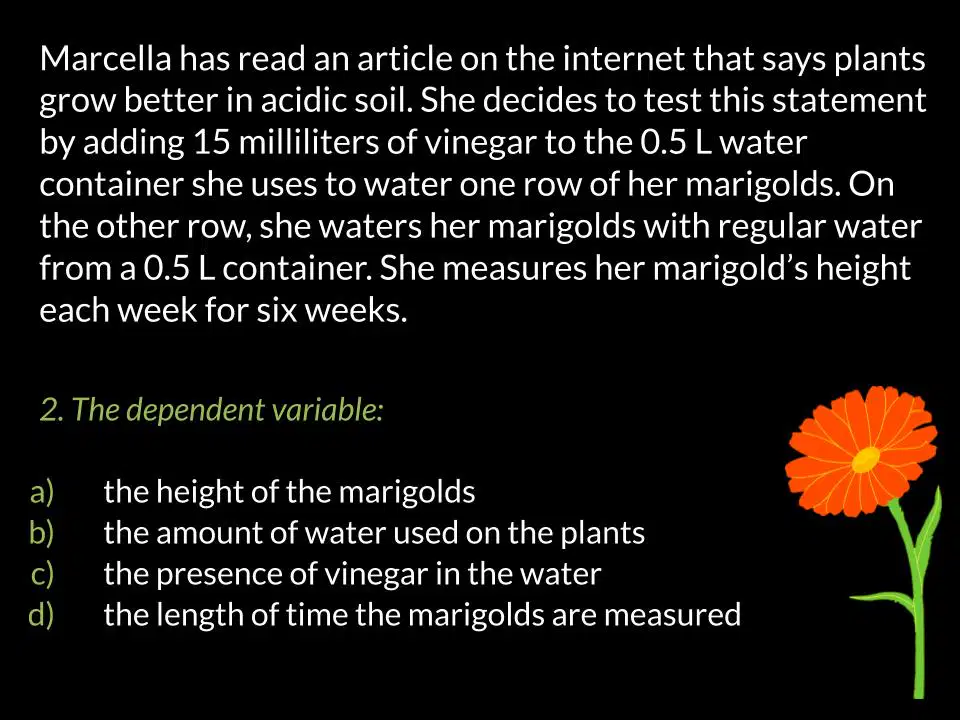
#2
a)
A
b)
B
c)
C
d)
D
8.
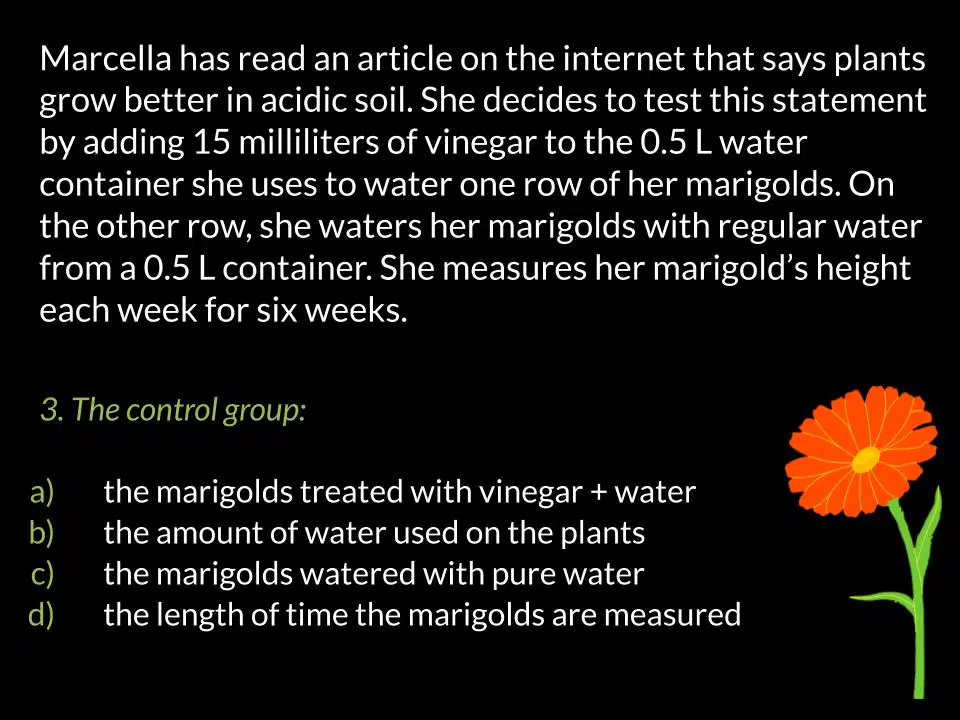
#3
a)
A
b)
B
c)
C
d)
D
9.
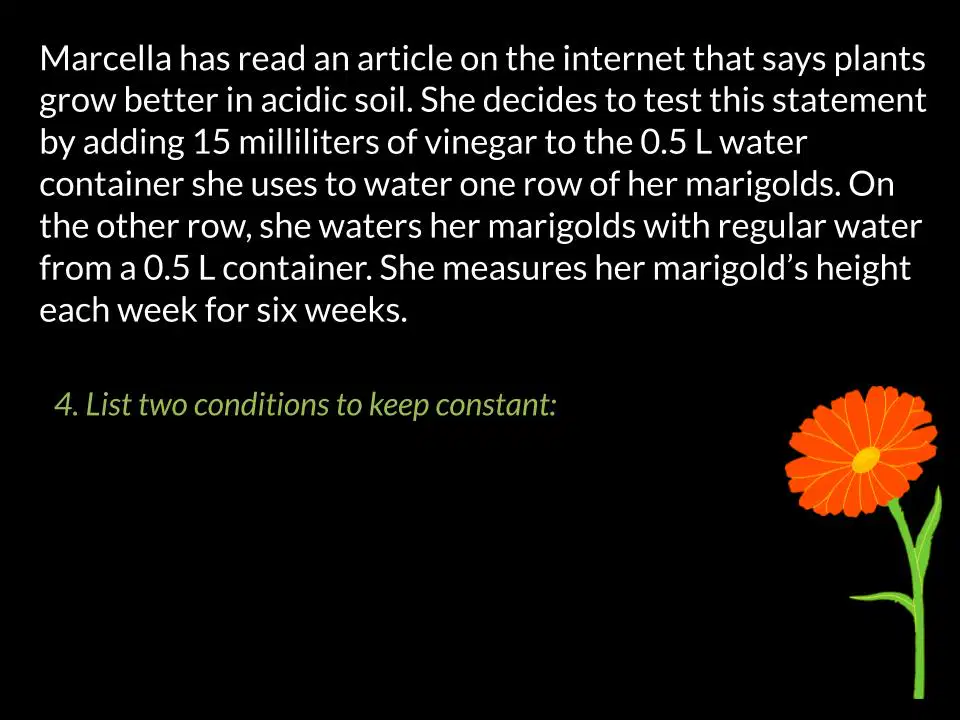
#4
a)
Amount of vinegar and amount of water
b)
Flower type and flower height
c)
Soil type and flower height
d)
All of the above
10.
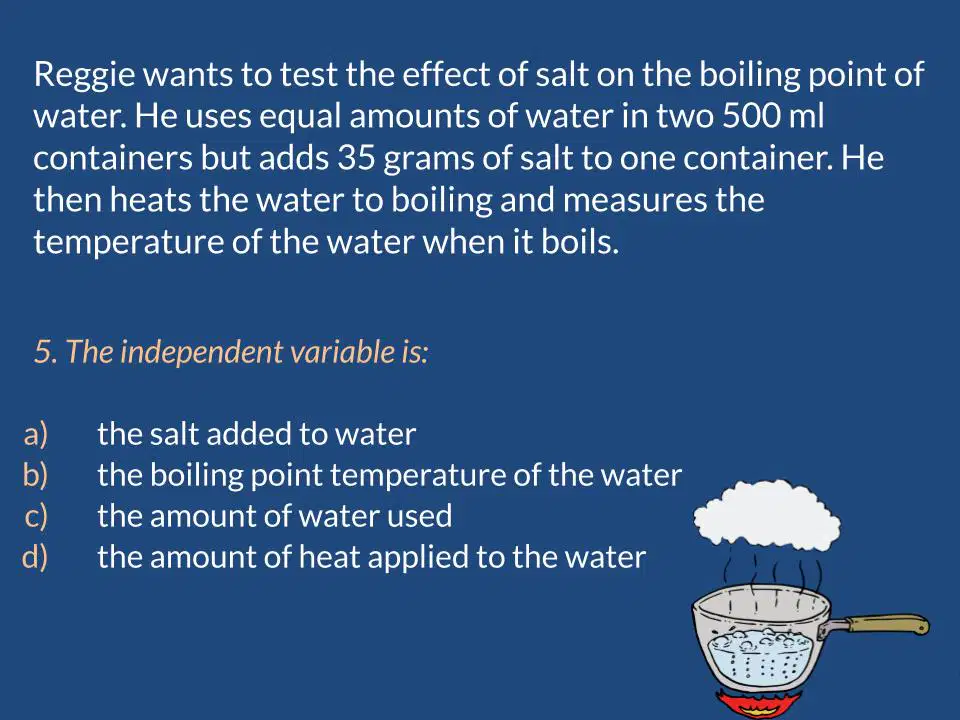
#5
a)
A
b)
B
c)
C
d)
D
11.
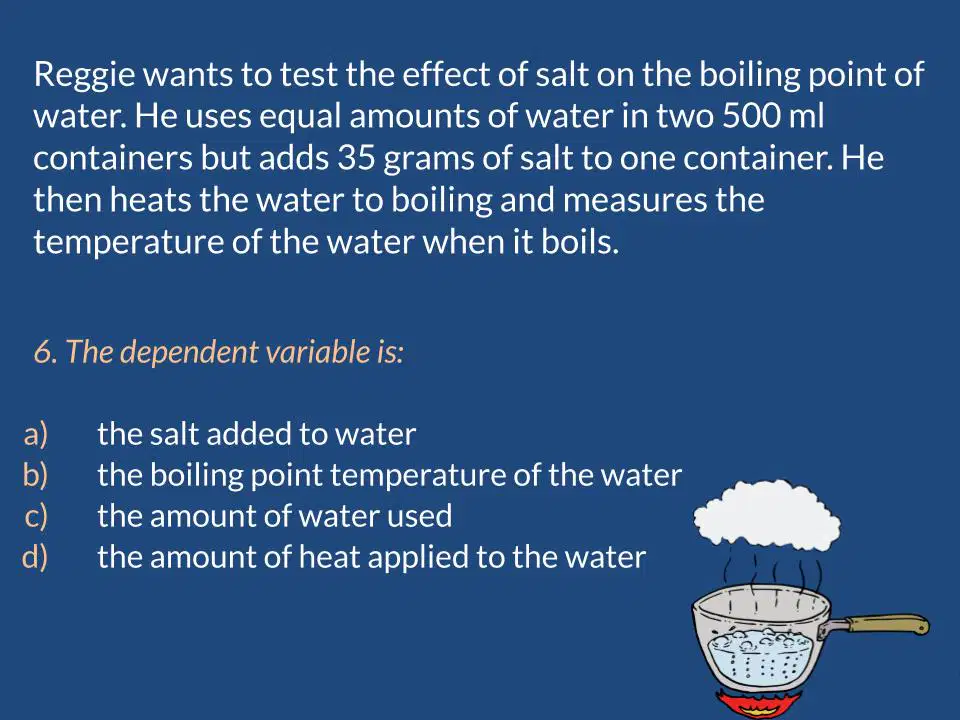
#6
a)
A
b)
B
c)
C
d)
D
12.
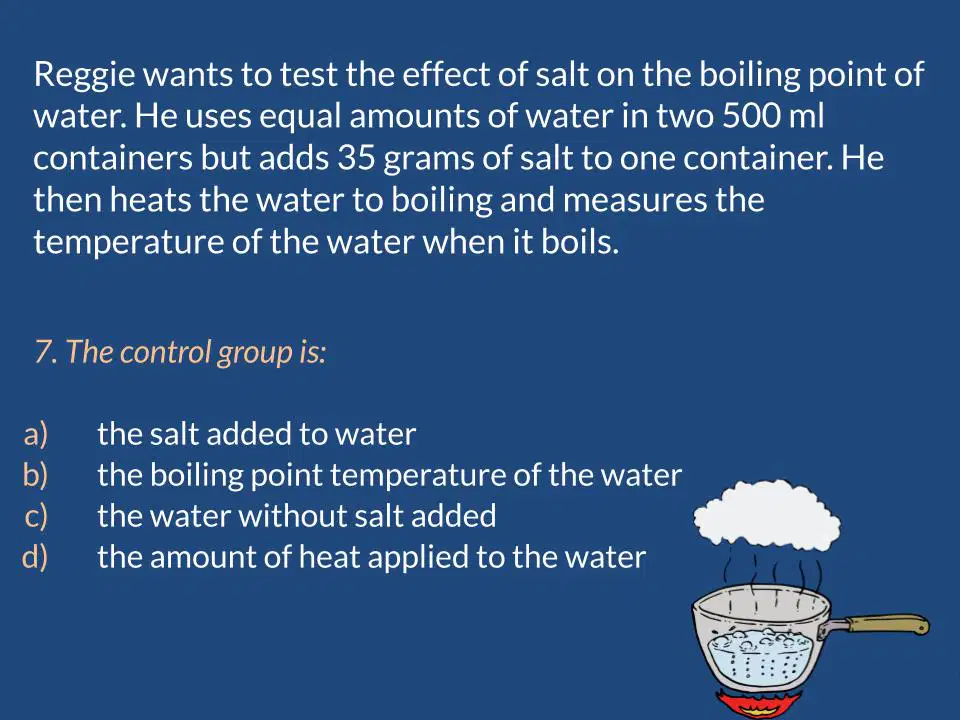
#7
a)
A
b)
B
c)
C
d)
D
13.
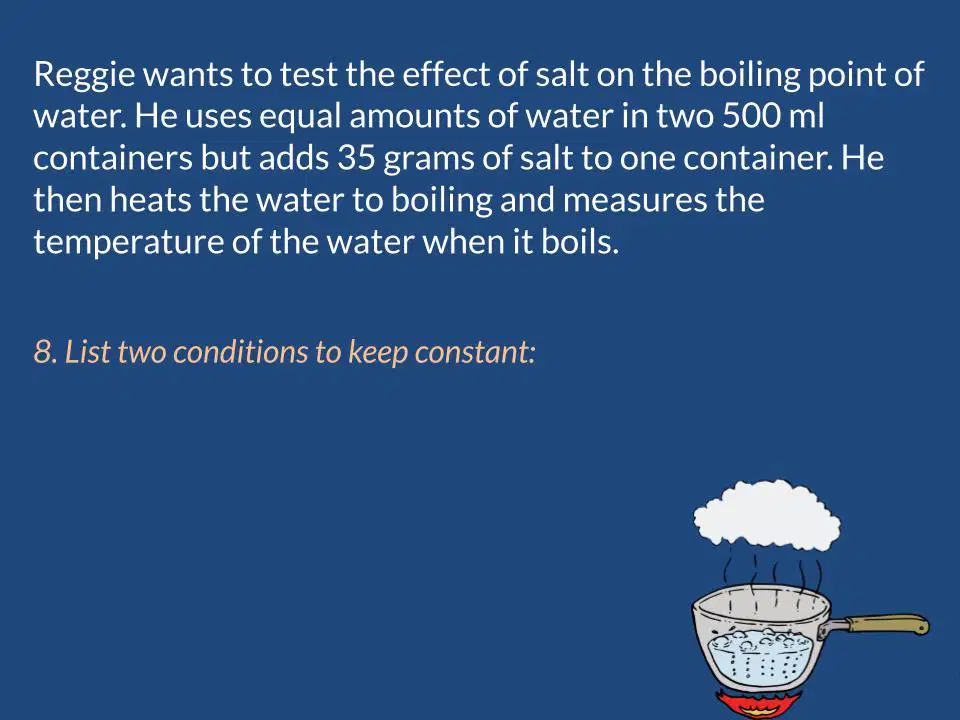
#8
a)
Amount of water
b)
Temperature of the water
c)
Size of containers
14.
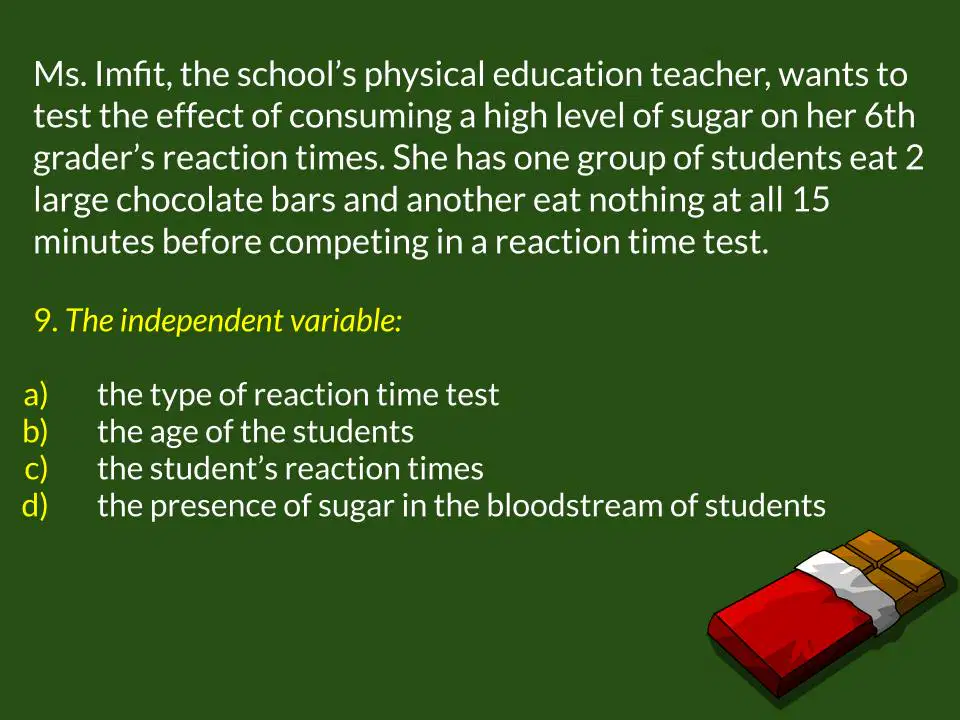
#9
a)
A
b)
B
c)
C
d)
D
15.
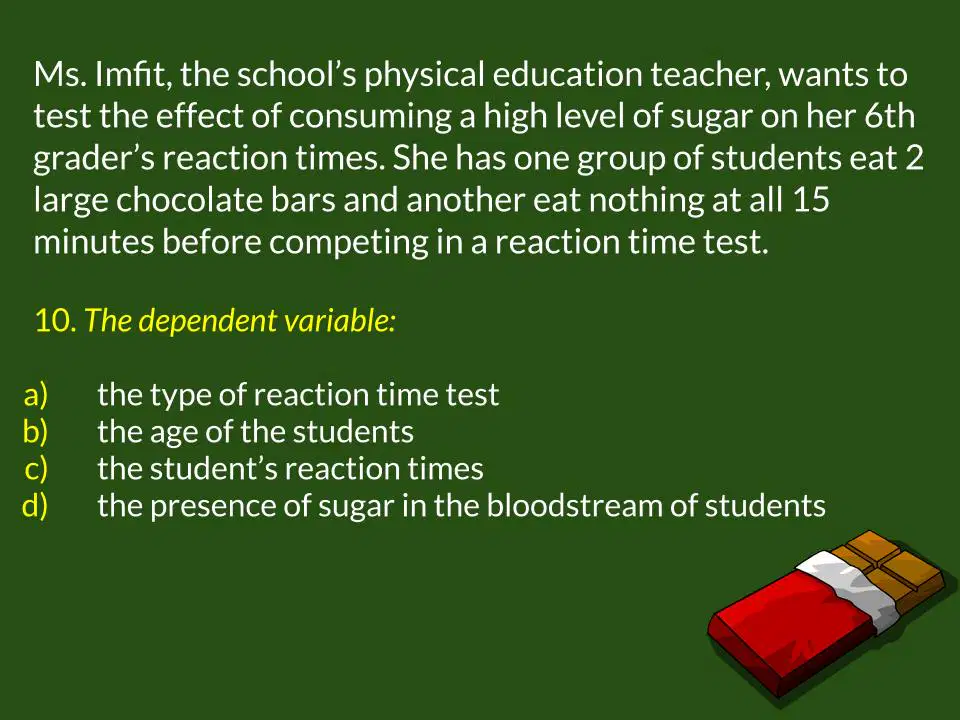
#10
a)
A
b)
B
c)
C
d)
D
16.
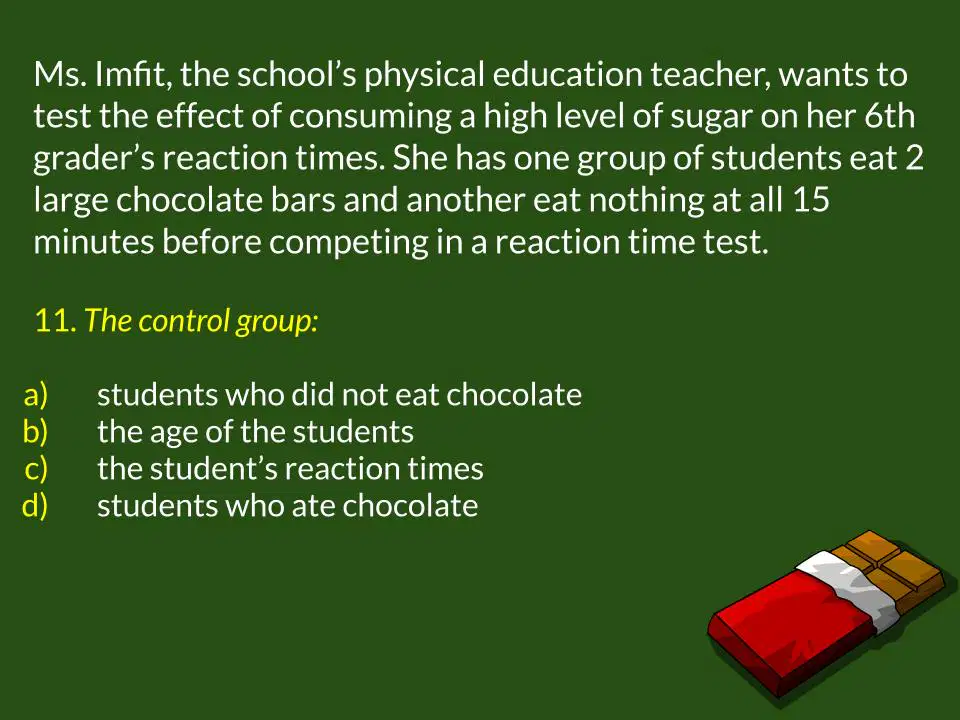
#11
a)
A
b)
B
c)
C
d)
D
17.
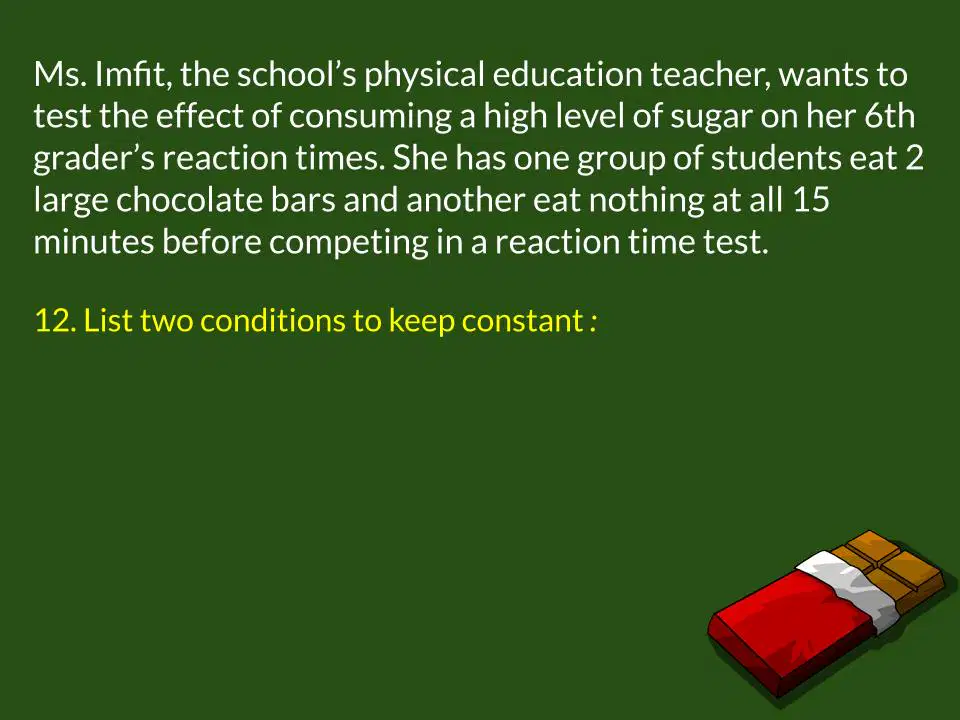
#12
a)
Type of test
b)
Amount of sugar
c)
Students' reaction times
d)
Size of 6th grade students
18.
Which number on the periodic table is a weighted average of an element's isotopes?
a)
Atomic mass
b)
Mass number
c)
Atomic number
d)
Isotopic mass
19.
Elements are arranged in rows and columns in the periodic table. The rows are called ________. The columns are called ________.
a)
periods; groups
b)
groups; periods
c)
groups; families
d)
families; periods
20.
Which classification has the most elements?
a)
Metals
b)
Nonmetals
c)
Metalloids
21.
Which element has the highest atomic radius?
a)
Potassium
b)
Krypton
c)
Cesium
d)
Radon
22.
At room temperature, what is the most common state of matter?
a)
solid
b)
liquid
c)
gas
23.
The most reactive metal below is
a)
Lithium
b)
Rubidium
c)
Calcium
d)
Scandium
24.
Generally, atoms with a low ionization energy are found on the _________ side of the periodic table.
a)
left
b)
right
25.
When atoms have 8 electrons in their outermost shell they are typically considered stable. This is an important part of what is known as the ______________ rule.
a)
periodic
b)
valence
c)
electron
d)
octet
26.
Which group of elements are not found alone in nature?
a)
Alkali metals
b)
Alkaline earth metals
c)
Halogens
d)
Both alkali and alkaline earth metals
27.
As you move left to right across a period, ionization energy of the elements tends to
a)
increase
b)
decrease
c)
stay the same
28.
What was the first property used to order the elements in the Periodic Table?
a)
atomic number
b)
atomic mass
c)
valence electrons
d)
none of the above
29.
How was Mendeleev's Periodic Table different from the modern one?
a)
It's organized horizontally instead of vertically
b)
It was organized by atomic mass, not atomic number
c)
His table had 63 elements, and we now have 108
d)
All of the above
30.
Which is considered the most electronegative element?
a)
Cl
b)
Si
c)
P
d)
S
31.
Copper (I) sulfide has a written formula of
a)
CuS
b)
CuS₂
c)
Cu₂S
d)
Cu₂S₂
32.
What do we call SnCl ₄?
a)
Tin Tetrachloride
b)
Tin (IV) Chloride
c)
Tin (II) Dichloride
d)
Tin (I) chloride
33.
Aluminum dichromate has a written formula of
a)
AlCr₂O₇
b)
Al(Cr₂O₇)₂
c)
Al₂(Cr₂O₇)
d)
Al₂(Cr₂O₇)₃
34.
Mercury (II) cyanide has a written formula of
a)
Hg(CN)₂
b)
HgCN
c)
Hg₂CN
d)
Hg₂(CN)₂
35.
Zinc (II) hydroxide has a written formula of
a)
ZnOH
b)
Zn₂OH
c)
Zn(OH)₂
d)
ZnOH₂
36.
What do we call N₂O₃?
a)
Trinitrogen Dioxide
b)
Dinitrogen Trioxide
c)
Nitrogen (III) Oxide
d)
Nitrogen Oxide
37.
Which element is most likely to donate an electron?
a)
K
b)
Cs
c)
O
d)
Ra
38.

Where do you find alkaline earth metals on the periodic table?
a)
B
b)
A
c)
C
d)
D
e)
E
39.
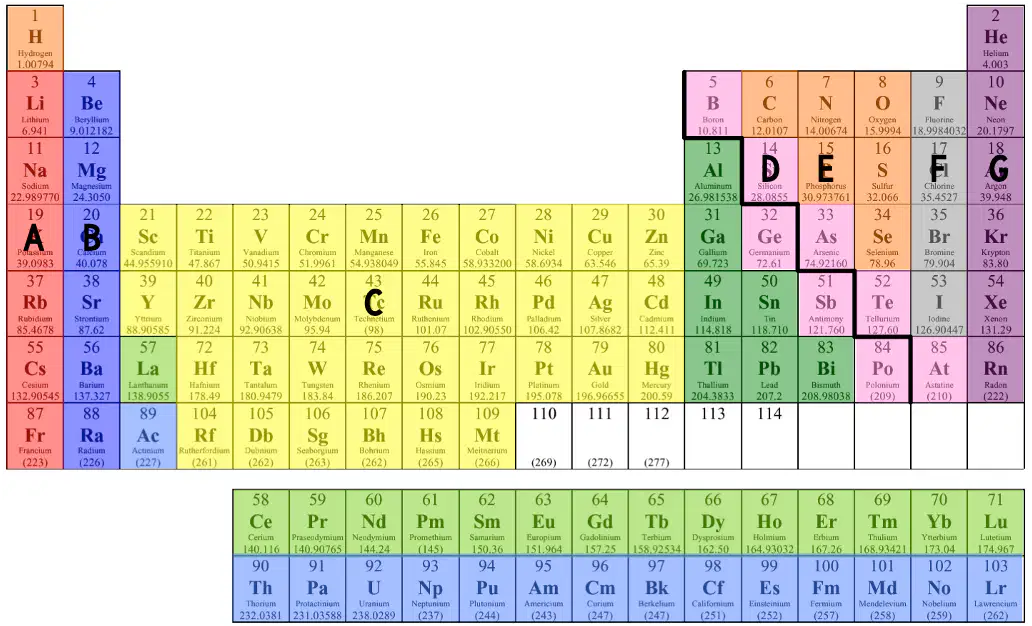
Where do you find transition metals on the periodic table?
a)
C
b)
A
c)
B
d)
D
e)
E
40.
As you move left to right across a period, electronegativity tends to
a)
increase
b)
decrease
c)
stay the same
41.
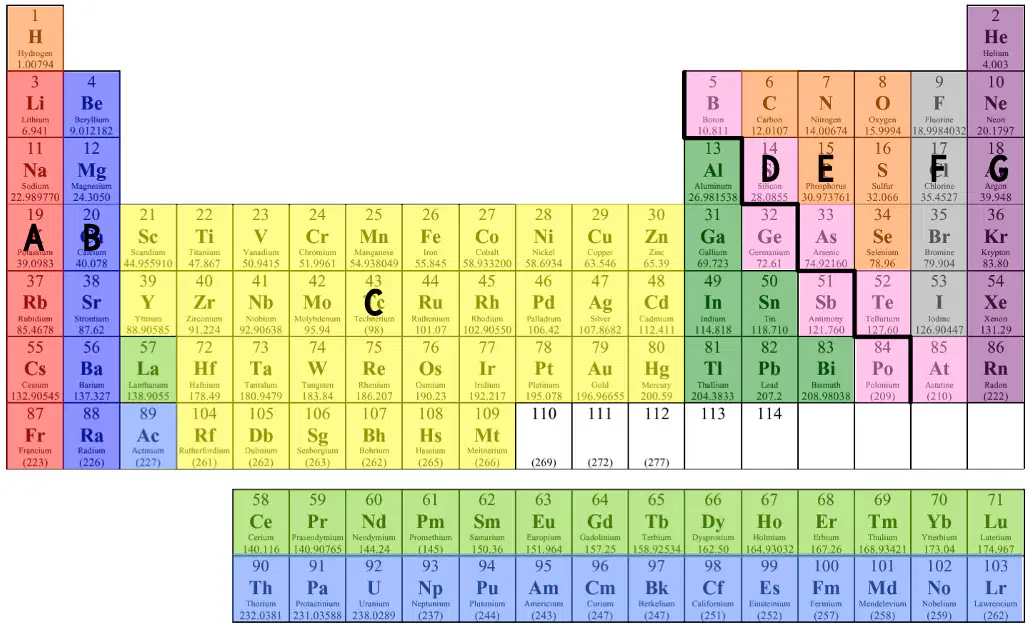
Where do you find alkali metals on the periodic table?
a)
A
b)
B
c)
C
d)
D
e)
E
42.
As you move left to right across a period, atomic radius generally
a)
increases
b)
decreases
c)
stays the same
43.
As you move down a group, reactivity of metals _______________ and reactivity of nonmetals _______________.
a)
increases; decreases
b)
decreases; stays the same
c)
stays the same; increases
d)
decreases; increases
44.
As you move left to right across a period, the electronegativity of an atom generally _____________________.
a)
decreases
b)
increases
c)
stays the same
45.
Are alkali and alkaline earth metals more likely to become positive or negative ions?
a)
Positive
b)
Negative
c)
Both
d)
None of the above
46.
Which group of nonmetals is extremely reactive?
a)
Group 1
b)
Group 2
c)
Group 17
d)
Group 18
47.
Atomic size generally increases as you:
a)
go from left to right across a row.
b)
go from top to bottom of a column.
c)
go from bottom to top of a column.
d)
none of the above.
48.
Which groups on the Periodic Table are more likely to accept electrons in a bond?
a)
Groups 1 & 2
b)
Groups 16 & 17
c)
both
d)
neither
49.
How many neutrons are in Vanadium?
a)
23
b)
27
c)
28
d)
50
50.
What is the mass number of Arsenic?
a)
33
b)
41
c)
74.922
d)
75
51.
Who created the model of the atom that we still use in chemistry today?
a)
Rutherford
b)
Bohr
c)
Modern Scientists
d)
Dalton
52.
An atom has 8 electrons, 6 protons, and 9 neutrons. What is the atomic mass of this atom?
a)
6
b)
2
c)
9
d)
15
53.
A positive ION is called a(n)
a)
Anion
b)
Cation
c)
Molecule
d)
Isotope
54.
Atoms are mostly made of:
a)
electrons
b)
empty space
c)
neutrons
d)
protons
55.
Atoms of the same element can have different atomic weights because they might have different numbers of:
a)
protons
b)
neutrons
c)
electrons
d)
croutons
56.
What do you create if you add or take away a neutron from an atom?
a)
Ion
b)
New element
c)
Isotope
d)
none of the above
57.
What do you create if you add or take away an electron from an atom?
a)
Ion
b)
New element
c)
Isotope
d)
None of the above
58.
What do you create if you add or take away an proton from an atom?
a)
Ion
b)
New element
c)
Isotope
d)
None of the above
59.
The subatomic particle that determines the identity of an element is the
a)
electron
b)
neutron
c)
proton
d)
all of the above are used to determine an element's identity
60.
How many valence electrons does Gallium (Ga) have?
a)
6
b)
5
c)
4
d)
3
61.
A negative ion is called a(n):
a)
Anion
b)
Cation
c)
Molecule
d)
Isotope
62.
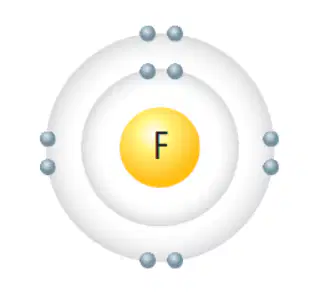
How many protons does the element below contain?
a)
8
b)
9
c)
10
d)
11
63.
If 2 atoms of oxygen have different numbers of neutrons, which property of those atoms will be different?
a)
The charge
b)
The mass
c)
It will become a different element
d)
None of the above is correct
64.
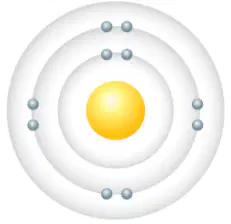
What is the overall charge on the Sodium (Na) atom below?
a)
+1
b)
+2
c)
-1
d)
It is neutral
65.
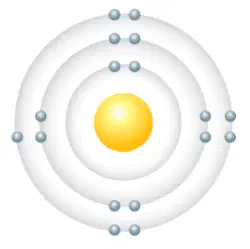
What is the overall charge of the Chlorine (Cl) atom below?
a)
+1
b)
-1
c)
-2
d)
it is neutral
66.
All matter:
a)
has mass and a definite shape.
b)
has mass and occupies space.
c)
combines with other matter and occupies space.
d)
has distinct properties and cannot be combined with other matter.
67.
Which of the following is NOT an example of a physical property?
a)
a. melting point
b)
b. boiling point
c)
c. flammability
d)
d. density
68.
Which of the following is a phase change from a solid directly to a gas?
a)
sublimation
b)
condensation
c)
deposition
d)
evaporation
69.
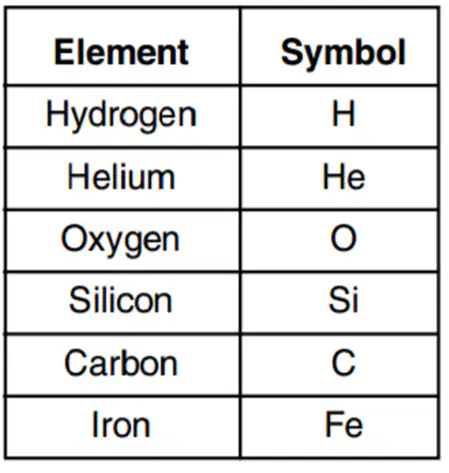
The table shows the chemical symbols for some common elements. Based on the information in the table, which of the four substances below is a compound?
a)
a. CO
b)
b. Si
c)
c. He
d)
d. Fe
70.
Milk turning sour is an example of a/an:
a)
compound
b)
physical change
c)
chemical change
d)
none of the above
71.
When a log is burned in a campfire, what happens to its matter?
a)
Matter is destroyed and turned into heat and light energy.
b)
The number of atoms stay the same, but they are arranged differently.
c)
Because the mass of the log is reduced during burning, atoms were destroyed.
d)
All atoms from the log become gas.
72.
Which property is a measure of how resistant to flow a substance is?
a)
Viscosity
b)
Porosity
c)
Luminosity
d)
Hardness
73.
The ability of a substance to be pulled into a wire without breaking is known as
a)
Hardness
b)
Malleability
c)
Ductility
d)
Viscosity
74.
Freezing a popsicle is an example of a/an (check all that apply):
a)
Chemical change
b)
Physical change
c)
Phase change
d)
All of the above
75.
The conversion of a liquid into a gas (check all that apply):
a)
Means that the particles are moving more slowly.
b)
Is called evaporation.
c)
Is caused by adding thermal energy to the liquid.
d)
Means that the particles are moving more quickly.
76.
According to the Law of Conservation of Matter, in ordinary chemical reactions matter can be:
a)
either created or destroyed
b)
created but not destroyed
c)
destroyed but not created
d)
neither created nor destroyed
77.
Which of the following do you know to be true of chemical reactions? Select all that apply.
a)
Temperature of the reactants can affect the rate of the reaction.
b)
The presence of a catalyst can slow down the reaction.
c)
Certain light waves can speed up a reaction.
d)
Amount (concentration) of reactants can affect the rate of a reaction.
e)
State of matter can have an effect on the rate of the reaction.
100 %

