wayground logo

Free Printable Worksheets

NEW

Font size

S
M
L
XL
Worksheets

Unit 7 Review

Total questions: 78

Worksheet time: 1hrs 18mins

Name
Class
Date
1.

What are the positive particles of an atom?

a)

electrons

b)

positrons

c)

neutrons

d)

protons

2.

Which particles in an atom that are neutral and have no charge?

a)

negatrons

b)

electrons

c)

neutrons

d)

protons

3.

Which particles that are found in the nucleus?

a)

neutrons and electrons

b)

electrons only

c)

protons and neutrons

d)

protons and electrons

4.
Neutrons are _______________ particles.
a)
negative
b)
positive
c)
neutral
d)
cows
5.

What is the central region of an atom where its neutrons and protons are is called?

a)

nucleus

b)

electron cloud

c)

core

d)

center

6.

What charge do electrons have?

a)

negative

b)

positive

c)

neutral

7.
How does the size of a proton compare to the size of a neutron?
a)
larger
b)
smaller
c)
equal
8.
These particles orbit around the nucleus of an atom.  What are they called?
a)
electrons
b)
protons
c)
neutrons
d)
photons
9.

What is the atomic number of this element?

a)

54

b)

131

c)

132

d)

cannot be determined

10.

What is this element's atomic mass?

a)

54

b)

131

c)

132

d)

cannnot be determined

11.

Which subatomic particle has a negative charge?

a)

proton

b)

neutron

c)

electron

12.

Which subatomic particle has a positive charge?

a)

proton

b)

neutron

c)

electron

13.

Which subatomic particle has a neutral or no charge?

a)

proton

b)

neutron

c)

electron

14.
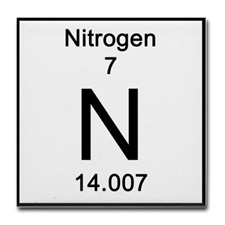
What is the number of protons that the element in this image contain?
a)
14
b)
7
c)
15
d)
18
15.

What is the atomic mass of Fluorine?

a)

9

b)

18

c)

17

d)

19

16.

How many protons would an atom with atomic number 6 have?

a)

6

b)

12

c)

3

d)

cannot be determined

17.
The atomic number of an elements is the total number of which particles in the nucleus?
a)
neutrons
b)
protons
c)
electrons
d)
protons and electrons
18.
a)
2
b)
8
c)
3
d)
13
19.
a)
2
b)
6
c)
10
d)
16
20.

What are valence electrons?

a)

protons in the atom

b)

electrons in the atom

c)

protons + neutrons in the nucleus

d)

electrons in the outside shell of the atom

21.

How many protons does Beryllium have?

a)

4

b)

9.0122

c)

2

d)

13.0122

22.
What is the atomic number for an element with twelve protons?
a)
2
b)
12
c)
24
d)
6
23.

In the modern periodic table, elements are arranged by which of the following?

a)

atomic mass

b)

atomic number

c)

valence electrons

d)

number of isotopes

24.

What does the number 1.00794 represent?

a)

Hydrogen

b)

atomic mass of all Hydrogen elements

c)

average atomic mass of all Hydrogen elements

d)

atomic explosion

25.
What is the number of protons that the element in this image contain?
a)
14
b)
7
c)
15
d)
18
26.

Isotopes of an element have ______________.

a)

different masses

b)

different protons

c)

different electrons

27.

Which number here is the atomic number?

a)

5

b)

10.811

28.

Isotopes are atoms that have the same number of protons but a different number of _____________.

a)

neutrons

b)

electrons

c)

atoms

29.
What is an isotope? 
a)
A charged atom
b)
An atom with different amounts of neutrons
c)
An atom with different amounts of protons
d)
A neutral atom
30.

How many neutrons does a Sodium-24 isotope have?

a)

12

b)

13

c)

14

d)

15

31.

How many protons does a Carbon-13 atom have?

a)

5

b)

6

c)

7

d)

8

32.

How many neutrons does a Calcium-48 isotope have?

a)

16

b)

20

c)

28

d)

12

33.
How many neutrons does an Oxygen-19 isotope have?
a)
19
b)
8
c)
11
d)
10
34.
How many neutrons does an Iodine-133 isotope have?
a)
80
b)
133
c)
53
d)
77
35.
How many neutrons does a Sulfur-32 isotope have?
a)
15
b)
16
c)
32
d)
12
36.
How many neutrons does a Flourine-14 isotope have?
a)
4
b)
5
c)
9
d)
14
37.
What is the atomic mass of the pictured isotope?
a)
2
b)
4
c)
6
d)
Hehehehe
38.
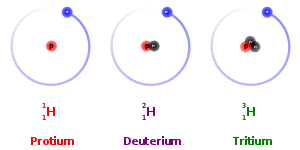
What is the atomic mass of the pictured isotope?
a)
17
b)
35
c)
18
d)
What a "clorious" isotope!
39.
What is the name of the pictured isotope?
a)
Carbon-12
b)
Carbon-13
c)
Carbon-14
d)
Carbon-15
40.
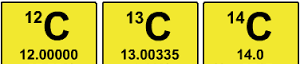
What do these isotopes of carbon all have in common?
a)
neutrons & mass number
b)
atomic number and neutrons
c)
atomic number and electrons
d)
protons, atomic number, and mass number
41.
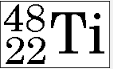
How many protons does this isotope of titanium have?
a)
48
b)
22
c)
26
d)
70
42.

Which of the following represents a Sodium ion?

a)

Na²⁺

b)

K²⁺

c)

Li⁺

d)

Na⁺

43.

Which of the following represents a Potassium ion?

a)

Na⁺

b)

K⁺

c)

K²⁺

d)

K⁻

44.

What is a cation?

a)

A negatively charged ion

b)

An atom with no charge

c)

A positively charged ion

d)

A stable atom on the periodic table

45.

What is an anion?

a)

A negatively charged particle

b)

An atom with no charge

c)

A positively charged ion

d)

A stable atom found on the periodic table

46.

Where are valence electrons located in an atom?

a)

On the outermost energy level

b)

On the innermost energy level

c)

In the nucleus

47.

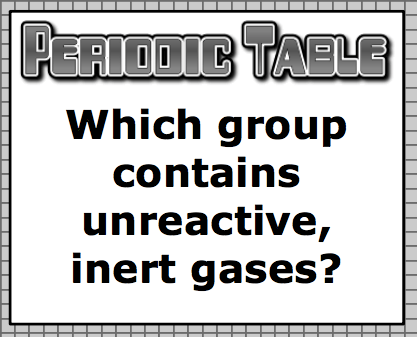
Where are the noble gases located on the periodic table?

a)

In the middle of the periodic table

b)

On the bottom of the periodic table

c)

On the left hand side of the periodic table

d)

On the right hand side of the periodic table

48.

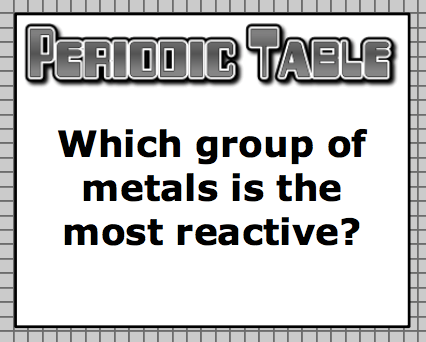
Where are the alkali metals located?

a)

The middle of the periodic table

b)

The bottom of the periodic table

c)

The left hand side of the periodic table

d)

The right hand side of the periodic table

49.

How many electrons fit in the second energy level?

a)

2

b)

8

c)

16

d)

18

50.

What is a charged atom known as?

a)

Electron

b)

Proton

c)

Ion

d)

Neutron

51.
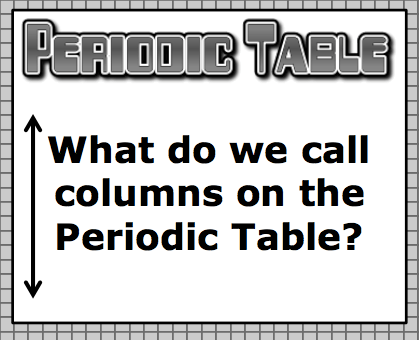
a)
Periods
b)
Groups
52.
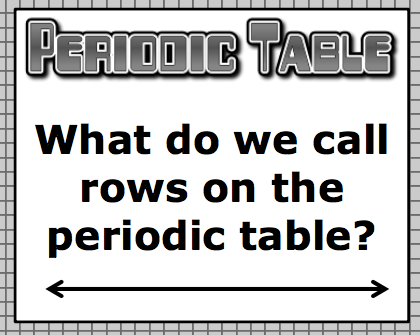
a)
Periods
b)
Groups
53.
a)
energy levels
b)
valence electrons
c)
protons
d)
neutrons
54.
a)
energy levels
b)
valence electrons
c)
protons
d)
neutrons
55.
a)
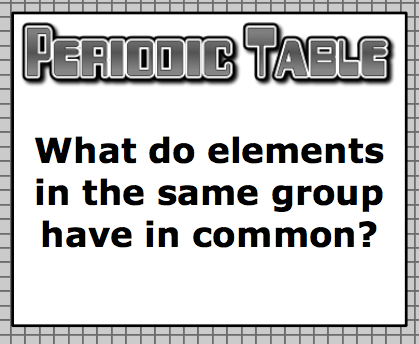
Same group
b)
Same period
56.
a)
Group 1
b)
Group 17
c)
Group 2
d)
Group 18
57.
a)
Group 1
b)
Group 17
c)
Group 18
d)
Group 2
58.
a)
Group 1
b)
Group 17
c)
Group 18
d)
Group 2
59.
a)
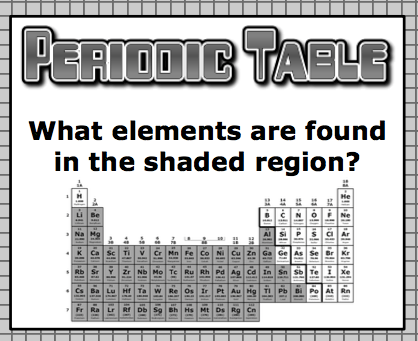
Metals
b)
Nonmetals
c)
Metalloids
60.
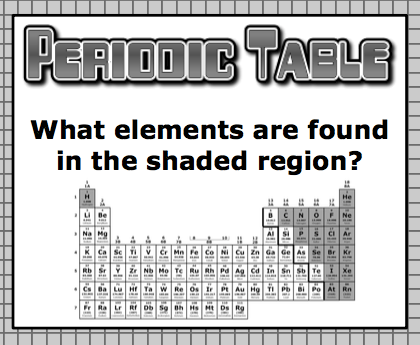
a)
Metals
b)
Nonmetals
c)
Metalloids
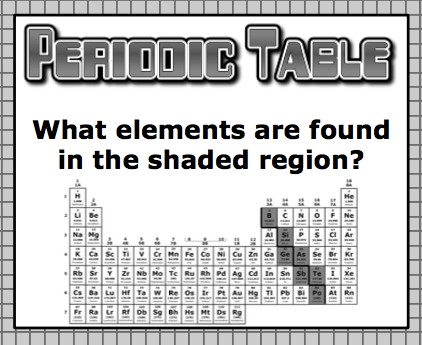
61.
a)
Metals
b)
Nonmetals
c)
Metalloids
62.
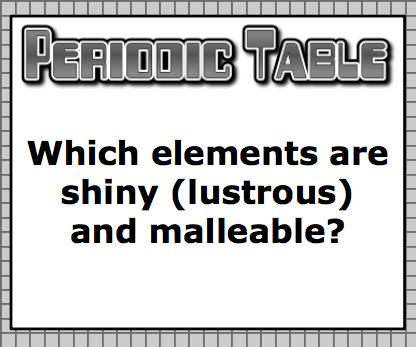
a)
Metals
b)
Nonmetals
c)
Metalloids
63.
a)
Metals
b)
Nonmetals
c)
Metalloids
64.
a)
Metals
b)
Nonmetals
c)
Metalloids
65.
a)
Metals
b)
Nonmetals
c)
Metalloids
66.
a)
Metals
b)
Nonmetals
c)
Metalloids
67.
Sodium (Na) is found in period 
a)
3
b)
2
c)
4
d)
1
68.
Sodium (Na) is found in group 
a)
1
b)
2
c)
3
d)
4
69.
The atomic number tells you what?  READ THE ANSWERS CAREFULLY
a)
only the number of electrons
b)
 only the number of protons
c)
only the number of neutrons
d)
the number of both electrons and protons in an atom.
70.
What does the atomic mass tell you? 
a)
Basically,the number of electrons and protons
b)
The number of neutrons
c)
Basically, the number of protons and neutrons
d)
The number of protons.
71.
How many valence electrons are found in atoms of group 14?
a)
4
b)
3
c)
14
d)
16
72.
Which group has the greatest number of valence electrons?
a)
1
b)
14
c)
18
d)
16
73.
How many valence electrons are found in atoms of group 1?
a)
7
b)
6
c)
4
d)
1
74.

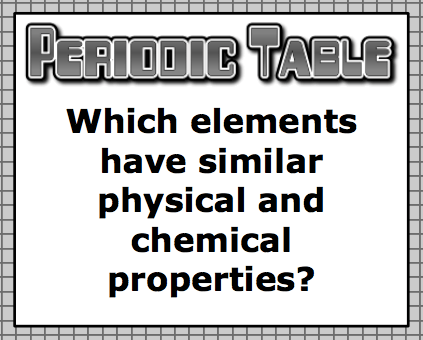
Which elements have the most similar chemical properties?

a)

boron and carbon

b)

oxygen and sulfur

c)

aluminum and bromine

d)

argon and silicon

75.

All atoms are most stable with (or would "prefer") how many electrons in their valence shell?

a)

1

b)

2

c)

8

d)

18

76.

When trying to identify an unknown element, a scientist determines what other elements reacts with chemically. Which property of the unknown element determines the other element it reacts with?

a)

The total number of neutrons in the unknown element

b)

The total number of particles in the nucleus of the unknown element

c)

The number of protons in the nucleus of the unknown element

d)

The number of valence electrons in the unknown element

77.

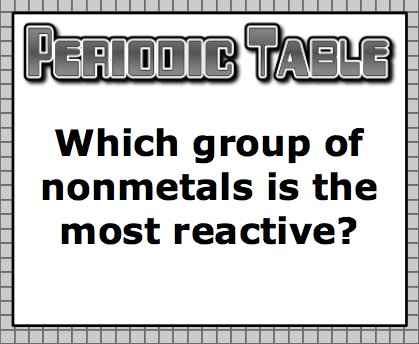
Why are halogens so reactive?

a)

They want to get rid of their only valance electron

b)

They only need one more electron

c)

They are non reactive, they have a full shell

78.
Describe this element.
a)
Highly reactive metal
b)
Highly reactive nonmetal
c)
Stable
d)
Less stable non metal