
 Worksheets
untitled
Total questions: 20
Worksheet time: 12mins
According to the 10% rule, if a plant contains 500 calories of energy, how much energy is available to the primary consumer that eats it?
5 calories
50 calories
500 calories
50,000 calories
Tertiary consumers are also known as:
Apex predators
Herbivores
Omnivores
Scavengers

The 10% rule states that 10% of energy moves from each trophic level to the next.
In the pyramid, if the producers level contains 1234 kilocalories, how many kilocalories are transferred to the bird (apex predator)?
123.4
1.234
1234
1234
Biomass is the total number of organisms in a given area.
Which trophic level in the pyramid has the highest biomass?
PRODUCERS
PRIMARY CONSUMERS
SECONDARY CONSUMERS
TERTIARY CONSUMERS

A partial food web of a Canadian forest ecosystem is shown below.
Which organism below is a producer?
Lynx
Red Squirrel
White Spruce
Spruce Grouse

Between which two organisms is energy directly transferred?
White Spruce and Coyote
Soapberries and Snowshoe Hare
Lynx and White Spruce
Red Squirrel and Snowshoe Hare

How many different organisms in this food web rely completely on producers for energy?
One
Two
Three
Four
Define carrying capacity.
Carrying capacity is the ability of a species to adapt to different environments
Carrying capacity refers to the maximum population size of a species that the environment can sustain temporarily
Carrying capacity refers to the maximum population size of a species that the environment can sustain indefinitely, given the food, habitat, water, and other necessities available in the environment.
Carrying capacity is the minimum population size of a species that the environment can sustain indefinitely
How does human impact affect carrying capacity?
Human impact increases carrying capacity by improving resources
Carrying capacity is not influenced by human impact
Human impact can decrease carrying capacity by depleting resources, polluting the environment, and disrupting ecosystems.
Human impact has no effect on carrying capacity

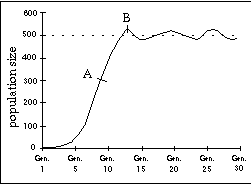
What is the carrying capacity of the graph?
1000
8000
800
600

The graph to the right shows the interaction of the wolf and moose populations on Isle Pekie. If the moose population continues to increase, the wolves' food supply will increase. What will most likely happen to the wolf population as a result?
It will decrease.
It will increase.
It will remain the same.

What type of growth is demonstrated in the graph?
Exponential
Carrying capacity
Linear
Negative


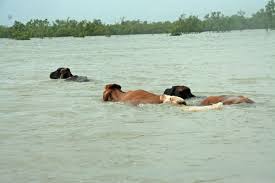
Natural disasters can be considered limiting factors.
true: density independent limiting factors
false; natural disasters are not limiting factors
true: density dependent limiting factors
false: because Mrs. Schaffer said
A severe flood in the Red River Valley causes a decline in the deer population.
Density-Dependent
Density-Independent

