
 Worksheets
IGCSE Physics Thermodynamics
Total questions: 134
Worksheet time: 2hrs 42mins
Which process transfers heat without the movement of matter?
Convection
Conduction
Radiation
Diffusion
What happens to the internal energy of a substance when it is heated?
Increases
Decreases
Stays the same
Depends on the temperature
Which of the following is the best insulator?
Copper
Silver
Water
Fiberglass
The specific heat capacity of water is 4200 J/kg°C. How much energy is required to raise the temperature of 2 kg of water by 10°C?
84000 J
21000 J
42000 J
168000 J
Which process is responsible for the heat transfer in boiling water?
Conduction
Convection
Radiation
Evaporation
What is the primary method of heat transfer in metals?
Radiation
Conduction
Convection
Insulation
In a thermos flask, which method of heat transfer is minimized by a vacuum?
Conduction
Convection
Radiation
All of the above
The latent heat of fusion of ice is 334,000 J/kg. How much energy is needed to melt 2 kg of ice at 0°C?
334,000 J
668,000 J
167,000 J
1,002,000 J
Which of the following materials is best for reflecting infrared radiation?
Black metal
Silver foil
White paper
Glass
Why does evaporation cause cooling?
It absorbs radiation
The fast-moving molecules leave the liquid
It reduces atmospheric pressure
It decreases thermal conductivity
What happens to the temperature of a substance during a phase change?
Increases
Decreases
Remains constant
Fluctuates
Which of the following factors does not affect the rate of evaporation?
Surface area
Humidity
Temperature
Mass of the liquid
What is the principle behind a liquid-in-glass thermometer?
Thermal expansion of liquid
Evaporation
Condensation
Latent heat absorption
Which gas law explains why a balloon expands when heated?
Boyle’s Law
Charles’s Law
Pascal's Law
Lenz's Law
Which of the following has the highest specific heat capacity?
Copper
Aluminum
Water
Iron
Which method of heat transfer occurs in a vacuum?
Conduction
Convection
Radiation
None
What does the term 'thermal equilibrium' mean?
Objects are at the same temperature
Objects have the same mass
Objects have no energy
Heat is continuously transferred between them
What is the SI unit of specific heat capacity?
J/kg
J/kg°C
J/°C
kg/°C
If the pressure of a gas is doubled at constant temperature, what happens to the volume?
It doubles
It remains the same
It halves
It quadruples
Which process cools the atmosphere by releasing latent heat?
Condensation
Evaporation
Freezing
Melting
A 500 W heater is used to heat 2 kg of water for 5 minutes. What is the energy supplied to the water?
60000 J
150000 J
300000 J
500000 J
Why does metal feel colder than wood at the same temperature?
It radiates heat faster
It is a better conductor of heat
It has a lower specific heat capacity
It has a higher density
What is the main reason for using vacuum flasks to store hot liquids?
To prevent heat transfer by conduction
To prevent heat transfer by convection
To prevent heat transfer by radiation
To prevent all forms of heat transfer
Why does air act as a good insulator?
It has a high density
It is transparent to radiation
It is a poor conductor of heat
It allows convection to occur
Which of the following statements about conduction in solids is correct?
Energy is transferred by the movement of atoms
Energy is transferred by the movement of free electrons
Energy is transferred by convection currents
Energy is transferred by radiation
If the temperature of a gas is doubled at constant volume, what happens to the pressure?
It halves
It remains the same
It doubles
It quadruples
The latent heat of vaporization of water is 2,260,000 J/kg. How much energy is required to vaporize 0.5 kg of water?
1,130,000 J
4,520,000 J
2,260,000 J
565,000 J
Why does sweating help cool the body?
It increases the body's thermal conductivity
It reduces blood flow
It allows heat to escape by evaporation
It absorbs heat from the body
Which of the following is an example of heat transfer by convection?
Heat from a radiator warming a room
Heat from the Sun warming the Earth
Heat through a metal rod
Heat through a vacuum
What property of water makes it useful for cooling systems?
Low boiling point
High specific heat capacity
High latent heat of fusion
Low density
Which of the following is the correct relationship between heat energy (Q), mass (m), specific heat capacity (c), and temperature change (ΔT)?
Q = mcΔT
Q = m/ΔT
Q = c/ΔT
Q = m + cΔT
The pressure of a gas is 200 kPa at 300 K. If the temperature is increased to 600 K at constant volume, what is the new pressure?
100 kPa
200 kPa
300 kPa
400 kPa
Why does thermal expansion occur in solids?
Molecules are destroyed
Atoms vibrate more and move apart
Atoms lose energy
New atoms are formed
What is the function of a coolant in a car engine?
To increase the temperature
To absorb heat and prevent overheating
To decrease pressure
To allow conduction
What is the relationship between pressure and volume in Boyle's Law?
Directly proportional
Inversely proportional
Equal
No relationship
Which type of heat transfer occurs in liquids and gases but not in solids?
Conduction
Convection
Radiation
Diffusion
What happens to the boiling point of water as atmospheric pressure decreases?
Increases
Decreases
Remains constant
Varies randomly
Which of the following materials has the lowest thermal conductivity?
Aluminum
Wood
Steel
Glass
A gas is compressed to half its original volume at constant temperature. What happens to its pressure?
Halved
Remains the same
Doubled
Quadrupled

Calculate the energy transferred when a
block of aluminum at 90.0 °C is placed in
2.00 liter (2 kg) of water at 20.0 °C if the
final temperature becomes 40.0 °C. Also, calcuate the mass of the Aluminium block? The specific heat capacity of water is 4184 J/KgoC and Al is 900 J/KgoC. The thermal energy equation is Q = m.c.ΔT
(Q = 167360 Joules)
&
(Alm = 3.719 kg)
(Q = 67360 Joules)
&
(Alm = 1.719 kg)
(Q = 267360 Joules)
&
(Alm = 0.719 kg)
Zero
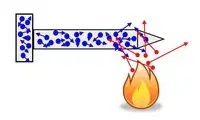
When thermal energy is added to a substance, the substance's particles move:
More rapidly at an increased diestance from each other.
More rapidly with less distance between each other.
More slowly with a greater distance between each other.
More slowly with a reduced distance between each other.
Radiation is the chief method of energy transfer from......
from the sun an earth satellite
from a gas flame to the top layer of water in teakettle
from a soldering iron to metals being soldered
from the bottom of a glass of water to an ice cube floating in it
Of the process below, the one in which practically all the heat transfer by conduction is________
from the sun to an earth satellite
from a gas flame to the top layer of water in a teakettle
from a stove top to a pot of water above it
None
Plastic handles are often used for kitchen utensils because...
the plastic is a good radiator
the plastic is a good insulator
the plastic is a good conductor
the plastic softens gradually with excessive heat

The ________ _______ of Thermodynamics states that energy cannot be created or destroyed; it can only be converted from one form to another
First Law
Second Law
Third Law
Zeroth Law

_______ ________ transfer the heat through the mass movement of fluids such as water, molten rock, or air from one place to the other
evaporation
convection currents
heat curve
sublimation
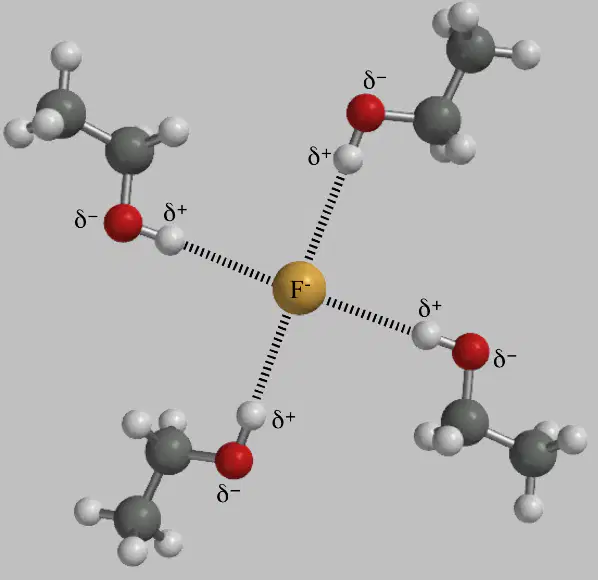
an attraction between two atoms that already participate in other chemical bonds
carbon bond
hydrogen bond
oxygen bond

are the attractive or repulsive forces between molecules
newton's force
gravity
intermolecular forces
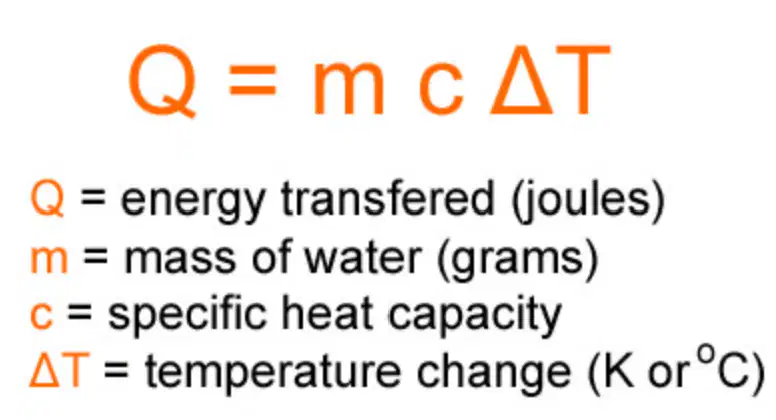
The ______________ is the amount of heat it takes to change the temperature of one gram of substance by 1°C
core
Jules
specific heat capacity

_________ is defined as a measure of randomness or disorder of a system
product
reaction
entropy
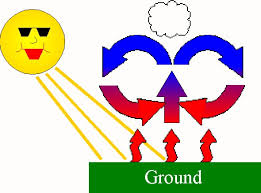
Convection currents occur:
Only in liquids
When a dense substance is warmer than a less dense substance
In both liquids and gases
Weakly in solids
Which of the following best describe a vacuum?
Hot
Cold
Shiny
Empty
When you heat a pot on a stove, the handle gets warm. Which type of heat transfer is responsible?
Conduction
Radiation
Convection
All of the above
When two things are the same temperature:
They have the same number of molecules
Their molecules stop moving
Their molecules move at the same average speed
Heat transfer between the two things stops
_____________, convection, and conduction are the three types of heat transfer.
Conveyance
Radiation
Translocation
When you touch hot sand, heat is transferred by _________ to your skin.
conduction
convection
radiation
When you heat up an object, the particles in the object move _________.
faster
the same speed
slower
__________ is the transfer of heat by the movement of a fluid.
Conduction
Convection
Radiation
How does heat move?
from a warmer to a cooler object
from a cooler to a warmer object
toward a hot object
away from a cold object
How is energy from the Sun transferred?
by radiation
by conduction
by convection
by the force of gravity
A material through which heat or electricity does not easily flow
friction
insulator
movement
water
Energy that causes a change in temperature of materials
heat energy
circuit
friction
fire
A material that allow heat or an electric current to flow through easily. Example is metal.
conductor
circuit
conversion
heat transfer

Heat travels from?
Cooler objects to warmer objects
Smooth objects to rough objects
Wet objects to dry objects
Warmer objects to cooler objects
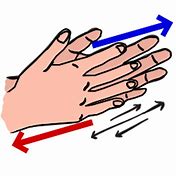
Friction is caused by?
Two objects rubbing together slowly
Two objects rubbing together quickly
Two objects sitting next to each other
Two objects floating in water
How do molecules move in a hot object?
they don't move
slowly
quickly
normal speed
What is NOT a source of heat?
rubbing something together quickly
the sun
electricity
sweating

Water has a specific heat of 4.184 J/g˚C.
Using Q = mcΔT, how much energy is released from 300 g of water when its temperature is decreased from 20˚C to 4˚C?
-5,026 J
-1,150 J
-20,083 J
-25,081 J

A substance in solid-state has just reached its phase change temperature. Based on the graph, what effect does additional thermal energy have on this substance?
Additional thermal energy increases the kinetic energy of the substance's particles.
Additional thermal energy breaks bonds holding substance's particles together.
Additional thermal energy changes the substance's phase with characteristic temperature increase.
Additional thermal energy does not affect the substance.

Analyze the picture.
In which state do molecules have the highest kinetic energy?
ion
solid
gas
liquid

Analyze the graph.
What phase change occurs from point B to point C?
sublimiation
melting
freezing
evaporation

Analyze the graph.
Between which points is heat energy released?
E to F
B to C
E to D
D to E
During an endothermic change, energy is ________ which _________ the surroundings.
absorbed, cools
absorbed, warms
released, cools
released, warms
During an exothermic change, energy is ________ which _________ the surroundings.
absorbed, cools
absorbed, warms
released, cools
released, warms

A change occurs that raises the temperature of the container in which it happens. What is the best term to describe the change. (The container is the surroundings and the metal is the system.)
condensation
endothermic
exothermic
mechanical

Four objects, made of the same material and having the same mass, are at the same temperature. The objects have different surfaces and different surface areas.
Which object emits infra-red radiation at the greatest rate?
A
B
C
D

Which processes occur in a metal to cause thermal conduction?
A
B
C
D

A liquid is heated in a beaker.
The density of the liquid changes as its temperature increases. This causes energy to be transferred throughout the liquid.
How does the density change and what is this energy transfer process?
A
B
C
D

Two otherwise identical cars, one black and one white, are at the same initial temperature. The cars are left in bright sunshine and their temperatures increase. During the night, their temperatures decrease.
Which car shows the greater rate of temperature increase and which car shows the greater rate of temperature decrease?
A
B
C
D
Which statement about the transfer of thermal energy is correct?
Convection can occur in air, but only when the air is trapped.
Convection can only occur in a gas.
Radiation cannot occur in air.
Radiation can occur in a vacuum, but convection cannot.

The diagram shows the cross-section of a vacuum flask containing a hot liquid in a cold room.
X and Y are points on the inside surfaces of the walls of the flask.
How is thermal energy transferred between X and Y?
by conduction and convection
by conduction only
by radiation and convection
by radiation only
Why does convection take place in a liquid when it is heated?
Liquids expand when they are heated.
Liquids start to bubble when they get close to boiling point.
Molecules in the liquid expand when they are heated.
Molecules near to the surface of the liquid escape into the air.

Two plastic cups are placed one inside the other. Hot water is poured into the inner cup and a lid is put on top, as shown.
Which statement is correct?
Heat loss by radiation is prevented by the small air gap.
No heat passes through the sides of either cup.
The bench is heated by convection from the bottom of the outer cup.
The lid is used to reduce heat loss by convection.

An experiment is set up to find out which metal is the best conductor of heat.
Balls are stuck with wax to rods made from different metals, as shown in diagram 1.
The rods are heated at one end. Some of the balls fall off, leaving some as shown in diagram 2.
Which labelled metal is the best conductor of heat?
A
B
C
D
Food is kept in a cool-box which uses two ice packs to keep it cool.
Where should the ice packs be placed to keep all the food as cool as possible?
both at the bottom of the box
both at the top of the box
one at the front and one at the back of the box
one on the left and one on the right of the box

A by conduction and convection
B by conduction only
C by radiation and convection
D by radiation only

A
B
C
D

A absorber of heat.
B conductor of heat.
C convector of heat.
D emitter of heat.

A
B
C
D
Hot liquid in a vacuum flask cools extremely slowly. This is because some methods of heat
transfer cannot take place in a vacuum.
Which methods cannot take place in a vacuum?
conduction and convection only
conduction and radiation only
convection and radiation only
conduction, convection and radiation
Which statement about convection currents is correct?
Convection currents occur because, when cooled, liquids contract and become more dense.
Convection currents occur because, when warmed, liquids expand and become more dense.
Convection currents only occur in liquids.
Convection currents only occur in solids and liquids.
In which type of substance are free electrons involved in the transfer of thermal energy?
all liquids
all solids
metals only
plastics only

A
B
C
D
Which statement about convection is not correct?
A It enables water in a pan on a cooker to get evenly heated.
B It happens in liquids and gases.
C It means that heat rises.
D It occurs because the density of a fluid decreases when it is heated.

Four thermometers, with their bulbs painted different colours, are placed at equal distances from
a radiant heater.
Which thermometer shows the slowest temperature rise when the heater is first switched on?
matt black
matt white
shiny black
shiny white
Some hot water is sealed inside a metal can. The can is in a vacuum in outer space.
The hot
water slowly cools down.
How does the thermal energy escape into space?
by conduction then convection
by conduction then radiation
by evaporation then convection
by evaporation then radiation

The metal surface of a kettle is hot.
What happens to the cool air outside the kettle when it comes into contact with the hot kettle?
The density of the air decreases and the air falls.
The density of the air decreases and the air rises.
The density of the air increases and the air falls.
The density of the air increases and the air rises.

Two metal cans are identical, except that one has a shiny silver outer surface and the other has a
dull black outer surface.
They each have 300 g of water at 80 °C sealed inside them. They are
both in a vacuum, in the darkness of outer space.
How does the temperature of the water in each one change?
Neither one will cool down.
The water in the black can cools more slowly than that in the shiny can.
The water in the shiny can cools more slowly than that in the black can.
They both cool down at the same rate.

Which material is the best choice to prevent their hands from getting too hot?
aluminium
copper
steel
wood

A
B
C
D
One end of a rod of copper is placed in hot water. Thermal energy travels along the rod to make the other end warmer.
What is the behaviour of the copper at an atomic level that accounts for most of the transfer of thermal energy from one end to the other?
Atoms at the hot end gain kinetic energy and move towards the other end.
Atoms at the hot end expand, colliding with other atoms and transferring energy.
Free electrons at the hot end gain energy and move towards the other end, colliding with atoms along the rod.
Free electrons at the hot end gain energy from the hot water and move directly to the other end.
Vacuum flasks usually have silvered walls that help to keep the contents of the flask hot.
Why are the walls silvered?
to absorb thermal energy from the air around the flask
to increase the rate of convection inside the flask
to reduce energy loss to the surroundings by conduction
to reflect thermal radiation back into the flask
100 g of water at 25 °C is poured into an insulating cup. 50 g of ice at 0 °C is added to the water.
The water is stirred until the temperature of the water has fallen to 0 °C.
18 g of ice remains unmelted.
The specific heat capacity of water is 4.2 J / g °C.
Which value does this experiment give for the specific latent heat of fusion of ice?
210 J / g
330 J / g
580 J / g
770 J / g
In which does thermal conduction not occur?
a gas
a liquid
a solid
a vacuum
The metal surface of a kettle is hot.
What happens to the cool air outside the kettle when it comes into contact with the hot kettle?
The density of the air decreases and the air falls.
The density of the air decreases and the air rises.
The density of the air increases and the air falls.
The density of the air increases and the air rises.
Which statement about convection currents is correct?
Convection currents occur because, when cooled, liquids contract and become more dense.
Convection currents occur because, when warmed, liquids expand and become more dense.
Convection currents only occur in liquids.
Convection currents only occur in solids and liquids.
The air temperature in a cold room is 15 °C.
A heater that contains water at 50 °C is used to heat the room.
By which process is most of the thermal energy transferred throughout the air in the room?
conduction
convection
evaporation
radiation
On a cold day, a shiny metal rod feels colder to the touch than a black plastic rod.
Which statement explains this observation?
The metal rod is a better absorber of infra-red radiation than the plastic rod.
The metal rod is a better thermal conductor than the plastic rod.
The metal rod is a worse absorber of infra-red radiation than the plastic rod.
The metal rod is a worse thermal conductor than the plastic rod.
In countries where it is usually hot, houses are often painted white.
What is the reason for this?
White surfaces are good reflectors of radiant energy.
White surfaces are good transmitters of radiant energy.
White surfaces are good absorbers of radiant energy.
White surfaces are good emitters of radiant energy.
A surface is made so that it is a good source of infrared radiation.
Which surface is not suitable?
a surface that is painted matt black
a surface that is painted white
a surface that is heated to a high temperature
a surface that has a large surface area

