
 Worksheets
Science
Total questions: 136
Worksheet time: 1hrs 28mins
_______ are the smallest units of life because they grow, reproduce, respond, and use energy.
atoms
elements
cells
all of the above
Cells come from______.
other preexisting cells
cytoplasm
organelles
prokaryotes
The cell theory states that_________
cells come from cells
all organisms are made of cells
cells are the basic unit of structure and function for life
all of the above
________ is the scientist who saw small chambers when looking at cork, and named them “cells”.
Newton
Hooke
Carson
Manning
The size of an organism is determined -
by the size of the cells that make up the organism.
by the number of cells that the organism has.
The cell theory is a result of the work of one very important scientist name Hooke.
True
False
A multicellular organism is made of
one cell
multiple cells
unicellular cells
there is no such thing as a "multicellular" organism
One common feature of all cells is their ability to -
work with other cells in a "unicellular" organism.
reproduce themselves.
be formed by spontaneous generation.
exist without needing a cell membrane
When a cell is ready to reproduce, it duplicates its contents, then divides into two similar (and sometimes exact duplicate) cells.
True
False
Regardless of type, all cells
have a cell membrane
have cytoplasm
can duplicate themselves by undergoing cell division
all of the above
The basic building blacks from which all living organisms are made are
cells
DNA
chromosomes
Amoeba
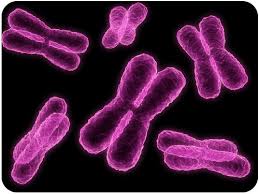
A normal human cell contains how many chromosomes?
16
26
46
14
It is true, not all cells have a true nucleus, but all cells must have some sort of
DNA
Cytoplasm
Osmosis
Call Wall
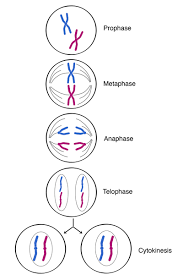
True or False: During Mitosis the nucleus divides in two
True
False
True or False: Interphase uses the most time for cell growth
True
False
The the three main phases of cell division are, Interphase, Mitosis and
cytoplasm
cytokineses
Cell Division
Cell phones
True or False: Cells Require oxygen to survive?
True
False
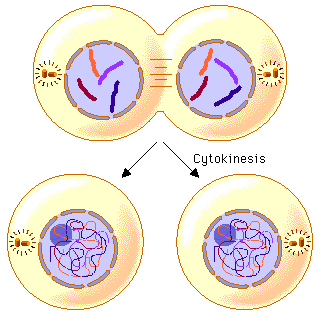
During this phase, animal cell looks like it is being pinched in the middle.
Interphase
mitosis
cytokineses
Telephase
Genes contain genetic
Cells
Traits
Traitors
Cytoplasm
This part of the cells controls what moves in and out
cell wall
cell membrane
Cytoplasm
organelles
Animal cells DO NOT have ...
mitochondria
nucleus
cytoplasm
chloroplasts
What directs all the activities of the cell?
cell wall
cytoplasm
nucleus
cell membrane

What part of a cell is "A" in the diagram?
nucleus
cytoplasm
cell membrane

Letter "B" is what part of a cell?
cytoplasm
cell membrane
nucleus

What part of a cell is "C" in the diagram?
cell membrane
nucleus
cytoplasm
What is the mitochondria?
The power house of a house
The power house of a cell
The main function of a cell
A basketball
In what organelle of plant cells does photosynthesis occur?
mitochondria
centrioles
chloroplast
ribosomes
A substance that is formed as the result of a chemical reaction is a __________________
Product
Reactant
Starters
Enders
Which of the following is an example of a chemical change?
water freezes to form ice
sugar dissolves in water
gasoline burns in a car engine
a piece of metal expands when it is heated
A change in the shape of an object is an example of _________________.
a chemical change
energy
an endothermic change
a physical change
Which one shows that a chemical reaction has occurred?
dissolving
melting
formation of a gas
bending

What is the BEST definition of a chemical reaction?
A change in matter that produces one or more NEW substances
When two things combine and EXPLODE.
What is a chemical reaction?
a change in matter when the molecules rearrange to make new molecules
a change in matter when matter changes its form or appearance
a change in matter when the physical appearance changes
a very boring change in matter

This image shows a
chemical reaction
physical change
musical change
all of these answers are correct

This change is a
chemical reaction
physical change
musical change
all answers are correct

The reactants in the image above are:
CH4 and 2 O2
2 H2O and CO2
All of these are reactants
All of these are products
The products in the image above are:
CH4 and 2 O2
2 H2O and CO2
All of these are reactants
All of these are products
When energy like heat and light are given off in a chemical reaction it is called
exothermic
endothermic
eccentric
ectomorphic
When energy is absorbed and taken in during a chemical reaction it is called
exothermic
endothermic
eccentric
ectomorphic
When the matter in a chemical reaction gets colder it is called
exothermic
endothermic
eccentric
endomorphic
When the matter in a chemical reaction gets warmer it is called
exothermic
endothermic
eccentric
endomorphic

Which is the correct description of photosynthesis
Photosynthesis is a chemical reaction because the atoms of the molecules get rearranged to form new molecules
Photosynthesis is a chemical reaction because the molecules stay the same before and after the change
Photosynthesis is a physical change because nature makes it happen
Photosynthesis is a physical change because the atoms stay the same
Signs of a chemical change could be:
a change in energy (temperature, light, sound)
a precipitate forms (a solid forms from 2 liquids)
formation of gas (bubbles)
shocking change in color
all of these answers are signs of chemical change

The products are:
molecular oxygen and 2 carbon
2 carbon monoxide
all of these are products
all of these are reactants
The reactants are:
molecular oxygen and 2 carbon
2 carbon monoxide
all of these are products
all of these are reactants

What is the unit to MEASURE force?
Kilogram
Meter
Pounds
Newton

A ____________ is a push or a pull on an object.
friction
force
magnet
gravity

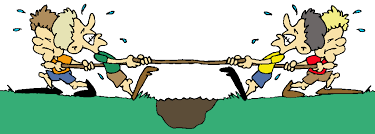


Forces that have a net force of zero Newtons
Balanced force
Unbalanced force

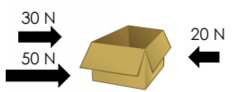


Which example would be a balanced force?
Train moving at a constant speed in the same direction.
A skier going down a hill.
A basketball being passed to a teammate.
An apple falling to the floor.
It is defined as a push or a pull.
Elements
Force
Friction
Fracture
It is defined as forces that are equal in magnitude.
Unbalanced Forces
Forces
Balanced Forces
Net force
It is defined as forces that are not equal in magnitude.
Unbalanced Forces
Forces
Balanced Forces
Friction

Use the picture as reference. If the force of the girl pushing is 30N, and the force of the boy who is also pushing is 30N, what is the net force?
0N
60N
900N
1N

Use the picture as reference. If the force of the girl pushing is 20N, and the boy who is also pushing is 15N, what is the net force?
5N
300N
35N
1.33N
If you apply an unbalanced force to an object at rest, what will happen to that object?
the object will remain at rest.
the object will move.
The object will stay.
None of the above.
If all forces acting on an object have equal magnitudes, what is the state of that object?
the object is at rest.
the object is moving.
The object is accelerating.
None of the above.
What operation do we use when forces acting on an object have the same direction?
division
multiplication
subtraction
addition
What operation do we use when forces acting on an object have the opposite directions?
division
multiplication
subtraction
addition
Beri and Ria are pulling a wagon, the force exerted by Beri is 45N and the force exerted by Ria is 12N. If the two girls are pulling on the same direction, what is the net force?
540N
3.75N
33N
57N
The physical features of an organism that help it survive.
Behavioral Adaptations
Structural Adaptations
The things animals do to survive.
Behavioral Adaptations
Structural Adaptations
Leaf insects are shaped like a leaf so predators think they are real leaves.
Behavioral Adaptation
Structural Adaptation
A beavers front teeth grow continuously to be able to chew wood.
Behavioral Adaptation
Structural Adaptation
Leaf insects sway as they walk so that they look like leaves blowing in the wind.
Behavioral Adaptation
Structural Adaptation
Frogs have long strong legs to hop quickly and far.
Behavioral Adaptation
Structural Adaptation
Beavers claim their territory by building piles of mud and marking it with scent.
Behavioral Adaptation
Structural Adaptation
A moose has long legs to walk through deep snow, over bushes, and wade through marshes.
Behavioral Adaptation
Structural Adaptation
Male moose roar loudly to attract mates.
Behavioral Adaptation
Structural Adaptation
A polar bear has very small ears to keep it from losing heat.
Behavioral Adaptation
Structural Adaptation
A polar bear has thick rough pads on their feet to better walk on ice.
Behavioral Adaptation
Structural Adaptation
Armadillos can roll up into a ball to protect their undersides.
Behavioral Adaptation
Structural Adaptation

Birds have different beaks to help them survive in their habitat, which is a type of ___________ adaptation.
behavioral
physical
learned
migration

Squirrels gather and store acorns for the winter, which is a ___________ adaptation.
behavioral
structural
physical
environmental

Camouflage and mimicry are examples of ___________ adaptations.
behavioral
special
physical
predatory

Hibernation, migration, and dormancy or all examples of ___________ adaptations.
behavioral
physical
special
environmental

Both animals and people are born with ___________, like crying.
instincts
experiences
adaptations
dormancy

___________ is when animals go into a deep sleep causing their bodies to slow down.
Mimicry
Migration
Dormancy
Hibernation

___________ is a term used to describe animals that blend into their habitats.
Mimicry
Camouflage
Adaptations
Instincts

A spider spinning a web is an example of an instinctive behavior.
True
False

A cub will learn how to hunt by watching and copying its mother, which is a/an ___________ behavior.
instinctive
adaptive
learned
mimicry

An opossum playing dead when it's in danger is an example of a ___________ adaptation.
learned
physical
behavioral
tricky

___________ is when an organism (plant or animal) slows down its activity because its habitat becomes stressful.
Migration
Dormancy
Hibernation
Adaptation

Animals that stay warm in cold habitats with thick fur body coverings is an example of a ___________ adaptation.
behavioral
environmental
learned
physical

Adaptations help animals ___________.
survive
get food
protect themselves
all of the above

Some animals use certain body parts to ___________ themselves or their babies.
defend
scare
adapt
raise

___________ is when some animals travel long distances from one place to another, usually during seasonal changes.
Hibernation
Migration
Dormancy
Mimicry

What does it mean to CAMOUFLAGE?
when a weak animal copies a stronger animal to warn of predators
when an animal is able to change colors to survive in an enviornment
when an animal hibernates during the winter.

What is HIBERNATION?
when a weak animal copies stronger animal to warn off predators.
when an animal hides in the cold winter and sleeps until the spring
when a larger animal eats its prey
Which is NOT a physical adaptation?
a bear hibernating in the winter
a bird with a sharp beak
a fish with scales on its body
Why would a bunnies fur be brown in the summer and white in the winter?
The rabbit likes to change fur color
The bunny learned it from his parents
The changing of fur color help the bunny blend in with it's surroundings.

Birds flying south 800 miles to find food and to escape cold winters is an example of
Hibernating
Migrating
Camouflage

A green snake blends in so predators can NOT find it. This is an example of?
Hibernation
Mimicry
Migration
Camouflauge
What is Migration?
When animals eat what they want
When animals travel from one place to another to eat or get away from the cold weather.
When animals are taught how to do something.

According tho the graph, which animal travels the longest distance?
Hummingbirds
Snow Geese
Seals
Monarch Butterflies

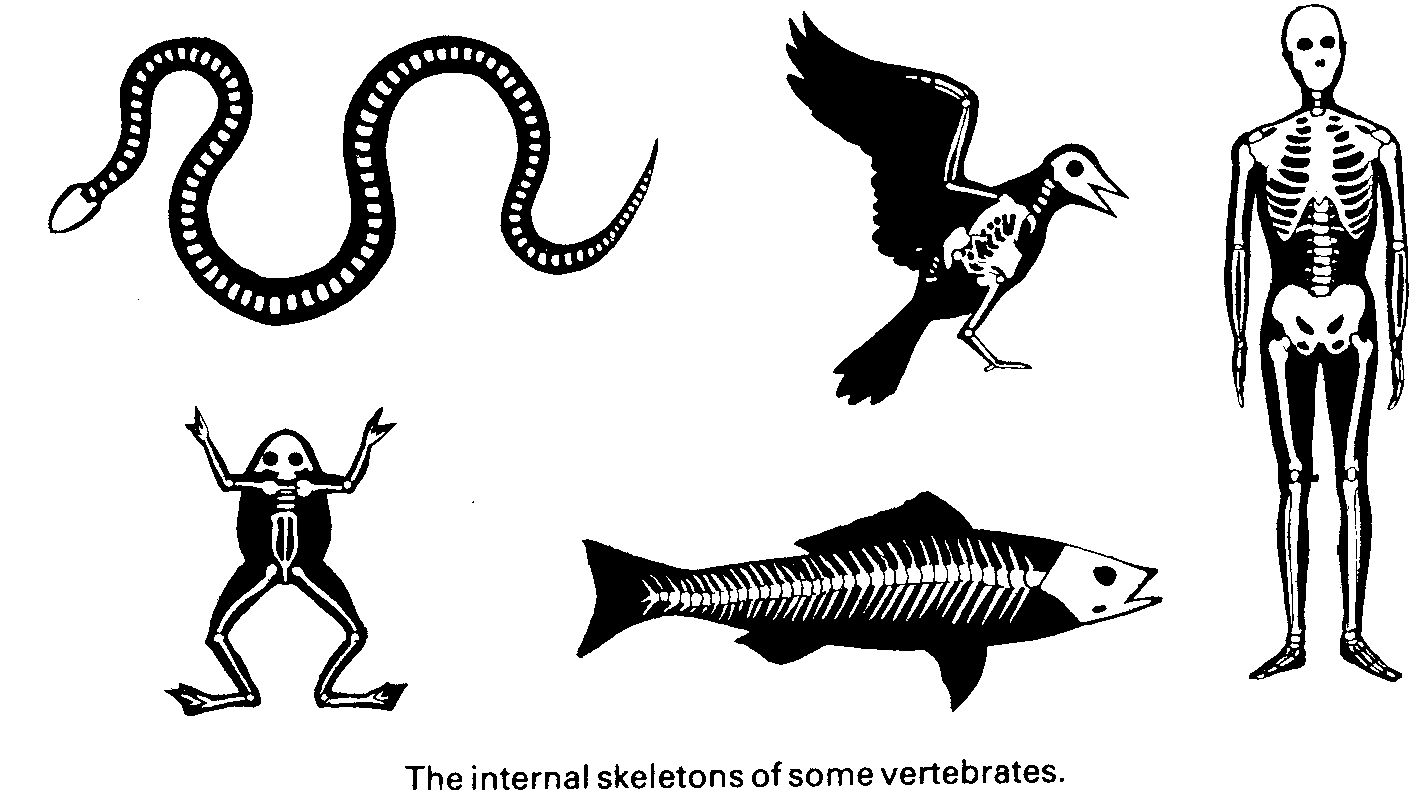
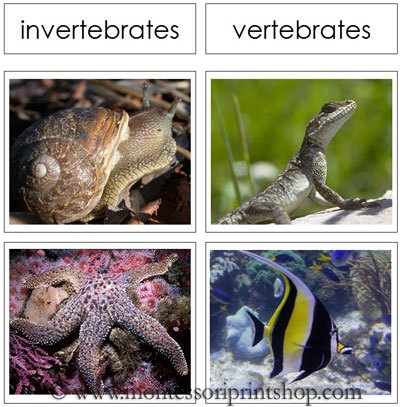
This animal is vertebrate or invertebrate?
Invertebrate
Vertebrate

This animal is vertebrate or invertebrate?
Vertebrate
invertebrate

This animal is vertebrate or invertebrate?
Invertebrate
Vertebrate

This animal is vertebrate or invertebrate?
Vertebrate
Invertebrate

This animal is vertebrate or invertebrate?
Invertebrate
Vertebrate
What is a behavioral adaptation?
Something an animal does to survive
How an animal looks
A structure that an animal has
A bear's thick fur
What is a structural adaptation?
Something an animal does to survive
The physical features of an organism that help it survive
A woodchuck hibernating in winter
A function an animal has

