
 Worksheets
10.2 Keys and Trees Review
Total questions: 50
Worksheet time: 40mins
The word "dichotomous" means...
divided into two parts
not living
two cots for me to sleep on
(a)
physical features
weather patterns
environment
diet

A dichotomous key for trees is provided. Hikers found a tree that has large brown cones and single sharp needles. What species of tree have the hikers found?
(a)

What is monster # 4 ?
Alienus Fuzzicus
Alienus Stripicus
Alienus Quadlegicus
Alienus Blobicus
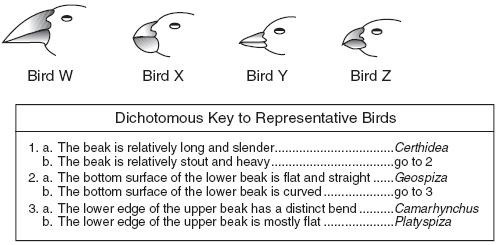
(a)

A student examines the winged insect using the picture.
Based on the key, in what order should this insect be classified?
(a)

What is monster # 1 ?
Alienus quadlegicus
Alienus haircus
Alienus Tritoothicus
Alienus Blobicus

Identify the fish
Sebastes serriceps
Sebastes nebulosus
Naucrates ductor
Seriola lalandi

Which shark is the picture of?
Cow Shark
Great White Shark
Hammerhead Shark
Saw Shark


Use the dichotomous key to identify this white wildflower
Starflower
Chickweed
Common Strawberry
Bowman's root

Identify leaf F
Cydonia
Magnolia
Aesculus
Fraxinus
Ilex

What is the name of this alien?
Alienus Greeno
Alienus Hairy
Alienus Tooth
Alienus Fuzzicus
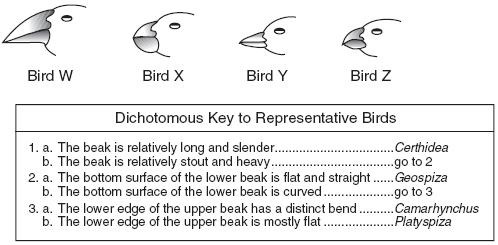

arachnids and insects?
following observations of the plant’s characteristics would be useful in determining its identity with a dichotomous key?
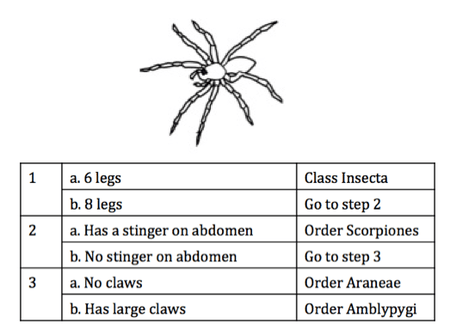
following observations of the plant’s characteristics would be useful in determining its identity with a dichotomous key?

According to this image, which two domains of life are most related?
Bacteria & Archaea
Archaea & Eukarya
Eukarya & Bacteria
According to this image, which two domains of life are most related?
Bacteria & Archaea
Archaea & Eukarya
Eukarya & Bacteria
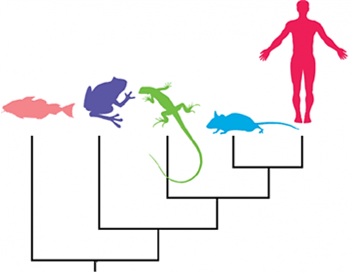
According to this phylogenetic tree, which creature is the least related out of all pictured?
Fish
Frog
Salamander
Human

What do you call the traits shown on phylogenetic trees, such as "four limbs" or "vertebrae"?
Derived characteristics
Speedy Lambofeeties
Branching elements
Harmonious changes

Which group of animals on this tree are most closely related to birds?
Saurischian dinosaurs
Ornithischian dinosaurs
Crocodiles
None of these are related to birds

What number is the common ancestor of C and D
1
2
3
4

From the picture above, What do the species all have in common?
Back bone
Same father
Common ancestor
Feathers

Phylogeny is usually represented by a tree diagram called a _________ - _____
Genetic Line
Phylogenetic Tree
Photographic Queue
Future Babies

What is the common ancestor of Letters A, B, C, D, E?
1
2
3
4
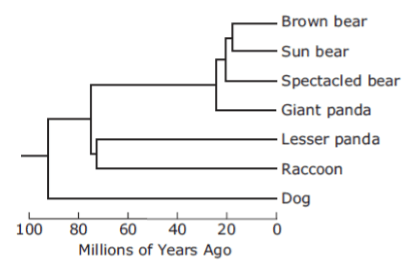
Who is the closest relative to the brown bear?
Giant panda
Dog
Lesser panda
Sun bear

Which organism is the most distantly related to all the others?
Raccoon
Dog
Giant Panda
Sun Bear
Which group of animals on this tree are most closely related to birds?
Saurischian dinosaurs
Ornithischian dinosaurs
Crocodiles
None of these are related to birds
On a phylogenetic tree, what do the branch lengths represent?
The age of the organisms
amount of genetic change since divergence
amount of genetic change since convergence
The age of divergence

Who is most closely related to Taxidea taxus?
Lutra lutra
Panthera pardus
Canis latrans
Canis lupus

Cytochrome c is a protein made up of 104 amino acids. It is found in the mitochondria and aides in the electron transport chain during cellular respiration. The data table represents the number of amino acid differences in cytochrome c between organisms A, B, C, and D.
The phylogenetic trees represent possible interpretations of the data in the chart.
Which two phylogenetic trees represent the data most accurately? (choose 2)


The phylogenetic tree was constructed using derived traits of organisms A, B, C, D, and E. Based on the tree, which two organisms share the most derived traits?
C and D because they share one common branch.
C and D because they are closest to the end of the tree next to each other.
A and B because they share the most branch points.
A and B because they are the pair closest to the center.

What is the best inference about biochemical relationships that could be made from this model?
The amino acid sequences of a lancelet and a tuna are more similar than that of a tuna and a salamander. This is due to the lancelet and the tuna both residing entirely in water while the salamander can survive on land.
The amino acid sequences of a salamander and a turtle are less similar than that of a turtle and a leopard. This is due to the turtle and the salamander both being adapted to life in water or land.
The amino acid sequences of a lancelet and a tuna are less similar than that of a tuna and a salamander. This is due to the lancelet and the tuna splitting from a common ancestor longer ago.
The amino acid sequences of a salamander and a turtle are more similar than that of a turtle and a leopard. This is due to the turtle and the salamander both being adapted to life in water or land.
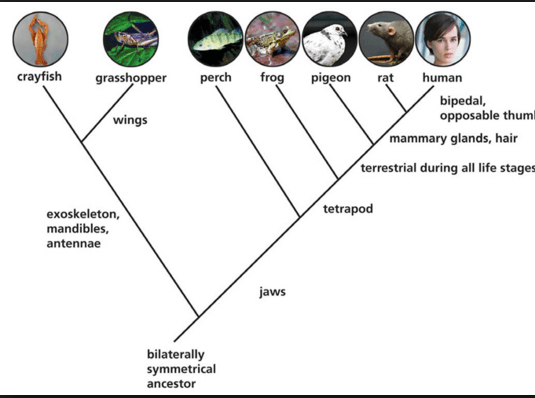
According to the cladogram, which organism is most distantly related to the human?
crayfish
grasshopper
perch
frog

In a phylogenetic tree, the branching points represent common ancestors.
Yes
NO
What is the common ancestor of Letters A, B, C, D, E?
1
2
3

The lizard has all these derived characteristics EXCEPT
Jaws
Lungs
Bipedal

Which species is the oldest?
A
B
C
D
E
Which species is the newest?
A
B
C
D
E

