
 Worksheets
Term 3 Exam Revision Quiz (Unit 4-6)
Total questions: 183
Worksheet time: 2hrs 0mins


Interconnected chains to show transfer of energy is called
a food chain.
a food web.

A linear sequence to show transfer of energy is called
a food chain.
a food web.
What is the role of decomposers
They break down dead organisms and return their nutrients back to the ecosystem.
Supply energy to the sun
Help organize the community
Create energy from the sun
Consumers are
organisms that help break down dead material
organisms that create energy from the sun
organisms that live in the ocean
Organisms that get their energy from eating other organisms.

What does an adaptation do?
Make animals extinct (die)
Help living things die
Help living things survive in their habitat
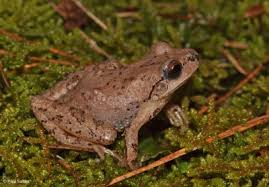


Which of these words does NOT describe an invasive species?
alien
intruder
non-native
natural
The primary cause of the introduction of invasive species introduction is ---
too much food.
human action.
weather events.
asteroids.
What is an invasive species?
An organism that is new to an environment that has positive effects on the environment.
An organism that is native to an environment that has negative effects on the environment.
An organism that is new to an environment that has negative effects on the environment.
An organism that is native to an environment that has positive effects on the environment.
How is a food web different from a food chain?
Foods webs contain only producers, not consumers.
Food webs do not include decomposers.
Food webs contain many different,linked food chains.
Food webs exist in aquatic environment;food chain exist in terrestrial environment
How might a lack of sunlight disrupt the food web
It would cause consumers to consume less
It would prevent decomposers from decomposing matter
It would prevent producers from producing nutrients.
It would not disrupt the food web at all.
How are primary consumers different from secondary consumers?
Primary consumers eat only plants;secondary consumers eat other consumers.
Primary consumers eat other consumers;secondary consumers eat only plants.
primary consumers eat plants and other consumer;secondary consumers eat plants and decompose matter
Primary consumers eat plants and decompose matter ;secondary consumers consumers eat plants and other consumers.

In this food web, what is missing?
Producer
Primary Consumer
Secondary Consumer
Tertiary Consumer
Decomposer
In this food web, what is the mountain lion if it eats a mule deer?
Producer
Primary Consumer
Secondary Consumer
Tertiary Consumer
Quaternary Consumer
When you consume an organism, you only receive 10% of the energy, but how much of the toxins do you receive?
All of the toxins
10% toxins
1% toxins
None of the toxins

In which organism would biomagnification be the most concentrated? (Remember the lab: Rabbits eat the grass, the snake eats the rabbit, the hawk eats the snake--the hawk is the apex predator)
grass
rabbit
snake
hawk

Which organism would have the most bioaccumulation?
eucalyptus tree
wombats
kookaburras
koalas
Toxin concentrations _____________ as you go up the food chain.
do not change
increase
decrease
Pesticides and herbicides eventually show up in higher level consumers due to
climate change
bioaccumulation
habitat destruction
fertilizer runoff
A __________ is a subatomic particle with a positive charge.
proton
neutron
electron
nucleus
A __________ is a subatomic particle with a negative charge.
proton
neutron
electron
nucleus
A __________ is a subatomic particle with a neutral charge.
proton
neutron
electron
nucleus
What is a atom?
An atom is a chemical substance
An atom is a material which is used to build something.
An atom is the smallest unit of ordinary matter that forms a chemical element.
None of these
Which of the following are NOT found in the atomic nucleus?
electrons
Nuclear Force
Neutrons
Protons
If you know the atomic number and the atomic mass of an atom then you should be able to figure out...
the number of neutrons
the name of the element
the number of protons
all of these

Carbon (C) is considered an element while Carbon Dioxide (CO2) is considered a compound. That is because Carbon Dioxide is -
a gas
made of two elements
given off by plants
useful to us


Pure --------------- is soft
aluminium
silver
gold
platinum
22 Carat gold is gold of ----------- purity
100%
91.66%
75%
44%
Diamond is the softest natural substance
True
False

What is the main characteristic of weather?
long period of time
short period of time
severe weather
the five climates zones

Which of the following factors or elements DO NOT affect weather?
Temperature
Humidity
Precipitation
Wind Vane

What's this climate zone?
Tropical
Dry
Polar
Continental
The daily changes we see outside is called
climate.
weather.
precipitation.
temperature.
Precipitation is
weather.
rain, sleet, hail, and snow.
hot, cold, and rainy.
temperature.
The temperature of a polar climate is?
warm and cool
consistently moderate
consistently cold
consistently hot
The temperature of a tropical climate is?
consistently hot
consistently cold
consistently moderate
warm and cool

In which climate zone would you find polar bears?
tropical
temperate
polar
snow
Climates are classified according to two major factors:
elevation and precipitation
latitude and temperature
elevation and latitude
precipitation and temperature
Global warming is known as the gradual increase in _________________ of the atmosphere.
precipitation
sun spots
temperature
ocean currents
The most abundant greenhouse gas in the atmosphere is ___________________.
oxygen
nitrogen
carbon dioxide
argon

Which zones are polar zones?
Zones A and B
Zones A and E
Zones E and D
Zones A, E, and C

Which zones are temperate zones?
Zones B and C
Zones B, C, and D
Zones, D and C
Zones D and B

Which zone is the tropical zone?
Zone B
Zone C
Zone D
Zone E
Possible human solutions for limiting global warming and climate change are...
being more energy-efficient
using renewable sources of energy
removing carbon from fossil fuel emissions
all of the above

How is a glacier different from an ice sheet?
Ice sheets are colder than glaciers
Glaciers are moving rivers of ice; ice sheets are immobile slabs
Glaciers form in the Northern Hemisphere; ice sheets form in the Southern Hemisphere.
Ice sheets form during interglacial periods; glaciers form during ice ages

If you wanted to take a core sample of an ice sheet, what would you need?
A glacier
A very large freezer
A thermometer
An auger
What kind of periods are ice ages?
Warm periods
Intergalactic periods
Cold periods
Both warm and cold preiods
Interglacials are ___________ periods
Cold
Warm
golden
Both cold and warm
How are sedimentary rocks formed?
cooling and hardening of lava
applied heat and pressure
compacting and cementing of sediments
melting of rock

About 78% of the Earth's atmosphere is comprised of _____.
oxygen
carbon dioxide
argon
nitrogen
What would happen if there were no atmosphere?
temperatures would be super cold all the time and the ice ages would return
temperatures would be super cold at night and super hot during the day
temperatures would be super hot all the time
ultraviolet radiation from the Sun would fry all life on Earth

How can cutting down trees increase global warming?
trees use carbon dioxide from the air to conduct photosynthesis
trees provide shade, which counteracts global warming
trees absorb the sun's energy without radiating it back into the atmosphere
none of the above
Greenhouse gasses can be made by ___.
burning fossil fuels in our cars
burning forests
with large-scale agriculture
all of these
Humidity is:
a boundary separating two masses of air of different densities.
a body of air with horizontally uniform temperature, humidity, and pressure.
a quantity representing the amount of water vapor in the atmosphere.
none of the above.
The effects of global warming include:
changes in the mating and migration of animals
melting ice caps and glaciers
prolonged growing seasons
all of the above

In the diagram, which letter represents the angle of incidence?
A
B
C
D
Why can you see most objects?
To get the best reflection from a mirror you need
a very shiny surface to reflect lots of light
to stand right in front of it
to shine a bright light on it
it to produce light


Given that the angle of incidence = 30 degrees
a. Draw a ray diagram, labelling clearly the normal, incident ray, angle of incidence, reflected ray and angle of reflection accurately.
Which is the correct diagam?

A student placed a pencil in a cup of water. The pencil appears broken because light
always travels in a straight line.
bends when it passes through water.
makes the water in the glass evaporate.
reflects the pencil on the water's surface.
When light passes at an angle to the normal from one medium into another in which its speed is higher
it is bent toward the normal.
it always lies along the normal.
it is unaffected.
it is bent away from the normal.
When light passes at an angle to the normal from one medium into another in which its speed is lower
it is bent towards the normal.
it always lies along the normal.
it is unaffected.
it is bent away from the normal.
If all other variables are held constant, what happens to the angle of refraction if the angle of incidence increases?
the angle of refraction stays the same
the angle of refraction decreases
the angle of refraction increases
cannot be determined from the information provided

Based on the image, as light passes from medium 1 to medium 2
light speeds up and bends towards the normal
light speeds up and bends away from the normal
light slows down and bends towards the normal
light slows down and bends away from the normal


Why is the spectrum of light separated into its components of color when white light is directed to a prism?
Because light reflects off the prism's surface
The incident white light refracts and separates into its constituent colors
The white light is absorbed by the prism, separating its colors
The light speeds up as it moves from air into the denser plastic material
This is the example of dispersion of light
sky looks bright orange in the evening
shadow
Pool seems shallower
rainbow
Why is the component of colour in a rainbow can be seen when light passes through a glass prism?
phenomena of scattering of light
phenomena of dispersion of light
phenomena of reflection of light
phenomena of diffraction of light
How many components of white light?
5
6
7
8
Why is the spectrum of light seperated into its components of colour when white light is directed to a prism?
The different colours in the white light bend away from the normal line at different angles when entering prism
The different colours in the white light bend towards the normal line at different angles when entering prism
The different colours in the white light bend away from the normal at same speed to each other when entering prism
The different colours in the white light bend towards the normal at same speed to each other when entering prism
These are all colours of spectrum except
indigo
blue
purple
green

Why is red light is at the top whileviolet at the bottom of the spectrum?
Violet light has the medium speed so it is refracted the least.
Violet light has the highest speed so it is refracted the least
Red light has the slowest speed so it is refracted the least
Red light has the highest speed so it is refracted the least.
Which of the following is NOT a source of light?
eyes
lit candle
sun
firefly
Light is unable to pass through ________________ objects
opaque
coloured
blunt
dark
Light is able to pass through __________________ materials
transparent
shiny
dull
opaque
Which of the following is NOT a primary color of light?
Red
Blue
Yellow
Green

How does light behave when hitting this shirt?
Yellow is absorbed; all other colors are reflected.
Yellow is reflected; all other colors are absorbed.
All colors are absorbed, but yellow is refracted.
Yellow is scattered and all other colors are absorbed.
Which pair of colours do NOT combine to make the correct secondary colours?
Red + Blue = Magenta
Red + Green = Yellow
Blue + Green = Cyan
Red + Yellow = Green

Which colour combinations produce yellow?
Red and Cyan
Cyan and Magenta
Red and Blue
Red and Green

Which color will pass through the filter?
Red only
Blue and Violet
Green
All colors


Wax paper or a foggy window is an example of what type of material?
transparent
translucent
opaque
What color of light do you get by combining red, green, and blue light?
Black Light
White Light
Ultraviolet Light
Infrared Light

, other colours are absorbed.


What type of galaxy is this?
Spiral
Elliptical
Irregular
Irrational
What type of galaxy has no defined pattern or shape?
Spiral
Elliptical
Irregular
Constellation
What are the 3 MAIN types of galaxies?
Spiral Galaxies, Regular Galaxies and Elliptical Galaxies
Spiral Galaxies, Irregular Galaxies and Elliptical Galaxies
Milky Way, Elliptical Galaxies, and Spiral Galaxies
Milky Way, Elliptical Galaxies and Irregular Galaxies

What type of galaxy is this?
Spiral
Elliptical
Irregular
Irrational

What type of galaxy is this?
Spiral
Elliptical
Irregular
Irrational
Our Galaxy is called the
M38
Milky Way Galaxy
Andromeda Galaxy
Pinwheel Galaxy
What type of galaxy is the Milky Way?
Spiral
Elliptical
Irregular
Transition
What are in galaxies?
dust, gas, stars and planetary systems
dust, gas and stars
dust, stars and planetary systems
gas, dust and planetary systems

Galaxies are classified by their.......
Size
Density
Brightness
Shape
A galaxy which is either spherical (ball like) or a flattened disk is a ___ galaxy.
elliptical
humanoid
irregular
spiral
A galaxy which has a nucleus of bright stars and two or more arms in circular formation is called a ___ galaxy.
elliptical
humanoid
irregular
spiral
A Group of stars, and or star systems, star clusters, dust and gas held together by gravity is known as:
Universe
Galaxy
Solar System
Planet
What Galaxy is Earth located?
Andromeda
Milky Way
Sagittarius
Snickers
What unit is used to measure distances in space?
Light year
Kilometer
Miles
Solar unit


Where is the asteroid belt?
Closer to the Sun than Mercury.
Between the orbits of Mars and Jupiter.
Between the orbits of Venus and Earth.
Between the orbits of Uranus and Neptune.
What causes meteors to burn up in our atmosphere?
Heat from the Sun
They are already so hot that our atmosphere can't handle it
Heat from Earth's atmosphere
Friction from the Earth's atmosphere
Asteroids are made up of..
iron oxygen and silicon
clay and silicate
stone and other metals
Ceres is...
the largest asteroid in the Kuiper Belt.
an asteroid in the Oort cloud.
the largest asteroid in the asteroid belt.
a comet in the Oort cloud.
A large round pit caused by the impact of a meteoroid.
Pothole
Pothole
Crater
Plateau
The force of gravity on an asteroids is ____ than the force of gravity on Venus.
smaller
bigger
How long is the Asteroid Itokawa?
530m
540m
560m
520m
A rocky object that revolves around the sun, but is too small to be considered a planet.
Meteor
Asteroid
Comet
Constellation
Can asteroid become planets?
No
Yes
Tick the statements that is not true about asteroids.
Asteroids are made from rock.
Fewer than 500 000 asteroids have been discovered.
Asteroids orbit the Sun.
Asteroids can have irregular shapes.
What are asteroids made of?
rocks
clouds
metals
dust
One similarity between asteroids & planets is that they all:
are made of rock
come from the Asteroid Belt
orbit the sun
I am located between Mars and Jupiter.
Comet belt
Meteor belt
Asteroid belt
Stars
Asteroids sometimes hit the earth because of these (choose two)
Earth's gravitational force
Closeness of asteroid to the earth's atmosphere
Chemical reactions in space
Weather conditions
When objects strike the surface of a planet or moon, they leave a deep impression on the surface called a:
Pothole
Canyon
Crater
Plateau
Which space object is larger?
Asteroid
Meteor
Planet
Planets and asteroids are non-luminous.
True
False
Invasive species can have a major impact on the ecosystem.
TRUE
FALSE
What is a NON-NATIVE species?
a plant or animal that is in its right place
a plant or animal that has been moved to a new place where it doesn't belong
a kind of plant that no animals eat
a kind of plant or animal that doesn't live anywhere
What is something that is common to most invasive species?
they don't live long
they can't have babies in the new area
they can't eat anything in the new area
they don't have many predators in their new area
Which of these is a native species in the desert?
a cow
a monkey
an oak tree
a cactus
Which statement about invasive species is true?
they can help the food web get better
lots of animals eat them
they get killed off quickly
they reproduce quickly
Which statement best reflects the reality of human recycling and trash disposal.
Recycling and proper trash disposal are not my responsibility. We have sanitation workers.
Recycling and trash disposal are way too expensive. Polluting nature is just a sad reality we can't really do anything about.
If humans put their minds to it, we could solve most of our recycling and trash disposal problems. Maybe not all, but anything is better than doing nothing.
There really is no point in trying to recycle or dispose of trash properly. There is no way to solve the problem or make it better.
Which consumer is the most affected by toxins like mercury?
Primary Consumer
Secondary Consumer
Apex Predator
Producers
"Only humans make waste nature cannot digest." What did the captain mean by this?
Nature cannot recycle or reuse much of the trash humans produce.
Nature is great at recycling or reusing most of the trash humans produce.
Humans are poor at recycling.
Humans are poor at disposing of trash.
Toxin concentrations _____________ as you go up the food chain.
do not change
increase
decrease
Pesticides and herbicides eventually show up in higher-level consumers (i.e. as you go up the food chain) due to
biomagnification
climate change
habitat destruction
bioaccumulation

In what year were the most toxins present in smallmouth bass?
2000
2002
2004
2005
Which organism would have the most bioaccumulation?
eucalyptus tree
wombats
kookaburras
koalas
In which organism would biomagnification be the most concentrated? (Remember the lab: Rabbits eat the grass, the snake eats the rabbit, the hawk eats the snake--the hawk is the apex predator)
grass
rabbit
snake
hawk
What are examples of toxins? (choose all that apply)
water
salt
pesticides
mercury
insecticides
When you consume an organism, you only receive 10% of the energy, but how much of the toxins do you receive?
All of the toxins
10% toxins
1% toxins
None of the toxins

