wayground logo

Free Printable Worksheets

Font size

S
M
L
XL
Worksheets

Periodic Table and Matter

Total questions: 33

Worksheet time: 56mins

Name
Class
Date
1.

What is NOT one of the three main groups of the periodic table?

a)

groups

b)

metal

c)

nonmetals

d)

metalloids

2.

What are the vertical columns on the periodic called?

a)

groups

b)

periods

c)

nonmetals

d)

metals

e)

metalloids

3.

What are the horizontal rows on the periodic table called?

a)

periods

b)

groups

c)

metals

d)

nonmetals

e)

metalloids

4.

What does the number of proton tell us?

a)

electrons

b)

atomic number

c)

atomic mass

d)

neutrons

5.

How many valence electrons does the element have?

a)

1

b)

2

c)

3

d)

4

6.

What is the atomic number of nickel?

a)

28

b)

58.69

7.

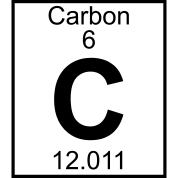
What does the 6 represent?

a)

atomic mass

b)

atomic number

c)

element name

d)

chemical symbol 

8.
What does 12.011 represent?
a)
atomic mass
b)
atomic number
c)
element name
d)
chemical symbol 
9.

the positively charged subatomic particle contained in the nucleus of an atom

a)

proton

b)

neutron

c)

electron

d)

matter

10.

a subatomic particle, contained in the nucleus of an atom, having the same mass as a proton but no electrical charge

a)

proton

b)

neutron

c)

electron

d)

matter

11.

a negatively charged subatomic particle that orbits the nucleus of an atom

a)

proton

b)

neutron

c)

electron

d)

matter

12.

one or two letters that represent the name of an element

a)

element name

b)

element symbol

c)

atomic number

d)

atomic mass

13.

Which is an proton?

a)
A
b)
B
c)
C
14.
What are the two structures found in the atom's nucleus?
a)
Electrons and Neutrons
b)
Protons and Electrons
c)
Protons and Neutrons
d)
Neutrons and Electrons
15.

How many neutrons are in the element shown?

a)

4

b)

9

c)

5

d)

13

16.
The modern periodic table of elements is arranged by 
a)
Number of neutrons
b)
State of matter
c)
Atomic number
d)
Atomic Mass
17.
Elements which are shiny, conduct electricity and heat are called
a)
metal
b)
nonmetal
c)
metalloid
d)
nonexistent
18.
The atoms along the staircase are called 
a)
metals
b)
nonmetals
c)
metalloids
d)
noble gases
19.
What's a valence electron?
a)
electrons in the second energy level
b)
electrons in the outermost energy level
c)
the atomic number
d)
electrons in the first level
20.
The family in the periodic table that contains the most reactive metals is the_______
a)
Alkaline Earth Metals
b)
Transition Metals 
c)
Alkali Metals
d)
Other Metals
21.
In what section would Transition Metals be found?
a)
orange
b)
light blue
c)
blue
d)
white
22.
The metals of group 2 are called
a)
transition metals
b)
alkaline earth metals
c)
lanthanides
d)
alkali metals
23.
The highlighted group is the 
a)
alkali metals
b)
alkaline earth metals
c)
halogens
d)
noble gases
24.
Elements that are gases, brittle and poor conductors are classified as what kind of elements?
a)
Nonmetals
b)
Metals
c)
Metalloids
d)
Alkali Metals
25.
Which group on the Periodic Table has 3 Valence electrons(electrons on last energy level)?
a)
Group 13
b)
Group 3
c)
Group 17
26.

The highlighted section is the...

a)

Actinides

b)

Lanthanides

c)

Halogens

d)

Alkali

27.

The highlighted section is the...

a)

Actinides

b)

Lanthanides

c)

Transition Metals

d)

Halogens

28.
How many valence electrons do atoms in group 16 have?
a)
4
b)
5
c)
6
d)
7
29.

These elements are in a:

a)

group

b)

period

30.

These elements are in a:

a)

group

b)

period

31.

How many electrons do atoms of the alkali metals have in their outer energy levels?

a)

1

b)

2

c)

3

d)

8

32.

Magnesium

a)

Ma

b)

Mg

c)

Me

d)

M

33.

Potassium

a)

P

b)

K

c)

Po

d)

Ps