
 Worksheets
Elements, Compounds and Mixtures
Total questions: 131
Worksheet time: 1hrs 6mins
Potassium iodide can be decomposed by electrolysis (an electric current) into the elements potassium and iodine. Based on this information, how would potassium iodide be classified?
Compound
Heterogeneous Mixture
Homogeneous Mixture
Solution
Ammonia is made up of two pure substances: nitrogen and hydrogen. What can be true for ammonia, nitrogen, and hydrogen?
Ammonia is made up of two pure substances: nitrogen and hydrogen. What can be true for ammonia, nitrogen, and hydrogen?
Ammonia is a mixture, and nitrogen and hydrogen are compounds.
Ammonia is a compound, and nitrogen and hydrogen are elements.
Ammonia is an element, and nitrogen and hydrogen are compounds.
When chemical W is added to a liquid, the chemical breaks down into substances X, Y, and Z. It is not possible to break down substances X, Y, and Z into simpler substances. What conclusion is supported by this evidence?
Chemical W is an element
Substances X, Y, and Z are elements
Chemical W is a pure substance
Substances X, Y and Z are compounds
The human body is composed primarily of water, sugar, protein, and fat. How are each of those individual substances classified?
Compounds
Elements
Heterogeneous Mixtures
Homogeneous Mixtures
Water, a stable liquid, is formed when two flammable gases, hydrogen and oxygen combine. What has happened?
An atom has been created.
A compound has been created.
A mixture has been created.
An element has been created.
Adam analyses a sample of a substance. He concludes that it consists of more than one type of atom chemically combined. What does the substance represent?
an element
a heterogeneous mixture
a homogeneous mixture
a compound
A substance is examined under a high-power electron microscope. The substance is found to contain only one type of atom.
element
compound
mixture
solution
What composes an element?
atoms of the same element
compounds of the same structure
mixtures of different substances
molecules of different structures
Which type of matter is an example of an element?
sugar
salt
carbon
water
Which substance is an element?
Al
CO
HF
NO2
Which set of substances contains only compounds?
HCl, Co, H2O, N2, O2
Cl, Al, Br, Ba, Mn
NaCl, NO2, CH4, CO
Mg, Ca, NO, Ga, Ge
Which statement best describes the properties of propanoic acid, C₂H₅COOH?
It is an element that contains five hydrogen atoms
It is a compound that has equal numbers of carbon and oxygen atoms
It is a compound that has double the number of hydrogen atoms than carbon atoms
It is an element that contains three carbon atoms
Which substance is a compound?
Cl
Cs
Ni
NO
How is carbon dioxide best described?
compound
element
mixture
solution
A student is writing a formula for a compound. What must the student always remember to include?
at least one number written low as a subscript
at least two capital letters
at least two lowercase letters
at least one number written large as a coefficient
A student is writing a formula for a compound. What must the student always remember to include?
a compound is composed of only one type of atom that is chemically combined
a compound is made up of two or more different atoms that are chemically combined
a compound is an impure substance that cannot be broken down
a compound is able to be separated into its parts using filtration
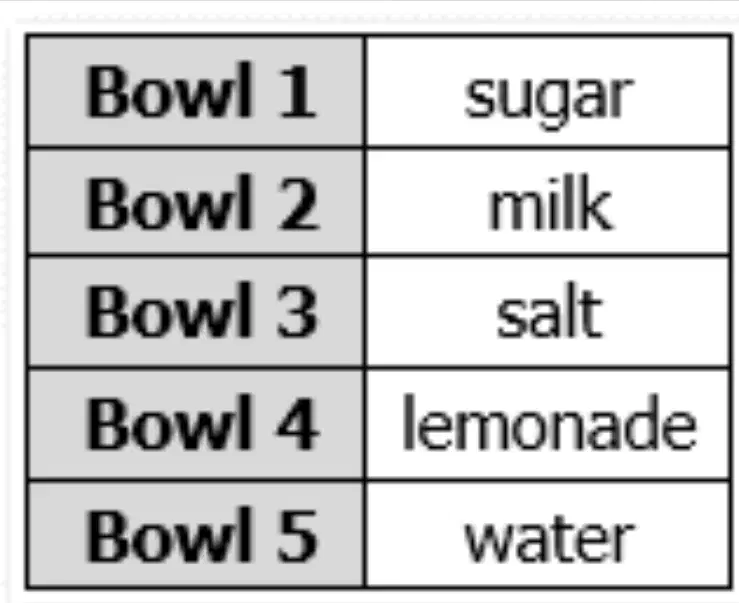
Kim has five similar bowls containing different substances, as shown in the table. Which bowls contain only compounds?
bowls 1 and 2
bowls 2 and 5
bowls 1, 3 and 5
bowls 2, 4 and 5
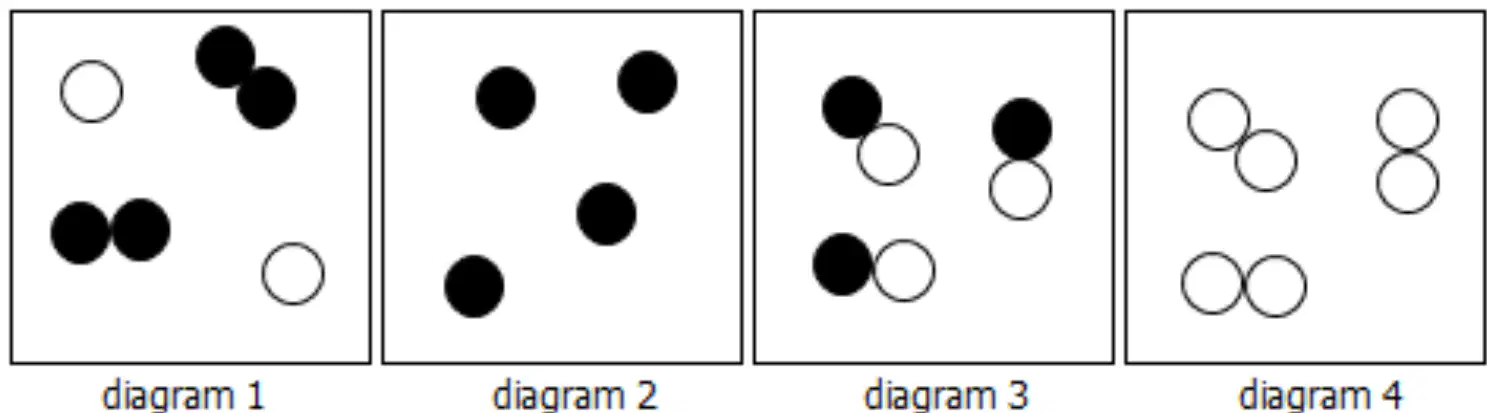
Examine the particle diagrams. Which diagrams can be classified as elements?
1 and 3
2 and 4
3 and 2
4 and 1
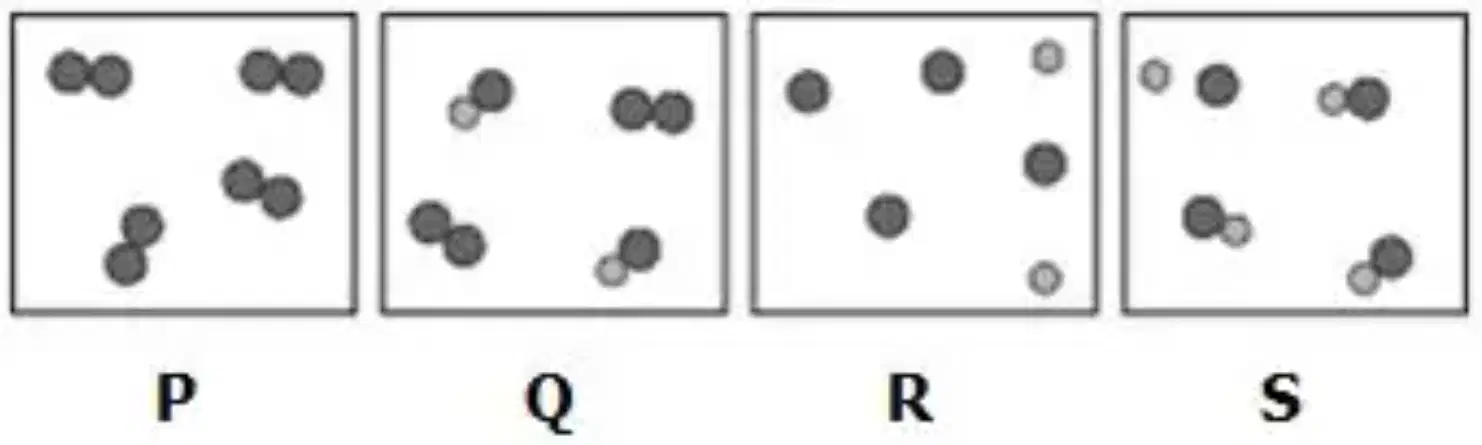
The image shows various atom arrangements. Which example(s) most likely represent(s) an element?
P
R
P and Q
Q and S
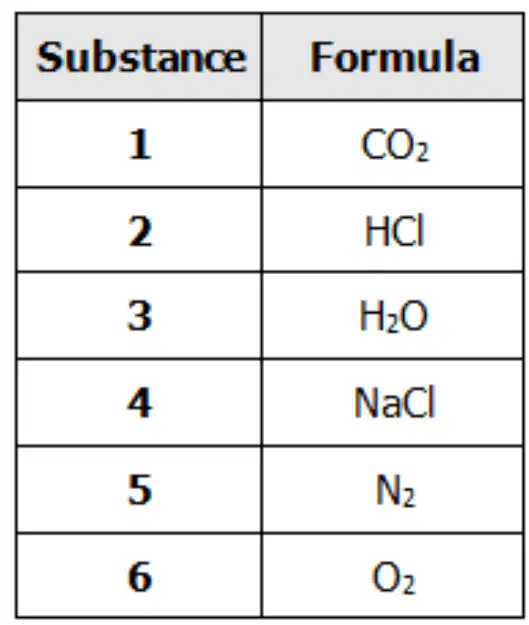
The chart shows a list of formulas. Which substances are compounds?
1, 2, 3 and 4
1, 2, 3 and 5
2, 4, 5 and 6
2, 3, 4 and 6

Josh prepared an atomic model for his science project, as shown. Ruth observes the model and classifies it as a compound. Is Ruth's classification correct?
No. a compound is made of atoms of a single element that cannot be joined chemically
Yes. a compound is made of one or more similar atoms that may be joined chemically or physically.
no. a compound is made of two or more atoms of different elements joined by bonds.
Yes. A compound is made of only two similar atoms joined together by a bond.
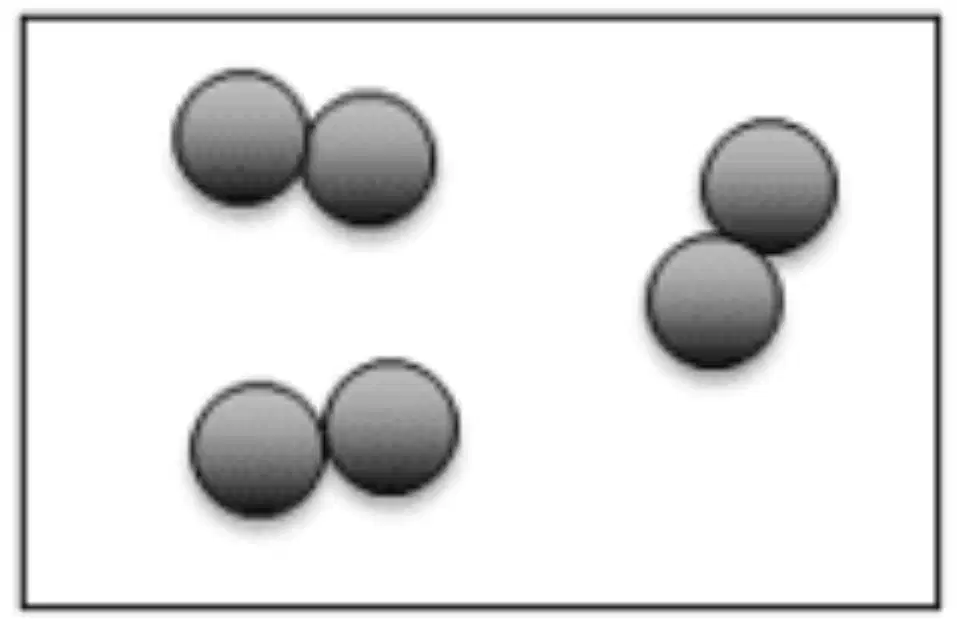
Examine the diagram that shows a model for one type of matter. Which type of matter is shown in the diagram?
compound
element
heterogeneous mixture
homogeneous mixture
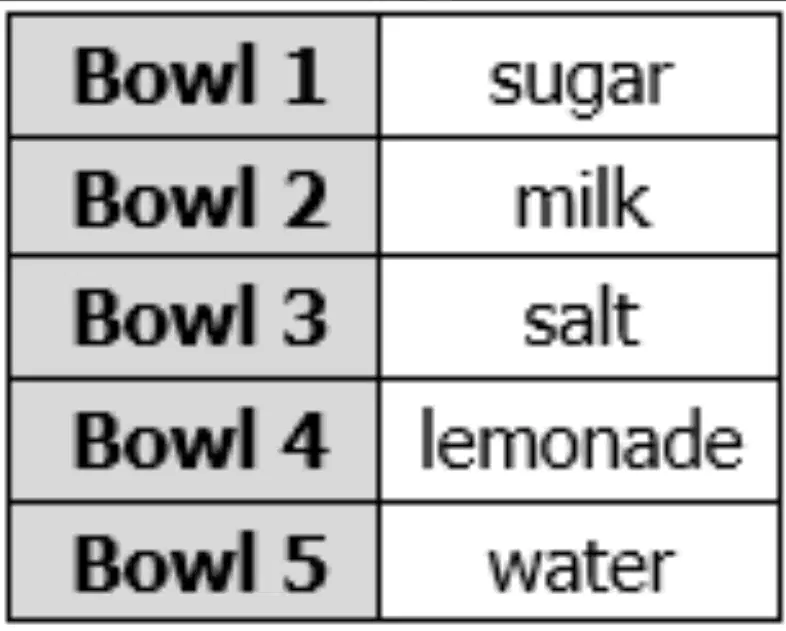
Kim has five similar bowls containing different substances, as shown in the table. Which bowl(s) contain(s) a compound? Select all that apply.
bowl 1
bowl 2
bowl 3
bowl bowl 4
bowl 5
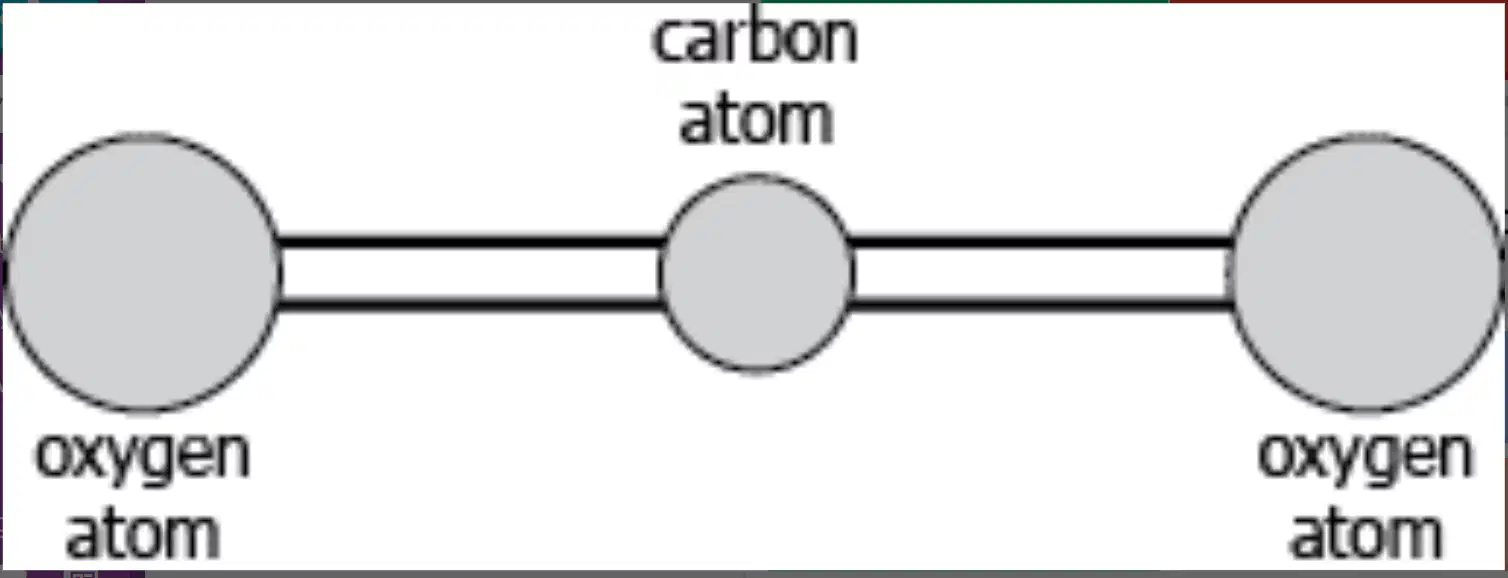
The image shows a model of a substance. How is the substance classified?
mxture
compound
element
atom
A compound is made up of two or more different elements. Which gas is classified as a compound?
carbon dioxide
nitrogen
hydrogen
oxygen
How are monoatomic elements and diatomic elements different?
Monoatomic elements include only nonmetals, and diatomic elements include both metals and nonmetals.
Monoatomic elements are dangerous to human health in their natural forms, and diatomic elements are essential to human health in their natural forms.
Monoatomic elements have only one bond in their stable forms, and diatomic elements have two bonds in their stable forms.
Monoatomic elements have only one atom in their stable forms, and diatomic elements have two atoms in their stable forms.
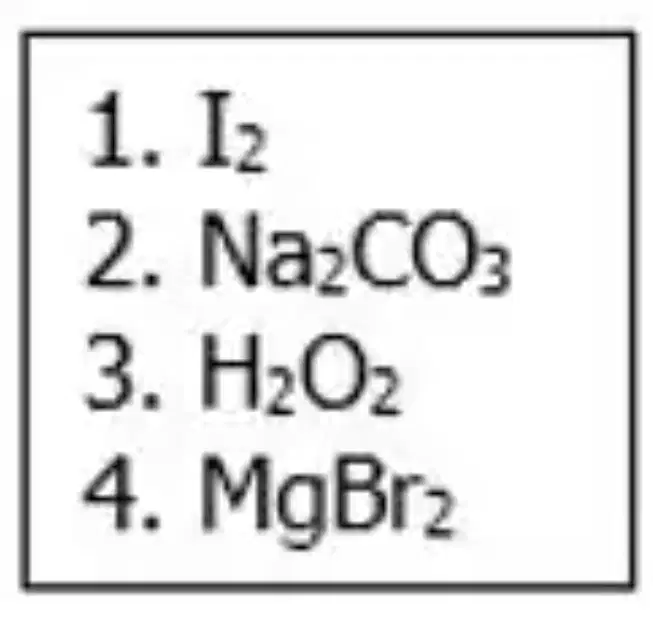
Examine the list of different substances. Which substance(s) is (are) diatomic?
1 only
3 only
1 and 3
2 and 4
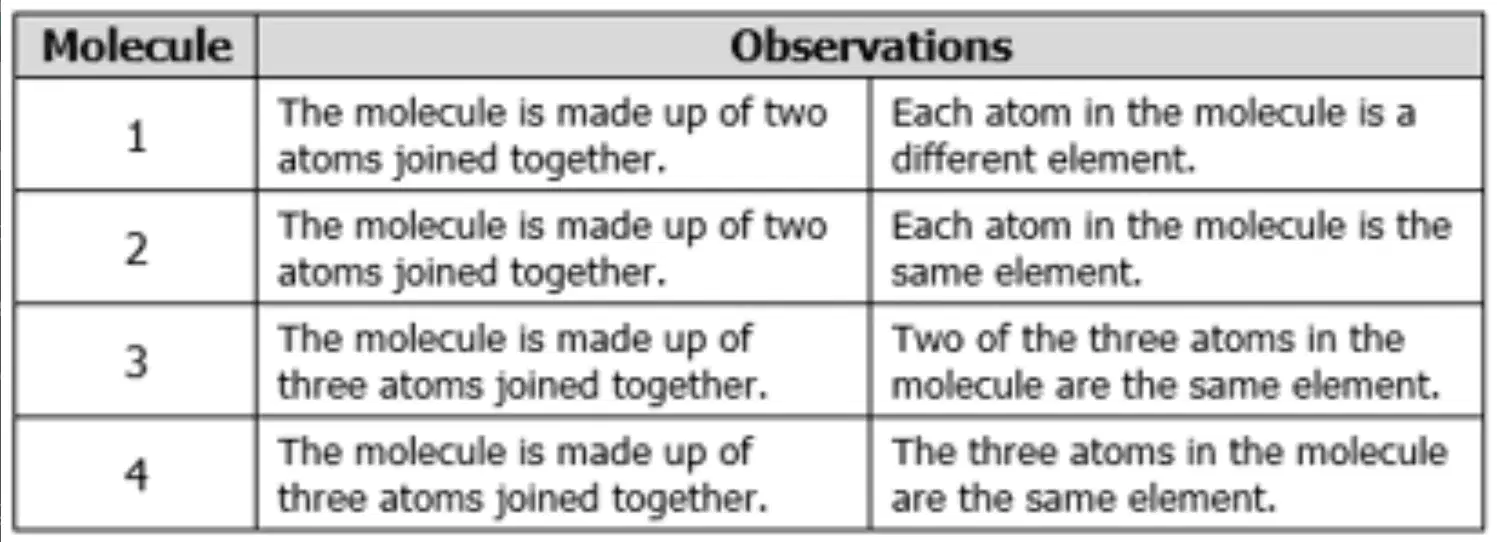
A student observes models of four different molecules and makes a list of observations. Which molecules can be classified as elemental molecules?
1 and 2
2 and 4
1 and 3
3 and 4
Sucrose (C₁₂H₂₂O₁₁) dissolves easily in water (H₂O) to produce an aqueous sugar solution. What is the correct description of these two substances?
Sucrose and water are both compounds because both substances are made of more than one type of atom.
Sucrose and water are both elements because they exist as a solid and liquid when separate and form an aqueous solution when combined.
Sucrose is a compound, and water is an element because the sucrose dissolves in the water.
Sucrose is a compound, and water is an element because the sucrose dissolves in the water.
Neon is represented with the formula Ne. How is neon best classified?
compound
diatomic element
mixture
monatomic element
The atmosphere is made of several gases including nitrogen (N₂), oxygen (Ar), and carbon dioxide (CO₂). How can gases in Earth's atmosphere be described?
monoatomic and diatomic elements only
diatomic elements and compounds only
monoatomic elements and compounds only
monoatomic and diatomic elements and compounds
O₃ is the chemical formula for ozone, a primary component of smog in the lower atmosphere and a critical gas in the upper atmosphere for blocking ultraviolet radiation from reaching Earth's surface. What is the correct description of ozone?
It is an element because it is a gas.
It is a compound because it is made up of more than one atom.
It is an element because it is made up of only one type of atom.
It is a compound because it is a gas.
What is common between sodium metal (Na) and table salt, sodium chloride (NaCl)?
They are molecules
Their smallest particles are called elements
They are compounds
Their smallest particles are called atoms
What do carbon, oxygen, and nitrogen have in common?
They are all gases at room temperature
They are all made up of atoms
They are all compounds
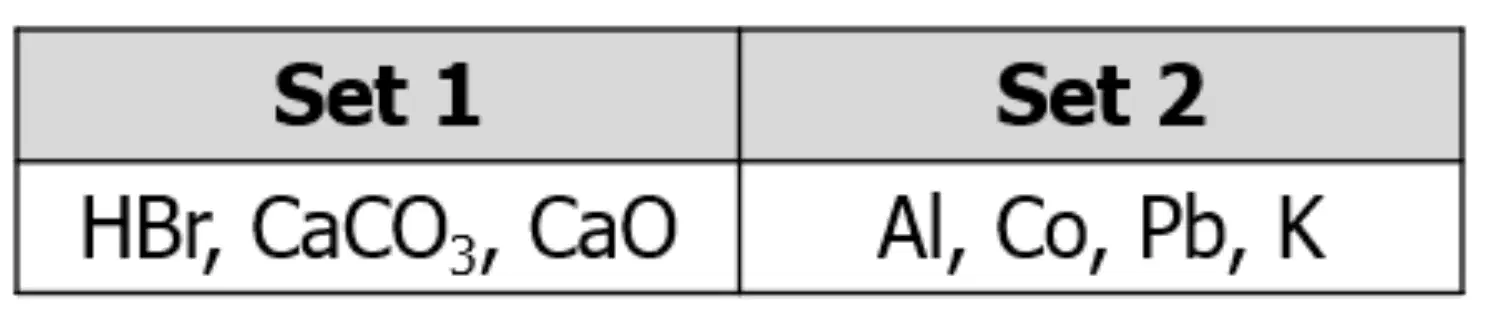
The table shows two sets of substances. Which terms best identify both sets?
Set 1: compounds; Set 2: elements
Set 1: elements and compounds; Set 2: elements
Set 1: elements; Set 2: compounds
Set 1: elements; Set 2: compounds
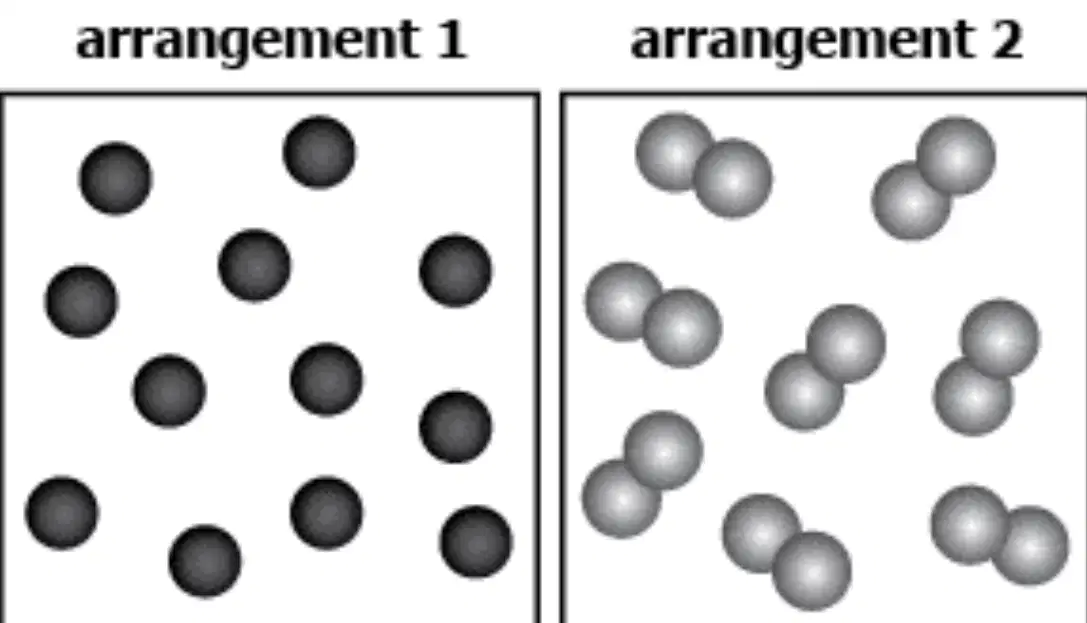
A student studies two different atom arrangements. How can the student classify arrangements 1 and 2?
Arrangements 1 and 2 are elements; elements are made of atoms or molecules composed of the same kind of atoms.
Arrangements 1 and 2 are compounds; compounds are composed of different types of atoms.
Arrangement 1 is an element and arrangement 2 is a compound; an element is made of one atom and a compound is made of one molecule
Arrangement 1 is an element, and arrangement 2 is a mixture; an element is made of one atom and a mixture is made of more than one atom
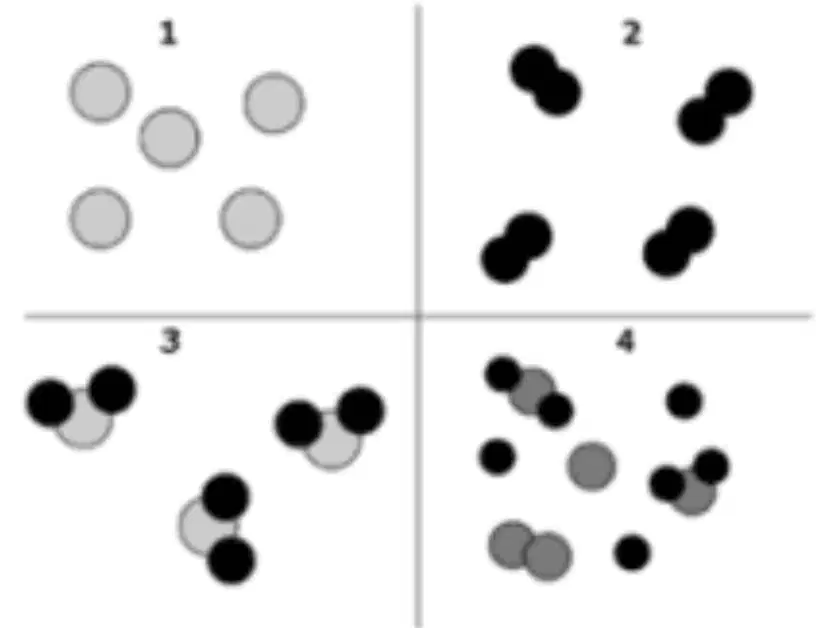
Each ball shown in the diagram represents a type of atom. Balls of the same shade and size represent the same kind of atom. Which diagram shows a single element?
1
2
3
4
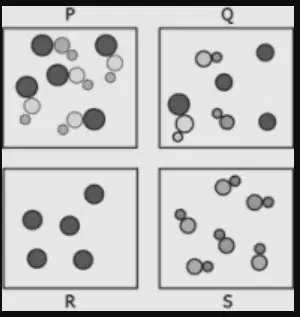
The image shows four atomic arrangements. Which atomic arrangement(s) represents an element?
P only
R only
P and Q
R and S
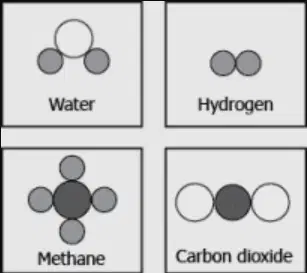
The image shows the atomic arrangements of four different substances. Which are compounds and why?
hydrogen because it contains only one kind of atom
methane because it contains the maximum number of molecules
water and carbon dioxide because each contains a similar number of molecules
water, carbon dioxide, and methane because each contains more than one element
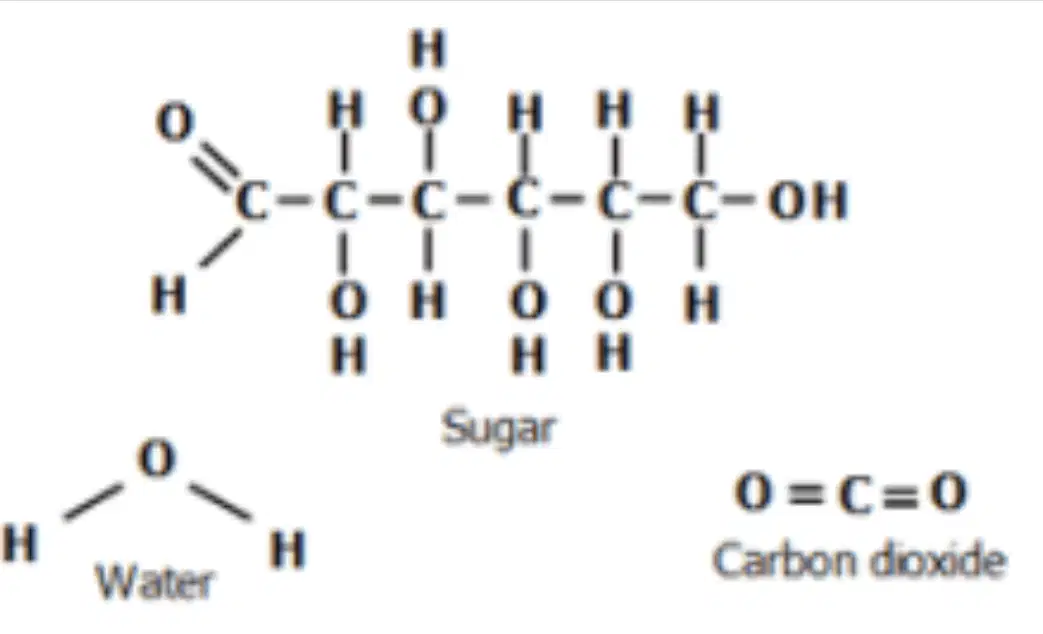
Examine the structural formulas for three common substances. What scientific concept is illustrated?
all substances are composed of water, carbon dioxide, and sugar.
elements combine in various ways to produce compounds found in living and non-living substances
all substances are composed of naturally-occurring chemicals
compounds combine in various ways to produce elements found in living and non-living substances
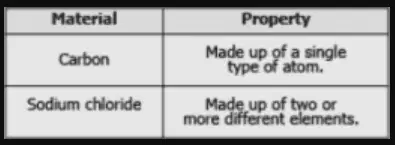
A student analyzes two different materials: carbon and sodium chloride. The table below lists their properties. Which option identifies them correctly?
Carbon is an element and sodium chloride is a mixture
Carbon is an element and sodium chloride is a compound
Carbon is a compound and sodium chloride is a mixture
Carbon is a homgenous mixture and sodium chloride is a heterogenous mixture
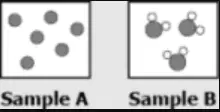
The image shows the arrangement of atoms in two samples, A and B. Which option identifies them correctly?
Sample A - element Sample B - compound
Sample A - element Sample B - mixture
Sample A - compound Sample B - element
Sample A - compound Sample B - mixture
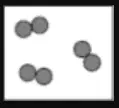
The image shows an atom arrangement. What does it represent?
compounds
elements
h
h
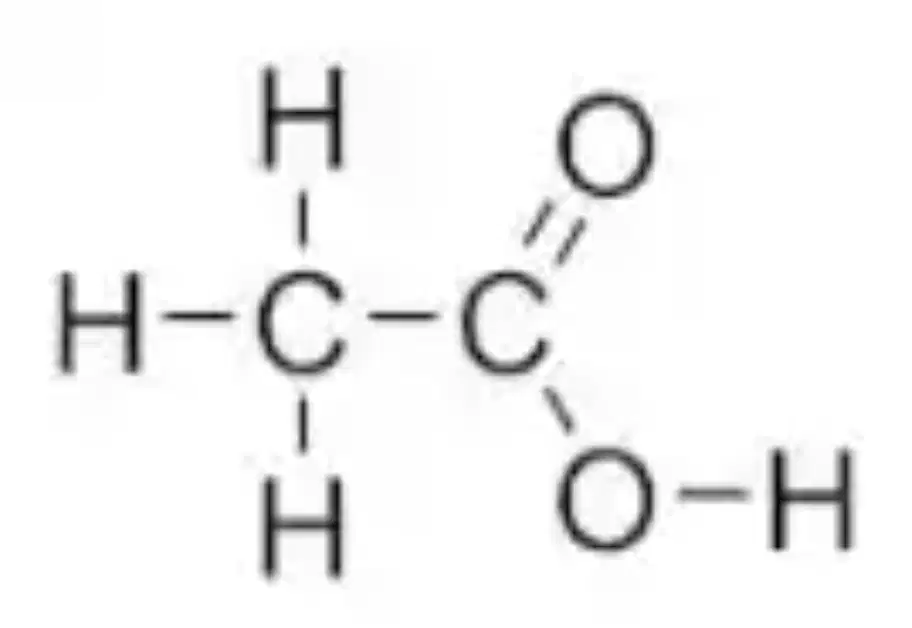
Matter can be classified in different ways. What kind of matter is illustrated?
cell
compound
element
mixture
Which substance is comprised of more than one element?
aluminum
silver
helium
steel
Table salt is a compound that is found almost everywhere. What is the correct chemical formula for table salt?
NaCl
NaCh
SoCl
SoCh
What distinguishes compounds from mixtures?
Compounds are composed of elements that have been chemically combined
Compounds must be physically separated back into their original substances
Compounds must be physically separated back into their original substances
Compounds must be physically separated back into their original substances
Which term refers to matter that could be heterogenous?
compound
element
mixture
solution
Which is the chemical formula for water?
HCl
H2O
HO2
H2Cl
Jamie poured a mixture of sand and salt water into a beaker through a funnel lined with filter paper. What will be found in the beaker after the filtering?
salt only
sand only
salt and water
salt and sand
Which is an example of a homogenous mixture?
air
soil
silver
water
How can a mixture of iron and sand be separated?
through a chemical reaction
with a magnet
through evaporation
with a state change
A substance contains 6 atoms of carbon, 12 atoms of hydrogen, and 6 atoms of oxygen. What is a common name for this chemical substance?
carbon dioxide
oxygen gas
sugar
salt
Which type(s) of matter is (are) considered a pure substance?
compounds and mixtures
elements and compounds
elements only
mixtures only
In certain areas of the world, a sample of ocean water is clear and only contains dissolved salts, while in other locations, a sample is opaque and contains dissolved salts as well as undissolved floating particulates. How can these samples of ocean water be classified?
both heterogenous and homogenous
heterogenous only
homogenous only
neither heterogenous nor homogenous
Which statement differentiates a compound from a mixture?
A compound is made of only one type of atom and a mixture is made of two types of atoms
A compound has two or more atoms joined chemically and a mixture has two or more atoms physically combined
A compound must be broken down by simpler physical means and a mixture must be broken down by chemical means
A compound has two identical atoms joined chemically and a mixture has two identical atoms physically combined
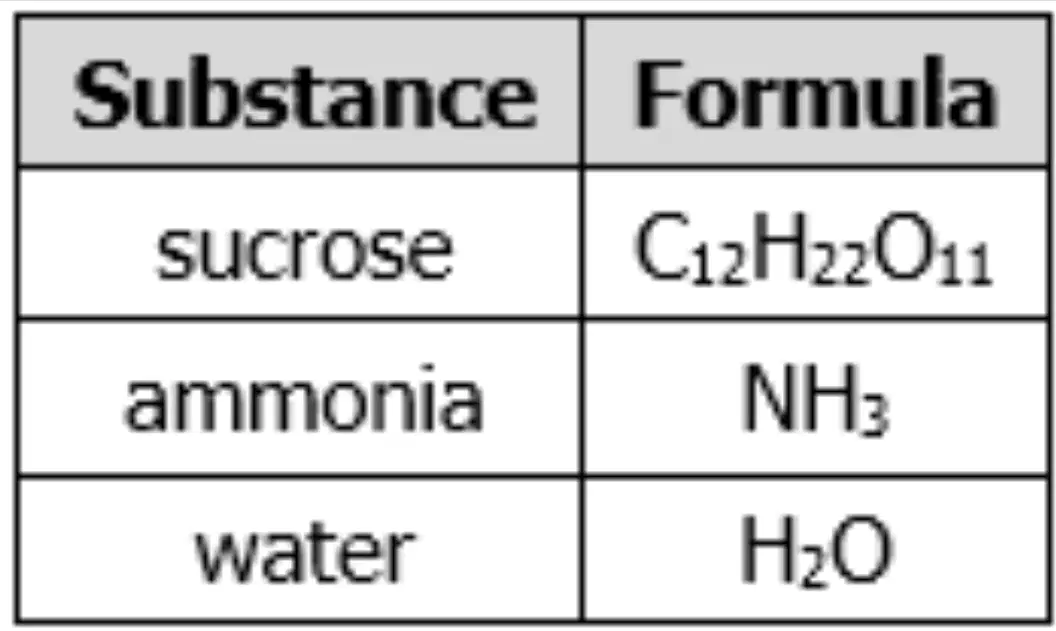
A teacher asks her students to classify the substances listed in the table shown as elements, compounds, or mixtures. A student claims that all of the substances are compounds. Which statement correctly describes the student's claim?
The student's claim is correct because a substance that contains more than two of the same atom is a compound
The student's claim is incorrect because a substance that contains more than one element is always a mixture.
The student's claim is incorrect because the atoms in the substances are physically combined to form a mixture
The student's claim is correct because the atoms in the substance are chemically combined to form a compound

The table lists the properties of substance A. Which term best classifies substance A?
compound
element
heterogeneous mixture
homogeneous mixture
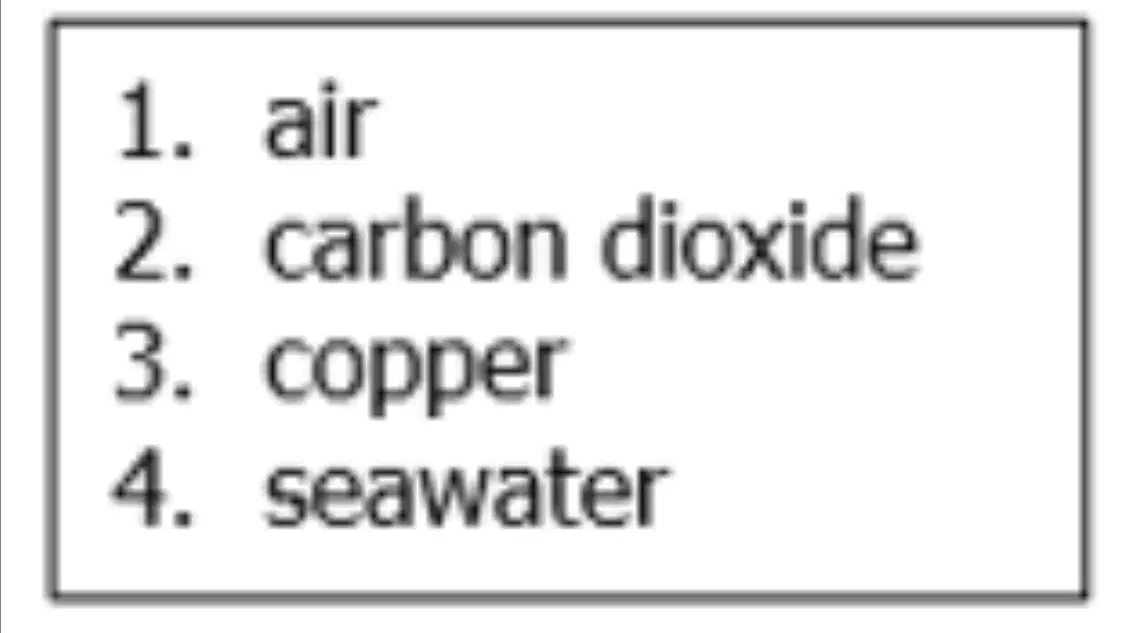
A student makes a list of some examples of matter. Which substance(s) can be classified as a mixture?
1 only
4 only
1 and 4
2 and 3
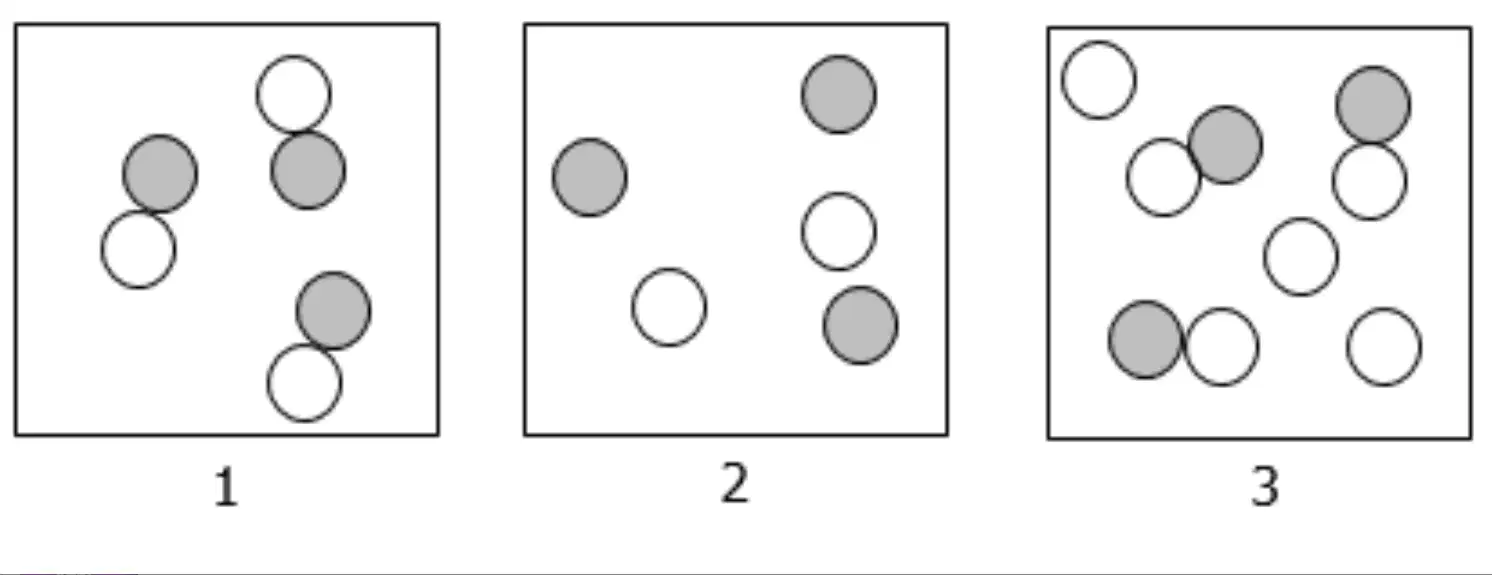
Examine the three particle diagrams. Which diagram(s) best represent(s) a mixture?
1 only
2 only
1 and 3
2 and 3
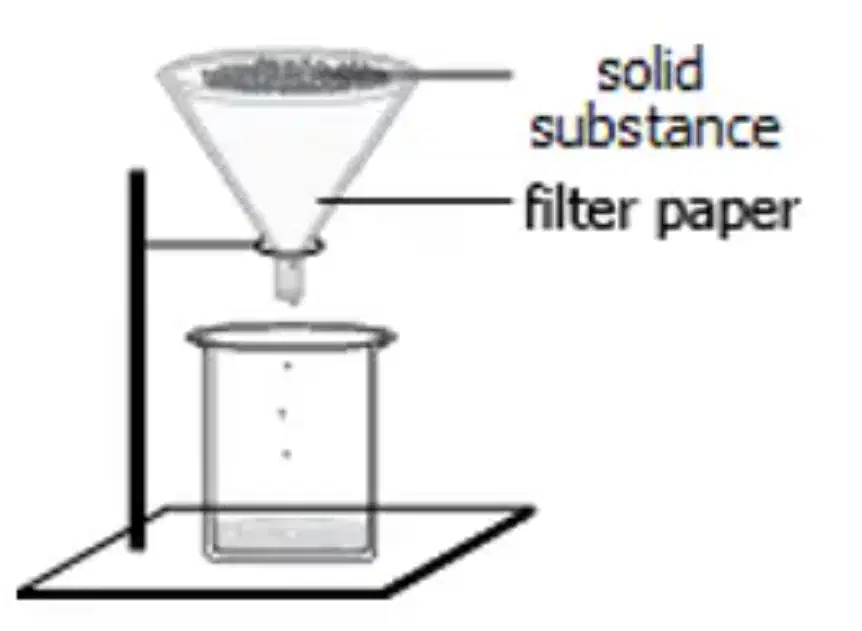
A student finds a beaker containing a substance in the laboratory. The student filters the contents of the beaker and notices that a solid is left on the filter paper. What can the student conclude about the type of matter of the original material?
the original material was a mixture
the original material was a compound
the original material was either an element or a compound
the original material was wither a mixture or a compound
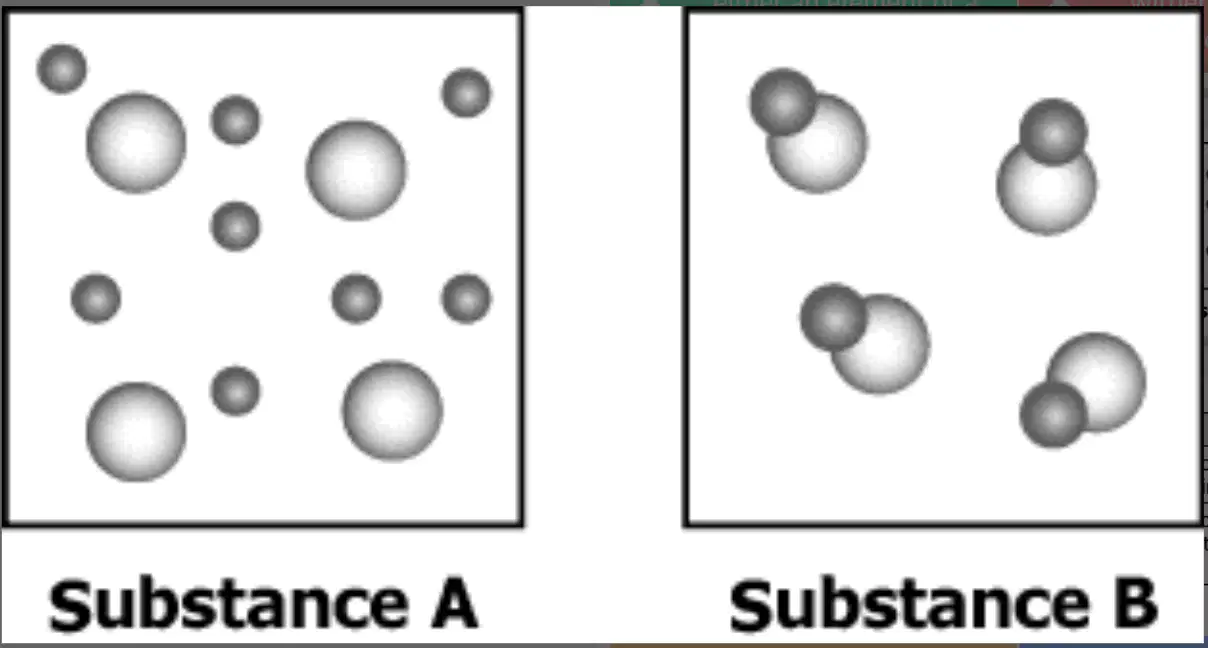
The atomic arrangements of two substances (A and B) are shown in the diagram. Which statement describes one of the substances correctly?
Substance A is an element as atoms are not combined chemically
Substance A is a compound as two different types of atoms are present
Substance B is a mixture as the atoms can be separated by any physical process
Substance B is a compound as the atoms can be separated only by chemical processes
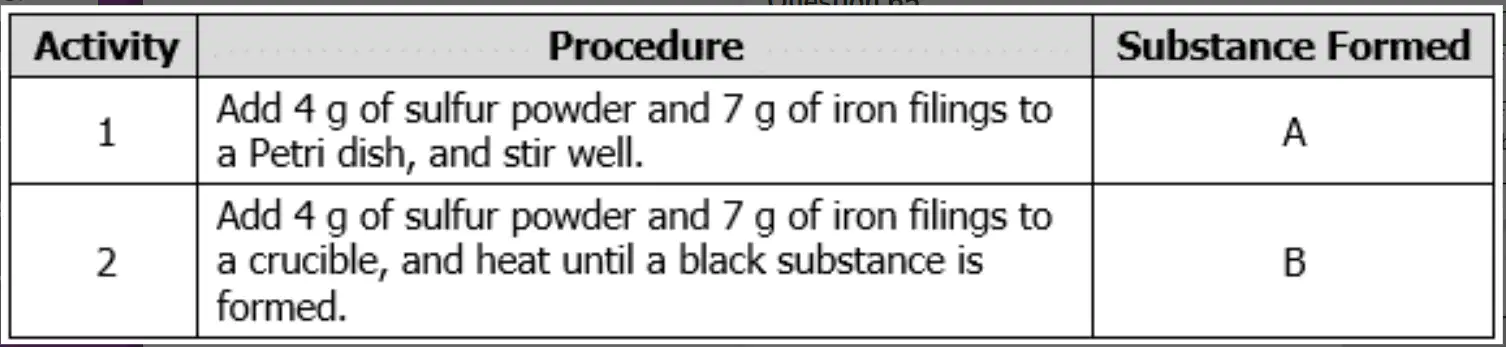
A student preforms two activities as shown in the table. The substances formed at the ends of the activities are labeled as Substance A and Substance B. What can be concluded about the two substances?
Substances A and B are mixtures
Substances A and B are compounds
Substance A is a compound and Substance B is a mixture
Substance A is a mixture and Substance B is a compound

A student receives a beaker that contains sand, water, and salt mixed together. The student performs a two-step process to separate all of the substances, as shown in the table. Which statement best classifies the contents of the beaker?
The beaker contains a homogenous mixture after Step 1 and an element after Step 2
The beaker originally contains a heterogenous mixture and after Step 1 it contains a homogenous mixture
The beaker contains a heterogenous mixture after Step 1 and a compound after Step 2
The beaker originally contains a heterogenous mixture, but after Step 1 it contains one compound

Two elements (A and B) are combined in two different ways to form two different substances, X and Y. The resulting substances have the characteristics shown in the table. What can be concluded from the table?
Substance X is a mixture and Substance Y is compound
Substance X is a compound and Substance Y is a mixture
Substances X and Y are compounds
Substances X and Y are mixtures
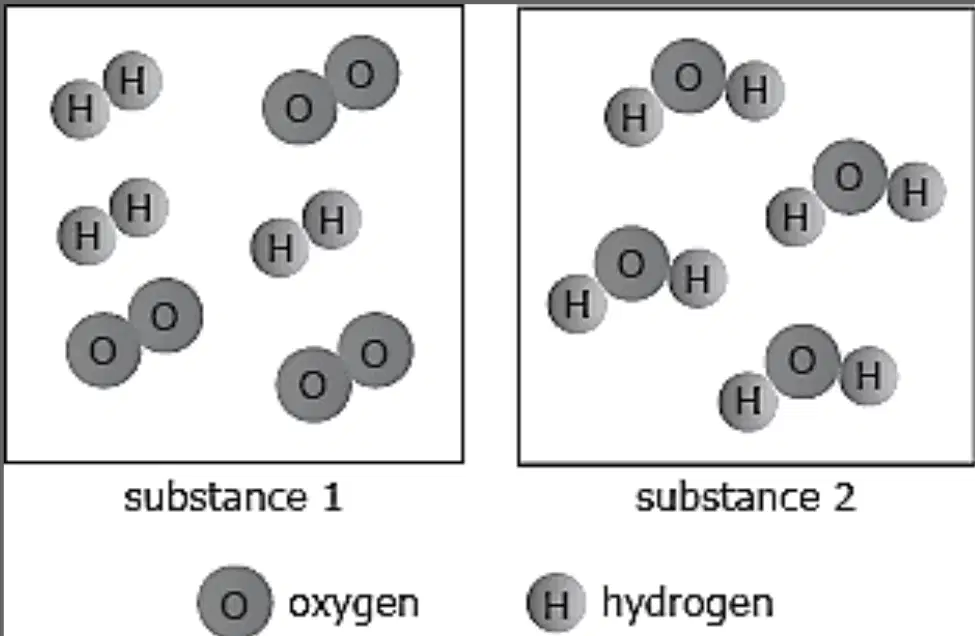
The diagram shows the atomic arrangement of two substances formed by the hydrogen (H) and oxygen (O) atoms. Which option
Substance 1: mixture; Substance 2: mixture
Substance 1: mixture; Substance 2: compound
Substance 1: compound; Substance 2: mixture
Substance 1: compound Substance 2: compound
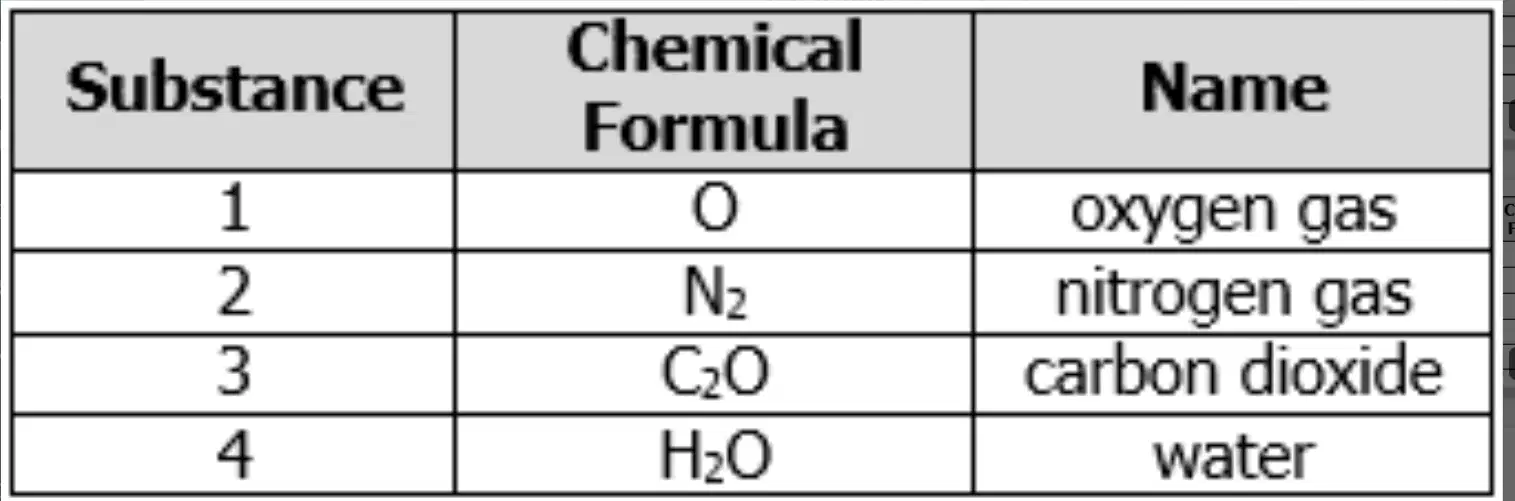
A student records the chemical formulas and the names for four separate substances in a table as shown. Which substances are incorrectly paired with their chemical formulas and names?
1 and 2
1 and 3
2 and 3
2 and 4

The chart shows a list of substances and chemical formulas. Which substances in the chart are paired correctly with their chemical formulas?
1 and 4
2 and 3
1, 4 and 5
2, 3 and 4
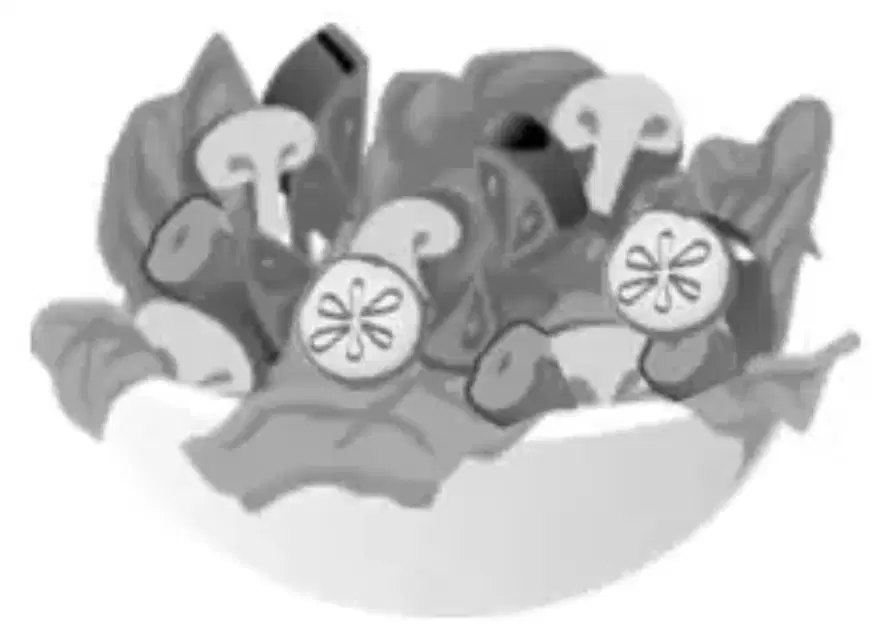
A student packs a salad for lunch. How can the salad be classified?
compound
element
heterogeneous mixture
homogeneous mixture
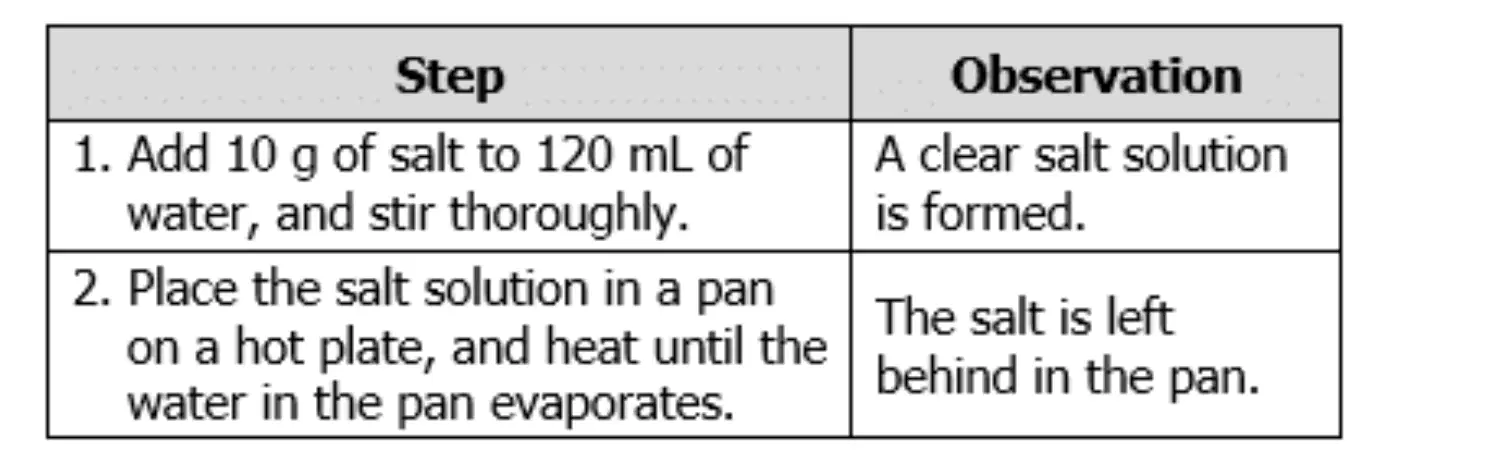
A student performs an investigation with water and table salt. The student lists the steps of the investigation and observations in a table. Which statement correctly classifies the matter observed at the completion of both steps of the investigation?
The salt solution and salt are both compounds
The salt solution is a heterogenous mixture and the salt is an element
The salt solution is a homogenous mixture and the salt is an element
The salt solution is a homogenous mixture and the salt is a compound
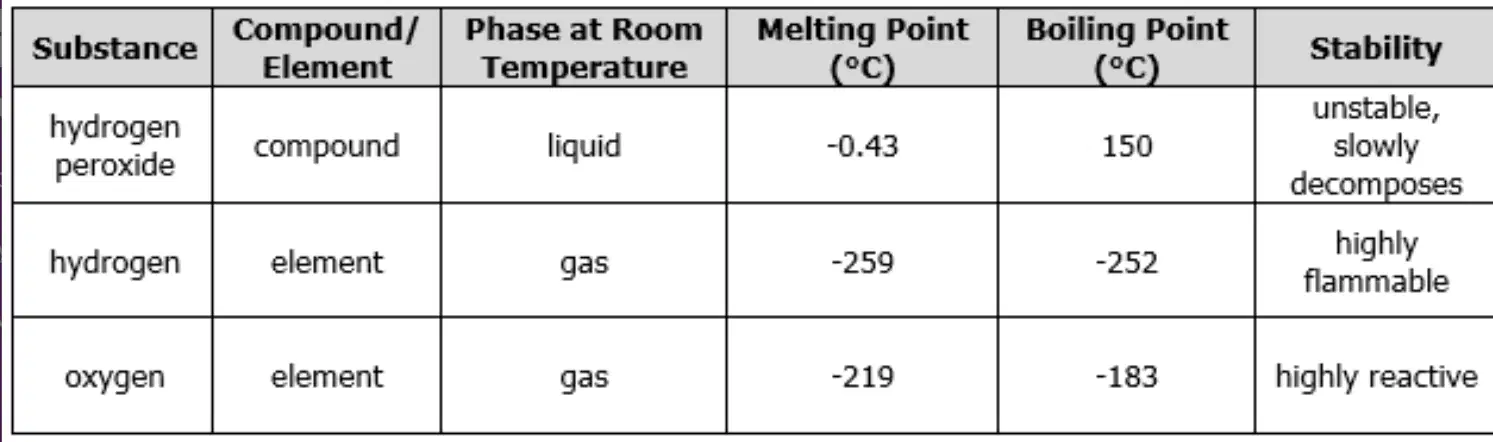
A student hypothesizes that a compound, hydrogen peroxide, shares the properties of the individual atoms that make it up, hydrogen and oxygen. The table shows the data that the student gathers. Does the data support the student's hypothesis?
Yes. The names of the elements are incorporated into the name of the compound
Yes. The boiling points of the elements combined define the boiling point of the compound
No. The elements are at different phases than the compound at room temperature
No. The elements and the compound are all dangerous due to their stability factors
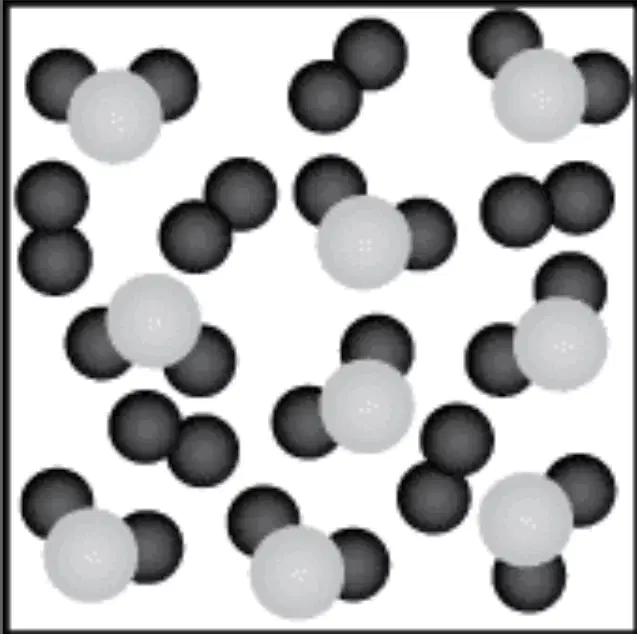
The image shows an arrangement of atoms. What does the atom arrangement represent?
a mixture made of two kinds of elements
a mixture made of one compound and one element
a compound made of two kinds of elements
a compound made of two different kinds of atoms

A teacher drew three figures on the board. Which option correctly classifies each figure as a compound, element, or mixture?
Figure 1: element; Figure 2: compound; Figure 3: mixture
Figure 1: compound; Figure 2: element; Figure 3: mixture
Figure 1: element; Figure 2: mixture Figure 3: compound
Figure 1: compound; Figure 2: mixture; Figure 3: element
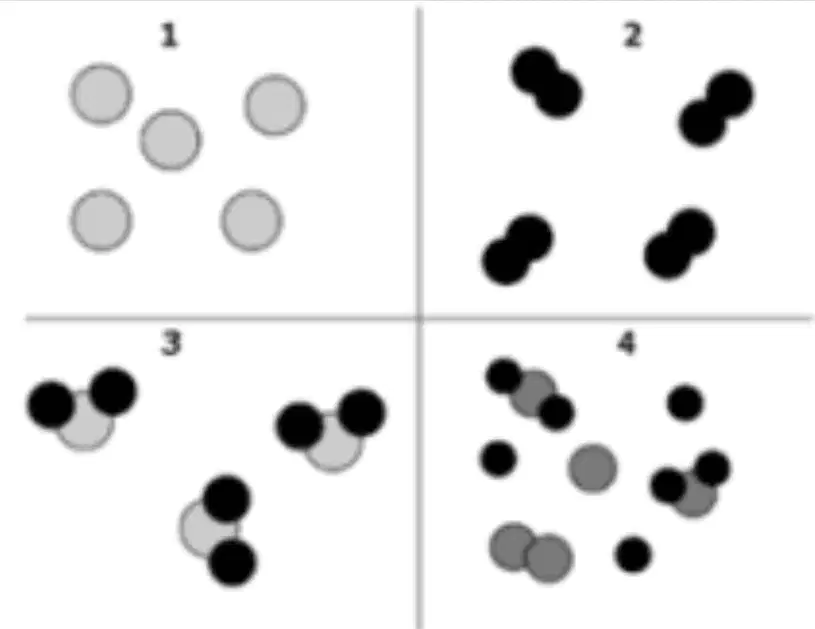
Each ball shown in the diagram represents a type of atom. Balls of the same shade and size represent the same kind of atom. Which diagram shows a mixture?
1
2
3
4
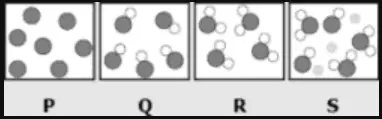
The image shows four different atom arrangements. Which option correctly classifies them as elements, compounds, and mixtures?
P element, Q and R compounds, S mixture
P compound, Q and R mixture, S elements
P compound, Q and R elements, S mixture
P element, Q and R compounds, S diatomic element
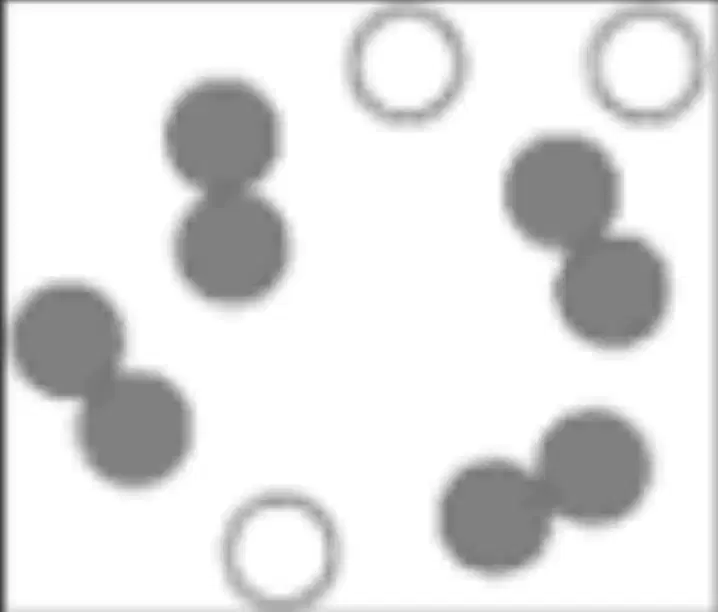
The image shows an atom arrangement. Why is it considered a mixture?
It is composed of one kind of atom
It is a physical combination of two or more different substances
It is composed of extremely small particles
It is composed of two or more types of elements that are chemically combined

The image shows various atom arrangements. Which arrangements represent a mixture?
A and B
A and E
C and D
A, c and D
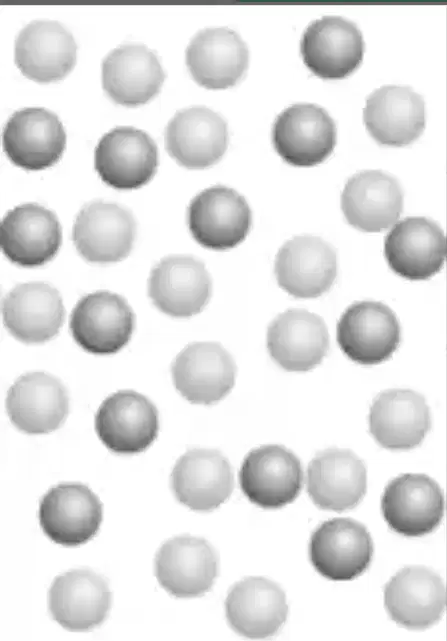
Matter can be classified in different ways. What kind of matter is illustrated?
cell
compound
element
mixture
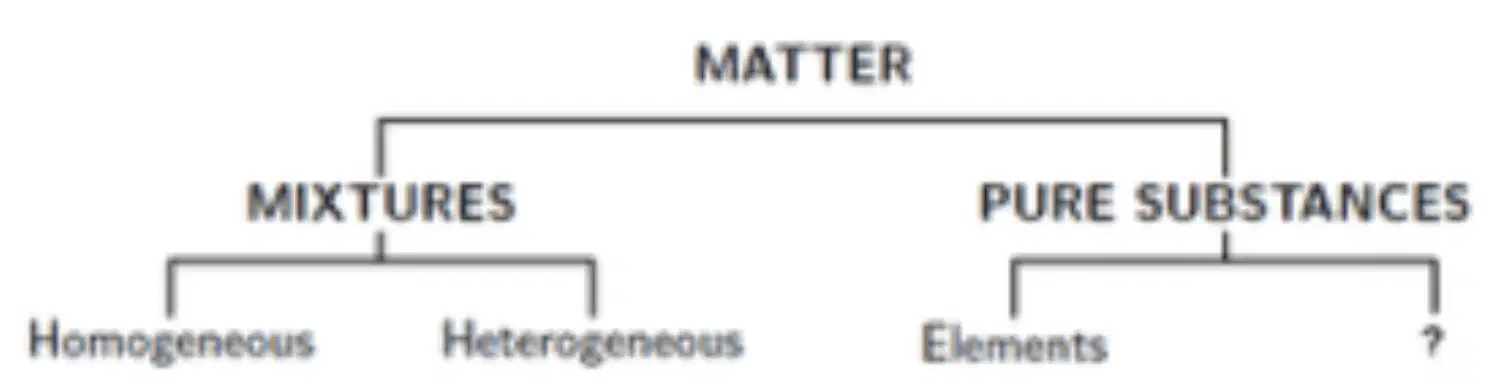
Which term is missing as indicated by the "?" in the diagram?
atom
compound
metals
molecules
Granite forms when magma cools slowly, deep underground, into large crystals composed of the minerals quartz, feldspar, and mica. How would granite be classified?
compound
homogenous mixture
heterogenous mixture
solution
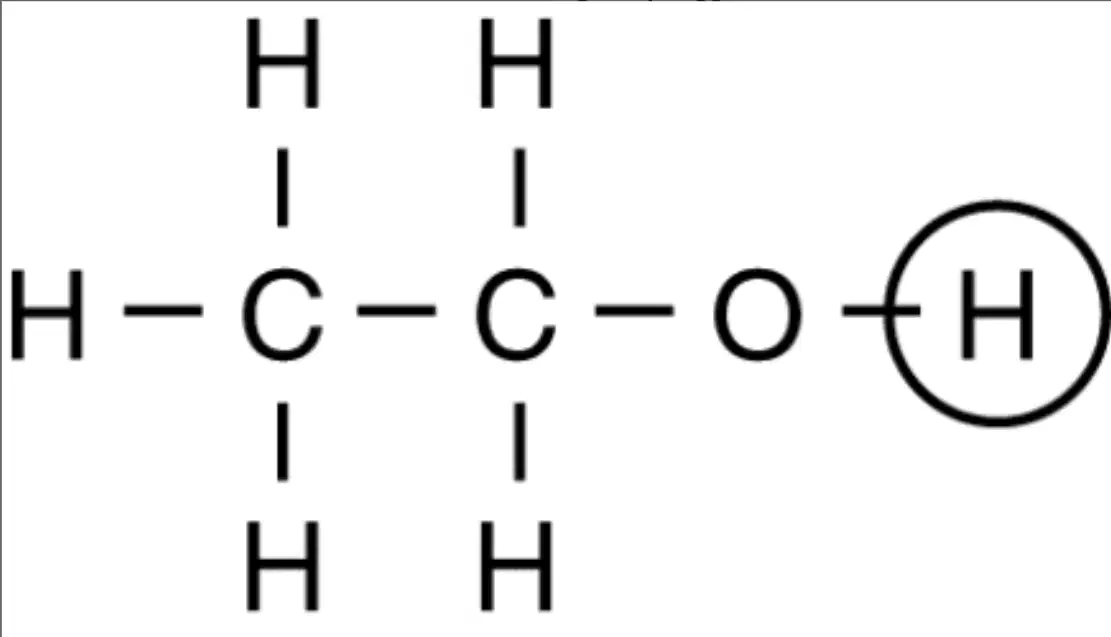
The diagram for the structural formula of ethanol shows the elements and their arrangement. What does the circled part of the diagram represent?
an atom
any ion
one molecule
an electron
A sample of the element copper is divided into the smallest particles possible such that each particle is still copper. Each particle can best be described as ...
an atom
a nucleus
a molecule
an electron
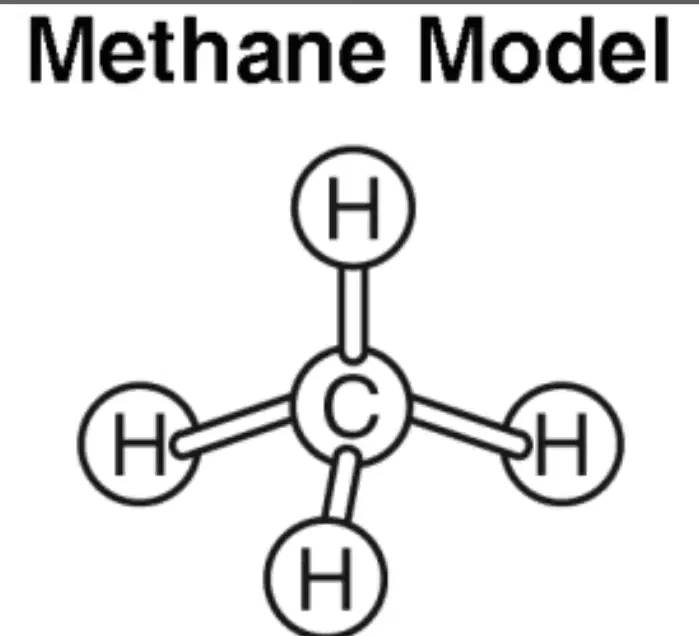
The chemical formula for methane is CH₄, and a model of its structure is shown. The model of methane represents a(n) ...
isotope
ion
atom
molecule
An atom can best be described as ...
the smallest particle that has all the characteristics of a compound
the smallest particle that has all the characteristics of an element
a charge particle that is similar to a molecule
a charged particle that is larger than a molecule
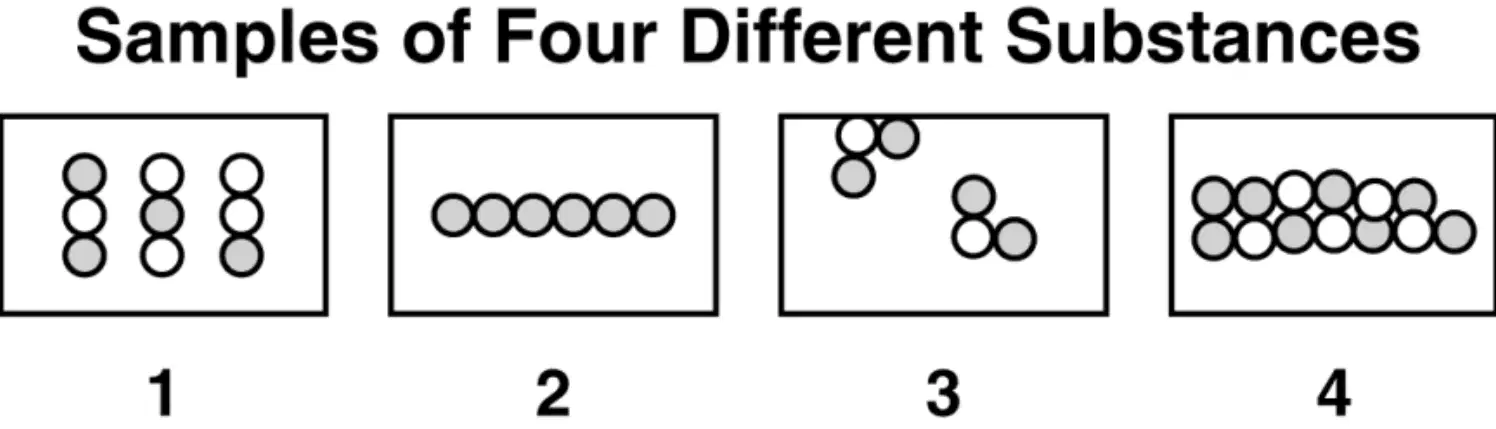
Which of the samples shown represents an element?
Substance 1
Substance 2
Substance 3
Ammonia (NH₃)
Select all of the options that are compounds.
Ozone (O₃)
Water (H₂O)
Nitrogen (N₂)
Ammonia (NH₃)
Which of the following best describes two atoms of oxygen that are chemically bonded to each other?
solution
compound
molecule
mixture
What is formed when a sodium atom and a chlorine atom react chemically?
element
compound
electron
neutron
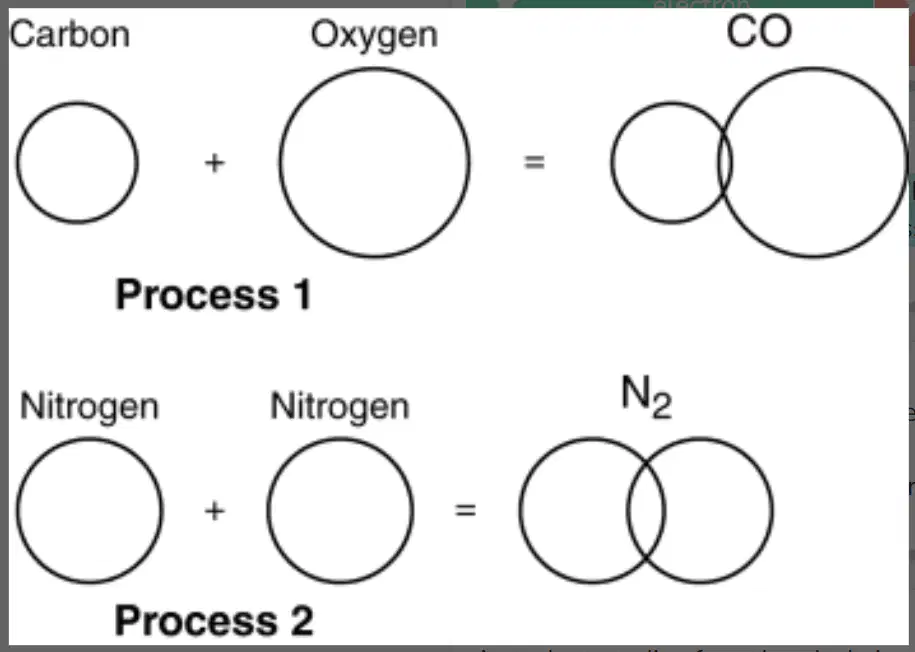
The image shows two processes. Which statement best compares the processes?
they both form a new atom
they both form a new molecule
Process 1 forms a new molecule and Process 2 forms a new atom
Process 1 forms a new atom and Process 2 forms a new molecule
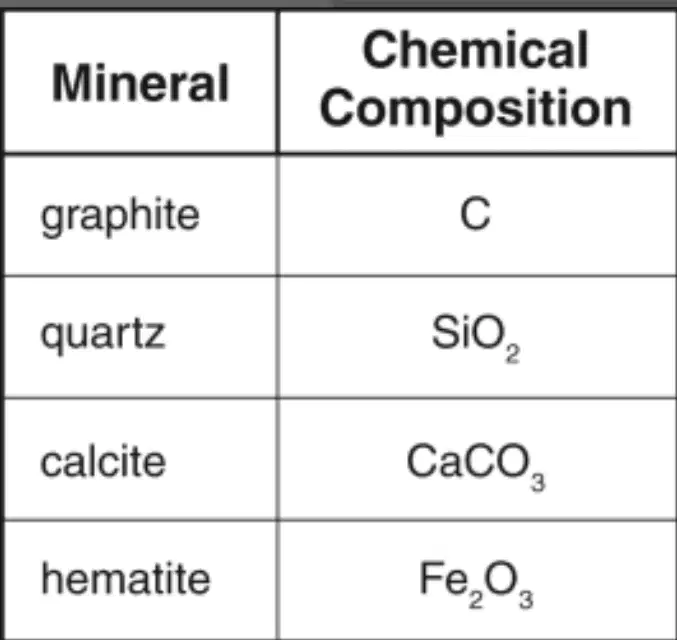
The table below shows several minerals found in Earth's crust. Based on the information in the table, which mineral is also an element?
graphite
quartz
calcite
hematite
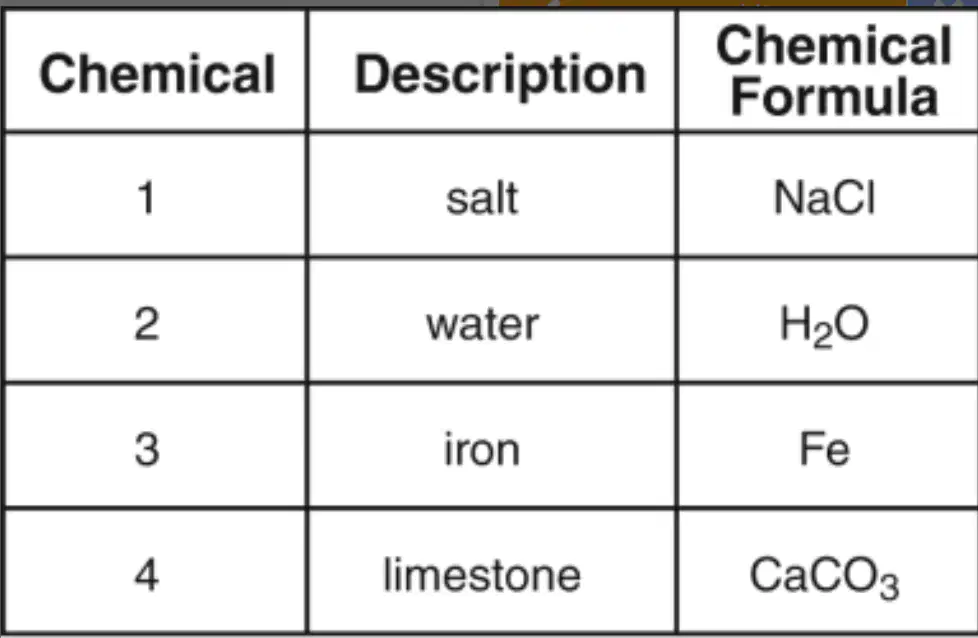
A student studies four chemicals in a laboratory investigation. Which chemical cannot be further broken down into other chemicals using ordinary laboratory processes?
1
2
3
4
A researcher uses several procedures to separate a rock sample into different chemicals. A mass of 50 grams of one chemical is produced. If this chemical cannot be separated into other chemicals, then it is best described as ...
a compound
a mixture
a solution
an element
Which can be broken down chemically into simpler substances?
isotopes
compounds
atoms
elements
What so any two samples of the element mercury (Hg) have in common?
the same mass
the same volume
the same number of electrons
the same type of atoms
Since sodium chloride is classified as a compound, a sample of it contains ...
atoms that are gases, liquids, and solids
matter that cannot be reduced to atoms
more than one kind of atom
a solution of atoms and molecules
When potassium and bromine atoms form chemical bonds, which of these is produced?
an element
a compound
a mixture
a new form of matter
When a molecule is separated into its component parts, it forms ...
compounds
atoms
protons
ions
When two nitrogen atoms combine they form a ...
mixture
compound
molecule
liquid
Calcium carbonate (CaCO₃) is considered a compound because it is made up of two or more ...
molecules
elements
gases
solids
Which basic units of matter have the same properties as an element?
protons
electrons
atoms
neutrons
Which substance is composed of only one type of atom?
water
gold
salt
sugar
Alyssa investigates properties of matter. the answer to which question would best determine whether a substance is an element or a compound?
What is the radius of each particle of the substance?
Was a chemical reaction necessary to create the substance
Does the substance contain more than one type of atom?
What is the electrical charge of the particles of the substance

A self-warming packet can be used to warm hands during cold weather. Powdered iron (Fe) reacts with oxygen (O₂) when the packet is exposed to air. Within the addition of a salt catalyst, Fe₂O₃ (iron oxide) is quickly formed and heat is given off. Which term best describes the iron oxide?
compound
ion
element
mixture
Which of the following is a molecule but not a compound?
carbon dioxide (CO₂)
sodium chloride (NaCl)
Ozone (O₃)
water (H₂O)
A student is testing a solid material to determine whether it is a pure substance or a mixture. Which observation would most likely indicate that the material is a mixture?
The material has crystals of two different colors
The material does not melt when it is heated over a burner
The material does not dissolve completely in water
The material reacts with an acid solution to form bubbles of gas.
Joey is making breakfast and pours a glass of milk over a bowl of dry cereal. Which best describes what Joey made for breakfast?
element
mixture
compound
solution

Ted adds some sand to a container of water. He stirs the sand and water together. Which term best describes the combination that Ted made?
mixture
solution
element
compound
Solids that are combined together and maintain their physical properties are best labeled as a ...
solute
solvent
mixture
compound
Marcus is going hiking. He packs some homemade snacks to take with him. He puts raisins, nuts, chocolate pieces, and dried fruit in a bag. What is the best description of this homemade snack?
substance
element
solution
mixture
Betsy tries to attract a variety of birds to her backyard. She puts up a bird feeder that contains sunflower seeds and corn. Which term best describes the contents of the bird feeder?
compound
element
mixture
solution
Soda water is a liquid that has bubbles of carbon dioxide in it. Which term best describes soda water?
element
mixture
compound
molecule
Sarah's class is learning about mixtures and solutions. Her teacher writes four statements on the board. Which statement best describes a mixture?
Both substances mix evenly
One substance dissolves into another
Both substances can evaporate
One substance can be separated from the other
Which is an example of a mixture?
oxygen
ice
soil
silver
Which best describes both a mixture and a solution?
a solid dissolves in a liquid
a material with new properties forms
two different substances combine
the combined substances cannot be separated
Pennies are made of zinc with a layer of copper on top. If a penny is heated, the copper and zinc can combine to form brass. Which term best describes brass?
atom
mixture
molecule
element
Beth and Juan made dough by combining sugar, butter, flour, and salt. Which term best describes the dough?
mixture
compound
solution
element
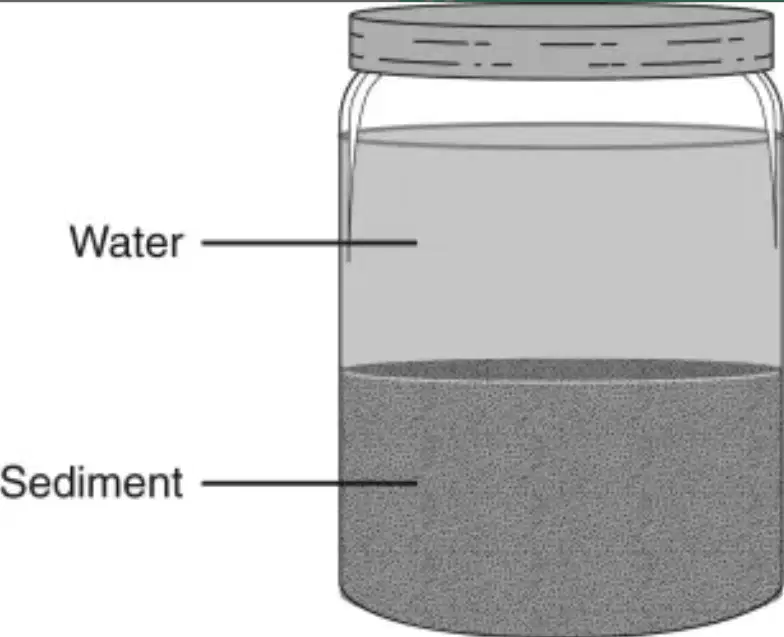
A student collects a sample of water from a pond. After a few minutes, some sediment settles out of the water. Which word best describes this sample?
compound
solution
mixture
element
Mark wants to make lemonade for his friends. he uses water, lemon juice, and sugar. Which of these best describes the lemonade?
mixture
metal
compound
element
Air is composed of nitrogen, oxygen, and other gases. Based on that information, air can be described as ...
compound
molecule
element
mixture
A student combined rice cereal with melted marshmallows. Which best describes what the student made?
atom
molecule
mixture
element
A student completes several tasks while making breakfast. During which task does the student make a solution?
adding sugar to tea
spreading jelly on toast
pouring milk on cereal
sprinkling cheese on eggs
A trumpet is a musical instrument made of brass. Brass is made of both copper and zinc metals. Which statement is the best description of brass?
Brass is a molecule
Brass is a mixture
Brass is an element
Brass is a compound
Which type of matter can separated by physical means?
atom
element
compound
mixture
Walter is investigating some properties of concrete. He pours a sample of dry concert onto the ground. Walter observes that the concrete is made up of sand, pebbles, and bigger pieces of rocks. Which term best describes the dry concrete?
compound
mixture
element
solution
Jessie knows that a quarter is made of nickel and copper. She can see these two substances in different colored bands on the edge of a quarter. Which best describes why Jessie can see the bands of nickel and copper on the edge of the quarter?
because the copper and nickel formed a new element
because the copper dissolved into the nickel
because the quarter is a mixture
because the quarter is metal
Salt and pepper are placed together in a container. When the container is shaken, the salt and pepper become a ...
liquid
solution
mixture
suspension
Vinegar and water are placed in a container and stirred. What is formed when they are mixed?
gas
solution
solid
compound
What is formed when a solute is dissolved into a solvent?
solution
compound
element
suspension
Which combination of letters could be used as a chemical symbol for an element?
BR
CHl
Dy
FeO
Which describes a property of all elements?
all elements are metals
all elements exist in the solid phase
all elements are pure substances
all elements have six electrons
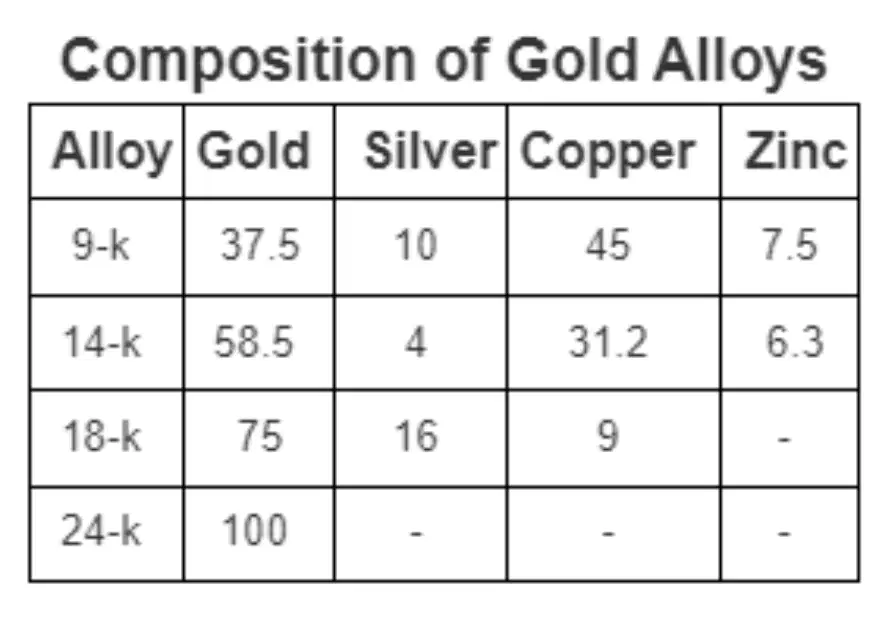
Gold is a metal that is used in many products, such as jewelry and electronic wire. It can be made into alloys with other metals or used alone. The table shows the composition by percent of yellow gold used in jewelry. Which statement best describes the composition of 24-karat gold?
a chemical combination of two or more different elements
atoms with the same number of protons in each nucleus
atoms with different numbers of valence electrons
a mixture of more than one type of element

