
 Worksheets
Greek Estimates
Total questions: 22
Worksheet time: 21mins
What was the key observation Eratosthenes used to measure the Earth's circumference?
The angle of the Sun's rays at noon in Alexandria
The length of the shadow cast by the Great Pyramid
The difference in star positions between Alexandria and Syene
The time it took for the Sun to set in different locations
How did Eratosthenes calculate the Earth's circumference using the angle of the Sun's rays?
By measuring the distance between two cities and using the angle to calculate the circumference
By using the angle to calculate the Earth's radius directly
By deriving the angle of the shadow in Syene using math
By using the angle to determine the Earth's diameter
What assumption did Eratosthenes make about the Earth to calculate its circumference?
The Earth is a perfect sphere
The Earth is flat
The Earth is an oblate spheroid
The Earth is a cube
Aristarchus used the concept of similar triangles to estimate the distance to the Moon. What was one of the key observations he made?
The angle between the Earth, Moon, and Sun during a specific lunar phase
The length of the shadow of the Earth on the Moon during a lunar eclipse
The time it takes for the Moon to orbit the Earth
The brightness of the Moon compared to the Sun
How did Aristarchus use the concept of similar triangles to estimate the distance to the Sun?
By comparing the surface area of the Earth to the diameter of the Sun
By comparing the distance to the Moon with the distance to the Sun
By measuring the angle of the Sun's rays at different times of the day
By using the angle of the Earth's shadow during the Winter Solstice
Which option is closest to the ratio that Aristarchus found for the distances to the Sun and Moon?
1:1000
1:200
1:400
1:10
What method did Aristarchus use to estimate the distances to the Sun and Moon?
Trigonometric parallax
Pythagorean Theorem
Similar triangles
Law of cosines
Eratosthenes' method relied on the assumption that the Sun's rays are:
Divergent
Convergent
Parallel
Eratosthenes measured the distance between Alexandria and Syene to be approximately:
500 km
800 km
1000 km
1200 km

What aspect of the animation shown here played a key role in Aristachus' method for finding the distances to the Sun and Moon?
The speed at which the Moon eclipses the Sun
The speed at which the Sun eclipses the Moon
The phase of the Moon during an eclipse
The relative size of the Sun and Moon in the sky
Aristarchus' method for determining the distance to the Moon involved observing:
A solar eclipse
A lunar eclipse
A quarter-moon phase
A solar flare
Aristarchus' estimation of the Sun's size compared to the Earth's was very roughly:
10 times larger
500 times larger
100 times larger
20 times larger
Which ancient city was directly under the Sun at noon during the summer solstice, according to Eratosthenes?
Athens
Alexandria
Syene
Rome
Rank the following lengths from smallest on the left to largest on the right:
Diameter of the Moon
Circumference of the Earth
Distance to the Moon
Diameter of the Sun
Distance to the Sun
On the summer solstice at high noon, Erastothenes knew that a stick in Syene cast a shadow at an angle of (a) degrees. He also knew that at the same time (b) km away in Alexandria another stick would cast a shadow with an angle of about (c) degrees. All of these were instrumental observations that he used to measure Earth's (d)
Use 4 of the given options to label the diagram that Aristarchus used to find relative distances to the Sun/Moon.
Distance to Sun
Distance to Moon
RM
RS
Categorize the elements relevant to the given methodologies:
solar eclipse
similar triangles
lunar eclipse
phases of the Moon
circumference
arc length
parallel sun rays
angle of stick's shadow
trig/geometry
specific times of the year
other planets
shadows
assumed Earth was flat
Erastothenes found that the circumference of the Earth was approximately (a) kilometers.
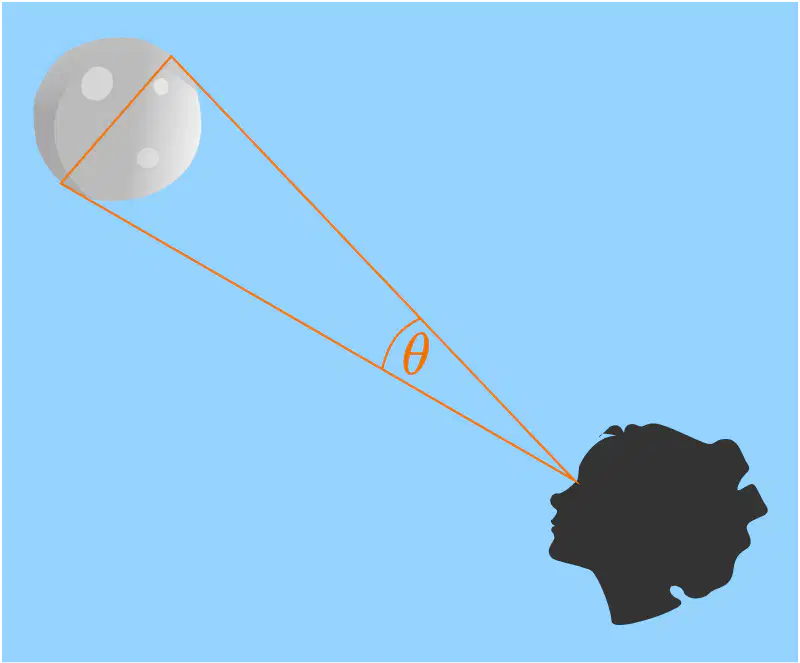
If the angle from one edge of the Moon to the other were to (a) it would indicate the Moon's (b) were doubled.
Every year, little by little, the Moon drifts away from Earth. This means the angle between its edges would (a) .
Express the ratio of the distances to the Sun and Moon in terms of the ratio of their radii.
LSun
RSun
Aristarchus used observations of (a) , simple trigonometry, and estimates of the size of Earth's (b) to estimate the distances to the Sun, Moon and their (c) .

