
 Worksheets
Quiz 3: AoC & Constitution by Mr. Ray
Total questions: 163
Worksheet time: 2hrs 28mins
Interpreting Charts: What was the problem with requiring a unanimous vote of the states to create changes in the Articles of Confederation?
It made it difficult to pass any amendments.
It ensured all states were in agreement.
It streamlined the decision-making process.
It allowed for quick changes to be made.
Analyzing: Why did the states approve a government with so many weaknesses?
They believed it would protect their sovereignty.
They wanted to avoid a strong central authority.
They were following the Articles of Confederation.
They were influenced by external pressures.
Reading Check: In what ways was the Confederation Congress ineffective?
Lack of power to tax
Inability to regulate trade
No executive branch to enforce laws
All of the above
The Framers preserved the rights of the states by:
Establishing a federal government with limited powers
Granting states the power to veto federal laws
Allowing states to secede from the union
Creating a national government with supreme authority
Summarizing: What compromises did the delegates agree on during the convention?
The Great Compromise and the Three-Fifths Compromise
The Missouri Compromise and the Compromise of 1850
The Compromise of 1877 and the Kansas-Nebraska Act
The Treaty of Paris and the Louisiana Purchase
Which term refers to a system where the government is elected by the people?
Republic
Framework
Recession
Federalism
Identify: Articles of Confederation, Northwest Ordinance, Shays’s Rebellion, Constitutional Convention, Great Compromise, Three-Fifths Compromise, Federalists, Antifederalists.
A set of laws governing the United States before the Constitution.
An uprising led by a former militia officer, which broke out in western Massachusetts.
An agreement that large and small states reached during the Constitutional Convention.
A meeting held in 1787 to address the problems of the weak central government.
A plan for the government of the Northwest Territory.
The Antifederalists opposed the Constitution because they believed it:
Gave too much power to the national government
Ensured individual rights
Promoted state sovereignty
Encouraged economic equality
The Constitution was written as a flexible framework of government by including which of the following features?
Separation of powers
Fixed terms for officials
Rigid amendment process
Detailed regulations for every aspect of governance
Which document provided a better way to solve the problems facing the nation?
Articles of Confederation
Constitution
Which of the following is a compromise the Founders reached at the Constitutional Convention?
The Great Compromise
The Missouri Compromise
The Compromise of 1850
The Kansas-Nebraska Act
Wilson thinks that the Constitution will work because:
It is based on historical precedents.
It has a system of checks and balances.
It is supported by all states.
It is flexible and can be amended.
The Pilgrims left England because:
They wanted to explore new lands.
They were seeking religious freedom.
They were escaping a natural disaster.
They were invited by the Native Americans.
William Penn regarded his colony as a "holy experiment" because:
He wanted to establish a place for religious freedom.
He aimed to create a military stronghold.
He sought to develop a commercial trading hub.
He intended to build a scientific research center.
The Great Awakening influenced the American colonies by:
Encouraging religious revival and unity
Promoting economic independence
Strengthening ties with Britain
Reducing religious diversity
What made the Stamp Act different from other legislation that Parliament enacted?
It was the first direct tax on the colonies.
It was the first law to regulate trade.
It was the first law to establish a postal system.
It was the first law to grant land to settlers.
The Founders provided for a separation of powers in the federal government by:
Establishing three branches of government: legislative, executive, and judicial
Creating a single centralized government
Allowing states to have more power than the federal government
Implementing a direct democracy system
What convinced Massachusetts to ratify the Constitution?
The promise of a Bill of Rights
Economic incentives
Military pressure
Political alliances
What rights did the colonists want from Britain?
The right to free speech
The right to bear arms
The right to fair trial
The right to representation in Parliament
What do you think would have happened if New York and Virginia had not ratified the Constitution?
The Constitution would have failed.
The Constitution would have been ratified by other states.
The United States would have been divided.
There would have been no significant impact.
Select one aspect of the changes brought by European colonization.
Introduction of new agricultural products
Establishment of democratic institutions
Spread of indigenous languages
Decline in global trade
Which laws did the British Parliament enact after the French and Indian War?
The Stamp Act and the Townshend Acts
The Navigation Acts and the Sugar Act
The Intolerable Acts and the Quartering Act
The Tea Act and the Currency Act
What kind of government is provided for by the Constitution ratified by Americans?
A monarchy
A dictatorship
A federal republic
A theocracy
What defects in the Articles of Confederation does Morse see?
Lack of a strong central government
Inability to levy taxes
No national judiciary
All of the above
Which countries share a border with the United States?
Canada and Mexico
Canada and Russia
Mexico and Cuba
Cuba and Russia


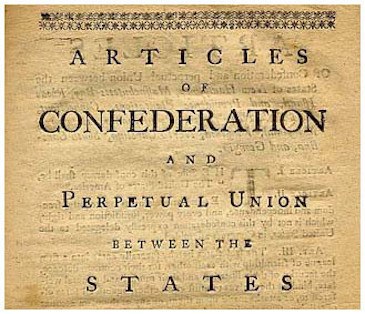
Federalists believed that the Articles of Confederation were a ________ and set up a ________ National Government.
Success, Strong.
Success, Weak.
Failure, Weak.
Failure, Strong.
Which state had the oldest state constitution still in effect today?
Massachusetts
Virginia
New Jersey
Maryland
What was a key result of Shays’ rebellion?
Banks no longer had the power to take property from people in debt.
Shays was treated as an American hero.
George Washington retired.
People realized the AoC was too weak for a country to succeed.
What happened as a result of Shays' Rebellion?
A national army was immediately created through a unanimous vote in Congress.
The Constitutional Convention meeting was called to discuss the weaknesses of the Articles of Confederation.
Massachusetts changed its laws so that farmers would not have their land seized.
Revolutionary War veterans were finally paid for their service.
What was the impact of Shays' Rebellion?
It made American leaders realize that the states needed to be more powerful.
It made American leaders realize that the states needed their own militias.
It made American leaders realize that the United States needed a confederation.
It made American leaders realize the United States needed a stronger national government.

What is the name of the plan for the first government of the United States?
Under the AOC, the confederation congress was given many powers
true
false
which of the following was a power given to the confederation congress?
power to tax
power to represent the U.S in foreign affairs
power to coin money
power to easily amend itself
Federalists wanted....
a weak central (national) government
a strong central (national) government
a Bill of Rights
strong state government
These group of people were called the ______ and they didn't support the ratification of the Constitution
Federalists
Whip Party
Independent Party
Antifederalists
This group supported stronger state governments
Federalists
Anti-Federalists
Which strong feature of the Articles of Confederation created a method for western territories to become states?
The ability to sign peace treaties
Shays' Rebellion
Northwest Ordinance
60,000 Ordinance
Who participated in Shays' Rebellion?
Poor farmers who were Continental Army soldiers
A group of brothers named Shays
Massachusetts militia men
Loyalists
What was the job of the 1 branch of government in the Articles Of Confederation?
Enforce laws
Make laws
Interpret whether a law is Constitutional
Promote westward expansion
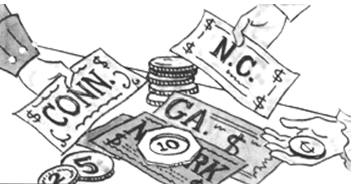

Which group was responsible for answering these questions?
Settlers creating the Mayflower Compact.
Delegates writing the Articles of Confederation.
Representatives drafting the Fundamental Orders of Connecticut.
Colonists negotiating the Albany Plan of Union.
What could have made people really not like the Articles of Confederation.
Congress could not afford to pay soldiers that fought in the Revolutionary War.
Congress was charging people too much taxes.
Congress gave too much power to the Executive Branch.
Congress gave too much power to the Legislative Branch.
Why was it so difficult to pass laws under the Articles of Confederation?
All the states had to agree for a law to pass.
The government did not have a congress where laws can pass.
States needed to have a 2/3 (9 out of 13) majority in order for a law to pass
Americans liked the laws from England but they did not like the taxes.
How did the Articles of Confederation impact the formation of the United States government?
It established a strong central government
It created a system of checks and balances
It led to the creation of the Constitution
It had no impact on the formation of the government
What was the purpose of the Articles of Confederation?
To unite the 13 colonies
To declare independence from Britain
To create a system of checks and balances
To establish a strong central government
Which of the following is NOT a way in which the Articles of Confederation impacted the development of the United States?
It provided a framework for the Constitution
It allowed for the creation of new states
It led to the creation of a strong central government
It established a system of checks and balances
Western lands north of the Ohio River were divided into squares of six by six miles
Republic
Township
Federalism
Constitution
What did the colonies form after the Declaration of Independence?
The 13 colonies became one State
“A firm league of friendship.”
Each colony became a country
The 13 colonies fought for control of the territory
Write an example of how money was devalued (depriciated)
The price of Spanish silver dollar increased from 40 to 146
It charged a 5% tax on imported goods
Pay the Royalists for property confiscated during the Revolutionary War
"A little more than a shadow without substance"
Under the Virginia Plan, the number of representatives each state received in Congress was
3/5 of the state's population
based on the state's population
1 per state
2 per state
What did the New Jersey Plan state about the structure of Congress (Legislative Branch)?
Each state would receive no representatives in Congress
3 houses and each state would receive 2 representatives
2 houses and representatives based on population
1 house and each state would receive 1 representative
Which of the following did BOTH the Virginia and New Jersey Plans include?
an end to slavery
representation based on population
three branches of government
two houses of congress
Consisting of two houses, or chambers, especially in legislature.
Depreciated
Bicameral
Petition
Ordinance

How was the government structured under the Articles of Confederation?
Communist regime
Centralized monarchy
Loose alliance of independent states
Dictatorship
What were the weaknesses of the central government under the Articles of Confederation?
Strict enforcement of laws
Strong regulation of trade
Inability to levy taxes, regulate trade, and enforce laws
Unlimited power to levy taxes

Name one power of the central government under the Articles of Confederation.
Levy taxes
Regulate interstate commerce
Declare war
Establish a national currency
What powers did the central government have under the Articles of Confederation?
Unlimited powers
Limited powers
Shared powers with the states
No powers

What were the achievements of the central government under the Articles of Confederation?
Establishment of a national bank
Creation of a standing army
Ratification of the Constitution
Establishment of a postal system, negotiation of the Treaty of Paris, and passage of the Northwest Ordinance

In 1786, a group of western Massachusetts farmers rose up to protest taxes and actions against debtors. This uprising, known as Shays' Rebellion, was important because it -
showed that the Confederation Congress was too weak to tax farmers.
revealed the inability of the national government to put down an uprising if it had spread
demonstrated the national government's lack of power to regulate interstate commerce
exposed the need for states to have votes in Congress based on their size
The Virginia Plan said that states should have representatives based on _______ .
how old they were
their population
their location
their religion
James Madison created The _________ Plan. He thought government should be split into three parts (or branches)
Georgia
New Jersey
Rhode Island
Virginia
A delegate is someone that was chosen to speak for others. Delegates were usually wealthy, business people, land owners, and lawyers.
true
false
Which branch of government is responsible for interpreting the laws and includes the Supreme Court?
Executive
Legislative
Judicial
Which branch of government is in charge of creating laws and includes the House of Representatives and Senate?
Executive
Legislative
Judicial
Which branch enforces the laws and includes the President and his cabinet members?
Executive
Legislative
Judicial
Which of the following is NOT one of the Three Branches of Government
Executive Branch
Legislative Branch
Judicial Branch
Constitutional Branch
Which of the following was NOT a delegate at the Constitutional Convention?
James Madison
Ben Franklin
George Washington
King George

What document created the government we still have today?
the Bill of Rights
Articles of Confederation
Constitution
Declaration of Independence
Freedom of speech, religion and other rights citizens have are found in the ____________ .
Declaration of Independence
Bill of Rights
Peace Treaty
Britain Agreement
Match the definition with the correct vocabulary word:
Land that the United States owns, but isn't a state yet.
Territory
Ratify
Amend
Ordinance
Match the definition with the correct vocabulary word:
To change something for the better officially.
Territory
Ratify
Amend
Ordinance


What did the Northwest Ordinance say about slavery?
It banned slavery in the Northwest Territories
It banned the slave trade throughout the country
It declared slavery legal in the Northwest Territories
It didn't mention slavery

Why did farmers rebel and take over courthouses in Shay's Rebellion?
They were in debt and their farms were being taken
They wanted America to return to Great Britain's control
They were angry about tea taxes
They wanted to become judges

The states included in this land ordinance made up the...
Northern Territory
Midwest Territory
Northwest Territory
Great Lakes Territory
Which picture is the best representation of the Articles of Confederation?


What was the main focus of the founders when trying to form America's first government?
To make taxes as low as possible
To keep the nation secure
To avoid an overly powerful government
To make state governments very powerful
Why did Americans struggle to see themselves as a unified nation?
Some people still supported the British.
The colonies were all very different with unique people
Most Americans didn't want to live under any government.
Northerners and southerners already disliked each other.
Each state used the SAME money under the Articles of Confederation.
True
False

The plan that combined the New Jersey & Virginia Plans and created our legislative branch was called
The Good Compromise
The Connecticut Compromise
The Great Compromise
The New Virginia Plan
The first part of the Constitution is called the
introversion
preamble
"we the people..."
articles
Which part of the constitution has the bill of rights
the articles
the amendments
the preamble
The executive branch _____________ the laws
enforces
executes
creates
debates in the House of Representatives
The judicial branch ____________ the laws
makes
marks
adds to
interprets
the sharing of powers between state and federal governments is called
state power
federal power
federalism
sectionalism
The commander in chief of the armed forces currently is
Donald Trump
Barack Obama
George Bush
Joe Biden
What is the "Supreme Law of the Land?"
The Declaration of Independence
The Articles of Confederation
Shays' Rebellion
The Constitution
One responsibility of the Executive Branch of the U.S. Government is to see that laws are---
are written quickly
followed by the citizens
interpreted correctly
taught in public schools
George Washington served the newly formed United States as the---
President
Vice president
Secretary of State
Federalist candidate
What do Jefferson and Washington have in common?
Both were a president of the United States
negotiated the Louisiana purchase
Both were authors of the Declaration of Independence
Military Commander during the American Revolution
the Founding Fathers created a government system characterized by checks and balances in order to---
ensure political change came slowly
safeguard against one branch dominating
concentrate power in an executive brankch
make elected officials accountable to voters
A presidential veto of law is an example of--
due process
judicial activism
individual rights
checks and balances.
group of persons chosen from each state, indirectly elect president
Popular Sovereignty
Indirect Democracy
Limited Government
Electoral College
All government power comes from the people
Popular Sovereignty
Indirect Democracy
Limited Government
Electoral Colleg
constitution specifically states what powers the government has
Popular Sovereignty
Indirect Democracy
Limited Government
Electoral College
designed to prevent one branch from seizing too much power. Example: President nominates judges, Senate approves nominations
Separation of Powers
Checks and balances
Ratify
Bill of Rights

What conclusion can be drawn from the headline?
Citizens can be involved in policy making through their representatives.
Citizens can be directly involved in policy making.
Only elected officials may change constitutions.
Only elected officials make policy.

the place in Philadelphia where the Constitution was debated and signed
White House
Washington Monument
Independence Hall


This Virginian delegate to the Constitutional Convention took detailed notes during the meetings and helped to propose compromises. "Father of the Constitution"
George Washington
James Madison
Thomas Jefferson
James Monroe


The Electoral College can best be described as a
Direct election
Popular election
Dynastic election
Indirect election
How many representatives per state are in the Senate?
1
2
Based on population
4
Police cannot get a search warrant without
Eminent Domain
Executive Order
Miranda Rights
Probable Cause
Which amendment guarantees Americans right to bear arms (own weapons)
Second Amendment
First Amendment
Ninth Amendment
Third Amendment
What does the third amendment say?
Protects the rights of every American, defines the Freedoms of Religion, Speech and Press
Prevents the government from forcing citizens to shelter soldiers in their homes
Guarantees Americans right to bear arms (own weapons)
Who is in charge of the executive branch?
the President
the Chief Justice
the Majority Leader
the Speaker of the House
The Bill of Rights refers to the first 10 amendments of the Constitution.
True
False
Who is considered to be "The Father of the Constitution"?
George Washington
James Madison
Madison Davis
James Monroe
Police officers usually need a _______ to search you or your property
Baton
Firearm
Warrant
Bible
Which of these rights is covered under the 1st Amendment?
Freedom of speech
Right to bear arms
Freedom from having to shelter soldiers in your home
18. What is the highest court in the United States?
The Supreme Court
The Applet Court
District Court
The one in Denver, Colorado

How long is one (1) term for the President?
4 years
6 years
3 years

You can protest in public against the government
True
False

