
 Worksheets
Natural Selection, Classification, Fossils and Extinction
Total questions: 23
Worksheet time: 15mins
Reorder the following points about natural selection
Mutations cause changes in characteristics
There is variation in a population
Some individuals are better suited to the environment and survive
Survivors can reproduce more
The alleles (DNA) from the survivors are passed onto the offspring
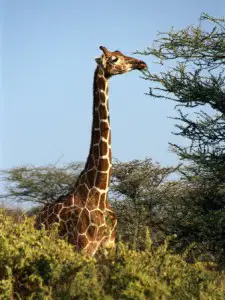
Reorder the following points about natural selection in giraffe necks
A mutations cause changes in neck length
There is variation in neck lengths in the population
Those with the longest necks can feed more and survive
Long-necked survivors can reproduce more
The alleles for long necks are passed onto the offspring
Which Kingdom do humans fall under
Animals
Plants
Fungi
Bacteria
Protists
Which Class do humans fall under
Mammals
Birds
Fish
Amphibians
Reptiles
Which Phylum do humans fall under
Vertebrates (Backbone)
Invertebrates (No Backbone)
Who came up with the theory of natural selection (a) Darwin
Reorder the following from least to most specific
Kingdom
Phylum
Class
Order
Family
In genetic engineering (a) is removed from the (b) of cells from organism and inserted into another organism. This gives the second organism new (c)
Why are scientists more likely to find a shell fossil and not a jellyfish fossil
shells are formed in volcanoes
shells have body structures that are likely to be preserved.
Shells are found in top layers of rocks
Jellyfish are more likely to be preserved

What conclusion can you make about this fossil?
It swam in the ocean.
It likely had feathers.
It had a shell
It has 5 toes on each foot.


How do fossils form
an insect becomes trapped in amber
an entire organism becomes frozen in ice.
a dead organism becomes buried in sediment
All of the above

Which of the following is most likely to become preserved as a fossil?
a leaf
a worm
jelly fish
clam shell

Explain why there are no fossils of many early forms of life
Early forms of life where too soft to form fossils
Early forms of life were very, very small so finding fossilised remains is very difficult.
Most dead organisms do not form fossils they decay
All of the above


What do Fossils show us?
Exactly what dead organisms looked like
How much or how organisms have changed over time
How organisms have stayed the same

In the Picture - Where are the oldest fossils of the organisms that lived longest ago found?
At the bottom
At the top
In the middle


What happens when a group of animals become extinct?
All of its members have died.
Only a few of its members are still living.
The animals can no longer lay eggs.
All of its members move to another place.

Which of these are causes of extinction
Habitat Destruction
A New Predator
A New Disease
A New Competing Species
All of the above

The endangered seabird the marbled murrelet, in California, is dependent upon Sequoia forests and trees for survival. What might happen to the marbled murrelet population if the sequoia population went extinct?
the population of marbled murrelet would remain the same
the population of marbled murrelet would increase
The marbled murrelet would become extinct
The marbled murrelet would be placed on the threatened species list
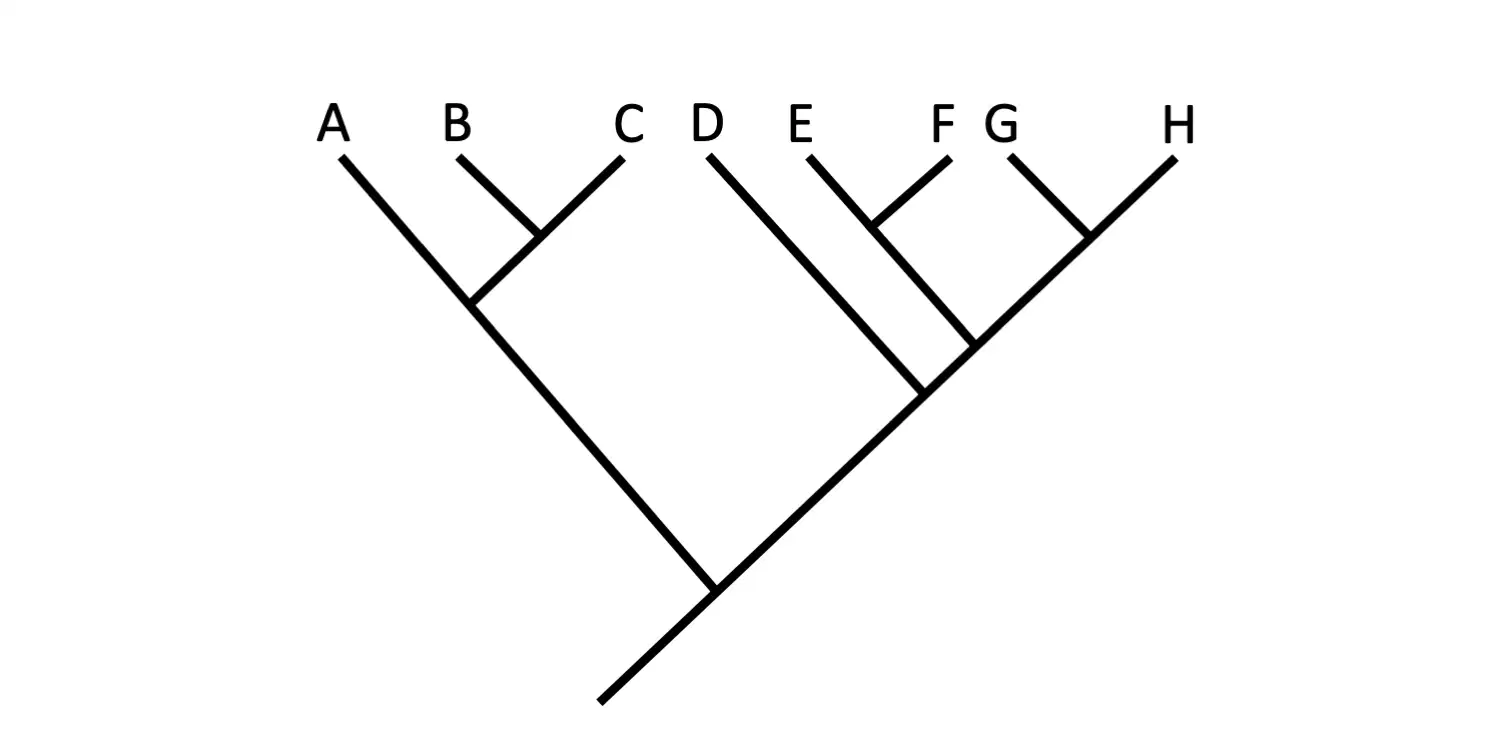
Which organism is most closely related to species E?
A
B
C
D
F

