
 Worksheets
Test 1.3 Study Guide
Total questions: 70
Worksheet time: 6hrs 50mins
when do you notify the teacher of accidents or unsafe lab conditions?
immediaitely
after the accident
tomorrow
never
when using an open flame what should the student do to be safe? Check all that apply.
Tie back long hair
Tie back loose clothes
leave the bunsen burner unattended
never look into the container while heating it.
should the student start the experiment without teacher supervision in the lab?
yes
no
purpose of Googles?
used to protect the eyes from foreign objects
used to look closer at objects
students should not where googles
help determine the mass of an object.
what is the purpose of a graduated cylinder?
used to find the temperature of a substance
used to find precise volume of liquids
used to find the force of an object
used to mix chemicals
what is the purpose of the beaker?
used to drink out of
used for stirring, mixing, and heating liquids
measure the volume of a liquid
used to transfer liquids

what tool is this?
tripple beam balance
electronic scale
spring scale
flask

what is this?
graduated cylinder
flask
beaker
funnel
what is the purpose/ use of a petri dish
used to eat off of.
used to grow cultures of microorganisms
used to mix substances
used to measure the volume of a solid.

what is this equipment called?
petri dish
graduated cylinder
test tube
hand lens

When elements are in the same ROW they are all in the same-
Chemical Symbol
Period
Family

When elements are in the same COLUMN they are all in the same-
Chemical Symbol
Period
Family

What do we call the one or two letter abbreviations for elements on the Periodic Table?
Chemical Symbol
Period
Family

Using this section of the periodic table, what is the chemical symbol for Silicon?
S
Si
C
Cl
Elements in the same ________ have the most similar chemical reactivity.
Chemical Symbol
Period
Family
Check all the characteristics of nonmetals.
most are gasses at room temperature
solid at room temperature
Poor conductor of electricity
dull luster
good conductor of electricity
Check all the characteristics of most metals.
most are gasses at room temperature
solid at room temperature
Poor conductor of electricity
dull luster
good conductor of electricity

In what order do we find these on the Periodic Table?
metals, nonmetals, metalloids
metalloids, metals, nonmetals
nonmetals, metalloids, metals
metals, metalloids, nonmetals

What classification of element is Silicon?
Metal
Nonmetal
Metalloid

What classification of element is Bromine?
Metal
Nonmetal
Metalloid

What classification of element is Lithium?
Metal
Nonmetal
Metalloid
Which is the correct formula for:
three hydrogen (H)
one sulfur (S)
four oxygen (O)
H3SO4
HSO4
H4S3O
H2O
Which of the following is a compound?
Co
O2
C
CO2
How many atoms are there TOTAL in:
H2SO4
6
5
7
3
How many elements are in C6H12O6?
1
2
3
4
Number of C's in 2Na₂CO₃
1
2
3
5
a capital letter or combination of a capital letter and a small letter that is used to represent an element is called a(n) ________
chemical symbol
element sign
How many Hydrogen atoms in 3(NH₄)₂CrO₄?
4
2
8
24
How many atoms are present if there is no subscript following the element symbol?
0
2
only 1
1 million
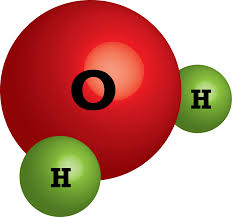
How many atoms of Hydrogen are in this compound?
1
2
3
4
Which of the following is an element?
H
NaOH
CO2
H2O
Which of the following is a compound?
H2O
Mg
O
C
Which of the following is an element?


Which of the following is a compound?


Elements are ____
2 or more atoms chemically combined
represented with subscripts
pure substances with 1 type of atom
represented with multiple symbols together
Elements are represented---
(Choose all that are correct.)
with a single symbol (may be 1 or 2 letters)
on the periodic table
with multiple symbols together
with subscripts
Which of the following are true about compounds?
They are represented with multiple element symbols together
They contain subscripts
They are represented on the periodic table
They are in things we use everyday

What is the correct formula for this compound?
NH
N3H
NH3
NH4

This picture represents which of the following?
element
compound

This picture represents which of the following?
element
compound

Elements are classified as pure substances.
True
False
A change where one or more new substances are created.
Physical Change
Chemical Change
Is melting butter for popcorn a chemical or physical change?
chemical
physical
Which of the following is NOT an example of a physical change?
crumpled paper
pencil sharpening
shrunken clothing
rust

Silverware tarnishing is an example of a _____ change
Physical
Chemical
When you break a cracker into pieces it is a...
Chemical change
Physical change

Is sharpening a pencil a physical or chemical change?
Physical
Chemical
During a chemical change, atoms...
Are rearranged to form something new
Stay the same
Arranged to become a liquid
Check all the different forms of matter
Solid
Liquid
Gas
Density
Atoms

Is water melting a physical or chemical change?
Physical
Chemical
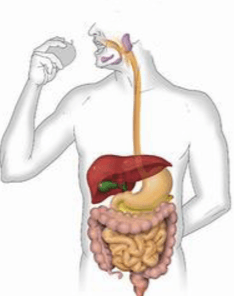
Is digesting your food a physical or chemical change?
Physical
Chemical

When baking soda and vinegar mix it creates a bubbly mess. Is this a chemical or physical change?
Physical
Chemical
If the chemical properties of a substance remain unchanged and the appearance or shape of an substance changes it is called a
Chemical change
Physical change
Both a physical and chemical change
Neither a physical or chemical change

A solution that contains all of the solute that it can hold at a given temperature.
unsaturated solution
homogeneous solution
A solution that can still dissolve more solute at a particular temperature.
heterogeneous solution
homogeneous solution
In a sample of salt water, NaCl (salt) would be considered the ______.

solvent
solution
solute

solvent
solute

Water dissolves __________ well.
polar substances (like sugar)
nonpolar substances (like oil)
bricks

A water-based solution is also known as an
orange solution
aqueous solution
plot solution

