
 Worksheets
study guide for Periodic table
Total questions: 100
Worksheet time: 2hrs 47mins
Who invented the Periodic Table?
Mendeleev
Bohr
Lewis
Democritus
As you move left to right on a row or period what happens?
Atomic number increases by 1
Electrons decrease
Number of shells decrease
Nothing
What happens to the number of shells as you move down a group?
They decrease by 1
They increase by 1
Nothing
The first energy shell can hold ______ electrons.
2
8
18
All elements in the same row have the same number of shells.
True
False
Sometimes
Mendeleev's genius was his ability to
predict elements that were not discovered yet
organize elements by their mass
had an element named after himself
organize elements by properties
Valence means......
inside
outside
full

Elements in the same group or column have the same ...
# of valence electrons
# of shells
# of protons
Mass Number

Rows on the periodic table are called ___________.
Periods
Sentences
Fences
Elements in the same group have __________
Similar Properties
Same number of shells
Similar Mass
What do all elements in the same period have?
same number of shells
same number of electrons
belong in the same family
Use your periodic table to find which element has 5 protons.
Lithium
Calcium
Boron
Neon
Iron, copper, and nickel are examples of ________.
Alkaline metals
Transition metals
Representative elements
alkali metals
Which of these elements is an alkali metal?
Beryllium
Iron
Lithium
Magnesium
Which group in the periodic table is composed of elements that do not react with other elements?
Halogens
Noble gases
Alkaline Earth Metals
Actinides
The following are metalloids EXCEPT for _________.
Antimony
Boron
Germanium
Tin
Which of these groups is known as the Halogens?
Group 1A
Group 2A
Group 7A
Group 8A

Carbon has an atomic number of 6. What can you conclude about carbon from this fact?
It has 6 protons.
It has 6 neutrons.
It's in group 6.
It's in period 6.

Noble gases are sometimes called "inert gases." What can you infer about the meaning of the word "inert" in chemistry?
It refers to substances that easily lose electrons.
It refers to substances that do not react with other substances.
It refers to substances that have strong electrochemical charges.
It refers to gases.

What do the orange and yellow spheres represent in this model of an atomic nucleus?
Gluons and leptons.
Protons and neutrons.
Positrons and electrons.
Atoms and molecules.

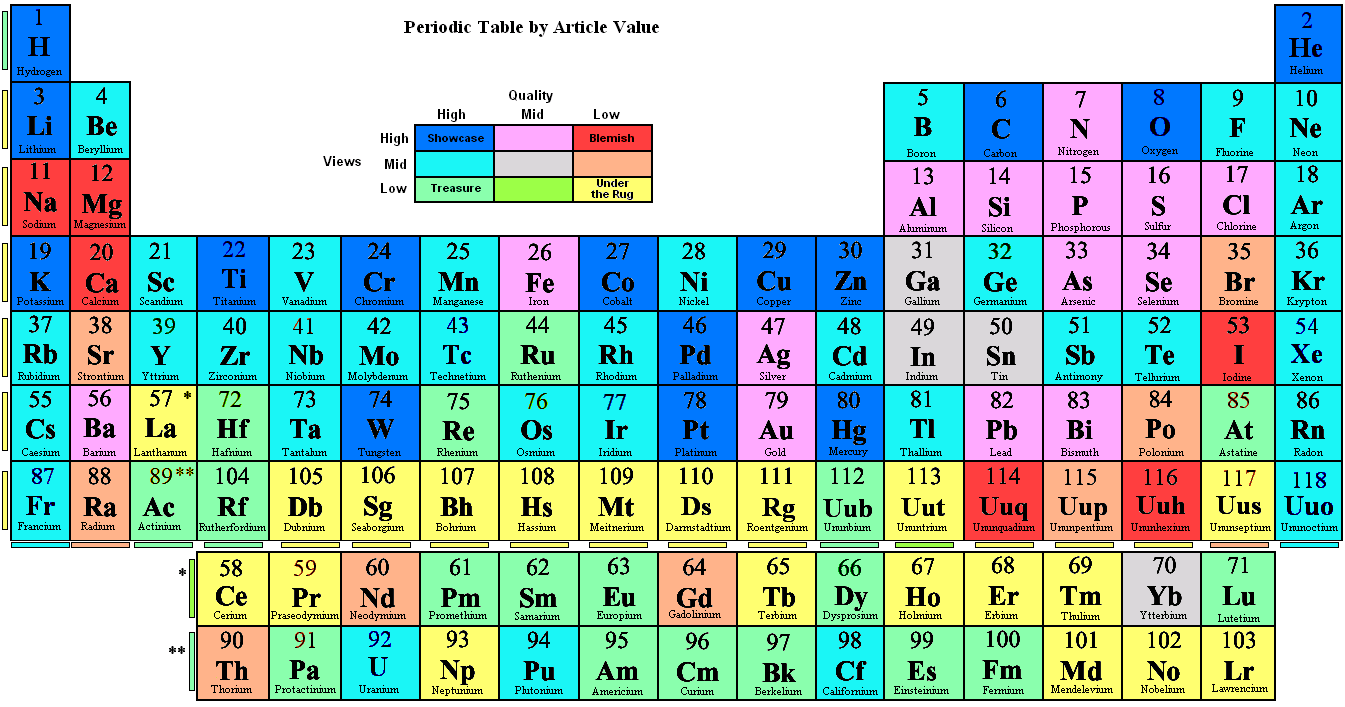
What do the elements highlighted in red have in common?
The same number of protons.
The same number of electrons.
The same number of neutrons.
The same number of electron shells.

Which of the following is a true statement?
Periods form horizontal rows; groups form vertical columns.
Groups form horizontal rows; periods form vertical columns.
Categories form horizontal rows; gases form vertical columns.
Gases form horizontal rows; categories form vertical columns.

What is true of all atoms?
They are electrically charged.
They contain more than one electron shell.
They have full outer electron shells.
They contain at least one proton.

Which of the following element is an example of Halogen
Sodium
Magnesium
Fluorine
Carbon
Which of the following is an inert / Noble gas?
Hydrogen
Helium
Oxygen
Carbon dioxide
------ are poor conductors of heat and electricity
Transition metals
All metals
Non metals
Copper
Which of the following element is a member of Alkaline earth metals?
Lithium
Iron
Calcium
Boron
Noble gases are inert because
They are highly reactive
They are unreactive
They are noble
They have 8 electrons in their outer most energy level
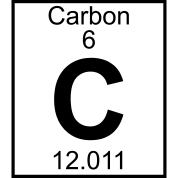
Which halogen is found in period 4?
Krypton (Kr)
Xenon (Xe)
Bromine (Br)
Iodine (I)
a subatomic particle, contained in the nucleus of an atom, having the same mass as a proton but no electrical charge
proton
neutron
electron
matter

what is the biggest group on the table
metals
nonmetals
metaloids
halogens
how many rows are on the table
4
5
6
7
how many groups/families are on the table
15
16
17
18
what is the name of group number 1
halogens
noble gases
alkali
alkaline earth
what is the name of group number 2
transition metals
halogens
metaloids
alkaline earth
what is the big group of metals called found within the metals
transition metals
nonmetals
noble gases
halogens
where are the metaloids found
far left, vertical
stair step/diagonal
far right horizontal
at the bottom
what group number are the halogens
18
1
2
17
what group number are the noble gases
17
18
14
15
what is the small group of elements called that include C,N,O
metals
nonmetals
metaloids
noble gases
symbols must have at least
1 cap. letter
2 cap. letters
2 lower case letters
any letter you want
Periodic law states that the elements are arranged according to their atomic ________ so that elements with similar chemical properties are in the same ________ and properties repeat periodically.
numbers, rows
masses, rows
masses, column
numbers, column
A grouping of elements based on similar chemical properties, arranged by columns in the periodic table; also known as a group
family
period
row
isotope
Metals (select all that apply)
are found on the right side of the periodic table.
are found on the left side of the periodic table.
are good conductors of heat and electricity.
are brittle.
are malleable and ductile.
Nonmetals (select all that apply)
are found on the right side of the periodic table.
are found on the left side of the periodic table.
are good conductors of heat and electricity.
are brittle.
can be solid, liquids, or gases at room temperature.

Which element is found in group 2, period 6?
Oxygen (O)
Barium (Ba)
Selenium (Se)
Carbon (C)
Which element has similar chemical properties as sodium but has 7 energy levels?
Francium (Fr)
Cesium (Cs)
Rubidium (Rb)
Potassium (K)
Elements that have the same number of energy levels are said to be in the same ______.
group
period
family
classification
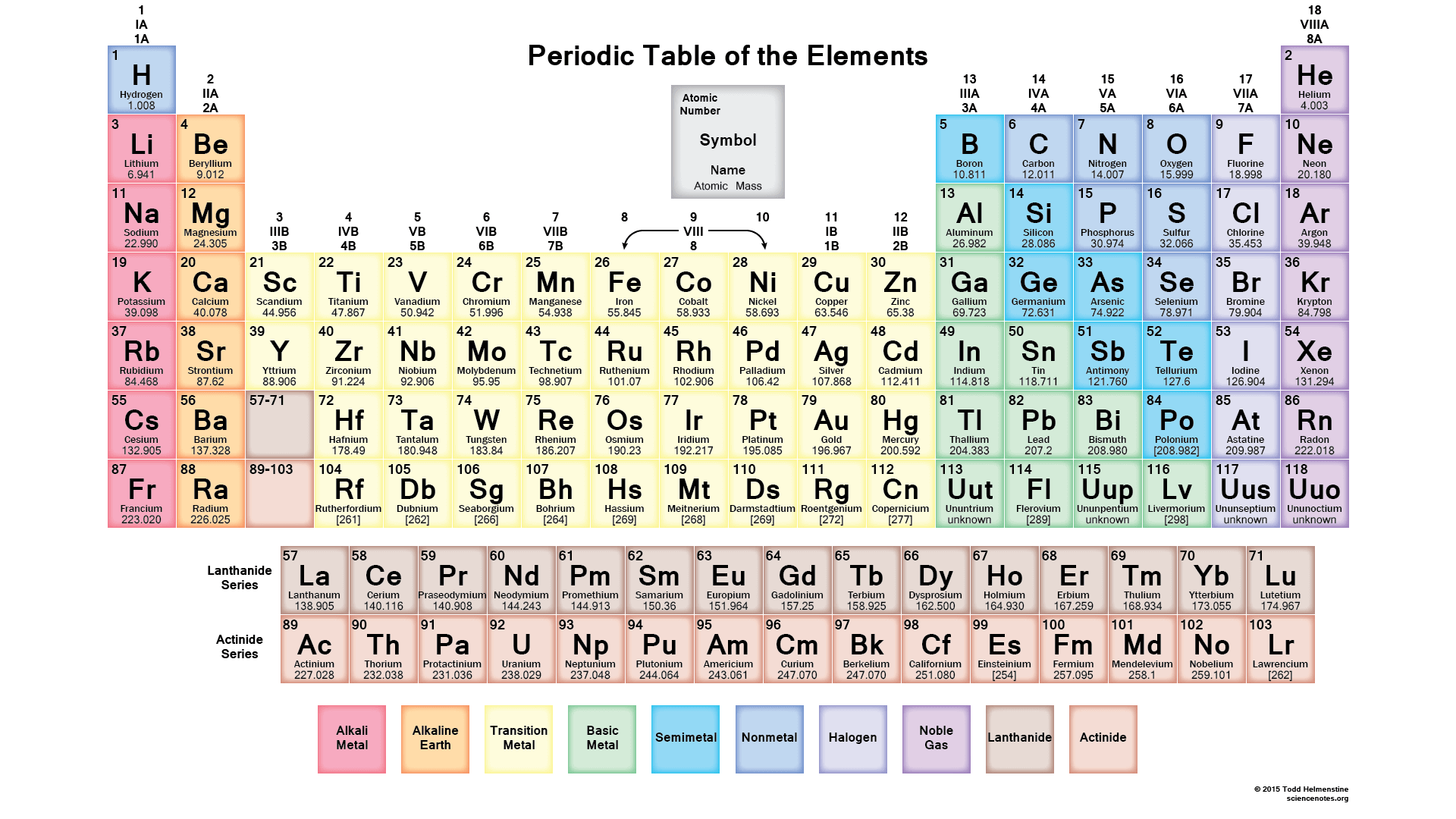
The Periodic Table of elements is arranged according to an element's
color
state of matter
place in the alphabet
properties
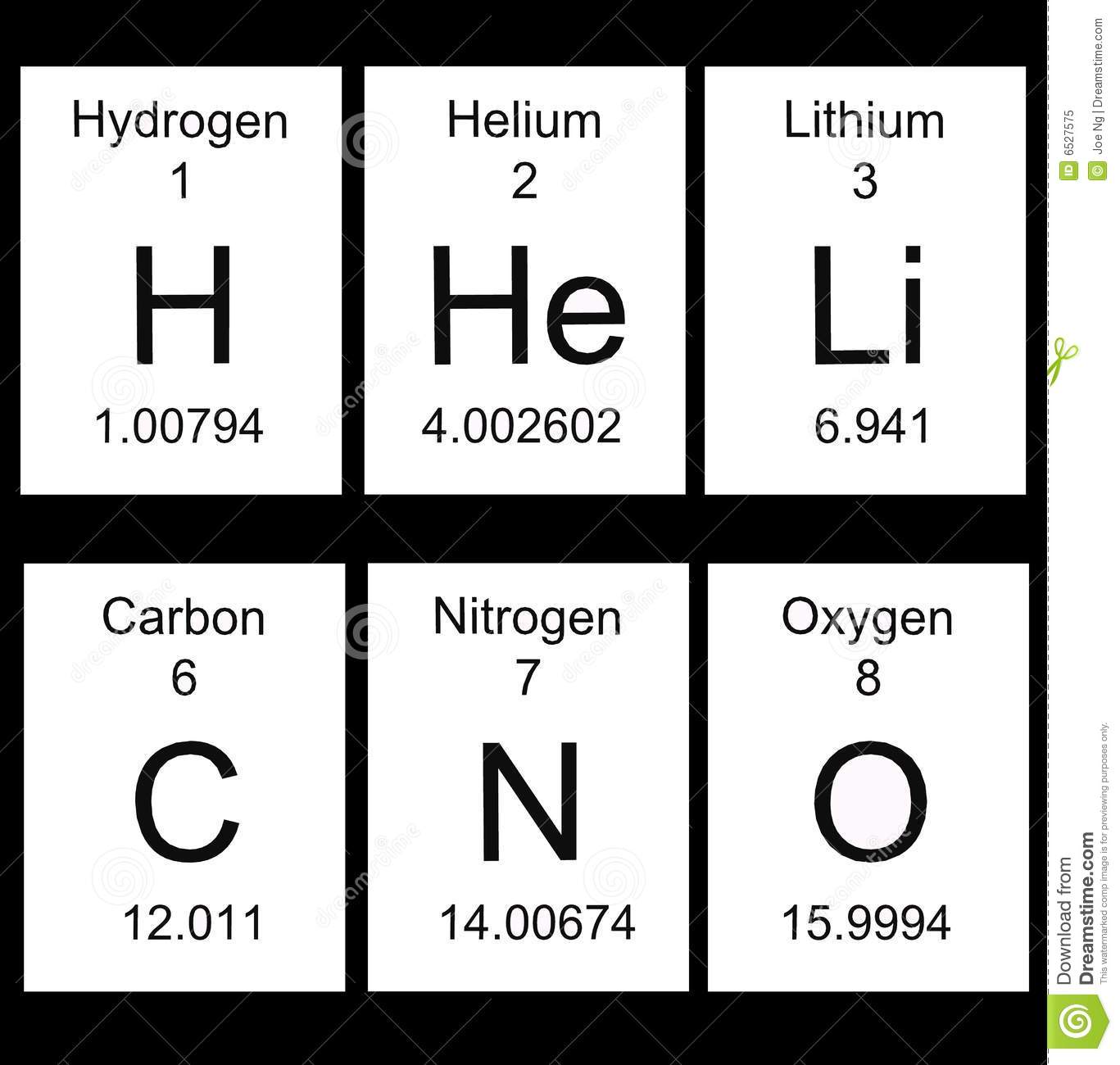
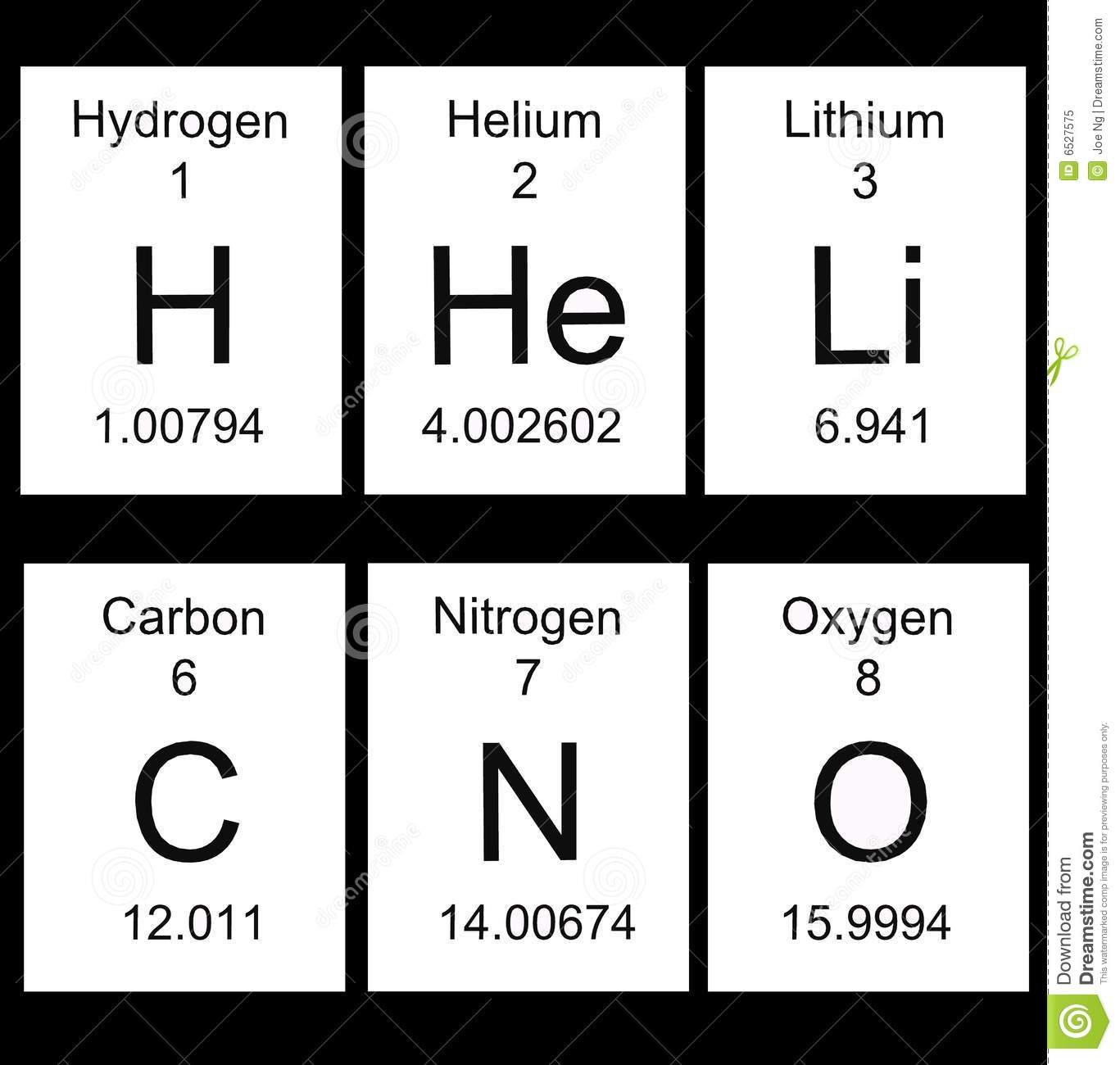
In each square of the periodic table, the number at the bottom is the:
atomic number
atomic mass
chemical symbol
element name



Because an element can not be broken down into a simpler substance, it is considered to be
a chemical impurity
a chemical substance
a pure substance
unbreakable


What is an isotope?
A charged atom
Two atoms of the same element with different amounts of neutrons
Two atoms of the same element with different amounts of protons
A neutral atom
Which two components of an atom contribute to the mass?
Protons and neutrons
Protons and electrons
neutrons and electrons
How do you calculate the number of neutrons in an atom?
neutrons=mass number
neutrons=atomic number
neutrons = mass number-atomic number
neutrons=protons + electrons

How many neutrons are in this isotope of Nitrogen?
5
7
8
15

How would you write the hyphen notation from this nuclear symbol?
Sodium-23
Sodium-11
Sodium-12
Sodium-22

How many protons are in the following atom?
82
125
207
189
What is the mass number of an atom that contains 9 protons, 10 neutrons, and 9 electrons?
9
10
18
19

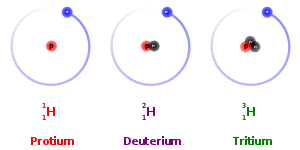
These three isotopes of carbon have different -
Atomic numbers
Mass numbers
Numbers of protons
Symbols

How many neutrons are in the nucleus of copper-63?
29
34
63
92

What is the mass number for the isotope shown?
29
34
63
92
12 protons and 13 neutrons
Mg-12
Mg-13
Mg-25
Mg-24.305
Which of the following are isotopes?
a) 14 7X b) 14 6X c) 15 7X d) 15 8X
a) and b)
a) and c)
c) and d)
a) and d)
Rate your understanding about isotopes.
Excellent
Developing
Getting there!
Needs attention
Poor



