
 Worksheets
Matter Lesson 1
Total questions: 47
Worksheet time: 37mins
Kayla wants to find out if air takes up space. Which experiment would best help her find this out?
Fill a cup with water. Fill another cup with air. Weigh both cups.
Weigh an empty metal container. Place a lid on it. Weigh it again.
Blow up a balloon. Tie a knot to make sure it is closed. Try to flatten the balloon.
Put red food coloring in an empty bottle. Place a cap on the bottle. Shake the bottle to see if the air inside turns red.
Which is true about a gas?
It changes to a liquid when it heats up.
It takes up a definite amount of space.
It takes up a definite amount of space but does not have a definite shape.
It does not take up a definite amount of space and does not have a definite shape.
What is the state of matter of whipped cream?
Gas
Solid
Liquid
Plasma

Gases have ...
Definite shape and definite volume.
No definite shape and no definite volume.
Definite volume but no definite shape.

Lisa was at the fair and noticed people walking around with these 8 differently shaped balloons filled with helium gas.
Which is the best conclusion Lisa could make about gases after she observed these balloons?
Gases take the shape and size of their containers
Gases have definite shapes and sizes
Gases have definite shapes and volumes
Gases' sizes and shapes do not change

A gas's molecules _______________
do not move
move in place
flow around each other
move away from each other
Gases are invisible
True
False
Gases fill their entire container
False
True


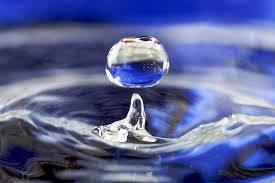


In which substance do the particles move the MOST?
air
ice
milk
wood

Atoms that are bunched close together and kind of vibrate in place
Solids
Liquids
Gases
Plasmas

Lilly is going to pour the liquid substance from the container shown into a large bucket. Which observation will Lilly most likely make?
The liquid substance will take the shape of its container.
The liquid substance will begin to change colors.
The liquid substance will immediately turn into a gas
The mass of the liquid substance will increase.
Liquids take the shape of their
container
mass
matter
water
What are the TWO characteristics of a solid?
definite mass, no shape
no definite mass or shape
definite mass and definite shape
no definite mass, defninte shape
The particles in a solid
are close together but can slide past one another.
are in fixed positions and vibrate slightly.
are spread out and move about freely.
are in fixed positions and do not move at all.


What can you say about the shape of solids?
They take the shape of their container.
They have their own shape.
Anything that takes up space

A scientist uses an instrument to study the small particles in a piece of matter. The diagram shows what the scientist sees.
What state of matter is the scientist most likely observing?
gas
solid
liquid
vapor

A scientist uses an instrument to study the small particles in a piece of matter. The diagram shows what the scientist sees.
What state of matter is the scientist most likely observing?
gas
solid
liquid
plasma

A scientist uses an instrument to study the small particles in a piece of matter. The diagram shows what the scientist sees.
What state of matter is the scientist most likely observing?
gas
solid
liquid
vapor

Anything that takes up space and has mass is...
Solids
Weight
Matter
Mass
When matter changes from one state to another, the mass remains the same.
True
False

Which picture shows how the particles in a liquid are arranged?
A
B
C

The breath that comes out of Beyoncé's mouth is in what phase of matter?
Gas
Liquid
Solid

A student drops a rock and a cork in a cup of water as shown.
The student observes that the cork floats while the rock sinks in water. What can be concluded from the observation?
The cork is more dense than the rock
The rock is more dense than the cork
The cork has a hole in it
The cork is more dense than the water

These particles belong to which state of matter?
Solid / Solido
Liquid / Liquido
Gas

Are these particles in a solid, liquid, or gas?
Solid
Liquid
Gas

Are these particles in a solid, liquid, or gas?
Solid
Liquid
Gas

Are these particles in a solid, liquid, or gas?
Solid
Liquid
Gas
In general, the particles of a liquid are __________ tightly packed than those in a solid.
more
less

Select the GAS.
Seleccione el GAS.


Select the SOLID.
Seleccione el SOLIDO.
Select the LIQUID.
Seleccione el LIQUIDO.
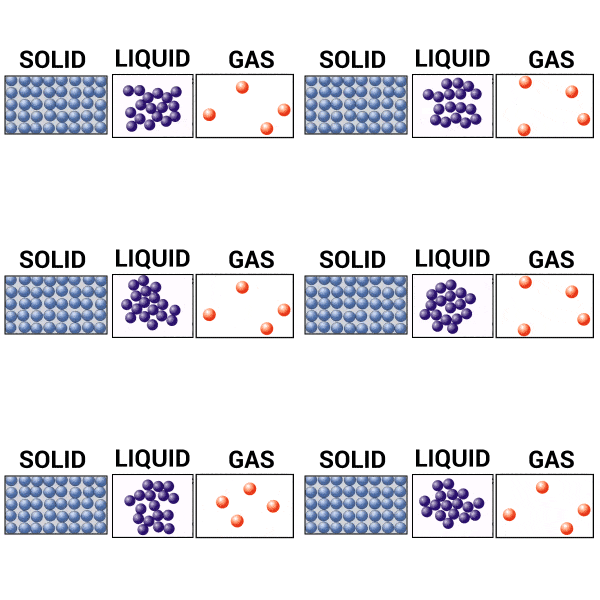
Which state of matter has particles that vibrate in place?
Solid
Liquid
Gas

The atoms that make up a solid are?
packed tightly together.
flowing around.
bouncing all over the place.

