Worksheets
Q2 Ecosystems: Cycles of Matter
Total questions: 22
Worksheet time: 20mins

The process by which water evaporates from plants through the pores in their leaves is called...
transpiration
precipitation
runoff
The process of converting nitrogen gas in the air into nitrates in the soil is known as:
Denitrification
Nitrogen conservation
Nitrogen fixation
The process in which elements, chemical compounds, and other forms of matter are passed from one organism to another and from one part of the biosphere to another is called:
biogeochemical cycles
cellular respiration
photosynthesis
Krebs cycle
______________ is an important nutrient because it is a major component of all organic molecules (such as carbohydrates, lipids, nucleic acids, and proteins).
Carbon
Nitrogen
Phosphorus
Bacteria convert nitrates into nitrogen gas in a process called:
nitrogen fixation
denitrification
cellular respiration
photosynthesis
______________ is an important nutrient because it needed to make proteins and nucleic acids (DNA & RNA). In gaseous form, it also makes up 78% of earth's atmosphere.
Carbon
Nitrogen
Phosphorus
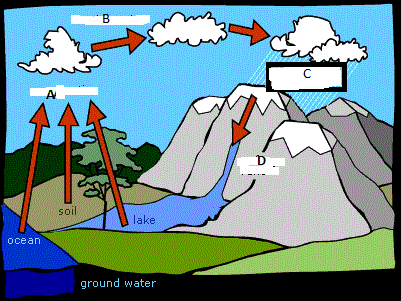
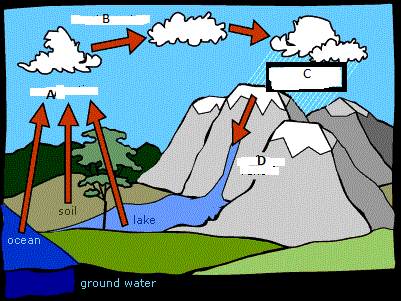

The water shown flowing over land is called
evaporation
runoff
condensation


The nonliving parts of an ecosystem.
Abiotic factors
Biotic factors

The portion of the planet in which living things are found
ecosystem
biosphere
biome
atmosphere
Choose the correct order of organization from simplest to most complex.
tissues --> cells --> organs --> organism --> organ system
organism --> organ system --> organs --> tissues --> cells
organs --> organ system --> tissues --> organism --> cells
cells --> tissues -->organs --> organ systems --> organism
Choose the correct order of organization from most complex to simplest.
tissues --> cells --> organs --> organism --> organ system
organism --> organ system --> organs --> tissues --> cells
organs --> organ system --> tissues --> organism --> cells
cells --> tissues -->organs --> organ systems --> organism