
 Worksheets
MC 0.1 Scientific Method
Total questions: 10
Worksheet time: 2hrs 40mins
Name
Class
Date
1.
How do we call the possible answer or explanation to a question based on prior knowledge and observations?
a)
Observation
b)
Experiment
c)
Hypothesis
d)
Conclusion
2.
What is an independent variable?
a)
The variable manipulated or controlled by the scientist.
b)
The variables that the scientist keeps constant, which allows them to attribute the results to the independent variable alone.
c)
The variable that the scientist is measuring or observing.
d)
The variable that will always be represented on the Y axis.
3.
What is the independent variable in the following scenario?
"The blood pressure of a soldier is measured every hour during one day."
a)
The blood pressure.
b)
The soldier
c)
The data of blood pressure.
d)
Time (hours).
4.

The following graph represents the height of a person (ESTATURA) throughout his life. At what age he reaches the highest height?
a)
15
b)
20
c)
25
d)
40
5.
Josie was performing an experiment where she grew the same kind of tomatoes in the same soil and amount of water. She sat one in the sun and one in a closet for 14 days. What is the independent variable in Josie's experiment?
a)
Tomatoes
b)
Sunlight
c)
Soil
d)
Water
6.
The information you collect while doing your experiment is called
a)
Data
b)
Observation
c)
Conclusion
d)
Hypothesis
7.
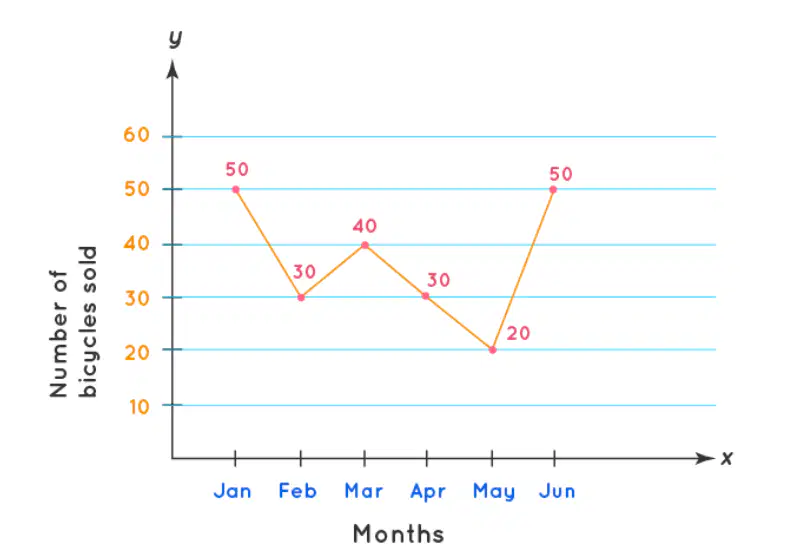
What is the dependent variable in this graph?
a)
Time (measured in months)
b)
The number of bicycles sold
c)
The months from January to June
d)
The price of the bicycles sold
8.
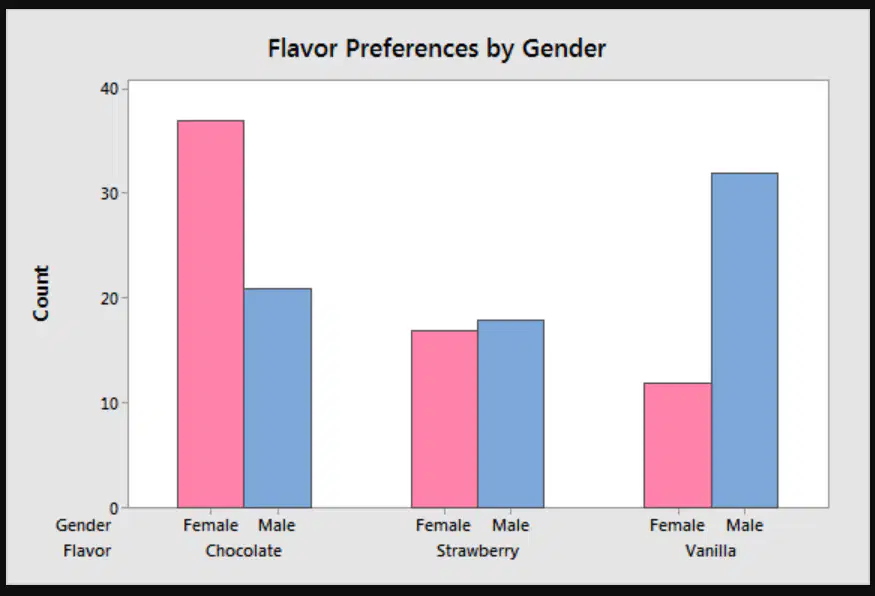
Observing the data plotted on this graph we can conclude that...
a)
Chocolate is a flavor preferred by Males.
b)
There are more female than male who prefer Strawberry flavor.
c)
There are more female than male who prefer Vanilla.
d)
There are more male than female who prefer Vanilla.
9.
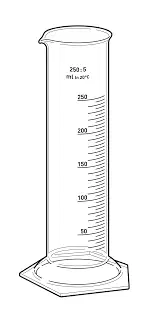
What is the name of this object that you can find in the laboratory?
a)
Graduated cylinder
b)
Beaker
c)
Pipette
d)
Test tube
10.

What is the name of this object that you can find in the laboratory?
a)
Beakers
b)
Test tubes
c)
Erlenmeyer flasks
d)
Pipettes
100 %

