
 Worksheets
C01 Periodic Table
Total questions: 181
Worksheet time: 3hrs 41mins
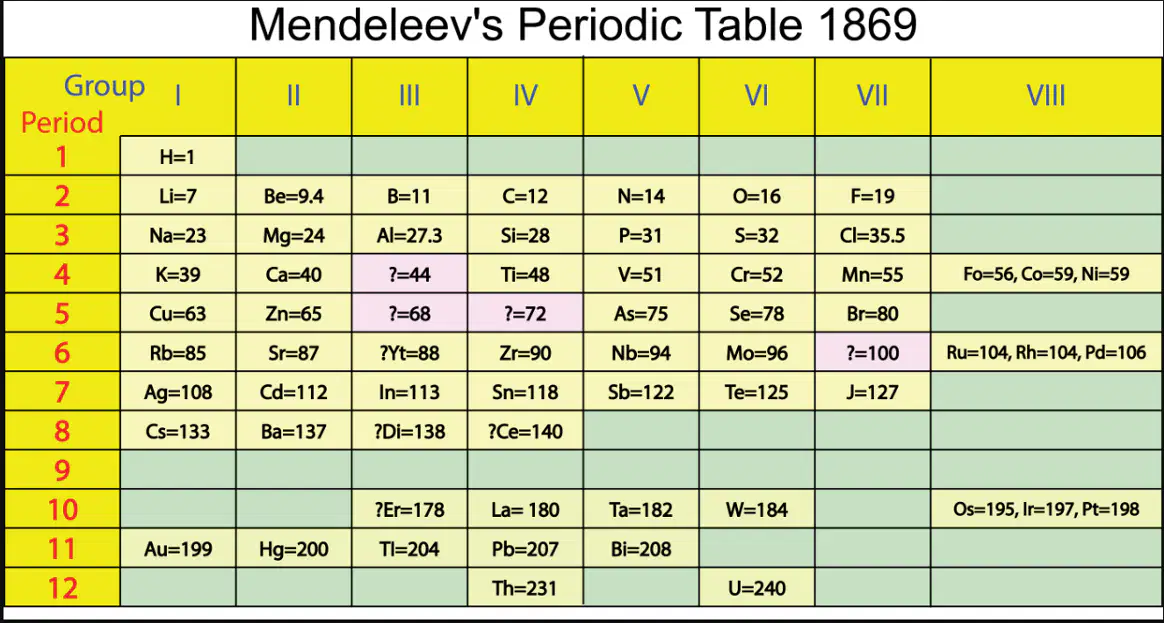
Mendeleev arranged his Periodic Table in numerical order by __________.

The modern Periodic Table is arranged in numerical order by __________.
The modern Periodic Table is arranged in numerical order by (a) .
Mendeleev arranged his Periodic Table in numerical order by (a) .

On Mendeleev's Periodic Table what are the numbers marked by the red arrows?
atomic number
mass number
number of neutrons
Group 1A
Group 2A
Groups 3-12
Group 7A
Group 8A

Alkali metals
Alkaline earth metals
Halogens
Transition Elements

Halogens
Noble Gases

7
various
8


Barium, Ba is an example of a
Alkali metal
Alkaline earth metal
Halogen
Noble gas
Transition metal

Iron, Fe is an example of a
Alkali metal
Alkaline earth metal
Halogen
Noble gas
Transition metal

Iodine, I is an example of a
Alkali metal
Alkaline earth metal
Halogen
Noble gas
Transition metal

Xenon, Xe is an example of a
Alkali metal
Alkaline earth metal
Halogen
Noble gas
Transition metal

Rubidium, Rb is an example of a
Alkali metal
Alkaline earth metal
Halogen
Noble gas
Transition metal
This chemical family of elements tends to have a variable number of valence electrons, to form more than one ion, and to form colored compounds.
Alkali metals
Alkaline earth metals
Halogens
Noble gases
Transition metals
This chemical family of elements is inert or nonreactive.
Alkali metals
Alkaline earth metals
Halogens
Noble gases
Transition metals

Which element would most likely have the same bonding characteristics as sodium, Na?
Li
Be
Ca
F
Mg

Which element would most likely have chemical properties that are very similar to the chemical properties of magnesium, Mg?
Li
Ba
Na
Sc
K

Chlorine, Cl and Iodine, I are known disinfectants used to kill bacteria, which of the following would most likely also have the same disinfectant properties?
Kr
Se
O
Br
Ar

How many valance electrons does oxygen, O have?
3
4
5
6
7
Elements in main group 1A have _____ valence electron(s).
1
2
3
4
5
Elements in main group 2A have _____ valence electron(s).
1
2
3
4
5
Elements in main group 3A have _____ valence electron(s).
1
2
3
4
5
Elements in main group 4A have _____ valence electron(s).
6
2
3
4
5
Elements in main group 5A have _____ valence electron(s).
6
2
3
4
5
Elements in main group 6A have _____ valence electron(s).
6
2
3
4
5
Elements in main group 7A have _____ valence electron(s).
6
2
7
8
5
Most Elements in main group 8A have _____ valence electron(s) but He has ______ valence electrons. (Select both answers.)
6
2
7
8
5
soft,
low density,
low melting point
good conductor
valence electrons: 1
reactivity: very high
alkali metals
soft,
low density,
low melting point
good conductor
valence electrons: 2
reactivity: very high
alkaline earth metals
hard,
high density,
high melting point
good conductor
valence electrons: varies
transition metals
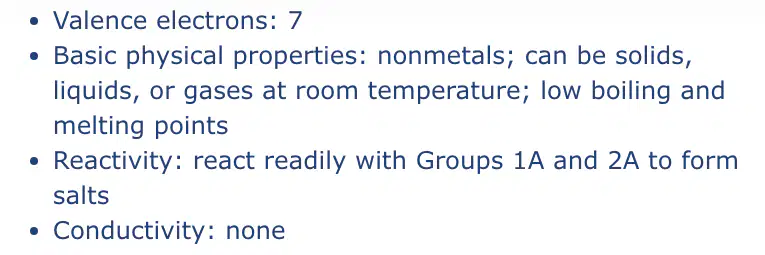
can be solid, liquid, or gas;
conductivity: none;
Readily reacts with Groups 1A & 2A
halogens
odorless, colorless, nonflammable,
gases;
conductivity: none
little to no reactivity
noble gases
forms compounds that are always soluble in water
alkali metals
soft,
low density,
low melting point
good conductor
valence electrons: 2
reactivity: very high
alkaline earth metals
forms colorful compounds
transition metals
colorful elements
halogens
only found in the element form
noble gases
forms compounds that are always soluble in water
alkali metals
highly radioacitve
actinides
tends to forms more than one ion
transition metals
All diatomic, can be solid, liquid, or gas
halogens
monatomic gases
noble gases
Which of these describes an alkali metal?
soft,
low density,
low melting point
good conductor
valence electrons: 1
reactivity: very high
soft,
low density,
low melting point
good conductor
valence electrons: 2
reactivity: very high
hard,
high density,
high melting point
good conductor
valence electrons: varies
can be solid, liquid, or gas;
conductivity: none;
Readily reacts with Groups 1A & 2A
odorless, colorless, nonflammable,
gases;
conductivity: none
little to no reactivity
Which of these describes a halogen?
soft,
low density,
low melting point
good conductor
valence electrons: 1
reactivity: very high
soft,
low density,
low melting point
good conductor
valence electrons: 2
reactivity: very high
hard,
high density,
high melting point
good conductor
valence electrons: varies
can be solid, liquid, or gas;
conductivity: none;
Readily reacts with Groups 1A & 2A
odorless, colorless, nonflammable,
gases;
conductivity: none
little to no reactivity
Which of these describes a noble gas?
soft,
low density,
low melting point
good conductor
valence electrons: 1
reactivity: very high
soft,
low density,
low melting point
good conductor
valence electrons: 2
reactivity: very high
hard,
high density,
high melting point
good conductor
valence electrons: varies
can be solid, liquid, or gas;
conductivity: none;
Readily reacts with Groups 1A & 2A
odorless, colorless, nonflammable,
gases;
conductivity: none
little to no reactivity
Which of these describes an element from Group 1A?
soft,
low density,
low melting point
good conductor
valence electrons: 1
reactivity: very high
soft,
low density,
low melting point
good conductor
valence electrons: 2
reactivity: very high
hard,
high density,
high melting point
good conductor
valence electrons: varies
can be solid, liquid, or gas;
conductivity: none;
Readily reacts with Groups 1A & 2A
odorless, colorless, nonflammable,
gases;
conductivity: none
little to no reactivity
Which of these describes an element from Group 8A?
soft,
low density,
low melting point
good conductor
valence electrons: 1
reactivity: very high
soft,
low density,
low melting point
good conductor
valence electrons: 2
reactivity: very high
hard,
high density,
high melting point
good conductor
valence electrons: varies
can be solid, liquid, or gas;
conductivity: none;
Readily reacts with Groups 1A & 2A
odorless, colorless, nonflammable,
gases;
conductivity: none
little to no reactivity
Which of these describes an element from Group 2A?
soft,
low density,
low melting point
good conductor
valence electrons: 1
reactivity: very high
soft,
low density,
low melting point
good conductor
valence electrons: 2
reactivity: very high
hard,
high density,
high melting point
good conductor
valence electrons: varies
can be solid, liquid, or gas;
conductivity: none;
Readily reacts with Groups 1A & 2A
odorless, colorless, nonflammable,
gases;
conductivity: none
little to no reactivity
Which of these describes an alkaline earth metal?
soft,
low density,
low melting point
good conductor
valence electrons: 1
reactivity: very high
soft,
low density,
low melting point
good conductor
valence electrons: 2
reactivity: very high
hard,
high density,
high melting point
good conductor
valence electrons: varies
can be solid, liquid, or gas;
conductivity: none;
Readily reacts with Groups 1A & 2A
odorless, colorless, nonflammable,
gases;
conductivity: none
little to no reactivity
Which of these describes a transition metal?
soft,
low density,
low melting point
good conductor
valence electrons: 1
reactivity: very high
soft,
low density,
low melting point
good conductor
valence electrons: 2
reactivity: very high
hard,
high density,
high melting point,
good conductor,
valence electrons: varies
can be solid, liquid, or gas;
conductivity: none;
Readily reacts with Groups 1A & 2A
odorless, colorless, nonflammable,
gases;
conductivity: none
little to no reactivity
Which of these describes an element from groups 3-12?
soft,
low density,
low melting point
good conductor
valence electrons: 1
reactivity: very high
soft,
low density,
low melting point
good conductor
valence electrons: 2
reactivity: very high
hard,
high density,
high melting point,
good conductor,
valence electrons: varies
can be solid, liquid, or gas;
conductivity: none;
Readily reacts with Groups 1A & 2A
odorless, colorless, nonflammable,
gases;
conductivity: none
little to no reactivity
Which of these describes an element from group 7A?
soft,
low density,
low melting point
good conductor
valence electrons: 1
reactivity: very high
soft,
low density,
low melting point
good conductor
valence electrons: 2
reactivity: very high
hard,
high density,
high melting point,
good conductor,
valence electrons: varies
can be solid, liquid, or gas;
conductivity: none;
Readily reacts with Groups 1A & 2A
odorless, colorless, nonflammable,
gases;
conductivity: none
little to no reactivity
soft,
low density,
low melting point
good conductor
valence electrons: 1
reactivity: very high
alkali metals
soft,
low density,
low melting point
good conductor
valence electrons: 2
reactivity: very high
alkaline earth metals
hard,
high density,
high melting point
good conductor
valence electrons: varies
transition metals
can be solid, liquid, or gas;
conductivity: none;
Readily reacts with Groups 1A & 2A
halogens
odorless, colorless, nonflammable,
gases;
conductivity: none
little to no reactivity
noble gases
soft,
low density,
low melting point
good conductor
valence electrons: 1
reactivity: very high
Group 1A
soft,
low density,
low melting point
good conductor
valence electrons: 2
reactivity: high
Group 2A
hard,
high density,
high melting point
good conductor
valence electrons: varies
Groups 3-12
can be solid, liquid, or gas;
conductivity: none;
Readily reacts with Groups 1A & 2A
Group 7A
odorless, colorless, nonflammable,
gases;
conductivity: none
little to no reactivity
Group 8A
Group 1A
alkali metals
Group 2A
alkaline earth metals
Groups 3-12
transition metals
Group 7A
halogens
Group 8A
noble gases
Match the following valence electrons with the correct group.
1 val e–
alkali metals
2 val e–
alkaline earth metals
various but usually 2 val e–
transition metals
7 val e–
halogens
8 val e–
noble gases
Match the following valence electrons with the correct group.
1 val e–
Na
2 val e–
Mg
various but usually 2 val e–
Fe
7 val e–
Cl
8 val e–
Ar
Match the following valence electrons with the correct group.
1 val e–
Group 1A
2 val e–
Group 2A
3 val e–
Group 3A
4 val e–
Group 4A
5 val e–
Group 5A
Match the following valence electrons with the correct group.
7 val e–
Group 7A
8 val e–
Group 8A
6 val e–
Group 6A
4 val e–
Group 4A
5 val e–
Group 5A
What is the name of the group/region?
Group 1A
(a)
What is the name of the group/region?
Group 2A
(a)
What is the name of the group/region?
Group 7A
(a)
What is the name of the group/region?
Group 8A
(a)
What is the name of the group/region?
- unreactive
(a)
What is the name of the group/region?
- elements have a various number of valence electrons
- tends to form more than one ion
(a)
What is the name of the group/region?
groups 3-12
(a)
What is the group number for the
alkali metals?
(It will accept IUPAC or old school.)
(Number/number-letter only)
(a)
What is the group number for the
alkaline earth metals?
(It will accept IUPAC or old school.)
(Number/number-letter only)
(a)
What is the group number for the
noble gases?
(It will accept IUPAC or old school.)
(Number/number-letter only)
(a)
What is the group number for the
halogens?
(It will accept IUPAC or old school.)
(Number/number-letter only)
(a)
What is the group number for the group that has
1 valence electron?
(It will accept IUPAC or old school.)
(Number/number-letter only)
(a)
What is the group number for the group that has
2 valence electrons?
(It will accept IUPAC or old school.)
(Number/number-letter only)
(a)
What is the group number for the group that has
3 valence electrons?
(It will accept IUPAC or old school.)
(Number/number-letter only)
(a)
What is the group number for the group that has
4 valence electrons?
(It will accept IUPAC or old school.)
(Number/number-letter only)
(a)
What is the group number for the group that has
5 valence electrons?
(It will accept IUPAC or old school.)
(Number/number-letter only)
(a)
What is the group number for the group that has
6 valence electrons?
(It will accept IUPAC or old school.)
(Number/number-letter only)
(a)
What is the group number for the group that has
7 valence electrons?
(It will accept IUPAC or old school.)
(Number/number-letter only)
(a)
What is the group number for the group that has
8 valence electrons?
(It will accept IUPAC or old school.)
(Number/number-letter only)
(a)

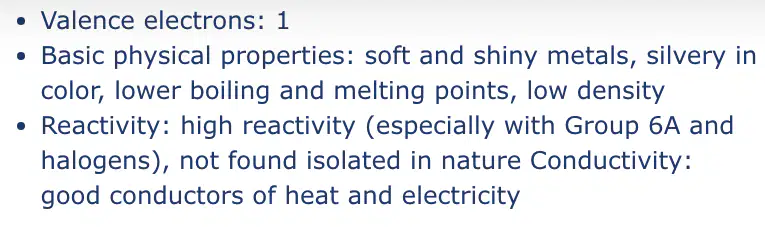
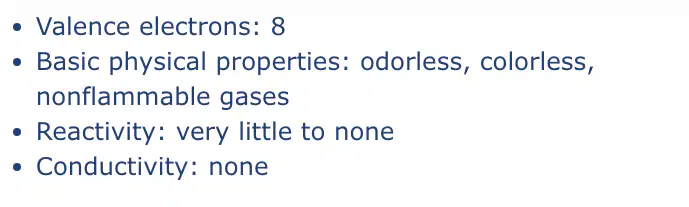
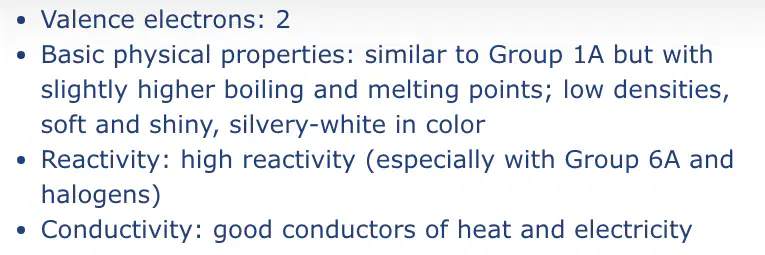
What is the "A" group number for elements that have properties that are similar to the properties in the picture?
(a)

What is the "A" group number for elements that have properties that are similar to the properties in the picture?
(a)

What is ONE group number for the groups that tend to have the same properties as those listed in the picture? (PICK ONLY ONE)
(It will accept IUPAC only. 1-18)
(Number only)
(a)
What is the group number for the group that contains elements that are inert?
(It will accept IUPAC or old school.)
(Number/number-letter only)
(a)
Which of these all mean the same thing?
inert
unreactive
nonreactive
volatile
corrosive
Select the Alkali Metals.
Select the Alkaline Earth Metals.
Select the Transition Metals
Which of these are named groups (That we learned about in this chapter.)? Marked all that apply.
An element that has the following properties:
soft and shiny,
low density,
very reactive with group 6A and 7A
one valence electron
good conductors
Which group does it belong to?
An element that has the following properties:
soft and shiny,
low density,
very reactive with group 6A and 7A
two valence electrons
good conductors
Which group does it belong to?
An element that has the following properties:
colorless
odorless
nonflammable
gas
reactivity: little to none
conductivity: none
Which group does it belong to?
Which named element group has the following properties?
can be solid, liquid, or gas
react readily with Groups 1A or 2A
conductivity: none
An element that has the following properties:
high density,
high melting point
much less reactive then other groups
shiny
hard
ductile/malleable
good conductor
Which group does it belong to?
In which group does the number of valence electrons vary?
In which group/region contains elements that tend to form colorful compounds?
Select the Halogens
Select the group/region that contains elements that tend to be highly radioactive
Select the Noble gases
Match together the elements with similar properites.
Na
K
Ca
Mg
O
S
P
N
Cl
F
Rubidium, Rb is in Group 1A. Pick ONE element that would have similar properties to Rb.
(It will accept the element symbol only.)
(a)

What is ONE element that has the properties listed in the picture?
(It will accept the SYMBOL only.)
(a)
Calcium, Ca is in Group 2A.
Pick ONE element that would have similar properties to Ca
(It will accept the element symbol only.)
(a)

What is ONE element that would have the properties shown in the picture?
(It will accept the element symbol only.)
(a)
Chlorine is in Group 7A.
Pick ONE element that would have similar properties to Cl.
(It will accept the element symbol only.)
(a)

What is ONE element that would have the same properties as those listed in the picture?
(It will accept the element symbol only.)
(a)
Radon, Rn is in Group 8A.
What is ONE element that would have similar properties?
(It will accept the element symbol only.)
(a)

What is ONE element would have properties similar to the ones in the picture?
(It will accept the element symbol only.)
(a)
Categorize the following info about Groups of the Periodic Table
Group 1A
one(1) valence electron
alkali metals
Group 2A
two(2) valence electrons
alkaline earth metals
Group 7A
seven(7) valence electrons
halogens
Group 8A
eight(8) valence electrons
noble gases
Categorize the following info about Groups of the Periodic Table
Group 1A
one(1) valence electron
Group 2A
two(2) valence electrons
Group 7A
seven(7) valence electrons
Group 8A
eight(8) valence electrons
Li
Be
F
Ne
Match the following

Noble Gasses

Halogens

Transition Metals

Alkali Metals

Alkaline Earth Metals

What Group on the periodic table is this element in?
Group 5A
Group 6A
Group 2A
Group 7A
Group 4A

What Group on the periodic table is this element in?
Group 5A
Group 6A
Group 2A
Group 7A
Group 4A

What Group on the periodic table is this element in?
Group 5A
Group 6A
Group 2A
Group 7A
Group 4A

What Group on the periodic table is this element in?
Group 5A
Group 6A
Group 2A
Group 7A
Group 4A

What Group on the periodic table is this element in?
Group 5A
Group 6A
Group 2A
Group 1A
Group 4A
What "A" group is this element in?
(a)

What "A" group is this element in?
(a)

What "A" group is this element in?
(a)

What "A" group is this element in?
(a)

What element is this?
(a)
What period is this element in?
(a)

What element is this?
(a)

What period is this element in?
(a)

What period is this element in?
(a)

What is the element?
(a)

What "A" group is this element in?
(a)
What row on the periodic table is this element in?
(a)
What element is this?
(a)

What is this element?
(a)

What period is this element in?
(a)
Match the atom with the row on the periodic table it is on.
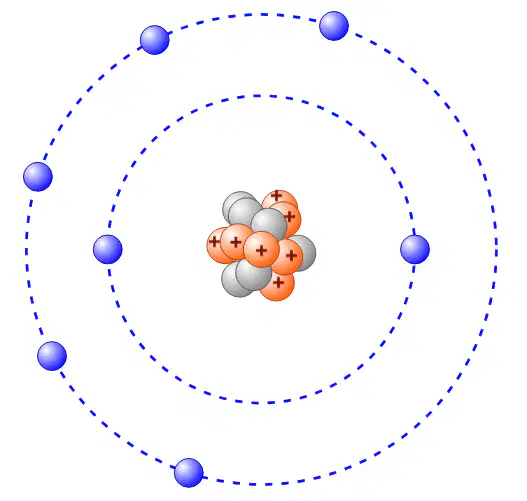
Period 2

Period 3

Period 1

Period 4
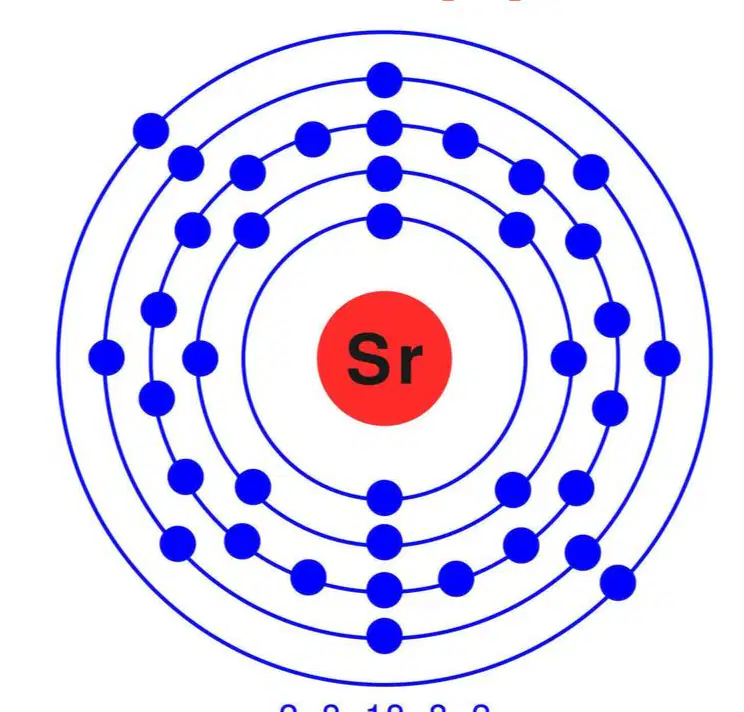
Period 5
Match the atom with the GROUP on the periodic table it is on.
Group 5A

Group 2A

Group 8A
Group 1A

Group 4A
Match the atom with its element name
Nitrogen

Magnesium
Neon
Potassium
Carbon

What element is this?
(a)

What element is this?
(a)

What element is this?
(a)

What element is this?
(a)

What row on the periodic table is this element in on the periodic table?
(a)

What element is this?
(a)

What "A" group is this element in?
(a)
What element is this?
(a)

What element is this?
(a)

What element is this?
(a)

What element is this?
(a)

What "A" group is this element in?
(a)

What period is this element in?
(a)
Which one of these is the Modern Periodic Table?
Which one of these is in numerical order by Atomic NUMBER?
Click on it.
Which one of these is in numerical order by Atomic MASS?
Click on it.
This chemical family of elements tends to form more than one ion and tends to form colored compounds.
Alkali metals
Alkaline earth metals
Halogens
Noble gases
Transition metals
This chemical family of elements are colorful diatomic elements.
Alkali metals
Alkaline earth metals
Halogens
Noble gases
Transition metals
This chemical family of elements is the most reactive nonmetal group.
Alkali metals
Alkaline earth metals
Halogens
Noble gases
Transition metals
This chemical family of elements is the most reactive metal group.
Alkali metals
Alkaline earth metals
Halogens
Noble gases
Transition metals
This chemical family of elements is very reactive and forms ions with a +2 charge.
Alkali metals
Alkaline earth metals
Halogens
Noble gases
Transition metals
This chemical family of elements is very reactive and forms ionic compounds that are always soluble in water.
Alkali metals
Alkaline earth metals
Halogens
Noble gases
Transition metals
Which element would most likely have chemical properties that are very similar to the chemical properties of magnesium, Mg?
Li
Ba
O
F
Ar
Which element would most likely have the same bonding characteristics as sodium, Na?
Li
Ba
O
F
Ar
Chlorine, Cl and Iodine, I are known disinfectants used to kill bacteria, which of the following would most likely also have the same disinfectant properties?
Li
Ba
O
Br
Ar
Which chemical family typically uses Roman numerals to indicate the charge of the ion?
Alkali metals
Alkaline earth metals
Halogens
Noble gases
Transition metals
forms compounds always soluble
alkali metals
have 2 valence electrons
alkaline earth metals
tends to form colorful compounds
transition metals
colorful corrosive elements
halogens
unreactive
noble gases
What is the name of the group/region?
- very reactive
- colorful elements
- diatomic elements
(a)
What is the name of the group/region?
- very reactive but not as reactive as its neighbor to the left
(a)
What is the name of the group/region?
2nd most reactive metal group
(a)
What is the name of the group/region?
- Extremely reactive
- form compounds always soluble in water
(a)
What is the name of the group/region?
- all monatomic
- all gases
(a)
What is the name of the group/region?
- tends to form more than one ion
(a)
What is the name of the group/region?
- tends to form colorful compounds
(a)
What is the group number for the group that forms compounds that are always soluble in water?
(It will accept IUPAC or old school.)
(Number/number-letter only)
(a)
What is one group number for the groups that tend to form colorful compounds?
(It will accept IUPAC only.)
(Number only)
(a)
What is one group number for the groups that tend to form more than one ion?
(It will accept IUPAC only.)
(Number only)
(a)
What is the group number for the group that is extremely reactive with water and oxygen, not found in nature as an element, and is considered the most reactive group?
(It will accept IUPAC or old school.)
(Number/number-letter only)
(a)
What is the group number for the group that is very reactive with water and oxygen, not found in nature as an element, and is considered the 2nd most reactive group?
(It will accept IUPAC or old school.)
(Number/number-letter only)
(a)
What is the group number for the group that contains corrosive elements?
(It will accept IUPAC or old school.)
(Number/number-letter only)
(a)
What is the group number for the group that are colorful elements?
(It will accept IUPAC or old school.)
(Number/number-letter only)
(a)
What is the group number for the group that contains diatomic elements?
(It will accept IUPAC or old school.)
(Number/number-letter only)
(a)
What is the group number for the group that contains only monatomic gases?
(It will accept IUPAC or old school.)
(Number/number-letter only)
(a)
The (a) are diatomic elements because they consist of molecules of two atoms chemically bonded together.
The halogens are (a) elements because they consist of molecules of two atoms chemically bonded together.
The halogens are diatomic elements because they consist of molecules of (a) atoms chemically bonded together.
The noble gases are monatomic elements because their particles consist of (a) atom.
The noble gases are (a) elements because their particles consist of one atom.
Label the periodic table with the different types of elements.
Select the Lanthanide Series
Select the Actinide Series
Select the Post Transition Metals
Match together the elements with similar properites.
Na
K
Ca
Mg
O
S
P
N
Cl
F
Select the Inner Transition Metals

