
 Worksheets
Understanding Polarity and Intermolecular Forces
Total questions: 45
Worksheet time: 52mins
What is the definition of polarity in chemistry?
The ability of a substance to conduct electricity.
The distribution of electrical charge over the atoms joined by the bond.
The mass of a molecule.
The number of protons in an atom.
Which of the following best describes a polar molecule?
A molecule with an even distribution of charge.
A molecule with an uneven distribution of charge.
A molecule that is symmetrical.
A molecule that is non-reactive.
Which of the following is a characteristic of nonpolar molecules?
They have a high boiling point.
They have an uneven distribution of charge.
They are usually soluble in water.
They have a symmetrical distribution of charge.
Which of the following statements is true about polar and nonpolar molecules?
Polar molecules have no net dipole moment.
Nonpolar molecules have a net dipole moment.
Polar molecules have a net dipole moment.
Nonpolar molecules are always ionic.
What is the principle of "like dissolves like" in chemistry?
Polar solvents dissolve nonpolar solutes.
Nonpolar solvents dissolve polar solutes.
Polar solvents dissolve polar solutes, and nonpolar solvents dissolve nonpolar solutes.
Solvents and solutes do not interact based on polarity.
Which of the following is an example of a polar molecule?
O2
CO2
H2O
CH4
Which of the following is an example of a nonpolar molecule?
NH3
HCl
CCl4
H2O
What type of intermolecular force is primarily present in polar molecules?
London dispersion forces
Dipole-dipole interactions
Covalent bonds
Metallic bonds
Which of the following statements is true regarding solutions and polarity?
Nonpolar solutes dissolve well in polar solvents.
Polar solutes dissolve well in nonpolar solvents.
Polar solutes dissolve well in polar solvents.
Solubility is not affected by polarity.
What is the effect of molecular symmetry on polarity?
Symmetrical molecules are always polar.
Symmetrical molecules are usually nonpolar.
Symmetry has no effect on polarity.
Symmetrical molecules are always ionic.
Which of the following molecules is likely to be nonpolar due to its symmetrical shape?
H2O
NH3
CO2
HCl
What type of bond is typically found in nonpolar molecules?
Ionic bond
Polar covalent bond
Nonpolar covalent bond
Hydrogen bond
Which of the following is a common property of polar substances?
They have low boiling points.
They are usually gases at room temperature.
They are good conductors of electricity.
They have high boiling points.
Which of the following is true about the solubility of nonpolar substances?
They are soluble in polar solvents.
They are insoluble in nonpolar solvents.
They are soluble in nonpolar solvents.
They are soluble in water.

A nonpolar covalent bond is equal sharing of electrons. A polar covelent bond is...
unequal sharing of electrons
different distribution of electrons
presence of hydrogen bonding
presence of polar atoms

CF4 is...
polar
nonpolar

Ethanol is...
polar
nonpolar


Butane is...
polar
nonpolar

Carbon dioxide considered a nonpolar molecule. Why?
the two polar bonds cancel each other out
the nonpolar bonds cancel each other out
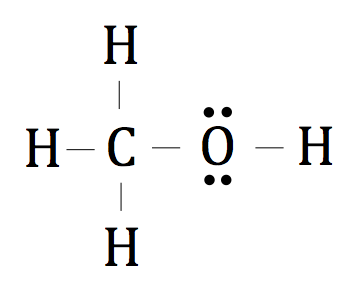
Is the following molecule polar or non-polar?
polar
non-polar

Is formaldehyde (CH2O) polar or non-polar?
Polar
Nonpolar

Is methane (CH4) polar or non-polar?
Polar
Nonpolar
Which of the following is a polar molecule?
CH4
Xe
H2O
CO2

Which of the following molecules, based on the elements present, would be most polar?
HF
H2
HCl
HBr

Water is attracted to glass, and this can be seen on a graduated cylinder because the water level is higher in the sides than in the middle. If water is attracted to glass, what can you conclude about glass?
glass must be nonpolar
glass must be polar
glass must be ionic
Water is considered polar due to:
even electron distribution
uneven electron distribution
the odd number of atoms involved
Which substance has the weakest intermolecular forces?
Substance A, boiling point of 75 °C
Substance B, boiling point of 105 °C
Substance C, boiling point of 25 °C
Substance d, boiling point of 45 °C
The weaker the intermolecular forces of a substance the _____________ the boiling point
higher
lower
In a polar covalent bond, the electrons gather around...
Mostly the atom with the greatest electronegativity
The atom with the lowest electronegativity
Each atom equally
Only the atom with the greatest electronegativity
The polarity of a bond is determined by...
The sum of the electronegativities of the two atoms
The difference in the electronegativities of the two atoms
The charges of the atoms
The number of electrons shared in the bond
What is the most electronegative element?
F
B
C
H
Opposite charges _________ each other
Repel
Attract
Fight
Like
Like charges _________ each other
Repel
Attract
Fight
Like
If something mixes/dissolves in water, it is ________
cool
nonpolar
polar
dense

Intermolecular Forces are the forces that exist
Between two or more molecules
Within a single molecule
Only in molecules containing carbon
In all molecules

