wayground logo

Free Printable Worksheets

Font size

S
M
L
XL
Worksheets

Unit 1 Test

Total questions: 75

Worksheet time: 46mins

Name
Class
Date
1.

Deja and Zhi conducted an experiment to test their hypothesis that male eggs of the American alligator only hatch at high temperature. They conducted an experiment and their results were organized in the data table above. They concluded very high temperatures killed unhatched alligators. What comment(s) would you make to Deja and Zhi regarding their conclusions?

a)
a. Their conclusion is supported by the data. Nothing should be added or deleted.
b)
b. They should reject their hypothesis. More males hatch at low temperatures, and more females hatch at high temperatures.
c)
c. They should accept their hypothesis, and also note that more eggs fail to hatch at high temperatures.
d)
d. They did not sample very many eggs, and no pattern is apparent in the data.
2.

When designing an experiment, scientists will test a relationship between a "cause" and an "effect." The "effect is known as the ____________.

a)
a. dependent variable
b)
b. constant
c)
c. independent variable
d)
d. control group
3.

Leah, LaRenda, and Gabi decide to test what factors influence water absorption by an egg. They remove the shell from 3 eggs by dissolving them in vinegar. They create three different water solutions. One is pure, 100% distilled water, a second is 50% water/50% corn syrup, and the third is 100% corn syrup. The mass of each egg is measured before they are put into a single solution for 24 hours. The mass of the eggs is then measured, and the data recorded below:

In this experiment, the independent variable they are testing is

a)
A. change in the mass of the eggs.
b)
B. the ending mass of the eggs
c)
C. the amount of time they were in the solution
d)
D. the type of solution the egg is placed in
4.

Leah, LaRenda, and Gabi decide to test what factors influence Leah, LaRenda, and Gabi decide to test what factors influence water absorption by an egg. They remove the shell from 3 eggs by dissolving them in vinegar. They create three different water solutions. One is pure, 100% distilled water, a second is 50% water/50% corn syrup, and the third is 100% corn syrup. The mass of each egg is measured before they are put into a single solution for 24 hours. The mass of the eggs is then measured, and the data recorded below:

The dependent variable in this experiment is

a)
A. the change in mass of the eggs
b)
B. the ending mass of the eggs
c)
C. the amount of time they were in the solution
d)
D. the type of solution the egg is placed in
5.

Leah, LaRenda, and Gabi decide to test what factors influence water absorption by an egg. They remove the shell from 3 eggs by dissolving them in vinegar. They create three different water solutions. One is pure, 100% distilled water, a second is 50% water/50% corn syrup, and the third is 100% corn syrup. The mass of each egg is measured before they are put into a single solution for 24 hours. The mass of the eggs is then measured, and the data recorded below:

Based on the data this group gathered, the most appropriate hypothesis would be

a)
A. “If an egg is placed in corn syrup, then it will gain mass.”
b)
B. “If an egg is placed in vinegar overnight, then its shell will dissolve.”
c)
C. “If three eggs are each placed in three different solutions, then the egg in distilled water will lose mass.”
d)
D. “If an egg is placed in a pure water solution, then the egg will gain mass.”
6.

A golf club company has four models of golf clubs. Average strokes saved per 18 holes is a positive indicator of quality (the more strokes saved, the better the golf clubs). The manufacturing time per set is a measure of how long it takes to manufacture one set of clubs. If the company wishes to produce a lot of golf clubs quickly, which set would be the best choice to meet their criteria, based on the data table?

a)
A. Legacy
b)
B. Titleist
c)
C. Premium
d)
D. Taylor Made
7.

Ada and Elijah have decided to do an experiment testing how sunlight affects plant growth. The students choose the same type of plants, soil, pots and amount of water they give the plants. They also make sure each plant is put in their designated area for the same amount of time each day. One plant is placed outside; one in front of a window that only gets light for 1/2 the day, and one in a closet. The students collect data every day for two weeks. Their results show that the plant outside grew the most and the plant in the closet had the least amount of growth. What are the constant variables that Ada and Elijah used in their experiment?

a)
A. type of environment
b)
B. type of soil
c)
C. amount of light
d)
D. Both A and B
8.
8a. Look at the picture below. Of the following choices, choose all that would fall under the category of QUALITATIVE observations.
a)
The bowl has M&Ms in it.
b)
The bowl has red, orange, yellow, green, blue, and brown M&Ms in it.
c)
The person shown loves M&Ms.
d)
The person shown is eating M&Ms for breakfast.
e)
There are four orange M&Ms on the spoon.
9.
8b. Look at the picture below. Of the following choices, choose all that would fall under the category of QUANTITATIVE observations.
a)
There are four orange M&Ms on the spoon.
b)
There is one spoon.
c)
There are three green M&Ms on the spoon.
d)
The person shown loves M&Ms.
e)
The person shown is eating M&Ms for breakfast.
10.
8c. Look at the picture below. Of the following choices, choose all that would fall under the category of Inferences.
a)
The person shown loves M&Ms because they have so many in front of them.
b)
The person shown is eating M&Ms for breakfast because it looks like cereal in a bowl.
c)
The person shown is getting ready to eat M&Ms because they are holding the spoon up to their open mouth.
d)
There are four orange M&Ms on the spoon.
e)
There is one spoon.
11.
9. Five students each used the same ruler to measure the length of the same pencil. Their measurements were: 15.33 cm, 15.34 cm, 15.33 cm, 15.33 cm, 15.34 cm. The actual length of the pencil was 15.85 cm. Choose the two best explanations for this data set.
a)
The data is precise because it is consistent and specific.
b)
The data is accurate because the measurements are correct.
c)
The data is not precise because it is inconsistent.
d)
The data is not accurate because the measurements are incorrect.
12.
10. Choose the BEST hypothesis for the relationships between IV - water temperature; DV - breathing rate of goldfish
a)
If the temperature of the water is less than 5*C, then the breathing rate of the goldfish will be higher than 120 bpm.
b)
If the temperature of the water is less, then the breathing rate of a goldfish will be more.
c)
If the amount of caffeine is 20mL, then the breathing rate of a goldfish will increase.
d)
If the goldfish breathing rate is higher, then the water temperature is lower.
e)
If the breathing rate of a goldfish is high, then the amount of caffeine will increase.
13.
11a. Identify the independent variable in this hypothesis: If a player practices longer, then he will score more points in the game.
a)
A. amount of practice
b)
B. points scored
c)
C. temperature of the gym
d)
D. player practicing
14.
11b. Identify the dependent variable in this hypothesis: If a player practices longer, then he will score more points in the game.
a)
A. practice time
b)
B. points scored
c)
C. temperature of the gym
d)
D. player practicing
15.
11c. Identify the control group in this hypothesis: If a player practices longer, then he will score more points in the game.
a)
A. practice time
b)
B. points scored
c)
C. temperature of the gym
d)
D. player not practicing at all
16.
11d. Identify a constant variable in this hypothesis: If a player practices longer, then he will score more points in the game.
a)
A. practice time
b)
B. points scored
c)
C. temperature of the gym
d)
D. player not practicing at all
17.
12a. Identify the independent variable in this hypothesis: If students eat a high-protein breakfast, then they will score higher on their biology test.
a)
A. biology test score
b)
B. amount of protein in the breakfast
c)
C. student that eats breakfast without protein
d)
D. same biology test
18.
12b. Identify the dependent variable in this hypothesis: If students eat a high-protein breakfast, then they will score higher on their biology test.
a)
A. biology test score
b)
B. amount of protein in the breakfast
c)
C. student that eats breakfast without protein
d)
D. same biology test
19.
12c. Identify the control group in this hypothesis: If students eat a high-protein breakfast, then they will score higher on their biology test.
a)
A. biology test score
b)
B. amount of protein in the breakfast
c)
C. student that eats breakfast without protein
d)
D. same biology test
20.
12d. Identify a constant variable in this hypothesis: If students eat a high-protein breakfast, then they will score higher on their biology test.
a)
A. biology test score
b)
B. amount of protein in the breakfast
c)
C. student that eats breakfast without protein
d)
D. same biology test
21.
13a. Constant variables can best be described as (Select ALL that apply)
a)
Variables that are controlled in an experiment
b)
Variables that change because the experimenter changes them
c)
Variables used for data comparison
d)
Variables that are kept the same throughout
e)
Variables that make the results of an experiment more reliable
22.
13b. Control groups make an experiment more accurate because (Select ALL that apply)
a)
The control group can be used as a standard for comparison.
b)
The control group is either the "normal" situation or without the treatment.
c)
The control group does not make the experiment more accurate.
d)
The control group only make an experiment more precise, not accurate.
23.
14. Which particles determine the identity of an element?
a)
A. Protons only
b)
B. Neutrons and Protons
c)
C. Neutrons only
d)
D. Protons and Electrons
24.
15. Which of the following terms represents the smallest part of an element that still has the properties of that element?
a)
A. Cell
b)
B. Matter
c)
C. Atom
d)
D. Molecule
25.
16. Life can exist under frozen surfaces in polar seas because
a)
A. water is less dense as a solid
b)
B. water is a terrific solvent
c)
C. water has a high surface tension
d)
D. water has a high specific heat
26.
17. An atom is electrically neutral because
a)
A. neutrons balance the protons and electrons.
b)
B. nuclear forces stabilize the charges
c)
C. the numbers of protons and electrons are equal
d)
D. the numbers of protons and neutrons are equal
27.
18. The nucleus of an atom has all of the following characteristics EXCEPT that it .
a)
A. is positively charged
b)
B. is very dense
c)
C. contains nearly all of the atom's mass
d)
D. contains nearly all of the atom's volume
28.
19. Atoms of elements in the same group of the periodic table share the same .
a)
A. number of energy levels
b)
B. number of valence electrons
c)
C. atomic numbers
d)
D. atomic masses
29.
20. The most important element necessary for life that makes up EVERY macromolecule is
a)
A. Hydrogen
b)
B. Nitrogen
c)
C. Carbon
d)
D. Oxygen
30.
21. The subatomic particles that are lost, gained, or shared in chemical bonds are called
a)
A. valence electrons
b)
B. protons
c)
C. atoms
d)
D. neutrons
31.
22. When placed in water, oil does not dissolve and stays separate. This means oil is ____________ and ___________.
a)
A. hydrophilic and polar
b)
B. hydrophilic and nonpolar
c)
C. hydrophobic and polar
d)
D. hydrophobic and nonpolar
32.
25a. The attraction between molecules of the same substance like water is attracted to water is an example of
a)
A. adhesion
b)
B. cohesion
c)
C. heat capacity
d)
D. capillary action
33.
25b. When water is attracted to substances OTHER than water, it is an example of
a)
A. adhesion
b)
B. cohesion
c)
C. heat capacity
d)
D. hydrophilic
34.
25c. The cohesion of water molecules at the surface of a body of water is known as
a)
A. surface tension
b)
B. cohesion
c)
C. heat capacity
d)
D. solubility
35.
25d. Why does ice float on top of water?
a)
A. it is not soluble
b)
B. it has a low specific heat
c)
C. it is less dense than water
d)
D. it is more dense than water
36.
27. The macromolecules that make up the majority of the cell membrane’s structure are
a)
A. lipids
b)
B. proteins
c)
C. enzymes
d)
D. carbohydrates
37.
28. The macromolecules that would most likely be involved in contracting muscles would be
a)
A. lipids
b)
B. proteins
c)
C. enzymes
d)
D. carbohydrates
38.
29. There are several levels of protein structure, the most complex of which is quaternary. Why are there so many different ways our bodies make proteins?
a)
A. We use them mainly for energy
b)
B. The cell is not allowed to make only one shape of protein.
c)
C. The form of the protein fits its function.
d)
D. Both A and C
39.
30. If available, the body will always digest which macromolecule for energy first?
a)
A. lipids
b)
B. proteins
c)
C. enzymes
d)
D. carbohdyrates
40.
31. Animals store most of their excess energy reserves as _______ because…
a)
A. glucose; it is easy to break down.
b)
B. fat; they store twice as much energy per gram.
c)
C. protein; it is a compact source of energy in their bodies.
d)
D. carbohydrates; they store twice as much energy per gram of glucose.
41.
32. We obtain all of the macromolecules from the food that we eat except for
a)
A. carbohydrates
b)
B. proteins
c)
C. lipids
d)
D. nucleic acids
42.
43. What order would each type of macromolecule be consumed by the body for energy?
a)
Carbohydrates - Lipids - Proteins - Nucleic Acids
b)
Lipids - Carbohydrates - Proteins - Nucleic Acids
c)
Carbohydrates - Lipids - Proteins
d)
Nucleic Acids - Lipids - Proteins - Carbohydrates
43.

33. Sugars, starches, and cellulose are all types of ___.

a)

Carbohydrates

b)

Lipids

c)

Proteins

d)

Nucleic Acids

44.

34. Glucose is a type of this macromolecule.

a)

Carbohydrates

b)

Lipids

c)

Proteins

d)

Nucleic Acids

45.

35. Nucleotides are the monomer of this macromolecule.

a)

Carbohydrates

b)

Lipids

c)

Proteins

d)

Nucleic Acids

46.

36. Amino acids connected by peptide bonds create ___.

a)

Carbohydrates

b)

Lipids

c)

Proteins

d)

Nucleic Acids

47.

37. DNA and RNA are types of ___.

a)

Carbohydrates

b)

Lipids

c)

Proteins

d)

Nucleic Acids

48.

38. Glycerol and fatty acids are monomers of ___.

a)

Carbohydrates

b)

Lipids

c)

Proteins

d)

Nucleic Acids

49.

39. Enzymes are one type of ___.

a)

Carbohydrates

b)

Lipids

c)

Proteins

d)

Nucleic Acids

50.

40. This macromolecule is responsible for cushioning our organs.

a)

Carbohydrates

b)

Lipids

c)

Proteins

d)

Nucleic Acids

51.

41. The structure that makes up the Cell Membrane's Phospholipid Bilayer

a)

Carbohydrates

b)

Lipids

c)

Proteins

d)

Nucleic Acids

52.

42. Built from monosaccharides.

a)

Carbohydrates

b)

Lipids

c)

Proteins

d)

Nucleic Acids

53.

Science is defined as

Select all that apply.

a)

the intellectual and practical activity encompassing the systematic study of the structure and behavior of the physical and natural world through observation and experiment.

b)

the study of the nature and behavior of natural things and the knowledge that we obtain about them

c)

knowledge about or study of the natural world based on facts learned through experiments and observation

d)

A study of the natural world based in experimentation and thus, supported by evidence.

e)

a particular way of knowing about the world

54.

Using the picture, decide if the statement is an example of an observation or inference.

The girl has blonde hair.

a)

Inference

b)

Observation

55.

Using the picture, decide if the statement is an example of an observation or inference.

The little girl took a bite out of each cookie.

a)

Inference

b)

Observation

56.

Use the data table to determine which student has the most precise data.

a)

Student A

b)

Student B

c)

Student C

d)

Cannot be determined

57.
A scientist performs an experiment to see if acids have an effect on the health of a particular type of plant. Three sets of plants were treated with acidic solutions of known pH while the control set was treated with a solution of neutral pH 7.Which is the best conclusion for this experiment?
a)
Acid has no effect on the health of this type of plant.
b)
B. High acidity is helpful to this type of plant.
c)
C. Low acidity is harmful to this type of plant.
d)
High acidity is harmful to this type of plant.
58.
The graph below shows atmospheric carbon dioxide levels since the year 1880.Which of the following conclusions can be drawn from this graph
a)
 Atmospheric carbon dioxide levels are responsible for global temperature change.
b)
 Atmospheric carbon dioxide levels have been rising at about the same rate for the past century.
c)
Atmospheric carbon dioxide levels have remained the same over the past century.
d)
 Atmospheric carbon dioxide levels have been rising at an increasingly higher rate as the past century has progressed.
59.

Having two opposite tendencies or two opposite electrical charges is an example of

a)

density

b)

cohesion

c)

polarity

d)

solubility

60.

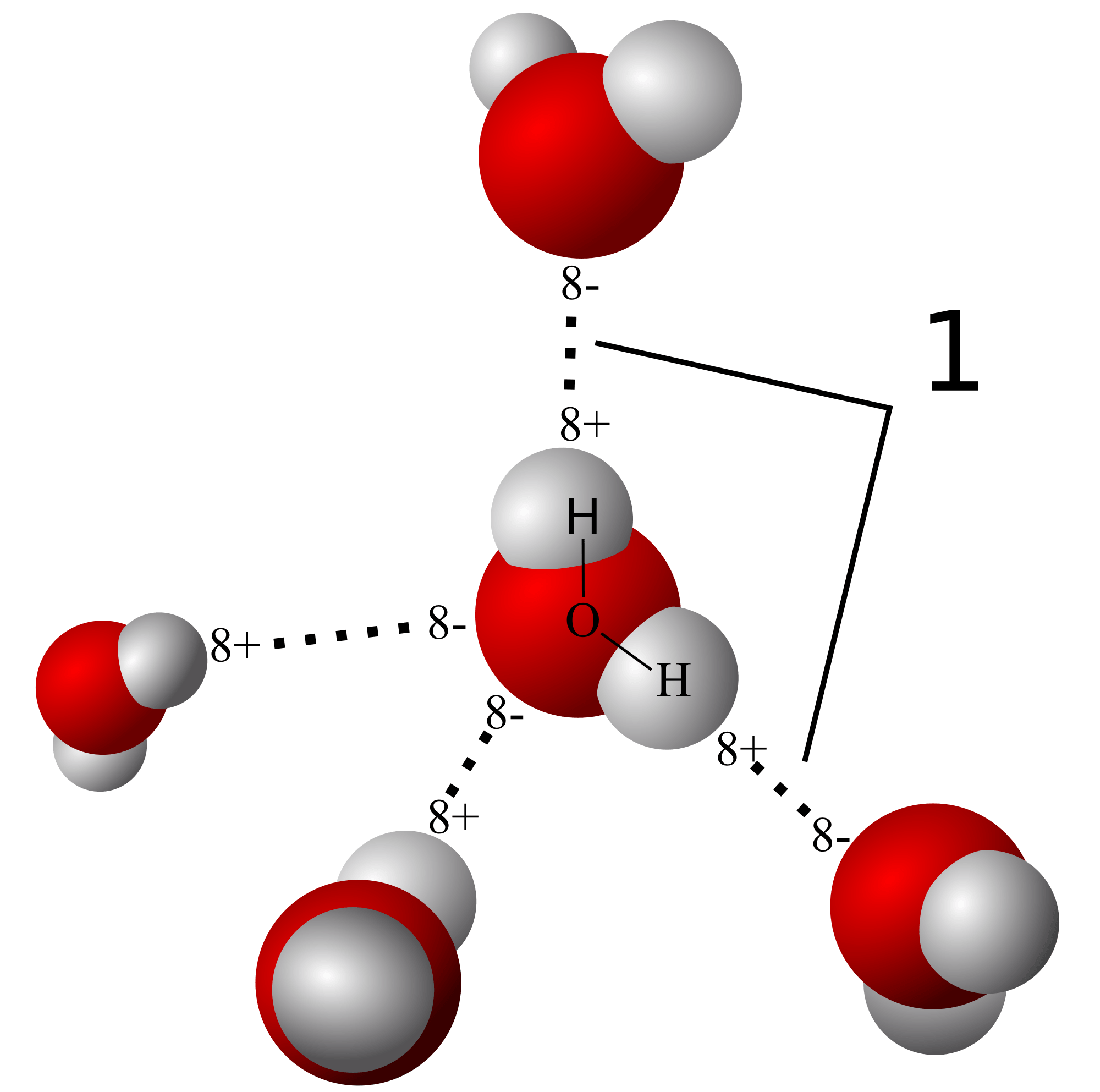
What type of bond connects water molecules to one another?

a)

hydrogen bond

b)

carbon bond

c)

oxygen bond

d)

iron bond

61.

Why could we get more drops of tap water on a penny than drops of soapy water?

a)

Soap is polar, water is not.

b)

Adding soap makes the water's surface tension stronger.

c)

Adding soap breaks the water's surface tension. Soap is partly nonpolar.

d)

We were able to get the same number of drops for both soapy water and tap water.

62.

An example of a hydrophobic substance is

a)

fat

b)

water

c)

sugar

d)

salt

63.

An example of a hydrophilic substance would be

a)

fat

b)

oil

c)

salt

d)

water

64.
Which statement explains why water molecules stick together?
a)
both sides are negative
b)
one side has a positive charge and the other side has a negative charge
c)
one side has a negative charge adn the other side has a neutral charge
d)
both sides are positive
65.

Which biological macromolecule is the main source of energy for living things?

a)

carbohydrates

b)

lipids

c)

nucleic acids

d)

proteins

66.
This is one job proteins do NOT have in the body
a)
insulation
b)
structure for tissues and organs
c)
speed up chemical reactions
d)
transport things through cell membrane
67.

What are the four macromolecules?

a)

proteins, nucleic acids, carbohydrates, and lipids

b)

monosaccharides, lipids, polysaccaharides, and proteins

c)

RNA, DNA, proteins, and carbohydrates

d)

monomer, polymer, DNA, enzymes

68.
The elements, ____________________, are found in all of the organic compounds.
a)
Carbon, Hydrogen and Oxygen
b)
Carbon, Hydrogen, Oxygen, and Nitrogen
c)
Carbon and Oxygen
d)
Carbon, Hydrogen, and Nitrogen
69.
What does POLY- mean?
a)
Two
b)
A name for a parrot
c)
Many
d)
One
70.

A scientist was given a sample and asked to determine which macromolecule group it belonged to. The chart shows their results. Which class does the molecule belong in?

a)

nucleic acids

b)

proteins

c)

salt

d)

carbohydrate

71.

All matter is made of

a)

energy

b)

atoms

c)

electrons

d)

compounds

72.

Match the three components that make up the structure of the atom to the specific characteristics of each.

Categorize the following

Located in the Nucleus and Positive

Located in the Nucleus and Neutral

Located in the Electron Cloud

Negative Charge

One AMU and Positive

One AMU and Neutral

1/2000 AMU

Protons
Neutrons
Electrons
73.

Reorder the following from smallest to largest

a)

Electron

b)

Atom

c)

Molecule

d)

Macromolecule

e)

Organelle

1)
2)
3)
4)
5)
74.

Reorder the following from smallest to largest

a)

organelle

b)

cell

c)

tissue

d)

organ

e)

organ system

1)
2)
3)
4)
5)
75.
Attractions between water molecules are called
a)
Covalent bonds
b)
Ionic bonds
c)
Polar bonds
d)
Hydrogen bonds