
NEW
Font size
 Worksheets
Thermal Energy
Total questions: 51
Worksheet time: 45mins

In the situation illustrated, how will heat energy move? Heat energy will be transferred from –
the hot plate to the water by conduction
the water to the hot plate by conduction.



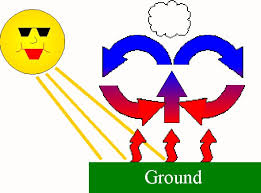


Which type of heat transfer is shown?
convection
conduction
radiation
ironing
Which best describes the process of convection?
Convection is the primary way heat travels through rays.
---
Convection is the primary way heat travels through appliances.
Convection is the primary way heat travels through liquids and gasses.
Thermal energy being transferred from a hot mug of cocoa to the table it is sitting on is an example of __________.
convection
conduction
radiation
chemistry
Which best explains how this roasting marshmallows happens?
Heat from the fire is conducted to the marshmallow.
Heat from the fire is radiated to the marshmallow.
The coolness of the marshmallow is conducted to the fire.
The coolness of the marshmallow is radiated to the fire.
Which best describes heat transfer by radiation?
A slice of bacon frying in a pan.
A pot on a stove boiling water.
Cooking a hotdog in a microwave.
A hot air balloon.

Walking on hot sand with your bare feet shows this type of heat transfer.
conduction
convection
radiation

This is the transfer of thermal energy through "space".
conduction
radiation
convection
spaceship

Which type of heat transfer is happening inside the hot air balloon?
convection
conduction
radiation
hot air balloon

Thermal Energy will ALWAYS be thermal energy.
True
False

All three types of heat transfer can be present at one time.
True
False

What would happen if you increased the temperature in a room?
Amount of thermal energy stays the same.
Amount of thermal energy decreases.
Amount of thermal energy increases.

What would happen to the atoms in a system if the temperature decreased?
The atoms would have less kinetic energy and move slower.
The atoms would have the same amount of kinetic energy and move at the same rate.
The atoms would have more kinetic energy and move faster.

In which beaker is there more kinetic energy?
A
B
C

Heat can only be transferred in one method.
true
false
The energy of moving particles is called _____.
sound energy
heat or thermal energy
light energy
mechanical energy
When particles are heated they begin to ____.
move faster
mover slower
move up
jump out of the pot
A large amount of matter needs ______ thermal energy to warm up than a small amount of matter.
less
the same amount of
more
no
The Greek prefix thermo- means _____.
thermometer
heat
sun
microwave
What tool is used to measure temperature?
a stove
a beaker
a thermometer
a glove
Why would the temperature of boiling water be higher than the temperature of ice water?
Because the particles in the boiling water are moving faster.
Because the particles in the boiling water aren't moving at all.
Because the particles in the boiling water are moving slower.
Because the particles in the boiling water are moving at the same speed.
Different substance's particles speed up at different rates.
True
False
When thermal energy is applied to an ice cube, it _____.
freezes
stays the same
tastes better
melts
What transfer heat through direct contact
Convection
Radiation
Conduction
Heat Equilibrium
Hot things have ____________ thermal energy than cold things
more
less
same
As temperature increases, molecules _____________
move slower
move the same
move faster
Cold things often have a _________ kinetic energy because_______
lower; particles are moving around less
lower; particles are moving around more
higher; particles are moving around the same
thermometer

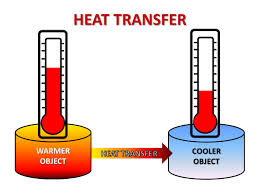
In heat transfer, heat always flows from the _?_ substance to the _?_ substance.
hotter to colder
colder to hotter
colder to colder
Which of the following is an example of heat transfer through radiation?
Sunlight warming the Earth
Boiling water circulating in a pot
Touching a hot stove
Ice melting in your hand
What happens to the particles of a substance as it is heated?
They move slower and closer together
They move faster and spread apart
They stop moving completely
They remain at the same speed
What happens to the molecules in a substance when it is heated?
The molecules move slower and have less energy
The molecules move faster and have more energy
The molecules stop moving
The molecules move at the same speed

