
 Worksheets
Module 5 Study Guide
Total questions: 32
Worksheet time: 32mins
Twisting your body to do your work is an example of
(a)
A patient/resident is being transferred back to bed after being up in the wheelchair for a long period of time. As the Nurse Assistant you can best (a) your back by: Keeping a wide base of support and keeping the patient/resident as (b) as possible to you as you perform the transfer
Which of the following is NOT a basic rule of body mechanics? Use only your (a) hand when (b)
Keep residents body _ to your body to decrease the chance of injury when transferring them.
(a)
When assisting a patient/resident with left sided weakness to transfer from the bed to a chair, the chair should be located: on which side of the bed
(a)
The purpose of a gait belt is to Assist in transferring a dependent patient/resident and protect both the patient/resident and Nurse Assistant from
(a)
_ is allowing then resident to sit on side of bed a few minutes before transfers or ambulation.
(a)
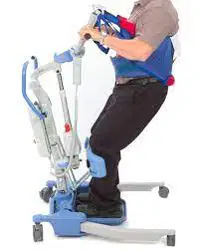
What is this device called?
(a)
After positioning resident in wheelchair _ brakes.
(a)
To sit up with the feet over the side of the bed for a moment to regain balance.
(a)
You need to transfer Mr. H with a transfer belt. The belt is applied:
(a)
Mr. H has weakness on his right side. Where should you position the wheelchair? Next to the (a) on his (b) side
A method of moving a person as a unit without disturbing their body alignment.
(a)
When ambulating, a patient/resident should be wearing shoes
(a)
The Nurse Assistant is ambulating a patient/resident with a gait belt. If the patient/resident begins to (a) , the Nurse Assistant should: Gently lower the patient/resident to the (b)
The Nurse Assistant has been asked to assist a patient/resident with ambulation. During the procedure, the Nurse Assistant should walk slightly _ and to one side of patient/resident providing support with the gait belt
(a)
When the Nurse Assistant is moving a patient/resident toward the head of the bed, they should remove The _ from under the patient’s/resident’s head and place it against the headboard
(a)
When positioning a patient/resident in a side lying position, the Nurse Assistant must first Move the patient/resident to the side of the bed where the Nurse Assistant is (a)
When a patient/resident is in good body alignment it means that the patient’s/resident’s:
(a)
Before performing any task at the bedside, the Nurse Assistant should: (a) the bed to a (b) position to help
Lying on the abdomen with the head turned to one side
(a)
Miss Polly Walker has the head of her bed elevated 60 degrees. This position is referred to as:
(a)
The patient/resident is positioned in bed with the head of the bed in a partial sitting position at a 45 degree angle. This position is referred to as the _ position
(a)
When placing a patient/resident in the side lying/lateral position, you promote (a) by placing pillows for support under the: Head, upper arm, upper leg/knees and behind the back
Lying on the back; comfortable for most residents
(a)
Lying on the stomach; uncomfortable for many people; used if required for medical condition or requested by resident
(a)
Head of bed raised 35 to 40 degrees
(a)
First move the patient/resident to the side of the bed where the Nurse Assistant is standing to allow for room to turn the patient without them being against the (a) . Side-lying/Lateral
When transferring a patient/resident with a mechanical lift (Hoyer lift), the patient’s/resident’s arms should be on his/her
(a)
Once an object has been lifted, the Nurse Assistant should keep the object as _ to the body as possible.
(a)
The best reason to use proper body mechanics is to _ _ to the patient as well as the Nurse Assistant
(a)
Your patient/resident is paralyzed from the waist down (paraplegia) and has maintained good upper body strength. The patient/resident wants to be able to move himself in bed, somewhat, without assistance. Which piece of equipment might be used for this purpose?
(a)

