wayground logo

Free Printable Worksheets

Font size

S
M
L
XL
Worksheets

Test Review Unit 1- Lesson 2: Changes in Energy

Total questions: 35

Worksheet time: 9hrs 31mins
Name
Class
Date
1.
A scientist performed an experiment during which she measured the energy transferred in each step of her experiment. The total quantity of energy transferred in all of the steps was less than the amount she measured at the beginning. What is the most likely explanation for this result?
a)
Energy was destroyed during certain steps in the experiment.
b)
The steps in the experiment required more energy than was available.
c)
The experiments created energy that was then used up at a faster rate.
d)
Some energy was transformed into unwanted heat or sound that was not detected.
2.
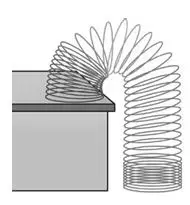
The picture shows a spring toy moving down steps. What happens to the energy of the toy?
a)
The potential energy of the toy is greatest while the toy is falling.
b)
The kinetic energy of the toy is greatest when the toy is finished falling.
c)
Some kinetic energy of the toy changes to potential energy as the toy falls down the steps.
d)
Some of the potential energy of the toy changes to kinetic energy as the toy falls down the steps.
3.
Some people use solar water heaters in their homes. A tank is attached on the roof, where the sun warms the water in the tank. Pipes transfer water from the tank to the taps in the home. Which statement describes the energy transfer that occurs after the water in the tank is already heated and is used?
a)
Solar energy from the sun becomes thermal energy in the tank.
b)
Thermal energy becomes kinetic mechanical energy as the water moves through the pipes.
c)
Kinetic energy from the sun becomes potential energy when the tap is opened and warms as it moves.
d)
Gravitational potential energy becomes kinetic energy when the tap is opened and water moves through the pipes.
4.
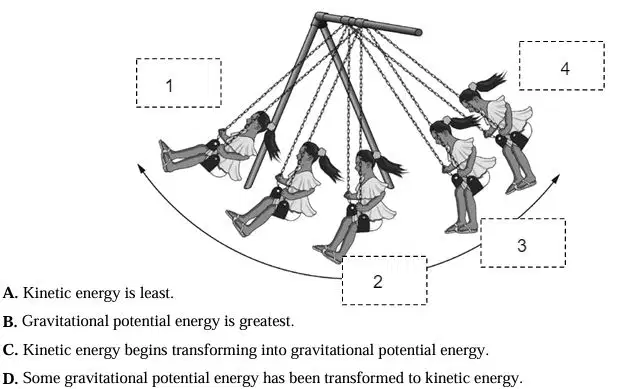
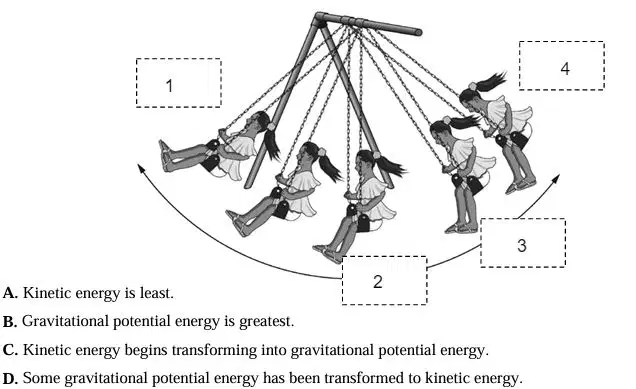
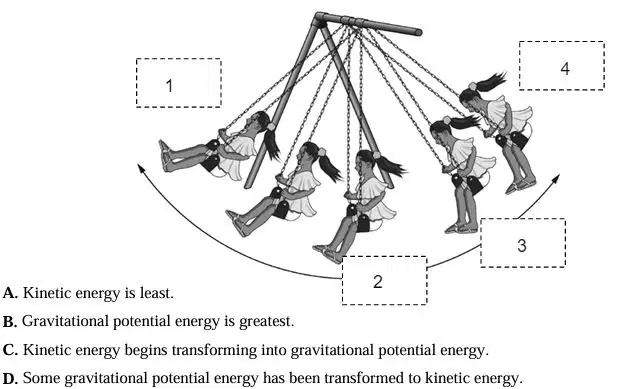
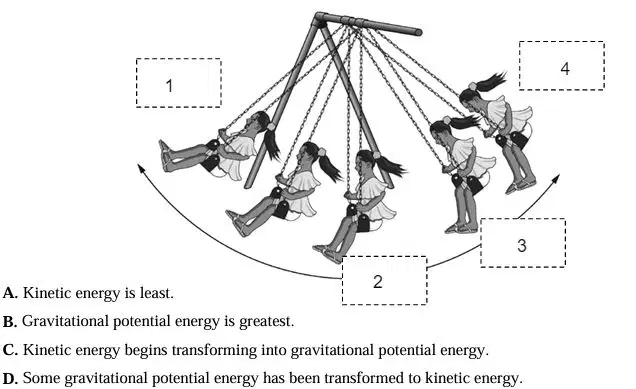
Rebecca is swinging on a playground swing. What letter describes what is occurring at point #1 of Rebecca’s swing?
a)
A
b)
B
c)
C
d)
D
5.
Rebecca is swinging on a playground swing. What letter describes what is occurring at point #2 of Rebecca’s swing?
a)
A
b)
B
c)
C
d)
D
6.
Rebecca is swinging on a playground swing. What letter describes what is occurring at point #3 of Rebecca’s swing?
a)
A
b)
B
c)
C
d)
D
7.
Rebecca is swinging on a playground swing. What letter describes what is occurring at point #4 of Rebecca’s swing?
a)
A
b)
B
c)
C
d)
D
8.

Select TWO correct answers! Please note there could be multiple correct answers. Just select 2!
a)
A
b)
B
c)
C
d)
D
9.
A __________ object has greater kinetic energy than a lighter object moving at the same speed.
a)
smaller
b)
lighter
c)
bigger
d)
heavier
10.
The passing of energy from one object to another is known as
a)
energy
b)
Newton's cradle
c)
energy transfer
d)
force
11.
True or False: Because energy cannot be created or destroyed, you can model energy flowing through a system as inputs and outputs.
a)
True
b)
False
12.
A _________is a group of interacting parts that move or work together. Energy can be put into a system from its environment, resulting in changes in the system.
a)
machine
b)
Netwon's cradle
c)
system
d)
energy transfer
13.
During our lab when we tested the balls rolling down the ramp and pushing the cup. This was an example of
a)
sound energy
b)
energy transfer
c)
systems
d)
inputs
14.
A roller coaster at the top of the hill has most of its energy in the form of gravitational potential energy. As the car rolls down the hill, which energy type is the gravitational potential energy transferred to?
a)
kinetic energy
b)
sound energy
c)
light energy
d)
electrical energy
15.
When you turn on a light, you're converting electrical energy into _____ and _____ energy.
a)
light and heat
b)
light and electrical
c)
light and potential
16.
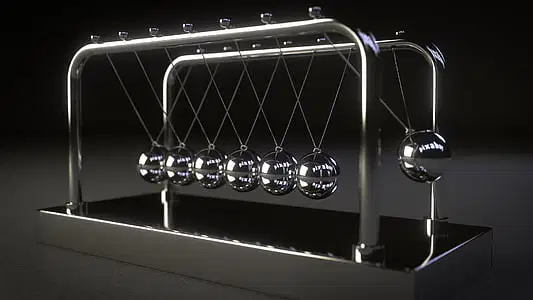
Newton's Cradle proves that
a)
Energy is never lost.
b)
Energy can be transferred.
c)
Energy can be gained.
17.
Energy...
a)
is the ability to do work or cause a change
b)
is all the movement in the universe
c)
cannot be created or destroyed
d)
all of the above
18.
Energy can be classified into these two categories.
a)
Potential and kinetic
b)
Gravitational and elastic
c)
Light and sound
d)
Kinetic and movement
19.

The Law of Conservation of Energy states...

a)

energy cannot be created or destroyed, but it can change forms

b)

energy can be created, destroyed, and can change forms

c)

energy cannot be created, destroyed, or change forms

d)

energy cannot be created, but it can be destroyed and change forms

20.
What kind of energy is represented in this picture?
a)
Thermal
b)
Potential
c)
Nuclear
d)
Mechanical
21.
When a pendulum swings, at which point is potential energy at its greatest?
a)
1
b)
2
c)
3
d)
4
22.
The faster an object moves, the ________ kinetic energy it has. 
a)
more
b)
less
c)
none of the above
d)
all of the above 
23.
Energy transformations occur when...
a)
energy is created through conduction
b)
energy changes from one form to another
c)
two forces slide together that are touching
d)
a chemical reaction takes place
24.

What type of energy transformation occurs in a stove burner?

a)

thermal (heat) to chemical

b)

electric to thermal (heat)

c)

thermal (heat) to sound

d)

sound to electric/electricity

25.
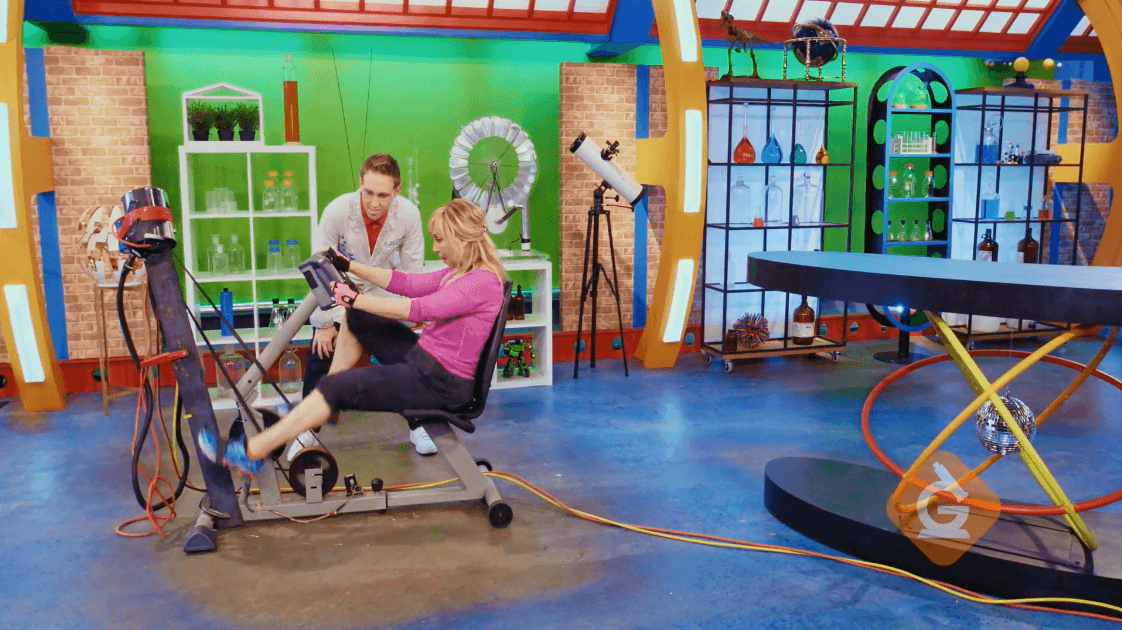
What form of energy is being converted to electrical energy with this bike?
a)
light
b)
motion
c)
sound
d)
heat
26.
In science, when one object runs into another we call it a _____________.
a)
crash
b)
hit
c)
strike
d)
collision
27.
As an object moves faster, it has more of what to transfer?
a)
weight
b)
density
c)
energy
d)
matter
28.

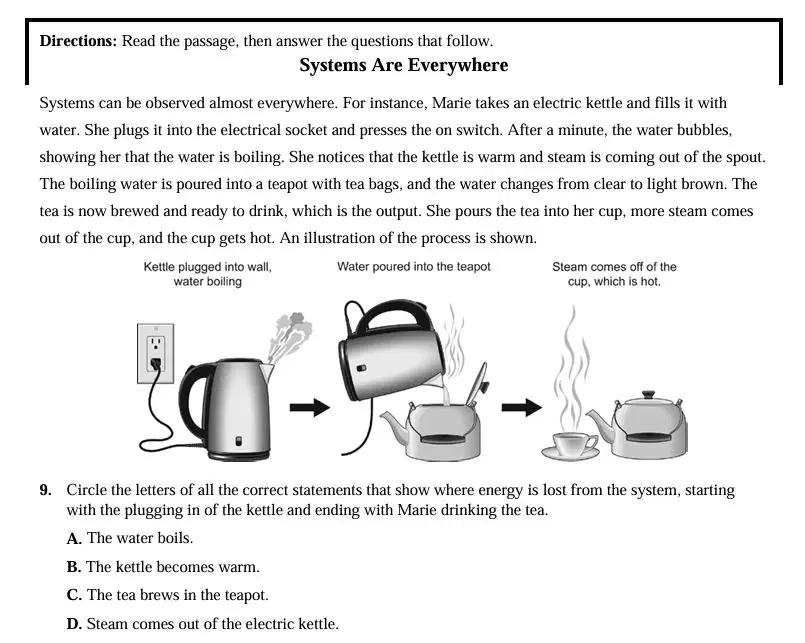
Identify the energy transfer

a)

chemical to radiant

b)

thermal to electrical

c)

chemical to thermal

d)

electrical to thermal

29.

stored energy based on its relative position within a system or condition

a)

potential energy

b)

kinetic energy

c)

energy

d)

system

30.
Four identical cans are arranged on the shelves of the bookcase shown.  Which can has the greatest potential energy?
a)
1
b)
2
c)
3
d)
4
31.
A girl throws a ball into the air.  At which point does the ball have the greatest potential energy?
a)
1
b)
2
c)
3
d)
4
32.

The person in the picture is listening to sound made by someone talking. This is evidence that energy can be

a)

Transferred from place to place

b)

Transferred through contact between objects

c)

Transformed from sound to work

d)

First created and then destroyed.

33.

Energy transfer is

a)

when an object is in motion.

b)

change energy from sound to heat sound.

c)

the movement of energy from object to another.

34.

How does the Newton's Cradle demonstrate the idea of "Energy cannot be created or destroyed"

a)

It shows how collisions between molecules cause change in direction or speed.

b)

It shows that molecules can be removed from substances

c)

It shows how molecules can be added to substances

d)

It shows that energy can be fun

35.

Match the following

a)
to crash into something else
1.
Collision
b)

to move from one place to another

2.

Transfer

c)

energy because something is moving

3.

Kinetic Energy

d)

the Law of Conservation of Energy

4.

Energy can't be created or destroyed