
 Worksheets
Classical Era Test Review
Total questions: 41
Worksheet time: 21mins
Which political system has its origins in ancient Greece under Pericles?
Autocracy
Democracy
Monarchy
Oligarchy
How did the rugged, mountainous geography of the Balkan Peninsula cause the Greek people to develop differently from their neighbors?
The Greeks established the first absolute monarchies in the world
The Greeks had a massive trade network that connected them to the rest of the world
The Greeks settled in highly independent city-states that frequently clashed with each other
The Greeks practiced the first monotheistic religion in world history
In what way were the Code of Hammurabi and the Twelve Tables of Rome similar?
They were both primarily oral traditions that defined the acceptable behaviors in their respective societies.
They were both written legal codes designed to keep order in society and ensured no one was above the law.
Neither of them contained any punishments for violating the laws they set.
They were both based around the concept of equal punishment for crimes regardless of social standing.
The Hellenistic culture we associate with Alexander the Great was developed as a result of:
Ethnocentrism
Cultural Diffusion
Direct Democracy
Embargos
Which influential Greek city-states had the most frequent conflicts with each other that eventually resulted in the Peloponnesian War?
Sparta
Corinth
Athens
Olympia
Mycenae
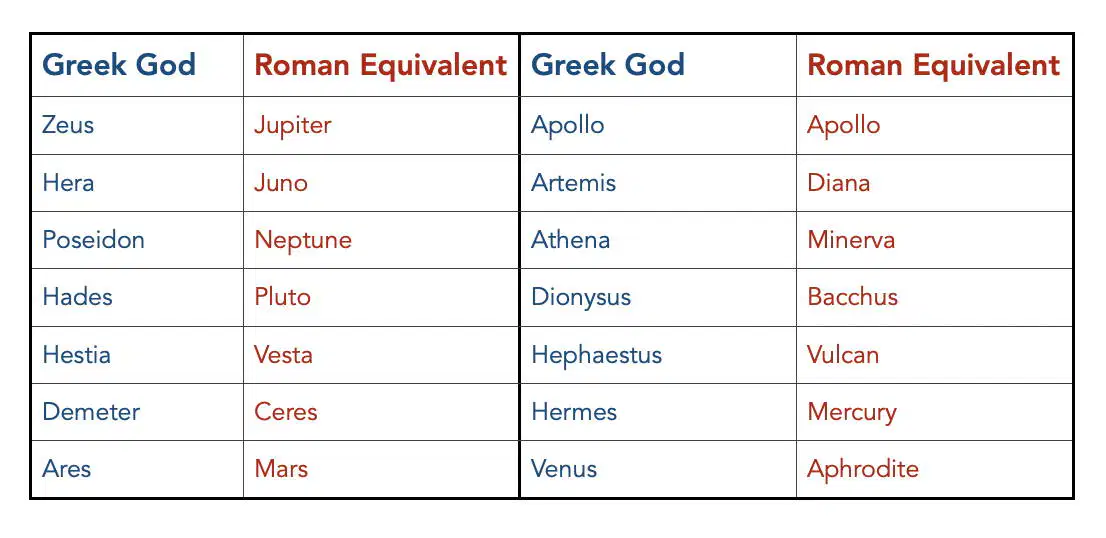
Roman Gods often shared common characteristics, appearances, and represented similar concepts as the Gods of other polytheistic religions, especially the Greek Gods. What is a logical explanation for these similarities between multiple religions?
The similarities are due to the influence of monotheistic religions that preceded polytheistic ones
The gods of different religions developed similar characteristics because the civilizations were geographically isolated from each other
The gods reflect common human experiences and natural phenomena, leading to similar characteristics across different cultures
Frequent trade, conquest, and diplomacy resulted in cultural diffusion between civilizations in the classical era
Which of the following places did NOT have one ruler, but rather was a set of city-states that ruled over themselves and frequently had rivalries?
France
Britannia
China
Greece
What aspects of modern day society did the classical Greeks and Romans have the most lasting influence on?
Laws and Governments
Poetry and Drama
Weapons and Military Tactics
Slavery and Trade Routes

The characteristics in the list above are all indicative of:
A strong and dominant empire
A military dictatorship
An empire that is about to fall
A republic in the classical era
What Roman innovation most contributed to the expansion of Christianity throughout the Western world?
A navy which covered most of the Mediterranean
A disciplined military with many devout Christians
Concrete used to build churches
An extensive road system which covered most of the empire
Why did Roman roads play an important role in the early spread of Christianity across the Empire?
They allowed missionaries to travel quickly and safely across the empire.
They provided a way for Roman soldiers to enforce Christian beliefs.
They were used to restrict the movement of Christian communities.
They connected only the eastern provinces where Christianity began.
Why did Roman leaders initially view Christianity as a threat to the stability of the empire?
Christianity promoted loyalty to the emperor above all else instead of to the senate.
Christians refused to follow Roman religious practices and submit to Roman authority.
Christianity encouraged citizens to join the Roman army in order to wipe out neighboring communities.
Christianity supported the worship of multiple gods that were opposed to traditional Roman gods.
Which classical civilization is most closely associated with the Twelve Tables, an extensive road network, the invention of concrete, and the spread of Christianity?
Babylonia
Greece
Phoenicia
Rome
“In a republic this rule ought to be observed: that the majority should not have the predominant power.”
- Marcus Tullius Cicero
Cicero was a prominent statesman and leader during the Roman Republic who often warned about the dangers of mob rule and giving too much power to the majority. Based on the quote above from Cicero, what was a defining characteristic of the Roman Republic?
The Republic gave all power to the people through direct voting on the decisions of the Republic.
The Republic balanced power by allowing citizens from different social classes to elect representatives.
The Republic allowed the Senate to rule without input from the citizens.
The Republic was designed to give the majority full control over decisions.
Which of these are contributing factors to the decline of the Roman Empire? (Select all that apply)
Excessive military spending to defend the Empire
Constant attacks from Germanic tribes in the northern provinces of the Empire
Political decisions from the Emperor that caused internal conflicts
Rapid inflation of the price of essential goods
The ideals of democracy in which citizens participate in their own government, and of a republic where the leaders in the government are elected by the citizens were first introduced by which classical civilizations?
Mesopotamia and Han China
The Judeo-Christian Legal Traditions
Greece and Rome
Great Britain and the United States
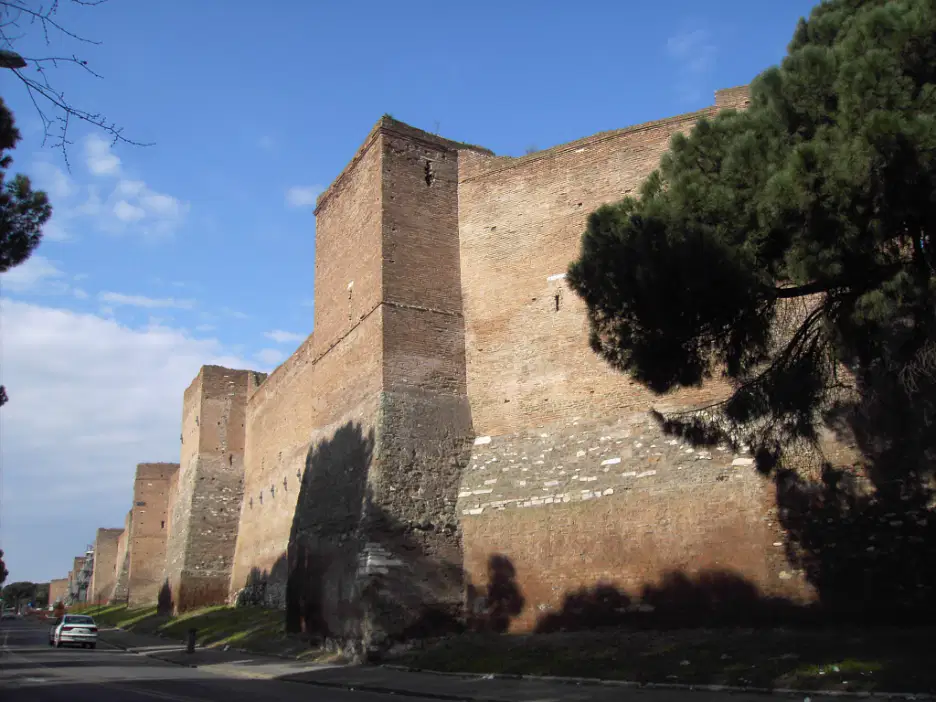
The high walls in the photo above are typical of classical cities. What would the primary purpose of these high walls be?
To keep out invading tribes
To prevent subjects from escaping
To stop the smuggling of goods
To allow the peaceful enjoyment of nature
Who were Socrates, Plato, and Aristotle?
Consuls of the Roman Republic that orchestrated the assassination of Caesar
Pharaohs of Ancient Egypt who built the pyramids of Giza
Religious leaders of the ancient Hebrews that later became apostles of Jesus
Philosophers of classical Greece that influenced education in the classic world
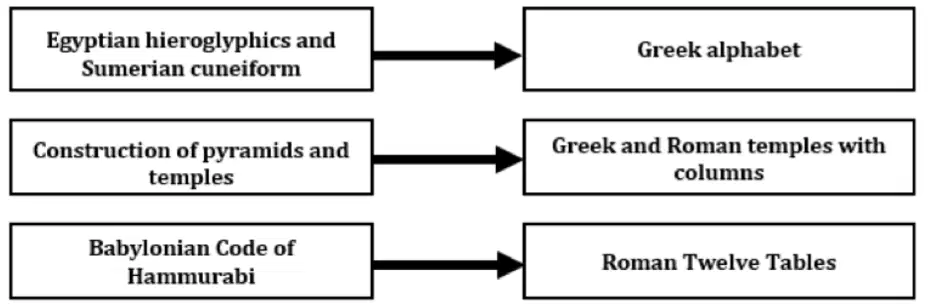
Based on the diagram above, which of the following conclusions about the relationship between ancient and classical civilizations is the most accurate?
The Greeks & Romans enforced a form of universal education
Ancient civilizations were not affected by their geography like classical civilizations were
The Greeks & Romans were influenced by the earlier river valley civilizations
All early civilizations were governed by a fixed set of written laws

What conclusion can be drawn from the comparison between the Roman Republic and the Roman Empire above?
Roman women could move freely from one social class to another
Although the rights of women grew in the Roman Empire, they still lacked many basic rights
The rights of Roman women declined under the Roman Empire
Women and men enjoyed equal rights by the time Rome became an Empire

“Rome will exist as long as the Colosseum does; When the Colosseum falls, so will Rome; When Rome falls, so will the world.”
-Venerable Saint Bede
According to the quote from Saint Bede, the Colosseum in Rome is representative of what aspect of life during the Roman Empire?
Slender columns between the arches symbolize the fragility of life
Spaces for stained glass windows permit artists to illustrate stories from the Bible in order to teach the public about Christianity
A smaller size gives the building a sense of intimacy for visitors
A large and massive structure represents the enduring power of the Empire
Which of the following statements would most likely represent the view of an Athenian citizen visiting Sparta?
“The government and society in Sparta is too strict. Their people don’t have a voice.”
“I feel like I never left home. Everything here is the exact same as it is in Athens.”
“This society allows much more freedom of expression than I’ve ever had living in Athens.”
“I have never seen a society that valued its citizens as much as they do in Sparta.”

All of these contributions to modern civilization originated in which classical civilization?
Egypt
China
Greece
Rome

This collection of coins from the Roman Empire would be an example of what kind of source? Use the image above to answer.
Primary source
Secondary source
Biased source
Monetary source

These coins issued by the Roman Empire were first issued in 211 B.C.E. and were made mostly of silver. By the end of the 3rd Century C.E., the silver content of the coins had fallen to only 2% of the total weight. What would this information and a study of these coins reveal about the later stages of the Roman Empire?
The finances of the Empire were in decline causing inflation
The value of the coins of the Empire remained stable throughout its long history
Roman coins were made smaller to make transportation easier
Christians refused to use coins that had the likeness of the Emperor
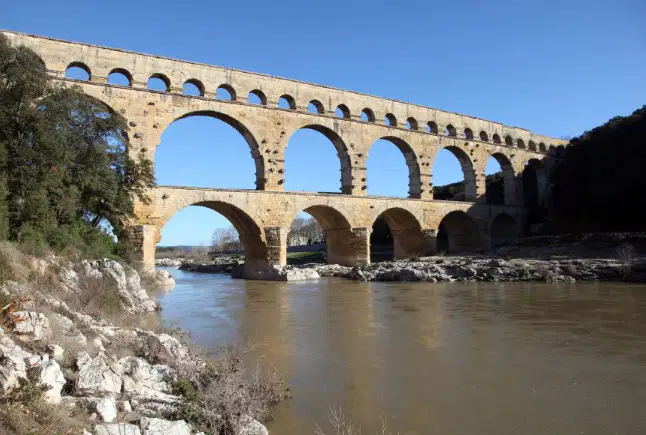
Aqueducts are one of the crowning achievements of the Roman Empire. Why did the Roman Empire spend so much effort and resources to build aqueducts?
Aqueducts carried fresh water to far-away cities to improve sanitation and allow settlement away from rivers
Aqueducts were used to showcase the Empire’s engineering prowess and impress other civilizations
Aqueducts created a network for transporting goods and soldiers across the Empire
Aqueducts prevented flooding by diverting excess rainwater away from populated areas
Why would the Roman Senate be fearful enough of Julius Caesar to assassinate him on the Senate floor? (Select all that apply)
Caesar was immensely popular with the Roman people
Caesar had amassed unprecedented power which created an imbalance
Caesar was draining the Roman treasury to pay for soldiers
Caesar had declared himself Dictator Perpetuo (Dictator for life)
Which of the following is NOT TRUE about the geography in Greece?
They became excellent fishermen, sailors and traders
Trade was very important
There was lots of farmland to grow crops.
The mountains made it difficult to communicate and travel
How did the geography of Greece impact its development of as civilization?
Independent city-states developed with different forms of government.
The city-states were ruled as an empire under one ruler.
The city-states formed a national democracy and voted for president of Greece.
The rough, rocky terrain did not effect the developement of civilization in Greece.

Based on this image, Hellenism was the result of ___
military strength
combining cultural ideas (cultural diffusion)
isolation of Egypt, India, Persia, and Greece
urbanization
Which Roman Emperor divided the Empire into two halves as a way to try to save the Empire?
Constantine
Theodosius
Augustus
Diocletian
Which Roman Emperor ended the persecution of Christians and eventually converted to Christianity on his deathbed?
Constantine
Theodosius
Augustus
Diocletian
The Pax Romana refers to a period of:
Civil war and unrest
Economic decline
Peace and stability
Religious persecution
Which of the following was NOT a reason for the fall of the Western Roman Empire?
Barbarian invasions
Economic troubles and overreliance on slave labor
The rise of the Eastern Roman Empire
The spread of Christianity
What was a significant impact of the Roman road system on the empire?
It facilitated the spread of Christianity
It led to the decline of Roman military power
It isolated the Roman provinces from each other
It caused economic instability
Which of the following best describes the political structure of ancient Athens?
A monarchy with a single ruler
A direct democracy where citizens voted on laws
An oligarchy controlled by a few wealthy families
A theocracy governed by religious leaders
What was the primary reason for the decline of the Roman Empire?
Overexpansion and military overspending
Invention of new technologies
Discovery of new trade routes
Establishment of new religions
Which classical civilization is credited with the development of the concept of democracy?
Rome
China
Greece
Egypt
What was the primary purpose of the Roman Colosseum during the Empire?
To serve as a religious temple
To host public spectacles and gladiatorial contests
To function as a marketplace
To act as a government meeting place
During the decline of Rome, how did the Emperors distract the people and keep them happy to prevent rebellion? (Two Answers)
Gave the people free grain to eat
By reducing taxes and increasing wages
Provided entertainment in the form of gladiator
By implementing democratic reforms and allowing public elections
How does democracy invented in Athens compare with modern democracies today?
Both systems guarantee equal justice under the law and allow citizens to participate in government regardless of social class.
Both systems limit political participation to citizens who own property and meet strict wealth requirements.
Both systems exclude individuals from leadership roles based on their family background and social status.
Both systems prevent citizens from influencing government decisions through voting and public service.

