
 Worksheets
Chemistry 1st Quarter Review Quizizz
Total questions: 60
Worksheet time: 1hrs 27mins
The SI base unit of temperature is
(a)
9009.00
There are (a) kilograms of calcium in 173 pounds of calcium. (1 pound = 453.59 grams; 1 kg = 1000 g). Round to two sig figs.
Convert this number to standard notation:
Type with no spaces
1.4 x 10⁻²
(a)
The correct pair of physical quantity and SI unit is (a) .
What experiment did Ernest Rutherford use to prove the presence of protons in the atom?
Cathode Ray Tube Experiment
Gold Foil Experiment
Oil Drop Experiment
Plum Pudding Experiment
Where can you find both neutrons and protons in the atomic structure?
Outer shell
Electron cloud
Nucleus
Proton cloud
Which subatomic particle is positive in charge?
Electron
Neutron
Proton
Positron
How many electrons are required to accomplish the “octet rule”?
2
4
6
8
How do you get the number of neutrons?
Atomic number plus Atomic mass
Atomic mass minus Atomic number
Atomic number minus Atomic mass
Atomic mass plus Atomic number
Total number of Neutrons for Calcium?
18
19
20
21
What is the chemical symbol Na?
Neon
Sodium
Nickel
Nitrogen
Used to hold stuff.
Often placed on a hot plate to heat stuff.
Should not be used to measure volume.
graduated cylinder
beaker
pipette
Used to hold liquids.
Should not be used to measure volume.
Can be used to contain small reactions.
Can be used to hold stuff being heated over a flame.
test tube
test tube rack
beaker
What is the atomic number?
the number of protons in the nucleus
the number of protons and neutrons in the nucleus
the number of neutrons in the nucleus
the number of protons in the energy levels
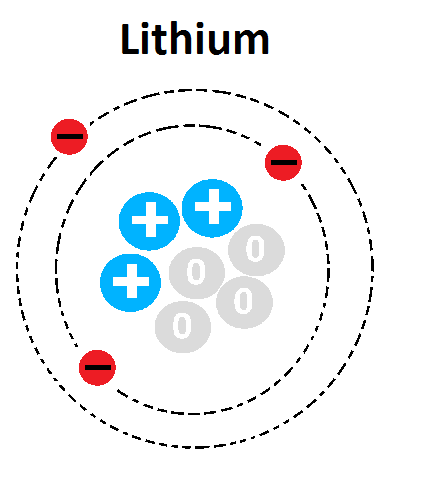
What is the atomic number of this atom?
1
3
4
7
An atom has 10 protons, 15 neutrons and 10 electrons what is its mass number.
20
10
35
25
Which of the following determines the identity of an element?
number of protons
atomic mass
number of neutrons
number of shells
Different isotopes of an element contain different numbers of ___.
protons
neutrons
electrons
elements
What is the difference between Neon-20 and Neon-22?
They have different numbers of electrons.
They have different numbers of neutrons.
Only 1 is radioactive.
No difference.
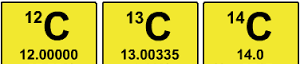
What is the average mass of this element?
The atomic mass of an element is the ___.
average of the mass number and the atomic number for the element
weighted average of the masses of the isotopes of the element
total mass of the isotopes of the element
total number of subatomic particles in the nucleus


Which ion is correctly written?
Al+3
Al-5
Cl+2
S+2
Noble gas elements (Group 18)
never form ions
are highly reactive
form +8 charged ions
form -8 charged ions
The halogens (Group 17)
have 7 valence electrons.
form -1 ions
are the most reactive family of nonmetal elements.
All of these are true.
Which of the following are properties of metals?
Shiny
Dull
Malleable
Ductile
Brittle
Which of the following are properties of nonmetals?
Good conductors of heat
Dull
Malleable
Poor conductors of electricity
Brittle

Which of the following elements has the LARGEST atomic radius?
K
Na
Al
N
What is a cation's charge?
positive
negative
neutral
depends on the element


When atom gains an electron, the size will
increase
decrease
have no change
smaller
Metals and nonmetals form (a) bonds
Nonmetals combine to form molecular compounds with (a) bonds
What is the name of the following compound?
MgBr2
magnesium bromide
magnesium bromine
magnesium dibromide
bromine magnesium
What is the correct name for the following compound?
Ca(NO2)2
Calcium nitroxide
calcium nitrite
calcium nitrate
calcium nitro dioxided
What is the formula for tetraphosphorous decasulfide?
PS10
P10S4
P4S10
P6S5
What is the correct formula for Lithium dichromate?
LiCr2O7
LiCrO4
Li2Cr2O7
Li2CrO4
Which is the correct formula for Aluminum perchlorate?
Al(ClO)3
Al(ClO2)3
Al(ClO3)3
Al(ClO4)3
What is the name of N2O?
nitrogen oxide
dinitrogen monoxide
nitrogen monoxide
dinitrogen oxide
If an ionic compound contains a transition metal, Roman numerals are used to determine the _____.
version of the isotope
version of the ion
order of appearance
charge on the ion
What is the correct name for Fe(OH)3?
(III) iron hydroxide
Iron hydroxide (III)
Iron (III) hydroxate
Iron (III) hydroxide
The correct coefficients to correctly balance the following equation
____ C7H16 + ____ O2 --> ____ CO2 + ____ H2O
from left to right would be:
2, 22, 14, 16
1, 5, 3, 4
1, 15/2, 7, 8
1, 11, 7, 8
Which of the following reactions reactions would be classified as single replacement?
____ P4 + ____ O2 --> ____ P2O3
____ Al + ____ HCl --> ____ H2 + ____ AlCl3
____ SO2 + ____ Li2Se --> ____ SSe2 + ____ Li2O
____ K + ____ Cl2 --> ____ KCl
What coefficient would go in from of hydrogen cyanide (HCN) in order for this chemical equation to be correctly balanced?
__ HCN + ___ CuSO4 --> ___ H2SO4 + ___ Cu(CN)2
4
3
2
1
What is happening in this reaction?
H2CO3(aq) --> H2O(l) + CO2(g)
Carbonic acid, H2CO3 is being combusted.
Carbonic acid, H2CO3 is being rearranged.
Water and carbon dioxide are products of decomposition.
Carbonic acid, H2CO3 is single replacement.
Which statements are true for the following equation?
3Ba(OH)2 + 2AlCl3 → 2Al(OH)3 + 3BaCl2
I. The equation shows a synthesis reaction.
II. The equation is unbalanced as written.
III. The equation shows a double replacement reaction.
I only
I and II only
III only
II and III only
I, II and III

The blue numbers in the image represent
subscripts
coeffiecients
roman numerals
none of the answer options are correct
When balancing a chemical equation, you can only change _________, you can never change _______!
coefficients, subscripts
subscripts, coefficients
formulas, subscripts
coefficients, formula units

