
 Worksheets
GeoWizard
Total questions: 60
Worksheet time: 31mins
Which of these processes are driven by energy from Earth’s interior? Select three.
Volcanic erutions
Weathering
Earthquakes
Mountain Range Formation
Erosion
How does energy drive plate tectonics?
Energy from Earth’s interior heats liquid magma, causing convection currents that move plates in Earth’s crust
Energy from the sun heats water on Earth’s surface, causing ocean currents that move plates in Earth’s crust
Energy from the sun heats liquid magma, causing convection currents that move plates in Earth’s crust
Energy from Earth’s interior heats water on Earth’s surface, causing ocean currents that move plates in Earth’s crust
Which statement BEST describes how convection currents drive processes in the Earth?
Convection currents deep in the Earth occur when molten rock flows underneath Earth's crust like a river. This causes changes in rocks at the surface and the movement of Earth's crust
Convection currents on the surface of the Earth occur when pieces of the Earth's crust to move to new locations. This causes changes in rocks at the surface and the movement of Earth's crust
Convection currents deep in the Earth occur when molten rock rises to the surface, cools, and sinks back down. This causes changes in rocks at the surface and the movement of Earth's crust
Convection currents on the surface of the Earth occur when the atmosphere moves pieces of the Earth's crust over time. This causes changes in rocks at the surface and the movement of Earth's crust
Which of the following processes cause rocks to change from one type of rock to another?
Pressure from rock layers above and heat from the inside of the earth
Melting from the heat inside Earth
Movement of tectonic plates
Weathering and erosion
Which transformations in the rock cycle require heat? Select three
Metamorphic rock to igneous rock
Sedimentary rock to metamorphic rock
Igneous rock to sedimentary rock
Metamorphic rock to sedimentary rock
Igneous rock to metamorphic rock
How is sedimentary rock formed?
Rock is heated and forms crystals.
Rocks are weathered and eroded
Organic material is compressed and layers of particles are cemented together
Magma cools and forms crystals
In the rock cycle, weathering and erosion begin the process of the formation of________.
crystals
sediments
magma
minerals
The theory of continental drift states that the land masses called continents were once closer together and have drifted apart over time. What is the strongest evidence to support this theory?
the migration patterns of birds
the periodic climate changes of Earth
the large variety of animals on each continent
the similarity of fossils on different continents
The San Andreas Fault is a very active fault line that stretches across the central west coast of North America. It was the cause of the 1906 San Francisco earthquake that killed thousands of people and left many of the city’s residents homeless. The fault and subsequent earthquake was caused by a transform boundary between the plates in the area. How does a transform boundary cause an earthquake?
The plates move away from one another, causing the plates to shift which create an earthquake
The plates slide horizontally past one another, increasing stress where the plates touch; once the stress is strong enough, the plates can suddenly lurch and cause an earthquake.
One plate slides underneath the other, causing it to rise up slightly; this action is what creates the earthquake
The two plates slam into one another; if their momentum is great enough the collisions have enough energy to start an earthquake.
What causes the seafloor to spread apart at mid-ocean ridges?
The strength of the Earth’s magnetic field is so strong it affects the iron filled rocks at mid-ocean ridges, pushing them apart causing the movement in the sea floor
Hot magma rises through the boundaries at the mid-ocean ridges, creating new rock as it cools and pushing the plates apart
At mid-ocean range boundaries, the waves in the ocean move in opposite directions and pull the plates away from one another.
The Earth is growing in size (although we don’t know why) and the mid-ocean ridges are where the crust has cracked open to allow the Earth to grow bigger.
Which of these is most responsible for the motion of the tectonic plates that make up the Earth's crust?
The Sun
The Moon
Earth's hot interior
Earth’s tides
What can be said about the age of the seafloor at mid-ocean ridges?
It is the same age as the rest of the seafloor
It is younger than the surrounding material
It is much older than all of the other seafloor.
It is unable to be dated due to its lack of minerals
Which evidence best supports the theory that the continents have moved over time?
The shape of the landmasses seem to fit together
The weather that happens in different continents
The climate differences all over the world
The limited amount of freshwater available
Which piece of fossil evidence would suggest the earth’s plates are moving?
Arctic plant fossils found in Greenland
fish fossils found on the land’s surface
dinosaur fossils found in North America
fossils of tropical species found in Antarctica
Which two continents provide the strongest evidence for the movement of landmasses?
Antarctica and North America
India and South America
Australia and Europe
South America and Africa
This flag has a red circle on a white background.
China
Japan
South Korea
Suriname
This flag has three vertical rectangles: One red, one blue, and one white.
France
Russia
Luxembourg
The Netherlands
This flag has three vertical rectangles: One green, one white, and one orange respectively.
Denmark
Cote d'lvoire
Ireland
Iceland
This flag has the same pattern as Ireland, except the colors are in the opposite order.
Ireland
Greenland
England
Cote d'lvoire
This flag has red and yellow stripes all around, so it creates a sun-like shape.
Israel
Macedonia
Monaco
Morocco
This flag has three horizontal stripes: One blue, one white, and one red.
France
Russia
Saint Maarten
Bermuda
This flag has 50 stars, and 13 stripes alternating red and white.
United States
Liberia
Malaysia
Great Britain
This flag has a sun, a crescent moon, and 13 stripes alternating red and white.
United States
Malaysia
Liberia
Syria
This flag has 4 increasingly large stars, and a UK flag in the top-right corner on a blue background
Great Britain
India
New Zealand
Denmark
This flag has 3 horizontal stripes going red, white, and blue. It also has a shield checkered red and white and a blue/yellow emblem on top.
Slovakia
Serbia
Slovenia
Moldova
This flag has a picture of 3 legs tied in a triangle-like pattern, placed in the middle of a red background
Isle of Man
Turks and Caicos
Niger
Indonesia
This flag has three horizontal stripes going from red to white to green, and an eagle eating a snake on the front
Spain
Costa Rica
Albania
Mexico
This flag consists of a black stripe crossing diagonally, with green triangles on either side
Taiwan
Tanzania
Zimbabwe
South Africa
This flag has a beautiful sunrise on it.(Yes, it's that simple.)
Macedonia
Kiribati
Tuvalu
Nauru
This flag has several stripes alternating yellow, red, and black, with a black circle in the center
Belgium
Germany
Uganda
Angola
This flag has two semicircles: 1 black and one red, and the black one has the soviet emblem on it.
USSR
Angola
Andorra
Armenia
This flag is the same as the french flag, except the blue rectangle is slightly less saturated.
France
Saint Maarten
The Netherlands
Luxembourg
This flag has a red, white, and blue alternating pattern on the center. with the white and blue being the smallest.
Greenland
Iceland
Thailand
China
This flag is a yellow cross on a blue background.
Sweden
Iceland
Norway
Finland
This flag is a blue cross with a white background
Norway
Finland
Iceland
England
This flag has a red and white cross on a white background.
Denmark
Iceland
Norway
England

What flag is this?
Chad
Colombia
Armenia
Romania

What flag is this?
Chad
Romania
Colombia
Armenia

What flag is this?
Chad
Colombia
Armenia
Romania
What is your favorite country of these?
China
Japan
South Korea
France

What is culture?
culture is an umbrella that covers all the people
culture is an umbrella that includes customs, traditions, life style, food, habits ...... etc.
culture is a part of language
culture is one of the features of co-existence

......................................................... is a medium of human communication
co-exitence
culture
language
Thai culture

Language is .........................................
not a part of culture
a part of culture
am not sure
they can be conected

Why do English teachers need to study about culture?
To able to teach students with different beliefs and cultures
To be able to get job easily
To be able to go home soon
To be able to get A grade

A language that can be understood and spoken by both speaker and listener is called ...........................................
common language
flrst language
Second language
bilingual
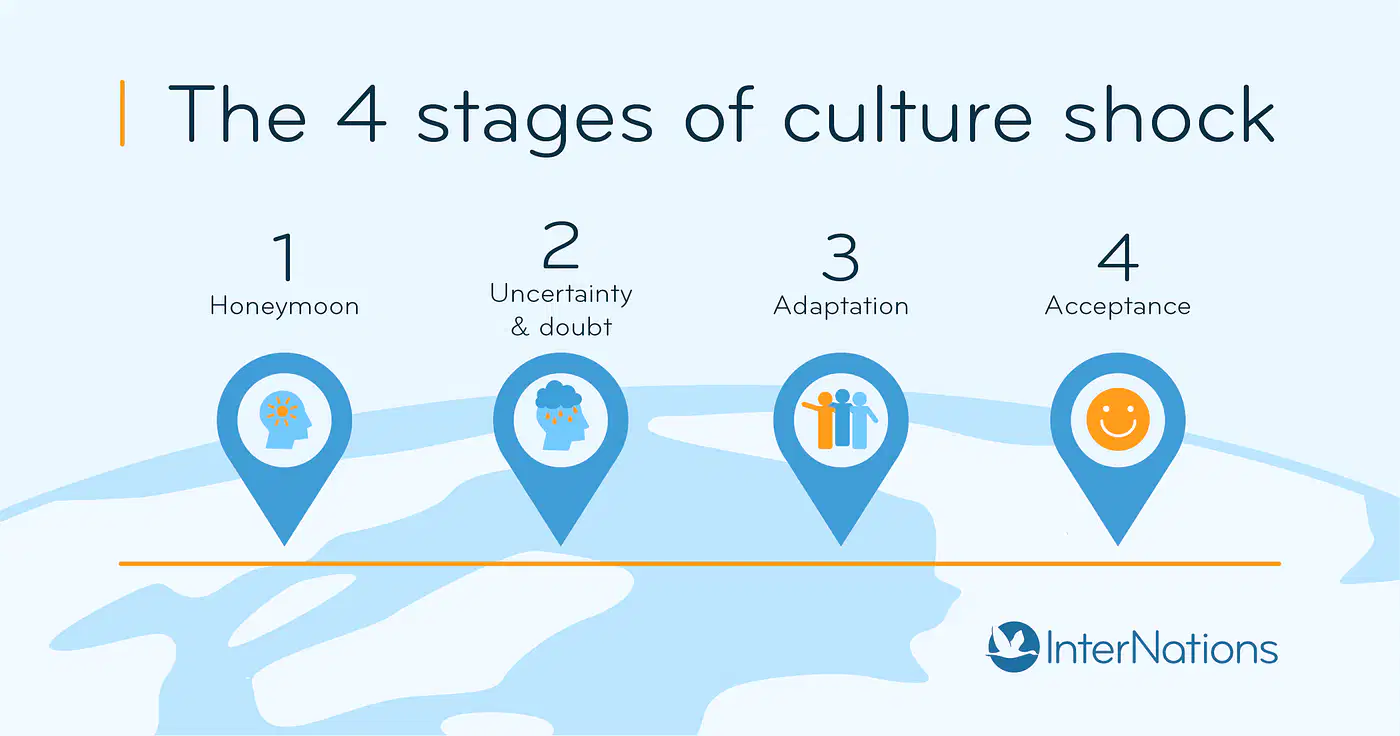
Things start changing and a person may start complaining about every thing in the new culture in the .........................................
Honeymoon stage
frustrtaion stage
adaptation stage
acceptance stage

One of the benefits if cross culture communication is ..........................................
Sharing and learning about other cultures
Helping foreigner to get cheaper prices
attracting more foreign friends to our country
getting money especially for tour guide

One of the obstacles of cross culture communication is ............................................... & .................................
Age
money
skin color
education

.................................................................. refers to “the state of living in peace with other/different minorities or groups
Co-existence
language
culture
diversity

There are ....................................... types of co-existence.
one
two
three
four

This type of co-existence is .......................................
passive co-existence
active coexistence
both active and passive
I am not sure

We need to co-exist with other minorities or groups .........................................................,
to have peace, love, unity and development
to have a lot of problems
to create a lot of problems
to travel abroad

Is there a co-existence in Thailand? .............................
Yes, there is
no, there is not
am not sure
i dont think so

The Iceberg model of culture was created by ..................................
Edward Hall
Albert Einstein
Shakespeare
Nelson Mandela
Edward Hall created the Iceberg model of culture in ..................................
1976
1977
1978
1979

(Food) is ....................................... element of culture.
external
internal
i am not sure
(Language) is ....................................... element of culture.
external
internal
i am not sure

There are .............................. elements of cross culture communication
five
four
three
two

One of the symptoms of culture shock is .............................
language
crying
weather
food
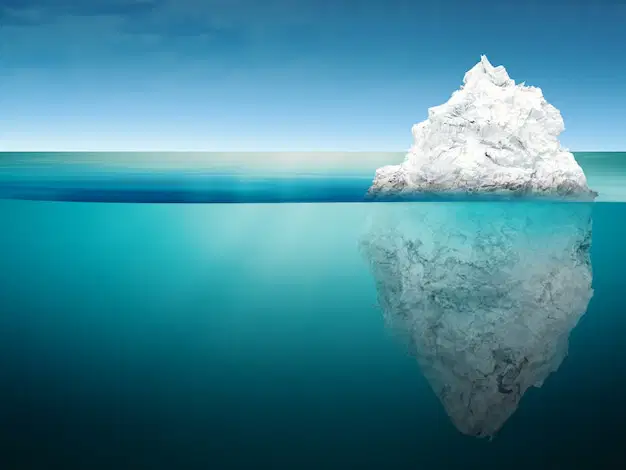
The external elements of culture represent ..................... % of the total percentage
10
12
13
19

